TattoosAI
A spider web tattoo on the elbow asks for more planning than its simple shape suggests. The design has to wrap a moving joint, hold its symmetry from different angles, and carry cultural meaning that can shift based on style, line weight, and context.
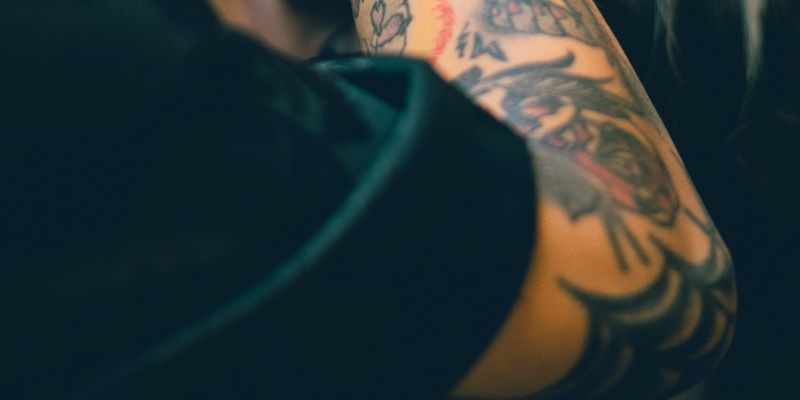
The history matters. In tattoo culture, elbow placement has long been tied to prison associations. One widely cited explanation is that each concentric segment represented time spent incarcerated, especially in U.S. prison culture, and that the web symbolized being trapped in the justice system, as described by Liverpool Tattoos' history of the spider web tattoo. At the same time, many current wearers choose the motif for balance, endurance, visual impact, or a classic tattoo look.
That mix of history and modern reinterpretation is what makes the elbow web worth planning carefully.
A good guide needs to do more than show finished tattoos. It should help you understand what the symbol can communicate, how the elbow changes the way a web is drawn, what healing on a high-motion joint is like, and how different styles age over time. Modern design tools can make that process easier. TattoosAI, for example, can help you test layout ideas, compare bold traditional lines against finer blackwork, and generate custom variations before you ever sit in the chair.
That turns this from a picture hunt into a practical toolkit. You get the cultural context, placement advice, and design prompts needed to build a spider web elbow tattoo that looks intentional on your body, not just attractive on someone else's arm.
Table of Contents
- 1. 1. The Classic American Traditional Web
- 1. 1. The Classic American Traditional Web
- 3. 3. The Delicate Fine-Line & Dotwork Web
- 3. 3. The Delicate Fine-Line & Dotwork Web
- 4. 4. The Symmetrical Geometric Web
- 6. 6. The Web with a Central Subject
- 6. 6. The Web with a Central Subject
- 7. 7. The Shattered or Broken Web
- Elbow Spider-Web Tattoo Styles: 7-Point Comparison
- From Concept to Ink Designing Your Perfect Web
1. 1. The Classic American Traditional Web
The American Traditional web is the version many tattooers picture first. Bold black outlines, evenly spaced arcs, and simple shading give it a clear structure that still reads well when the elbow bends. On a joint that folds, stretches, and scuffs more than flatter skin, that clarity matters.
This style works like good interface design on a small screen. Heavy lines and strong contrast stay legible under stress, while tiny details can turn muddy once the skin heals and settles. That is why a classic web often looks more intentional on the elbow than a highly ornate version.
Why it works on the elbow
The elbow has a hard center point, curved surrounding skin, and constant motion. A traditional web matches that anatomy naturally because its radiating lines can anchor at the point of the elbow and expand outward in clean rings. The result feels built for the body part instead of pasted onto it.
Healing is part of the design decision too. Elbows can heal rougher than calmer areas, and the skin often dries, flexes, and sheds unevenly during recovery. Thick outlines give your artist more room for error than fragile details do. Years later, that usually means a web that still reads as a web.
A practical way to brief your artist is simple.
Practical rule: Ask for confident line weight, open spacing, and shading that stays readable when your arm is bent.
The cultural baggage also stays strongest with this version. Because the motif is so recognizable, a classic elbow web can signal old-school tattoo culture, toughness, or prison associations depending on context. As noted earlier, that history is worth understanding before you commit, especially if you want the piece to feel informed rather than accidental.
If you like the bold look but want to test cleaner fills, darker shading, or a sharper contrast profile, studying blackwork tattoo style references can help you compare how much weight and spacing your web should carry. AI tools are useful here. You can prompt variations like “American Traditional elbow spider web, bold black lines, wide negative space, readable when bent” and review several layouts before your consultation. That turns a familiar tattoo into a planned custom piece, which is the difference between copying a symbol and building one that fits your arm, your taste, and the meaning you want it to carry.
1. 1. The Classic American Traditional Web

If you picture spider web tattoos on elbows, this is probably the version in your head already. Thick black outlines, simple arcs, strong spacing, and shading that stays readable even when the arm is bent. It's one of the few tattoo motifs that benefits from being blunt and bold.
American Traditional works especially well on the elbow because elbows move constantly and heal a little rougher than flat skin. A tiny, fussy design can blur into noise there. A bold web keeps its shape when your arm flexes, when the skin creases, and when the tattoo settles over time.
Why it works on the elbow
Consider interface design principles. High contrast wins on a busy surface. If a tattoo has to perform on one of the body's most active joints, clean geometry and thicker lines usually beat microscopic detail.
Practical rule: If you want a timeless elbow tattoo, ask your artist to prioritize line confidence and spacing over extra ornament.
There's also the cultural side. The elbow is the placement most strongly tied to the prison meaning of the web. Historical descriptions connect this specific placement to incarceration symbolism, hardened identity, and being trapped in the system, according to this spider web tattoo history overview. If you choose the classic version, know the history and be ready to explain your own reason for wearing it.
A real-world example is someone building a traditional sleeve with a dagger on the forearm and a rose on the upper arm. The elbow web becomes the connector piece. It fills awkward space, creates flow, and makes the whole arm look intentional instead of patchy.
- Best for: Bold traditional sleeves, heritage tattoo looks, high-contrast black ink
- Ask your artist about: Wider gaps between rings, clean center alignment, and whether to shade every segment or keep some skin breaks
- AI prompt idea: “American Traditional elbow spider web tattoo, bold black outlines, heavy contrast, classic flash aesthetic, centered on elbow, simple shading, clean symmetry”
3. 3. The Delicate Fine-Line & Dotwork Web

What if an elbow spider web could read more like lace, engraving, or a piece of jewelry than a bold patch of black? Fine-line and dotwork designs take the familiar web structure and strip it down to precision, spacing, and texture. The mood changes fast. A motif that can feel heavy in one style starts to look refined and almost architectural in another.
The technique matters here. Fine lines create the framework. Dot shading softens the transitions, like pixels blending an image on a high-resolution screen. Instead of filling each segment with solid black, the artist builds tone gradually with tiny points, which gives the web a lighter and more detailed finish.
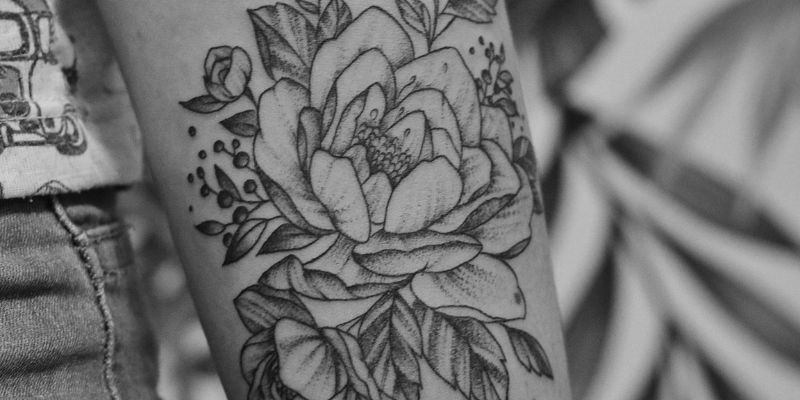
This style usually fits best with black-and-grey sleeves, ornamental work, florals, or minimalist tattoos that already rely on restraint. If your arm has soft shading and open skin, a delicate web can connect those pieces without stealing all the attention. If you want inspiration that pushes the pattern side of the design, study geometric tattoo style references and notice how symmetry, repetition, and spacing create elegance without heavy saturation.
There is a tradeoff. The elbow is a rough surface for tiny details. Skin texture, bending, and healing can blur very thin marks, especially at the center point where the joint moves most. The safest approach is to keep the concept delicate but not fragile. A skilled artist might use slightly stronger outer rings, wider gaps, or fewer dot gradients than you first imagined, and that adjustment usually improves the healed result.
The cultural reading is shifting too. Many younger wearers now read the spider web less as a fixed symbol and more as a marker of resilience, style, or personal storytelling, a change you can see across social platforms and modern tattoo portfolios. That does not erase the older associations tied to elbow placement. It means your design choices, surrounding tattoos, and your own explanation shape how people read it.
AI can help before you book. Use it like a sketch lab. Generate variations with different ring counts, center treatments, and dot density so you can compare what stays readable at arm's length. Prompt ideas such as “fine-line elbow spider web tattoo, black and grey, delicate dotwork shading, ornamental detail, open skin, clean symmetry, healed-tattoo readability” will give you stronger starting references for your artist.
3. 3. The Delicate Fine-Line & Dotwork Web

Not everyone wants their elbow tattoo to shout. Fine-line and dotwork webs take the same basic structure and make it feel lighter, airier, and more intricate. Instead of a loud old-school look, you get something closer to jewelry or etched pattern work.
This option appeals to people who like black ink but don't want a heavy traditional patch. The web can stay minimal, or it can blend into ornamental details, tiny geometric textures, or subtle gradient shading built from dots.
Who this style suits best
A fine-line web often fits someone with a softer black-and-grey sleeve, botanical work, or minimalist tattoos elsewhere on the arm. It can also work if you want the elbow tattoo to feel present without dominating every photo of your arm.
There is one caution. Elbows aren't the easiest place for very thin lines. Skin texture, movement, and healing can soften delicate details. That doesn't mean you should avoid the style. It means you should simplify the layout and let the artist decide where line weight needs to be slightly stronger.
The cultural reading also isn't fixed anymore. A future-dated analysis cited by a YouTube reference claims that 78% of TikTok users under 25 viewed the tattoo as a sign of personal resilience or fashion rather than gang affiliation in a 2025 analysis of comments on #spiderwebelbow, according to the linked video reference. That doesn't erase older meanings, but it helps explain why many younger clients now ask for more aesthetic, less confrontational versions.
- Good pairings: Ornamental blackwork, celestial motifs, soft gothic sleeves
- Less ideal for: Very small elbows with lots of existing scar tissue or rough healed texture
- AI prompt idea: “Fine-line spider web elbow tattoo, delicate single-needle lines, soft dotwork shading, subtle black and grey, elegant and minimal, symmetrical but airy”
4. 4. The Symmetrical Geometric Web

Some people don't want an organic web at all. They want order. A geometric elbow web turns the motif into a system of clean divisions, repeated angles, and carefully measured spacing. It can look like a mandala, a radial grid, or a web filtered through technical drawing.
This version suits design-minded clients. If you like symmetry in architecture, UI layout, or product design, this tattoo scratches the same itch. The elbow becomes the anchor point for structure.
Precision matters more here
Geometric work is unforgiving. On a rose, a tiny imperfection can disappear into texture. On a symmetrical elbow web, your eye catches imbalance fast. That's why stencil placement matters almost more than the drawing itself.
If you're collecting reference styles, study geometric tattoo design ideas and notice how spacing controls the entire effect. The strongest pieces aren't always the most complex. They're the ones with the cleanest rhythm.
A practical example is someone with a half-sleeve made of repeating shapes, sacred-geometry-inspired patterns, or blackout sections broken by precise linework. A geometric web can bridge those areas better than a naturalistic web would.
“Center it with the arm relaxed, then check it again with the arm bent.” That simple step can save a symmetrical tattoo from looking off once you start moving normally.
Use AI to test variations with terms like “radial symmetry,” “hexagonal web structure,” “mandala influence,” or “precise line intervals.” Bring your top two or three outputs to your artist, not twenty. A narrower set leads to a better conversation.
6. 6. The Web with a Central Subject
Want your elbow web to feel like your tattoo, not just a standard pattern? Put a clear focal image in the center and let the web radiate around it. That changes the design from a background motif into a framed composition.
The elbow's circular shape supports this layout naturally. Web strands spread outward like spokes around a hub, so a rose, skull, eye, gemstone, compass, or moth can sit in the middle without fighting the anatomy. It works like placing an app icon at the center of a clean interface. Your eye knows where to land first.
This approach also solves a practical design problem. The elbow tip has texture, movement, and thicker skin, which can make tiny details harder to keep crisp over time. A bold central subject gives the artist a sturdier shape to build around, so the tattoo reads clearly whether your arm is bent or relaxed.
Choosing a subject that reads well
Different center images change the tone fast. A rose usually feels softer or more romantic. A skull pushes the piece darker. An eye can feel surreal or watchful. A compass adds direction and purpose.
Scale matters more than symbolism here.
If the center image is too busy, the web and the subject start competing. The strongest versions keep the middle simple enough to read at a glance and bold enough to hold up on a joint. Clean silhouettes, solid blacks, and limited fine detail usually age better than tiny ornamental features.
AI is especially useful at this stage because it lets you test one variable at a time. Keep the web structure constant, then swap only the centerpiece. Try prompts like “spider web elbow tattoo with central eye,” “spider web elbow tattoo with central gemstone,” or “spider web elbow tattoo with central rose.” Side-by-side outputs make your preference easier to spot. You are not just collecting images. You are comparing mood, symbolism, and readability before your artist even starts drawing.
That makes this style a strong fit for anyone using this article as a planning toolkit. You can bring your artist a tighter brief, clearer references, and a better sense of what belongs in the center versus what should stay in the surrounding web.
6. 6. The Web with a Central Subject

This is one of the smartest ways to personalize the motif. Instead of letting every line converge into a plain center, you place a focal image right on or around the elbow point. A rose, skull, eye, gem, compass, or even a tiny moth can completely change the mood.
It's also practical. The elbow tip is textured and can be a tricky place for tiny detail. A strong central subject gives the artist more options to disguise that texture and make the whole composition feel intentional.
Good focal points for the elbow center
A rose softens the tattoo. A skull pushes it darker. An eye makes it surreal. A compass gives it a directional or travel feel. The trick is scale. The center image should be simple enough to read from normal viewing distance and sturdy enough to survive on a joint.
You can plan this especially well with AI because it lets you swap center motifs without redrawing the whole tattoo each time. Start with one base prompt, then change only the subject. For example: “spider web elbow tattoo with central eye,” then “with central gemstone,” then “with central rose.” That side-by-side comparison helps you notice whether you want elegance, menace, romance, or symbolism.
The elbow remains the most common placement for this motif for reasons beyond history. A future-dated underserved-angle claim says 65% of first-time tattoo seekers in major markets choose the elbow for spider webs because of visibility and contour suitability, not symbolism, according to Inkppl's discussion of spider web tattoo meanings and modern interpretations. Even without leaning hard on the number, the design logic is easy to see. The elbow's circular structure naturally supports a radiating layout.
Design note: If the center object is detailed, simplify the outer web. If the center stays minimal, the outer rings can carry more visual complexity.
7. 7. The Shattered or Broken Web

A broken web changes the message immediately. Instead of a neat, complete trap, you get missing strands, jagged breaks, or a web that looks torn open. It's one of the strongest reinterpretations for people who respect the tattoo's history but don't want to repeat its older symbolism.
Visually, this style can lean gritty or elegant. Harsh breaks and uneven lines create a damaged, rebellious look. Cleaner missing sections can feel more graphic and intentional, almost like a deconstructed logo.
Turning the symbol on its head
This is the version I'd recommend to someone who likes the elbow web format but wants the concept to say movement, escape, or rebuilding. You still get the radial shape that fits the joint so well, but the narrative shifts. The wearer isn't stuck in the web. They've torn through it.
A strong example is someone marking a life change, sobriety milestone, career reset, or a move away from an identity they've outgrown. You don't need text to make that readable. The damage pattern can do the storytelling if it's designed clearly.
For planning, AI is especially useful here because “broken” can mean many different things. It can mean snapped threads, burned-away edges, asymmetrical gaps, or a web split by another object. Generate several concepts and pay attention to clarity. If the break reads as accidental sloppiness instead of a deliberate idea, the design needs refinement.
- Best visual additions: Cracks, smoke wisps, torn strands, small symbolic openings
- Keep in mind: Too many missing sections can make it stop reading as a web at all
- AI prompt idea: “Broken spider web elbow tattoo, shattered radial lines, symbolic escape, black ink, strong composition, readable gaps, rebellious but clean”
Elbow Spider-Web Tattoo Styles: 7-Point Comparison
| Style | 🔄 Implementation Complexity | ⚡ Resource & Time | ⭐ Expected Outcomes | 💡 Ideal Use Cases | 📊 Key Advantages |
|---|---|---|---|---|---|
| 1. Classic American Traditional Web | Medium, bold lines, straightforward layout | Moderate, single session possible; touch-ups common | High readability and longevity; timeless look | Traditional sleeves; high-visibility elbow anchor | Strong contrast, easy integration, recognizability |
| 2. Intricate Blackwork & Negative Space Web | High, heavy saturation and clean negative shapes | High, long packing sessions; careful healing needed | Very high visual impact if healed evenly | Full blackwork sleeves; graphic/modern arms | Dramatic silhouette, seamless extension, bold statement |
| 3. Delicate Fine-Line & Dotwork Web | High, precision single-needle or stippling technique | High, time-consuming stippling; meticulous sessions | Elegant, subtle, intricate detail; low distant legibility | Illustrative/fine-line sleeves; botanical or ornamental themes | Refined detail, delicate aesthetic, customizable patterns |
| 4. Symmetrical Geometric Web | Very high, exact symmetry and precise linework required | High, stencil use and careful execution; possible multiple sessions | Flawless, modern patterning when precise | Geometric/mandala sleeves; centerpiece designs | Clean geometry, strong visual order, highly structured |
| 5. Vibrant Neo-Traditional Color Web | High, combines bold outlines with color blending | High, color packing and blending; potential touch-ups | Vivid, expressive, highly personalized outcome | Color-themed sleeves; illustrative focal points | Rich color depth, illustrative detail, personal symbolism |
| 6. Web with a Central Subject | Variable, depends on complexity of the center piece | Variable, simple center quick; realistic center requires time | Strong focal storytelling and personalized meaning | Narrative sleeves; symbol-driven tattoos | Highly customizable meaning, strong focal composition |
| 7. Shattered or Broken Web | Medium, artistic freedom but intentional composition needed | Moderate, less symmetry, still requires skilled execution | Dynamic, expressive; communicates liberation | Standalone pieces; abstract/trash-polka or recovery themes | Clear symbolism of escape, expressive aesthetics, adaptable integration |
From Concept to Ink Designing Your Perfect Web
The best spider web tattoos on elbows don't happen by accident. They work because the wearer understands the history, chooses a style that matches their taste, and plans around the elbow's unique shape and healing demands. That's the difference between a tattoo that feels generic and one that feels resolved.
Start with meaning, even if your meaning is aesthetic. If you love the design for its symmetry, say that. If you connect to resilience, say that. If you're drawn to tattoo history and want to reinterpret an old motif with fresh intent, that's valid too. What matters is that you know what you're wearing and why.
Then get practical. Decide whether you want bold lines or delicate detail. Think about how the web connects to the rest of your arm. A standalone elbow tattoo can look strong, but a web often looks even better when it links a forearm piece to an upper-arm piece. Bring reference images that show line weight, spacing, and mood, not just the basic subject.
AI can save time instead of replacing the artist. Use TattoosAI to test prompt variations like “American Traditional elbow web,” “negative space blackwork elbow web,” or “broken geometric spider web with central eye.” You can compare symmetry, density, and focal points quickly, then narrow your ideas before the consultation. That makes your studio visit more focused because you're discussing preferences, not starting from a blank page.
Once you've got a concept, choose an artist whose healed work shows confidence on joints, black packing, or fine detail, depending on the style you picked. Ask how they approach stencil placement on a bent surface, how much simplification they recommend, and what healing usually looks like for elbow work. Those questions tell you a lot about whether the artist understands the placement.
A great spider web elbow tattoo is art, history, and engineering all at once. It needs the right symbolism, the right visual rhythm, and the right execution on one of the body's trickiest surfaces. When those pieces line up, the tattoo doesn't just fill the elbow. It anchors the whole arm.
If you want to turn an idea into something you can bring to a tattoo appointment, try TattoosAI. You can describe your concept, explore multiple styles, and generate custom spider web elbow tattoo directions in minutes, which makes it much easier to walk into a studio with a clear vision instead of a vague mood board.