TattoosAI
From Idea to Ink: A Guide to Choosing Your Perfect Tattoo
Choosing a tattoo is a commitment to a piece of art that tells your story. But where do you start when most tattoo symbols ideas pages stop at vague meanings and pretty pictures? A symbol isn't just a symbol once it hits skin. Line weight, placement, scale, contrast, and cultural context all change how that idea reads now and how it will age later.
That gap matters because tattoos are rarely just decoration. In a 2023 Pew Research Center survey on tattoo motivations and prevalence, 32% of U.S. adults said they have at least one tattoo, and among tattooed adults, 69% said honoring or remembering someone or something was a major or minor reason they got inked. The same survey found 47% wanted to make a statement about their beliefs. That tells you something important right away. The strongest tattoo symbol choices usually come from memory, identity, values, or a turning point in life.
This guide keeps things practical. You'll find ten strong directions, from minimalist line work to dragons, koi, and floral pieces, with the trade-offs that shape a good decision. Each section includes meaning, what tends to work and what often doesn't, placement and longevity notes, and a TattoosAI prompt you can use to build a custom starting point before speaking with an artist.
Table of Contents
- 1. Minimalist Line Work
- 2. Geometric Patterns and Sacred Geometry
- 3. Blackwork and Blackout Tattoos
- 4. Dotwork and Stipple Tattoos
- 5. Watercolor Tattoos
- 6. Portrait and Realism Tattoos
- 7. Japanese Traditional Irezumi
- 8. Dragon Tattoos
- 9. Koi Fish Tattoos
- 10. Rose and Floral Designs
- 10 Tattoo Symbol Styles Compared
- Refining Your Vision and Working With Your Artist
1. Minimalist Line Work
Minimalist line work looks effortless when it's done well. It isn't. The fewer marks you use, the more every line matters, which is why this style works best when the concept is emotionally clear and visually simple.
Single-line pet portraits, face outlines, tiny botanical stems, and small scenic outlines are strong options. A memorial cat silhouette on the inner forearm can feel personal without being loud. A one-line mountain horizon on the ankle can mark a place or period of life without turning into a literal postcard.
Why It Works
This style suits people who want tattoo symbols ideas that feel intimate instead of performative. It also adapts well to smaller placements like the wrist, collarbone, behind the ear, or the outer ankle. The catch is longevity. Ultra-fine lines can soften visually over time, especially if the design depends on tiny gaps or micro details.
The practical fix is simple. Strip the idea down, then give the artist enough line weight to make it hold. If you want a minimalist wolf, don't ask for fur texture, moon phases, a forest, and a quote in one tiny piece. Pick one visual message and let negative space do the work.
Practical rule: In minimalist tattoos, adding more detail usually makes the tattoo less readable, not more meaningful.
TattoosAI prompt
Use TattoosAI to test several versions before you commit. Ask for the same symbol in three levels of complexity so you can compare what still reads clearly at a small size.
- Prompt: “Minimalist fine line tattoo of a sleeping cat in one continuous line, elegant negative space, black ink only, subtle memorial feeling, designed for inner forearm, clean modern composition”
- Variation to test: “same concept, slightly thicker line weight, simplified silhouette, no micro details”
- What to reject: cluttered shading, overly thin linework, tiny text attached to a tiny image
2. Geometric Patterns and Sacred Geometry
Geometric tattoos sit at the intersection of control and symbolism. They can feel spiritual, architectural, mathematical, or ritualistic depending on how they're built. That flexibility is exactly why they're so appealing and why they're easy to get wrong.
Smithsonian notes in its history of tattooing across cultures that the oldest known tattooed human remains date back about 5,200 years, and that early tattoos often used dotted lines and diamond patterns. The same article points to later Japanese body art and Polynesian traditions with elaborate geometric designs. That history is useful because it reminds people that geometric tattoo symbols ideas aren't just trendy symmetry. They come from very old systems of identity, ritual, and meaning.

Precision matters more than meaning alone
A Flower of Life, mandala, compass grid, or geometric animal can look timeless if the artist keeps spacing consistent and respects the body's shape. Flat placements like the upper back, sternum, forearm, and outer thigh usually give cleaner results than areas that bend and twist heavily.
If you're drawn to mandala-based symmetry, studying a dedicated mandala tattoo ideas gallery helps you compare dense versus open compositions before you lock in one format. Dense geometry can look powerful on paper but muddy on skin if every segment competes for attention.
- Best use: center-focused placements, repeated symmetry, bold focal geometry with breathing room
- Common mistake: mixing sacred symbols, constellations, animals, initials, and ornamental fill into one overbuilt design
- Better approach: one geometric framework, one personal element, one clear hierarchy
TattoosAI prompt
Ask TattoosAI for both a dense and a simplified version. Learning often accelerates when one compares initial ideas against what reads well.
Geometric tattoos reward restraint. If every section is detailed, nothing feels intentional.
- Prompt: “Geometric tattoo design with Flower of Life core, four subtle compass points, black ink, balanced symmetry, medium detail, designed for upper back, crisp lines and negative space”
- Alternative: “geometric deer head with sacred geometry halo, simplified line pattern, no background clutter, forearm placement”
3. Blackwork and Blackout Tattoos
Blackwork solves problems that fine-line styles can't. It creates immediate contrast, stays legible from a distance, and handles large shapes with confidence. If your taste leans bold, ceremonial, graphic, or protective, this is one of the strongest directions you can take.
Blackwork can be ornamental bands, abstract movement, heavy geometric fields, or negative-space compositions. Blackout goes further by saturating larger areas, often to create a dramatic field of black or to rework an older tattoo.
Bold design solves different problems
This style works well when you want the tattoo to feel decisive. It can also help unify a patchwork sleeve or cover visual noise from earlier work. What doesn't work is treating blackwork like a casual impulse. Large black areas dominate the body visually, and they affect what you can add later.
A forearm blackwork band can be elegant and architectural. A full blackout sleeve is a lifestyle choice. Both can be valid, but they don't ask the same commitment from you.
- Strong placements: forearm, calf, upper arm, chest panels
- Needs caution: hands, fingers, and any area where you aren't prepared for constant visibility
- Common regret pattern: choosing blackout for shock value instead of because the body composition calls for it
TattoosAI prompt
Use TattoosAI to test silhouette, negative space, and coverage balance before thinking about specifics. In blackwork, composition matters more than ornament.
- Prompt: “Bold blackwork tattoo for forearm, abstract flowing shapes with negative space, high contrast, clean edges, modern ritual aesthetic, no color”
- Variation: “ornamental blackwork armband with symmetrical gaps, graphic and readable from distance”
- What to watch: if the AI output looks like a sticker pasted on skin rather than a shape built for the limb, refine the prompt with placement-specific language
4. Dotwork and Stipple Tattoos
Dotwork speaks softly, but it isn't weak. It builds form through patience and density, which gives it a meditative quality that suits spiritual, celestial, geometric, and natural motifs especially well.
This style shines when you want atmosphere without soft blur. A moon phase sequence, a beetle, a sacred pattern, or a botanical piece can all gain depth through controlled stippling. Done badly, though, dotwork just looks dusty and inconsistent.

Texture is the whole point
The key trade-off is scale. Tiny dotwork can lose its texture if there isn't enough room for the density shifts to show. Medium to larger placements usually give the technique space to breathe, especially on the forearm, shoulder blade, calf, or thigh.
This is one of the best tattoo symbols ideas categories for people who want symbolism without hard visual aggression. A stippled sun and moon piece can feel layered and thoughtful. A dotwork snake wrapped into a micro space usually turns into visual static.
Good dotwork reads in two ways. Up close, you notice texture. From farther away, you still understand the image.
TattoosAI prompt
When prompting TattoosAI, specify dot density and keep the composition clean. If you don't, the result often drifts into generic shading instead of true stipple logic.
- Prompt: “Dotwork tattoo of a crescent moon with botanical branches, black ink only, fine stipple shading, airy composition, designed for shoulder blade”
- Alternative: “sacred geometric dotwork tattoo, circular symmetry, medium spacing between elements, no solid black fill”
- Avoid: tiny lettering mixed into dense stippling, especially on small placements
5. Watercolor Tattoos
Watercolor tattoos attract people for obvious reasons. They feel loose, expressive, and more painterly than conventional tattooing. The problem is that many watercolor concepts lean too heavily on the color effect and not enough on structure.
A strong watercolor tattoo usually has an anchor. That might be a black line drawing, a clear floral outline, a bird silhouette, or a koi body with controlled edges. Without that anchor, the splash effect can read beautifully at first and less clearly later.
Best when structure supports the color
If you want a fox, hummingbird, rose, or galaxy wash in watercolor, ask whether the image still works in grayscale. If the answer is no, rebuild it. That's the easiest way to avoid a design that depends entirely on fresh saturation.
These tattoos do best on placements with lower friction and enough room for the color transitions to breathe. Upper arm, thigh, shoulder, and upper back usually outperform feet, fingers, and other high-wear areas.

- Works well for: floral pieces, birds, koi, abstract emotional themes, memorial pieces with color symbolism
- Less reliable for: tiny designs that need crisp recognition without line support
- Smart move: choose a color palette with personal meaning, then keep the composition disciplined
TattoosAI prompt
The most useful AI prompts here specify both subject and paint behavior. “Watercolor tattoo” alone is too vague.
- Prompt: “Watercolor tattoo of a rose with black line anchor, soft red and coral washes, controlled splatter, elegant composition for upper arm”
- Alternative: “koi fish watercolor tattoo with ink outline, blue and orange fluid background, readable body shape, forearm design”
- Refinement note: ask for a version with stronger black framework so your artist can compare longevity options
6. Portrait and Realism Tattoos
Portraits are where emotion and technical standards collide. People choose them for family, partners, children, pets, cultural icons, or a specific memory, but realism is unforgiving. If the structure is off, everyone sees it.
That's why portrait work starts with reference editing, not sentiment. Pick one excellent photo, not five mediocre ones. Decide whether you want a direct likeness, a memorial interpretation, or a realism-inspired composition with supporting elements.
A good portrait starts with editing the idea
The best realism tattoos usually have room to breathe. A loved one's face framed by roses, clocks, doves, or clouds can work, but only if the portrait remains the priority. If everything around the face is equally detailed, the eye has nowhere to land.
This is also where meaning often matters most. A large share of tattooed adults say remembrance played a role in getting tattooed, as noted earlier in the Pew survey, so portrait requests often carry real emotional weight. That's exactly why you shouldn't rush them.
- Best practice: choose an artist with healed portrait examples, not just fresh ones
- Often underestimated: the amount of skin space needed for eyes, nose, mouth, and expression to stay convincing
- Safer direction for first-timers: pet portraits or partial-feature realism before a full human face
TattoosAI prompt
AI works best here as a composition tool, not a replacement for a tattooer's drawing skill. Use it to test crops, framing, and style direction.
- Prompt: “Black and gray memorial portrait tattoo of an elderly man smiling, realistic but clean, soft background only, chest placement, high contrast focal face”
- Alternative: “realistic pet portrait tattoo of a golden retriever with gentle expression, black and gray, oval composition, upper arm”
- Ask for versions with: plain background, floral frame, and geometric frame so you can compare distraction levels
7. Japanese Traditional Irezumi
Japanese traditional tattooing carries visual authority because every element has been refined through repetition, symbolism, and body flow. Large dragons, koi, chrysanthemums, waves, peonies, masks, and wind bars all belong to a larger compositional language.
That's why this style rewards commitment. A single small motif can work, but irezumi really comes alive when the body placement allows movement. Sleeves, backs, ribs, thighs, and chest panels give the imagery room to tell a story.
History and respect matter here
This is also one of the clearest examples of cultural context mattering as much as aesthetics. Symbol-heavy tattoo discovery often flattens sacred or region-specific motifs into generic inspiration, but that can create meaning drift. A discussion of cross-cultural and spiritual symbol risk highlights the importance of verifying origins, understanding context, and not treating spiritually loaded symbols as interchangeable decoration.
For irezumi, that means asking more than “Does this dragon look cool?” Ask what mood, narrative, and tradition you're borrowing from. A koi with waves and maple leaves reads differently from a dragon with clouds and lightning. A Daruma or temple motif needs more care than a casual add-on.
Respect starts before the stencil. Learn what the motif means in context, then decide whether it still fits your story.
TattoosAI prompt
Use TattoosAI to rough in movement, motif pairing, and body flow. Then bring that concept to an artist who specializes in Japanese composition.
- Prompt: “Japanese traditional koi fish tattoo with waves and maple leaves, bold outlines, strong body flow, designed for half sleeve, balanced negative space”
- Alternative: “Irezumi dragon with clouds and wind bars, classic color palette, dynamic S-curve body, full back concept”
- Don't ask for: random mashups of sacred, anime, fantasy, and traditional elements unless you intentionally want a fusion piece
8. Dragon Tattoos
Dragon tattoos survive trend cycles because they can hold almost any emotional charge. Power, protection, wisdom, danger, rebirth, rage, discipline. The decision isn't whether you want a dragon. It's which dragon tradition matches your intent.
The global tattoo market is large enough that design-intent tools sit inside a real commercial decision process, with one industry forecast valuing the tattoo market at USD 2.43 billion in 2025 and projecting USD 5.99 billion by 2034. That growth helps explain why motif exploration has become more specialized. People aren't just choosing “a dragon tattoo.” They're comparing styles, symbolism, body flow, and custom variants before they book.
Choose the version before the pose
An Eastern dragon tends to feel serpentine, fluid, and atmospheric. A Western dragon often feels heavier, armored, and confrontational. A minimalist dragon becomes almost calligraphic. A geometric dragon pushes the idea toward control and abstraction.
If you need help clarifying what kind of meaning you want the image to carry, a focused guide to tattoo symbolism ideas is useful before you settle on aesthetics. Too many dragon tattoos fail because the client chooses the pose first and the symbolic language second.
- For sleeves: long, flowing bodies usually outperform compact dragon heads
- For chest or back: wider compositions can carry clouds, fire, waves, or a pearl without crowding
- For minimalist versions: use fewer scales and stronger silhouette
TattoosAI prompt
Dragons respond well to detailed prompts because pose, mood, and style all change the result dramatically.
- Prompt: “Eastern dragon tattoo, flowing serpentine body, black and gray with selective red accents, protective and wise expression, designed for full sleeve, dynamic movement”
- Alternative: “minimalist dragon silhouette tattoo, elegant curve, black ink only, collarbone placement”
- Helpful add-ons: specify air, water, clouds, fire, or geometric framing depending on the emotional tone you want
9. Koi Fish Tattoos
Koi work because they carry meaning and motion at the same time. They're one of the best tattoo symbols ideas if you want a symbol of perseverance, endurance, acceptance, or transformation without defaulting to a generic inspirational icon.
A koi can be subtle or dramatic. One fish moving upward on the forearm can read as personal struggle and resolve. Two koi circling each other can suggest balance, partnership, or inner duality. A full Japanese-style sleeve can turn the koi into part of a larger life narrative.
Movement makes or breaks a koi tattoo
Direction matters. So does body shape. A koi needs a graceful arc, believable fins, and water elements that support the fish instead of swallowing it. Many weak koi tattoos fail because the water takes over and the fish becomes an afterthought.
This motif also pairs well with several styles. Traditional Japanese gives it authority. Watercolor gives it energy. Fine line can make it quiet and personal. The wrong move is trying to cram all three approaches into one medium-sized design.
A published study on tattoo prevalence and demographics reported prevalence highest among younger adults, including 45% among women ages 25 to 29. For practical design work, that matters because many first-time and repeat clients in their 20s are choosing symbols that need immediate emotional clarity and long-term readability. Koi fits that brief when the composition stays disciplined.
TattoosAI prompt
Use AI to test direction, water behavior, and amount of supporting ornament. Those choices change the whole mood.
- Prompt: “Japanese koi fish tattoo swimming upstream, black and gray with orange accents, strong body curve, stylized water waves, forearm composition”
- Alternative: “two koi fish yin-yang inspired tattoo, balanced circular movement, clean linework, upper arm placement”
- Useful comparison: generate one minimal koi, one traditional koi, and one watercolor koi, then compare which version still feels like you when stripped down
10. Rose and Floral Designs
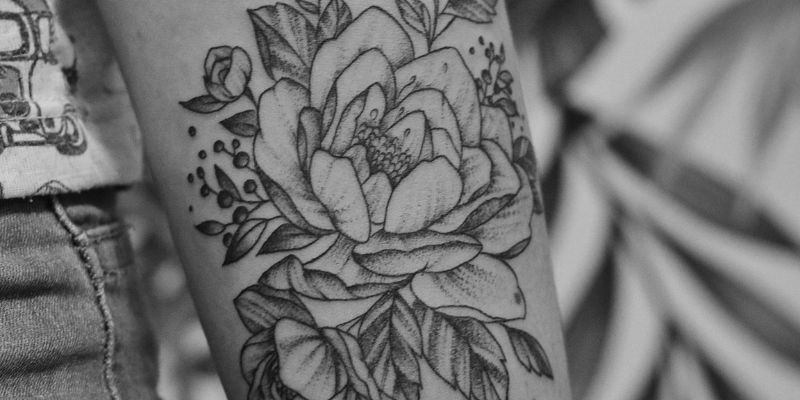
Floral tattoos are common because they're flexible, not because they're basic. A rose can be romantic, memorial, devotional, dramatic, or almost architectural depending on how it's drawn. The same goes for peonies, cherry blossoms, lotuses, wildflowers, and botanical stems.
Flowers also let you control intensity. A single stem near the wrist feels quiet. A black and gray rose on the hand feels classic and direct. A layered peony sleeve feels lush and decorative. The symbol changes with the treatment.
Flowers need design discipline
The biggest mistake is assuming all flowers suit all styles equally. Roses usually tolerate bold linework well. Cherry blossoms rely more on flow and spacing. Lotuses can drift into overused spiritual shorthand unless there's a reason behind them. Wildflower clusters can become messy if every stem overlaps without hierarchy.
A practical article on how tattoo design choices age over time points to key variables people often ignore, including line style, color, size, placement, and typography. It also notes that thin lines communicate differently than bolder treatments, and that font style changes the message too. That applies directly to floral work. A rose with memorial script underneath isn't one decision. It's at least three: the bloom style, the line strategy, and the lettering voice.
- Good pairing: one focal flower, one support element, one deliberate placement
- Typical overbuild: bouquet, quote, date, butterfly, dagger, and ornamental frame in one small area
- Stronger result: decide whether the flower is decorative, symbolic, or commemorative, then build accordingly
TattoosAI prompt
Floral prompting works best when you specify species, bloom stage, and style.
- Prompt: “Black and gray rose tattoo, partially open bloom, elegant stem, subtle thorns, clean composition for outer forearm, timeless style”
- Alternative: “botanical peony tattoo with two leaves, fine line and soft shading, upper thigh placement, balanced negative space”
- Try this comparison: generate the same flower as minimalist, blackwork, and watercolor, then see which version still feels right without relying on trend
10 Tattoo Symbol Styles Compared
| Style | Implementation Complexity 🔄 | Resource Requirements ⚡ | Expected Outcomes 📊⭐ | Ideal Use Cases & Tips 💡 |
|---|---|---|---|---|
| Minimalist Line Work | Low–Medium, requires fine-line precision and steady hand | Low, short sessions, minimal ink, quick healing | Subtle, timeless aesthetic; moderate durability (fine lines may blur) ⭐⭐ | First-timers, professional/conservative placements; choose experienced fine-line artists |
| Geometric Patterns & Sacred Geometry | Medium, needs mathematical precision and careful placement | Medium, detailed layouts, skilled artist, moderate time | Highly balanced, symbolic, scales well for size; long-lasting with bold lines ⭐⭐⭐ | Mandalas, spiritual pieces, scalable back/chest work; test placements and high-res proofs |
| Blackwork & Blackout | Medium–High, composition and saturation management critical | High, heavy ink, long sessions, higher pain and cost | Very high contrast and longevity; striking visual impact ⭐⭐⭐⭐ | High-impact sleeves, scar cover, long-term pieces; ensure artist experienced in saturation |
| Dotwork & Stipple | High, meticulous dot placement and density control | High, very time-consuming, specialist artist, multiple sessions | Unique textured look; impressive detail if executed well but time-intensive ⭐⭐⭐ | Large mandalas, geometric/meditative pieces; plan for long sessions and review portfolios closely |
| Watercolor Tattoos | High, expert color blending and soft-edge technique | High, color inks, fade-prone (touch-ups likely), specialized artist | Vibrant, painterly results with lower long-term saturation; eye-catching but needs maintenance ⭐⭐ | Creative, social-media-forward designs (florals, animals); choose sun-protected placements and expect touch-ups |
| Portrait & Realism | Very High, photorealism requires elite technical skill | Very High, long, expensive sessions; top-tier artist and quality references | Highly personal, emotive results; likeness quality depends on artist; long-term care needed ⭐⭐⭐⭐ | Memorials and tribute pieces; provide multiple high-res references and budget generously |
| Japanese Traditional (Irezumi) | High, complex composition, cultural motifs, narrative flow | Very High, multiple lengthy sessions, specialist Irezumi artist | Timeless, bold and cohesive large-scale art with excellent longevity ⭐⭐⭐⭐ | Full-back/sleeve storytelling pieces; research cultural meaning and select a true specialist |
| Dragon Tattoos | Variable, complexity depends on chosen style (minimal → elaborate) | Variable, can be quick small piece or multi-session large work | Versatile and symbolic; strong focal piece potential; impact scales with detail ⭐⭐⭐ | Centerpieces for sleeves/back; customize cultural elements and pose for uniqueness |
| Koi Fish Tattoos | Medium–High, scale detail, flow, and directional meaning matter | Medium–High, often color work and multi-session for larger pieces | Distinctive narrative symbolism; visually striking, colors may need touch-ups ⭐⭐⭐ | Japanese-style sleeves, symbolic journey motifs; plan composition and color palette carefully |
| Rose & Floral Designs | Low–Medium, technique varies by realism and color use | Low–Medium, scalable, many artists available | Universally appealing and customizable; ages well across styles ⭐⭐⭐ | Commemorative or decorative pieces; experiment with flower type and placement for meaning |
Refining Your Vision and Working With Your Artist
Choosing a symbol is only the first real decision. The harder and more important part is turning that symbol into a tattoo that fits your body, your story, and your tolerance for visibility, aging, and future additions. That's where most generic tattoo symbols ideas articles fall short. They tell you what a symbol can mean, but they don't help you decide what version of that symbol will still feel personal and readable years later.
That practical layer matters because tattooing is mainstream across demographics. In the same Pew Research Center tattoo survey, 38% of women and 27% of men in the U.S. said they have at least one tattoo. The decision you're making isn't niche or unusual. It's a design problem, and good design rewards clarity.
Bring your artist a strong brief, not just a mood board. That means knowing your symbol, your preferred style, your likely placement, your tolerance for boldness, and what details are essential. If the dragon must feel protective rather than aggressive, say that. If the rose is for your grandmother and you want it restrained rather than gothic, say that. If the portrait matters more than the background, make that explicit before anyone starts sketching.
A good artist will improve your concept. Sometimes that means enlarging it. Sometimes it means stripping pieces out. Sometimes it means telling you the wrist isn't the right place for the detail you want. Those corrections aren't pushback. They're part of the job. The best tattoo consultations feel a lot like good art direction. You bring intention. The artist brings technical judgment.
AI-generated concepts can help at this stage because they reduce guesswork. TattoosAI is one option for building visual references quickly, especially if you want to compare styles, prompt several versions of the same symbol, or test whether your idea works better as minimalist, blackwork, Japanese, dotwork, or watercolor before meeting an artist. What it shouldn't replace is the tattooer's eye for skin, scale, contrast, and healing.
If you use AI well, you arrive with better questions. Is this koi stronger with less water? Does this geometric piece need more open space? Should this floral design lose the script? That makes the studio conversation sharper and usually leads to a better tattoo.
The best tattoos rarely begin as perfect drawings. They begin as honest ideas, then get refined until the design and the body finally agree.
If you're narrowing down tattoo symbols ideas and want a faster way to visualize them, try TattoosAI to generate custom concepts, compare styles, and bring your artist a clearer starting point for the final design.