TattoosAI
Before a tattoo appointment, the decision rarely feels simple. You might be comparing wrist photos, zooming in on how tightly a vine wraps, and wondering whether a design that looks elegant on a screen will still feel balanced once it follows the curves of your body. Vine tattoos reward that extra thought because small changes in spacing, leaf size, and direction can completely change the final effect.
That flexibility helps explain their lasting appeal. Tattooing reaches back thousands of years, and botanical imagery has remained a recurring motif across cultures, as noted by the Brick Store Museum's history of tattooing and botanical tattoo traditions. Tattoos are now mainstream, with the same Brick Store Museum overview citing a 2019 U.S. survey in which 40% of Americans had at least one tattoo, up from 21% in 2012, and 47% of adults ages 18 to 35 reported having tattoos.
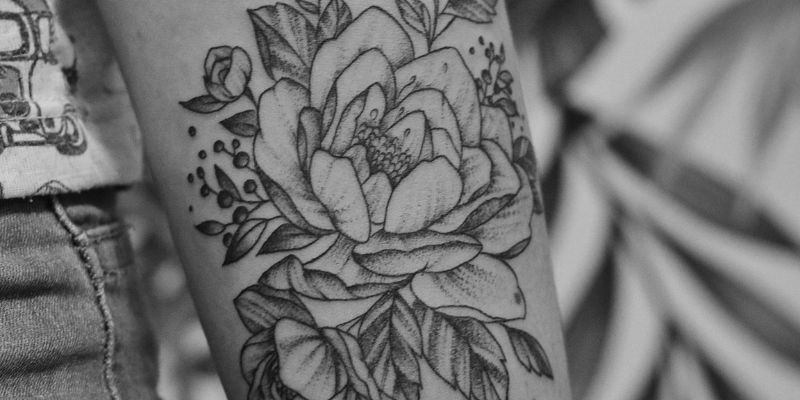
A vine works like a visual pathway. It can curl, climb, frame, or connect other elements without feeling forced. That makes it useful for many intentions at once. A fine vine around the ankle can read as soft and personal, while a larger design with flowers, geometry, or shading can feel structured, dramatic, or symbolic.
The goal here is not just to show attractive examples. It is to help you understand why certain vine tattoo designs work, what details to change if you want a different mood, and how to turn a rough idea into something more specific. If you are using an AI tattoo generator such as TattoosAI, that process becomes easier to test. You can try prompt variations for leaf shape, line weight, body placement, and style direction before bringing a polished concept to a tattoo artist.
Table of Contents
- 1. Delicate Vine Wraps Around Wrist or Ankle
- 2. Full Forearm Sleeve with Climbing Vines and Flowers
- 3. Geometric Vine Pattern with Sacred Geometry Elements
- 4. Watercolor Vine Design with Bleeding Ink Effect
- 5. Japanese-Inspired Vine with Koi, Dragons, or Botanical Elements
- 6. 3D Realistic Vine Climbing Around Limb with Shadow Effects
- 7. Dotwork Stipple Vine Tattoo with Pointillist Technique
- Comparison of 7 Vine Tattoo Designs
- From Concept to Skin Designing Your Vine Tattoo
1. Delicate Vine Wraps Around Wrist or Ankle
A thin vine circling the wrist or ankle is often the first version people fall for. It feels light, elegant, and easy to wear with anything. Because the design loops around the body, it also carries a natural sense of continuity that suits the symbolism people often want from vines.
This style works best when the artist treats the vine like movement instead of decoration. A few small leaves, tiny buds, or one restrained flower can be enough. Too many details can make a small wrap feel busy fast.
Why this style works
Independent tattoo-content coverage consistently frames vine tattoos as symbols of growth and resilience and highlights how well they adapt to placements like the forearm, ankle, spine, and ribs, according to this overview of simple vine tattoo ideas and placement patterns. That's especially true on the wrist and ankle, where the body's natural curves help the design feel intentional instead of pasted on.
A good real-world approach is to think of jewelry. Some people want a vine that reads like a permanent bracelet. Others want a looser spiral that leaves skin visible between turns, almost like a climbing plant finding its path.
Practical rule: If you want a wrap tattoo to stay delicate, ask for fewer elements with clearer spacing, not more tiny details.
AI prompt ideas to try
Use an AI tattoo generator to test direction before you talk to an artist. The fastest way to learn what you like is to change one variable at a time.
- Placement-first prompt: “Minimalist vine tattoo wrapping around wrist, fine line, sparse leaves, elegant spacing, black ink”
- Direction prompt: “Ankle vine tattoo spiral, counterclockwise wrap, tiny leaf clusters, soft botanical linework”
- Variation prompt: “Same vine tattoo design in three line weights, very delicate, medium delicate, slightly bolder”
You can also generate the same concept with different leaf types. Ivy reads differently from olive, jasmine, or an abstract vine. Bring a few versions to your tattooist and ask which one will scale best for your skin and placement.
2. Full Forearm Sleeve with Climbing Vines and Flowers
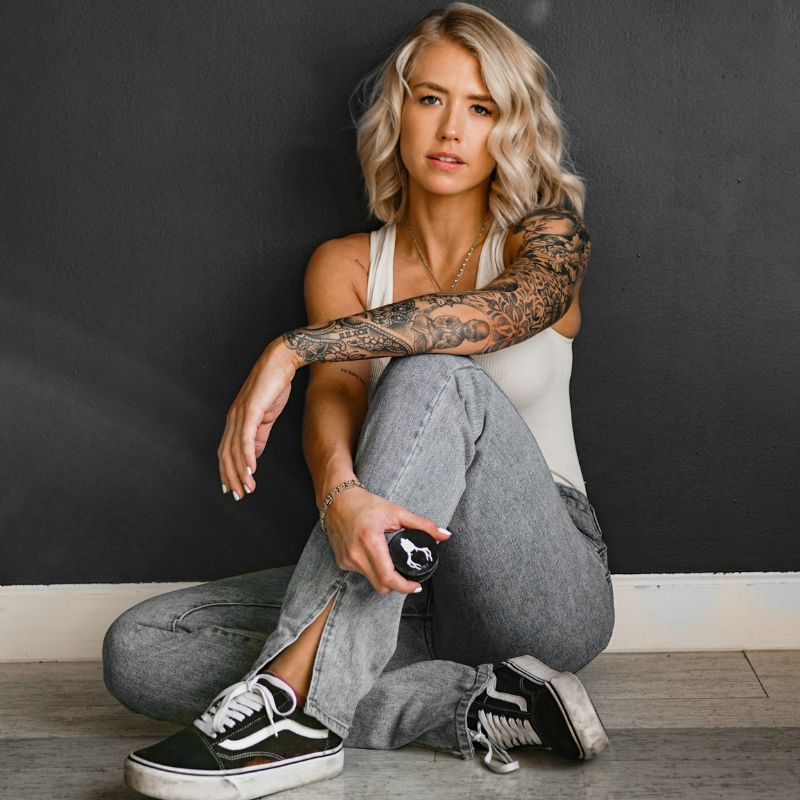
Some vine tattoos aren't subtle at all. A forearm sleeve gives the design space to climb, branch, overlap, and interact with different flowers. Instead of reading like an accessory, it reads like a living composition.
That larger canvas works because vines are structurally flexible. Their stems can unify many elements that would otherwise feel separate. A rose, a jasmine bloom, a thorned branch, and open leaves can all belong together if the vine controls the movement.
A broad historical shift helps explain why this kind of decorative botanical work feels so normal now. Tattoo machines were patented in 1891, helping standardize and expand tattoo production, and by the 1970s tattoos were increasingly embraced outside sailor and veteran circles. By 1996, it was estimated that nearly half of tattoo seekers were women, reflecting a broader customer base and stronger demand for ornamental styles, as summarized in Tattooing 101's tattoo history timeline.
Building a sleeve that feels alive
A strong sleeve usually has a route. It may climb from wrist to elbow, wind from inner forearm outward, or frame negative space so the arm doesn't look fully packed. If you're mixing flowers, decide which bloom is the lead element and which ones support it.
Here's a common real-world scenario. Someone loves both roses and ivy, but doesn't want a heavy traditional rose sleeve. The solution might be a lighter vine system with only a few rose blooms placed at turning points, letting the leaves do the connecting work.
A visual reference helps when you start thinking at sleeve scale.

Prompt structure for layered concepts
For sleeves, don't ask AI for one perfect answer. Ask for a family of compositions.
- Structure prompt: “Full forearm vine sleeve, climbing stems, open negative space, three floral focal points, black and grey botanical tattoo”
- Section test prompt: “Inner forearm vine cluster with jasmine, outer forearm ivy branches, matching style for sleeve continuity”
- Palette prompt: “Forearm botanical vine sleeve, monochrome linework version and soft muted color version”
Start with composition. Decide color later. If the black line structure doesn't work, color won't save it.
3. Geometric Vine Pattern with Sacred Geometry Elements
This is the style for people who want nature and order in the same piece. The vine brings movement. Geometry brings discipline. When those two forces are balanced well, the tattoo feels modern, intentional, and slightly meditative.
The trick is not letting one side overpower the other. If the geometric frame is too dense, the vine looks trapped. If the vine is too loose, the geometry feels decorative rather than integrated.
Organic lines meet structure
A common version places a vine around a mandala, through a hexagon frame, or across repeating line geometry. Another approach is subtler. A natural vine grows through clean dot-and-line construction without fully enclosing it.
That contrast appeals to design-savvy clients because it creates tension. Leaves taper in irregular ways. Geometry repeats on purpose. Together they make the eye move back and forth.
Take a look at how that fusion can appear in concept art.

What to specify in your generator prompt
This style gets better when your prompt includes the relationship between the parts, not just the parts themselves.
- Balanced prompt: “Geometric vine tattoo, flowing botanical stems weaving through hexagonal sacred geometry, symmetrical center with organic asymmetry at edges”
- Placement prompt: “Upper arm geometric vine design, mandala core, trailing leaves extending beyond frame, black linework”
- Contrast prompt: “Fine botanical vine with bold geometric scaffold, clean negative space, precise symmetry”
Ask for both symmetrical and asymmetrical outputs. You may think you want strict balance, then realize a slightly broken pattern feels more natural on the body.
4. Watercolor Vine Design with Bleeding Ink Effect
Watercolor vine tattoos attract people who want softness without losing the botanical theme. Instead of relying on hard outlines and dense black fill, they use color washes, feathered edges, and painterly transitions. The result can feel airy, romantic, or expressive.
That said, watercolor works best when there's still an underlying structure. A visible stem, a readable leaf edge, or a controlled black outline often gives the tattoo enough backbone to age more clearly.
Soft color, strong silhouette
The best vine tattoos designs in watercolor usually don't treat the whole tattoo like a blur. They anchor the composition with a defined shape, then let the color bloom around it. Purple flowers with green washes are common, but muted blue, dusty pink, and earthy tones can work just as well.
This approach is often a good match for someone who likes botanical illustration more than classic tattoo boldness. It can also soften a larger piece, especially on the shoulder, thigh, or outer forearm.
A watercolor-style concept shows that mood clearly.

For style experimentation, a generator with a dedicated watercolor tattoo style option makes it easier to compare soft wash interpretations before you meet an artist.
Prompts that keep watercolor readable
A useful prompt tells the AI where to keep control and where to let color spread.
- Readable watercolor prompt: “Watercolor vine tattoo, defined black stem, soft green and violet paint wash, airy edges, botanical elegance”
- Placement-aware prompt: “Shoulder vine tattoo in watercolor style, climbing branch with blossoms, light splash effect, open background”
- Comparison prompt: “Same vine design in soft pastel watercolor and deep saturated watercolor”
Watercolor looks best when the shape is still recognizable from a few feet away.
5. Japanese-Inspired Vine with Koi, Dragons, or Botanical Elements
Japanese-inspired work changes the role of the vine. Instead of being the whole tattoo, it often becomes part of a larger flow system around a koi, dragon, blossoms, wind bars, or water movement. The vine supports rhythm and direction.
This style asks for more care than a mood-board mashup. If you're borrowing from Japanese tattoo aesthetics, it helps to work with an artist who understands composition, symbolism, and how those motifs traditionally move across the body.
Flow matters more than decoration
A sleeve or panel in this style usually needs a clear current. A koi may move upward against flow. A dragon may twist through space. Vines, blossoms, or other botanicals should reinforce that movement, not interrupt it.
In practice, that means fewer disconnected icons. Instead of “koi plus random leaves,” think “vine lines guiding the eye toward the koi's head” or “botanical forms softening the transition between larger motifs.”
One strong real-world choice is a forearm piece where a climbing vine frames a koi without wrapping tightly around it. Another is a rib or thigh composition where blossoms and trailing stems create breathing room around a dragon.
Better prompts for respectful inspiration
If you use AI here, write prompts that describe composition and influence rather than asking for a direct copy of a named master's work.
- Compositional prompt: “Japanese-inspired vine tattoo with koi, flowing movement, botanical framing elements, bold line rhythm, balanced negative space”
- Alternative prompt: “Traditional Japanese-inspired sleeve concept, climbing vine accents with blossoms, dynamic direction, black and grey”
- Choice prompt: “Same Japanese-inspired botanical composition with koi version, dragon version, and blossom-focused version”
Bring those concepts to a traditionally trained artist and ask what needs to change to make the design coherent and respectful.
6. 3D Realistic Vine Climbing Around Limb with Shadow Effects
A realistic vine tattoo tries to fool the eye. It doesn't just show a plant. It suggests a plant wrapping over skin with dimension, depth, and shadow. When it works, the tattoo feels almost sculptural.
This is one of the hardest vine approaches to pull off because the body can either help the illusion or break it. A vine that looks convincing in a flat image may lose that realism once it crosses muscle, bends around a joint, or shifts on curved skin.
Realism depends on anatomy
Placement matters more here than in simpler linework. The forearm, calf, and outer upper arm often give artists enough surface to create believable wrapping. The hand, fingers, and tight wrist area can make realistic depth harder to maintain.
There's also a practical issue many galleries skip. Existing online coverage of vine tattoos focuses heavily on aesthetics and placement but rarely gives a clear framework for long-term aging, especially for thin lines, curls, and small leaf details on high-motion areas, as reflected in this vine tattoo placement and style discussion that highlights the content gap around durability. If you want realism, don't assume tiny detail is always the better choice.
Ask your artist which shadows create depth and which details will just disappear over time.
AI prompts for believable depth
For 3D concepts, include lighting and wrap direction in the prompt.
- Depth prompt: “3D realistic vine tattoo wrapping around forearm, natural leaf curl, subtle cast shadows, black and grey realism”
- Lighting prompt: “Realistic climbing vine with thorns, shadow falling from upper left, wrapped around calf, detailed botanical texture”
- Angle test prompt: “Same realistic vine tattoo shown from front, side, and three-quarter angle”
That kind of preview helps you discuss realism with your artist in body terms, not just image terms.
7. Dotwork Stipple Vine Tattoo with Pointillist Technique
Dotwork gives vine tattoos a quieter kind of detail. Instead of heavy shading, the image builds through clusters of dots. Dense areas create shadow. Open areas stay airy. On a vine design, that can feel refined and textured without becoming visually heavy.
This style is especially useful if you like black and grey work but want something softer than solid fill. It also pairs well with geometric elements, crescent shapes, moons, or ornamental framing.
Texture without heavy fill
A large design library can hint at how common a motif has become. Dreamstime indexes 6,486 vine tattoo design illustrations and vectors, which shows how widely the basic vine idea is repeated across commercial references. That's why dotwork can be so useful. It gives a familiar motif a distinct surface and rhythm.
A real-world example is a spine or forearm vine where the stem is mostly linework but the leaves transition into stippled shading. Another is an ornamental vine half-sleeve where dot halos and background gradients add depth without closing up the composition.
Prompt ideas for dot density and aging
A good dotwork prompt should say how dense the shading is, not just that it uses dots. If you're exploring style variations, try a dedicated dotwork tattoo style option to compare sparse and dense stippling.
- Fine texture prompt: “Dotwork vine tattoo, fine stipple shading, delicate leaves, black ink, elegant negative space”
- High-contrast prompt: “Botanical vine in dotwork style, dense dot shadows behind leaves, crisp stem outline, forearm placement”
- Durability prompt: “Dotwork vine tattoo with medium detail, readable leaf shapes, not micro, designed for clear long-term visibility”
Keep an eye on scale. If the leaves are tiny and every shadow relies on micro-dots, the tattoo may look impressive in a digital mock-up but less distinct in real life.
Comparison of 7 Vine Tattoo Designs
| Design | Complexity 🔄 | Resources & Time ⚡ | Expected Results / Impact 📊 | Ideal Use Cases / Tips 💡 | Key Advantages ⭐ |
|---|---|---|---|---|---|
| Delicate Vine Wraps Around Wrist or Ankle | Low–Moderate, precise thin-line work required | Low, short session, minimal cost | Subtle, elegant continuity; low visual impact | Concealable starter piece; test clockwise vs. counter-clockwise orientations | Versatile, minimal pain, easily expandable |
| Full Forearm Sleeve with Climbing Vines and Flowers | High, layered composition and flow planning | High, multiple sessions, higher cost | Strong visual presence and cohesive garden effect | Statement sleeves, color exploration; generate section mock-ups before inking | Highly customizable, dramatic and personal |
| Geometric Vine Pattern with Sacred Geometry Elements | High, requires mathematical precision | Moderate–High, skilled geometric artist needed | Striking, photogenic contrast of organic vs. geometric | For design-savvy clients; try symmetric and asymmetric AI variants | Unique fusion, symbolic and social-media friendly |
| Watercolor Vine Design with Bleeding Ink Effect | Moderate–High, color control and blending skill | Moderate, color work and more frequent touch-ups | Ethereal, painterly result with vibrant color impact | Ideal for creative palettes; generate multiple color studies | Highly artistic, forgiving of minor line flaws |
| Japanese-Inspired Vine with Koi, Dragons, or Botanical Elements | High, traditional composition and flow expertise | High, long sessions and culturally informed artist | Timeless narrative pieces with cultural symbolism | Best for large pieces/sleeves; respect cultural authenticity | Rich symbolism, respected and narrative-driven aesthetic |
| 3D Realistic Vine Climbing Around Limb with Shadow Effects | Very High, master-level realism and anatomy mapping | Very High, lengthy sessions, premium cost | Photorealistic illusion; very high visual impact | Showcase technical skill; produce multiple lighting references | Extremely striking, photogenic, memorable |
| Dotwork/Stipple Vine Tattoo with Pointillist Technique | High, meticulous dot density and patience | High, time-consuming sessions, specialist artist | Intricate texture and depth; consistent aging | Suited for black & gray enthusiasts; plan session duration | Unique texture, ages well with consistent appearance |
From Concept to Skin Designing Your Vine Tattoo
A vine tattoo works when it follows both your meaning and your anatomy. That's why the best choice usually isn't the most elaborate one you saved. It's the one whose flow, spacing, and level of detail make sense for where you want it and how you want it to age.
If you're deciding between styles, simplify the decision. Ask yourself four things. Do you want the tattoo to read as delicate or bold? Do you want black linework, dotwork, realism, or color? Do you want it to stand alone or grow into a larger piece later? And do you care more about fine visual delicacy or long-term clarity? Those answers narrow the field fast.
AI can help at the idea stage because it lets you test combinations without pressure. You can compare clockwise and counterclockwise wraps, sparse versus full foliage, watercolor versus linework, or geometric versus organic balance in minutes. That doesn't replace a tattoo artist. It gives you better raw material for the conversation.
If your generated concept feels close but not finished, refine it before the consultation. Change the leaf type. Remove one flower. Increase spacing. Thicken the main stem. Convert a sleeve idea into a half-sleeve. That kind of iteration is often more useful than collecting random screenshots from different styles.
For first-time clients, one smart move is to bring both inspiration and a simplified line version. Resources on MyImageUpscaler line art methods can help you think about how a design reads when reduced to essential outlines, which is often where tattoo clarity starts.
TattoosAI is one option that fits this process because it lets you describe an idea, choose from multiple styles, and generate original concepts for review before you visit a studio. Used well, it can help you show your artist what you mean when words alone feel too vague.
Your vine tattoo doesn't need to look like anyone else's. It just needs a strong shape, a clear feeling, and enough intention behind it that it still feels like your story once the stencil goes on.
If you're ready to turn rough inspiration into something you can discuss with an artist, try TattoosAI. Generate vine concepts in different styles, compare placements and line weights, and bring the versions that feel most like you to your next consultation.