TattoosAI
Your Back is a Canvas: Planning Your Masterpiece
A full back tattoo can feel equal parts exciting and overwhelming. You might already know the vibe you want, maybe something mythic, spiritual, fierce, or personal, but turning that feeling into a design that fits your body is the hard part. Big tattoos on the back ask for more than a cool reference image. They need flow, balance, and a plan that still makes sense after multiple sessions.
That's why it helps to think of a back piece like a long-form art project instead of a spontaneous tattoo idea. The back is one of the largest uninterrupted spaces on the body, so artists often approach it as a multi-session composition where linework, shading, negative space, and body contours all have to stay consistent over time, as discussed in a qualitative study on tattoo culture and large compositions. The design also lives on a moving surface. Shoulder blades, posture, weight change, muscle gain, pregnancy, and aging can all subtly affect symmetry over time, a practical planning gap noted in a discussion of long-term back tattoo distortion.
You're also planning around everyday life. If you've thought about grooming or skin treatments before or after your tattoo, it's worth understanding risks of laser hair removal near tattoos before you commit.
Table of Contents
- 1. Full Back Phoenix
- 2. Dragon Back Piece (Asian-Inspired)
- 3. Angel Wings with Religious Elements
- 4. Koi Fish Back Piece
- 5. Full Back Portrait or Landscape Scene
- 6. Geometric Back Mandala
- 7. Animal or Creature Back Piece (Wolf, Lion, Tiger)
- 8. Skeleton or Skull Back Panel
- 9. Sleeve and Back Connection (Extended Body Art)
- 10. Floral or Botanical Back Garden
- Comparison of 10 Large Back Tattoo Designs
- From Concept to Skin Your Next Steps
1. Full Back Phoenix
A phoenix is one of the most natural ideas for big tattoos on the back because the shape already wants to spread. Wings can stretch across the shoulders, tail feathers can taper toward the lower back, and flames or smoke can fill awkward gaps without making the design look crowded. If you want a tattoo that feels dramatic from every angle, this is hard to beat.
It also fits the reason many people choose a back piece in the first place. A phoenix usually symbolizes rebirth, survival, and a second chapter, so it works well when you want the tattoo to mark a turning point rather than just decorate a large area.

Build the motion first
The biggest choice isn't color. It's direction. A rising phoenix feels very different from one that's descending, folding inward, or bursting outward from the spine.
A simple mini-project plan helps:
- Symbolism: Rebirth, resilience, return after hardship.
- Layout idea: Head near the upper back or shoulder line, wings stretched wide, tail feathers guiding the eye downward.
- Time estimate: Usually a multi-session project because feather detail, flame textures, and background effects take layering.
- Cost estimate: Ask your artist for a session-based quote instead of chasing a generic internet number. Large back work varies too much by style and artist.
Practical rule: Ask for one version with open wings and one with partially folded wings. The difference can completely change how broad your shoulders appear.
For TattoosAI, try prompts that specify both style and movement. Examples:
- “Full back phoenix tattoo, wings spread across shoulders, long feather tail to lower back, Japanese style, red orange gold palette, dramatic flames, balanced symmetry”
- “Watercolor phoenix back piece, abstract smoke and ash, soft feather edges, upward movement, full back composition”
- “Black and grey phoenix full back tattoo, high contrast feathers, subtle fire textures, elegant vertical flow”
A real-world approach here is to save three versions only: one bold, one soft, one highly detailed. Too many variations can make the decision harder instead of easier.
2. Dragon Back Piece (Asian-Inspired)
If the phoenix is about ascent, the dragon is about movement and authority. A dragon's long body can wrap around the spine, sweep over the shoulder blade, or coil through clouds and waves in a way that turns the entire back into one continuous scene. That's why dragon work has stayed one of the classic choices for large-scale tattooing.
This is also a design where cultural specificity matters. Chinese and Japanese dragons don't read exactly the same, and your artist will likely ask which tradition you're drawn to before sketching anything.
Choose the tradition before the details
Start with the story you want the dragon to tell. Some people want protection and wisdom. Others want force, luck, discipline, or a more mythic visual identity.
Use this planning frame:
- Symbolism: Power, protection, wisdom, fortune, command.
- Layout idea: Dragon head near one shoulder, body winding diagonally across the back, tail anchoring the lower section.
- Time estimate: Usually extended over several appointments because scales, whiskers, cloud forms, and background textures need consistency.
- Cost estimate: Best discussed after you've decided whether you want heavy detail, open negative space, or color saturation.
For visual exploration, browse Japanese tattoo ideas for dragons, koi, and large-format motifs and compare body flow rather than isolated dragon heads.
Try TattoosAI prompts like:
- “Full back Japanese dragon tattoo, coiling body around spine, storm clouds and wind bars, black and grey, dynamic traditional composition”
- “Chinese dragon back piece, celestial elements, elegant long body, powerful head on shoulder, gold and red accents”
- “Modern watercolor dragon full back tattoo, abstract ink splashes, flowing body, high movement, artistic negative space”
A dragon that looks great on flat paper can fall apart on a curved back. Ask to see the design wrapped conceptually around the shoulder blades, not just centered on a rectangle.
A good real-world example is the client who already has a shoulder tattoo they want to keep. A dragon is often easier to integrate around existing work than a rigidly symmetrical piece like a mandala.
3. Angel Wings with Religious Elements
Angel wings are one of the most requested back tattoos because they already match the body's architecture. The shoulder blades naturally support the shape, and the upper back gives enough space for feather layering without forcing the design to look compressed. If you want something spiritual without filling every inch of your back, wings give you scale and breathing room at the same time.
They also give you flexibility. You can keep them devotional, memorial, minimalist, protective, or fully celestial with halos, crosses, rays, script, or clouds.
Make the anatomy work for you
The most convincing wing tattoos don't start with feather detail. They start with placement. Your artist needs to decide where the inner edge of each wing sits in relation to the spine and how far the outer edges should reach across the shoulders.
A compact project plan might look like this:
- Symbolism: Protection, faith, memory, freedom, divine connection.
- Layout idea: Symmetrical wings opening from the spine, with optional halo or cross centered between the shoulders.
- Time estimate: Moderate to extensive depending on whether you want soft realism, blackwork, or geometric simplification.
- Cost estimate: Tied closely to feather density and whether the background includes clouds, light beams, or script.
For TattoosAI, test very different interpretations before you settle:
- “Full back angel wings tattoo, photorealistic feather detail, soft shading, shoulder blade alignment, sacred atmosphere”
- “Minimalist geometric angel wings on upper back, clean linework, subtle symmetry, black ink only”
- “Angel wings with halo and cross, full upper back design, black and grey realism, layered feathers, spiritual memorial theme”
One useful scenario: if you're worried a full-back scene will feel too busy, angel wings can create impact without covering the lower back at all. That makes them easier to expand later if your vision changes.
4. Koi Fish Back Piece
A koi back piece has a different energy from a dragon. It feels fluid, patient, and alive. Instead of dominating the whole back with one central figure, koi designs often create motion through curves, water, rocks, lotus flowers, and currents. That makes them especially good for people who want a tattoo that reads as a full composition rather than a single emblem.
Koi are often tied to perseverance and transformation, which gives the design emotional depth without making it feel too literal.
Let the water do half the storytelling
The fish matters, but the water is what gives the tattoo direction. Fast water can make the piece feel aggressive. Slow swirling water makes it calmer and more meditative. Upstream movement can suggest struggle and progress. Circular movement can feel balanced and reflective.
Use a plan like this:
- Symbolism: Perseverance, transformation, luck, discipline.
- Layout idea: One large koi or multiple koi moving around the spine, with waves shaping the overall rhythm of the back.
- Time estimate: Usually built in stages because scales, fins, and water textures need layering.
- Cost estimate: Depends on whether you choose traditional color, black and grey, or a softer painterly style.
Prompt ideas for TattoosAI:
- “Japanese koi fish full back tattoo, swimming upward through waves, bold traditional composition, red and gold koi, dramatic water movement”
- “Black and grey koi back piece, elegant curved body, lotus flowers, flowing water, full back symmetry”
- “Watercolor koi fish tattoo on back, abstract splash background, soft blue water, orange koi, artistic movement”
A strong real-world choice here is for someone who wants a meaningful tattoo but isn't comfortable with overtly aggressive symbolism. Koi can still feel powerful without reading as confrontational.
5. Full Back Portrait or Landscape Scene
You have a person, place, or memory you want to carry on your back, and the hard part is turning that idea into a tattoo that still reads clearly from a few feet away. A full back scene can be one of the most personal options in this list, but it also asks for more planning than people expect. The back is a wide, curved surface, so a design that looks beautiful on a flat reference photo can lose focus once it is stretched across shoulders, spine, and lower back.
Start with the viewing distance. A back piece is read the way a mural is read. The large shapes need to make sense first, and the fine detail should reward a closer look. That is why your first choice is not just the subject. It is the structure. Decide whether you want one dominant focal point, such as a face or deity, or a broader scene built from layers like mountains, trees, architecture, smoke, clouds, or water.
Build the scene like a poster, not a collage
Strong portrait and scenery tattoos usually work in three layers: foreground, middle ground, and background. That separation keeps the design readable and stops everything from blending into one dark mass over time. If you skip that planning step, even skilled realism can feel crowded.
Use this mini-plan:
- Symbolism: Personal memory, family tribute, spiritual devotion, heritage, attachment to a place, life story.
- Layout idea: One central portrait framed by secondary elements, or a wide scenic composition that uses shoulder width for scale and the spine as a visual anchor.
- Time estimate: Often a multi-session project because realism, texture, and soft transitions need careful layering.
- Cost estimate: Usually varies more than simpler motifs. Price depends on detail level, black and grey versus color, and whether the artist is creating a custom composition from several references.
TattoosAI helps at the planning stage because it lets you test composition before you commit to a stencil. That matters here. You may love the idea of combining a face, mountains, trees, and sky, then realize the design works better when one of those elements is reduced or moved lower on the back. Using prompts to generate several versions gives you something much closer to an artist-ready brief than a loose folder of inspiration images.
Try TattoosAI prompts like:
- “Photorealistic full back portrait tattoo, central face with ornamental background, black and grey, strong depth, clean focal point”
- “Mountain scene full back tattoo, pine forest, river, wildlife, atmospheric realism, layered composition”
- “Spiritual figure portrait on full back, dramatic light and shadow, sacred iconography, black and grey realism”
One more planning tip helps a lot. If the subject is a loved one, ask for two concepts: one literal portrait and one scene inspired by them. A direct face can be powerful, but a place, object, or symbolic setting often ages more gracefully and gives the artist more freedom to build a balanced full-back composition.
6. Geometric Back Mandala
A mandala turns the back into a structure. Instead of following a creature or scene, it builds order outward from a center point. That makes it one of the most satisfying choices for people who love symmetry, pattern, and visual calm. It can feel spiritual, mathematical, ornamental, or all three at once.
It's also less forgiving than it looks. Small alignment issues become obvious very quickly when the whole design depends on precision.

Precision starts at the spine
For geometric work, the spine is the anchor. If the centerline is off, the whole piece can feel tilted even when the individual shapes are well tattooed. That's why your artist's stencil process matters almost as much as the final design.
Use this mini-plan:
- Symbolism: Balance, unity, wholeness, meditation, order.
- Layout idea: Main mandala centered on the upper or mid-back, with radial expansions toward the shoulders and lower back.
- Time estimate: Usually session-based because linework and dot shading often happen in phases.
- Cost estimate: Influenced by density, scale, and how much negative space you want to preserve.
Prompt ideas for TattoosAI:
- “Full back geometric mandala tattoo, sacred geometry, perfect symmetry, black and grey, fine line and dot shading”
- “Large mandala centered on spine, layered petals and geometric forms, upper and mid-back coverage, clean negative space”
- “Chakra-inspired full back mandala, symmetrical geometry, restrained color accents, meditative visual balance”
Design note: Ask for one version with heavier black anchors and one with mostly fine lines. Geometric tattoos can either read bold from afar or delicate up close, and the choice changes the whole mood.
A mandala also works well for clients who don't want overt symbolism like animals or mythic figures but still want a large piece with strong intent.
7. Animal or Creature Back Piece (Wolf, Lion, Tiger)
A large animal tattoo can feel direct in the best way. You don't need to explain a lion's presence, a wolf's alertness, or a tiger's intensity. People understand the emotional signal immediately. On the back, that kind of subject can be built as a commanding central portrait or expanded into a fuller scene with forests, smoke, moonlight, flowers, or abstract geometry.
This category works best when you choose the emotion before you choose the species. A calm wolf and a snarling wolf are almost two different tattoos.
Pick the posture before the species
Think about whether you want the animal to face outward, move across the back, or emerge from a background. A frontal lion head feels iconic. A tiger in motion feels more alive. A wolf looking over its shoulder can feel watchful rather than aggressive.
A practical planning setup:
- Symbolism: Strength, leadership, instinct, protection, courage.
- Layout idea: Large head on the upper back with mane or environment extending downward, or a full-body creature crossing the back diagonally.
- Time estimate: Often moderate to extensive depending on realism and background complexity.
- Cost estimate: Depends heavily on fur detail, realism level, and surrounding scene work.
Try TattoosAI prompts such as:
- “Full back lion tattoo, realistic mane flowing across shoulders, black and grey, regal expression, dramatic shading”
- “Wolf back piece, realistic head with forest background, moonlight atmosphere, full upper and mid-back composition”
- “Tiger full back tattoo, dynamic movement, orange black palette, abstract geometric fusion, powerful stance”
A useful real-world example is someone who already has smaller animal tattoos elsewhere. On the back, you can finally give one creature enough scale to look intentional rather than decorative.
8. Skeleton or Skull Back Panel
Skeleton and skull imagery can go in very different directions. It can be dark, rebellious, ceremonial, anatomical, gothic, playful, or highly decorative. That range is part of the appeal. A back panel gives you enough space to lean into bone structure, framing elements, and symbolism without reducing the design to a single skull floating in empty space.
This is also one of the better options if you like contrast. Bone forms, shadows, flowers, flames, and blackwork backgrounds can create a very readable composition from a distance.
Decide how literal you want to get
You don't need to choose between “anatomically correct” and “totally stylized” right away, but you should know which direction feels more like you. A ribcage-inspired back concept reads very differently from a gothic skull collage or a sugar skull composition with floral detail.
Your project plan might be:
- Symbolism: Mortality, transformation, memory, rebellion, impermanence.
- Layout idea: Central skull structure, vertical skeletal framework, or a decorative back panel that uses bone motifs as anchors.
- Time estimate: Usually multi-session work if you want heavy detail and layered background contrast.
- Cost estimate: Guided by realism level, ornamental additions, and whether the piece stays black and grey or adds color.
A report summarizing Danish tattoo research noted that larger tattoos matter medically because size increases cumulative pigment load and the probability of systemic pigment migration. In that analysis, the association was strongest for tattoos larger than a palm, with skin cancer risk more than 2.3 times higher and lymphoma risk about 2.7 times higher in that subgroup. For a large back panel, that's a practical reminder to treat the project like a real bodily exposure, follow conservative aftercare, and monitor anything that doesn't heal normally.
Prompt examples:
- “Full back skeleton tattoo, anatomical style, black and grey, decorative smoke and roses, detailed spine alignment”
- “Large skull back panel tattoo, gothic blackwork, layered shadows, full back composition, dramatic contrast”
- “Sugar skull full back tattoo, floral framing, ornate patterns, balanced symmetry, bold decorative style”
9. Sleeve and Back Connection (Extended Body Art)
If you already have one sleeve, or you know you want sleeves eventually, your back shouldn't be planned in isolation. Connected work looks stronger when the shoulders, upper arms, and back share a visual language. That doesn't mean every inch must match perfectly. It means the eye should understand how the tattoos belong together.
This kind of project is less about choosing a single image and more about building routes across the body.
Think in pathways, not separate tattoos
A dragon can leave the back and enter the arm. Smoke can bridge a shoulder cap into a sleeve. Geometric patterns can echo from tricep to scapula. Floral vines can travel from the upper back into the outer arm. The point is continuity.
Use this framework:
- Symbolism: Unified identity, narrative expansion, long-term commitment to body art.
- Layout idea: Back as the central field, with shoulders acting as transition zones into one or both sleeves.
- Time estimate: Usually a long project because sequencing matters. Some people start on the back, others connect from existing sleeves.
- Cost estimate: Best discussed as a phased roadmap rather than one quote.
If you're exploring continuity ideas, browse sleeve tattoo concepts that can connect into larger body compositions.
Here's a useful visual reference for flow across connected body areas:
Prompt ideas for TattoosAI:
- “Back to sleeve tattoo integration, Japanese dragon, clouds and wind bars, smooth shoulder transition, full upper body flow”
- “Geometric mandala back piece connecting to both sleeves, symmetrical pathways, black ink, unified pattern language”
- “Botanical back tattoo extending into arm sleeves, peonies and vines, organic transitions, balanced composition”
Don't approve the back design until you've seen how it enters the shoulders. That junction is where connected projects either feel seamless or patched together.
A real-world scenario here is the client with one completed arm and one blank arm. The back can become the bridge that makes the entire upper body feel intentional.
10. Floral or Botanical Back Garden
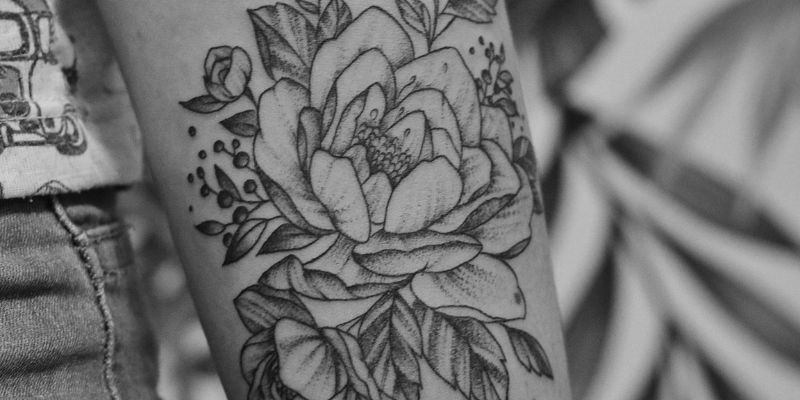
Botanical work is one of the most flexible ideas for big tattoos on the back. It can be soft or bold, ornamental or realistic, tightly structured or airy and open. Because stems, leaves, petals, and vines already curve naturally, they adapt beautifully to the back's contours without feeling forced.
This is a strong option if you want scale without heaviness. A large floral composition can cover a lot of skin while still feeling breathable.

Choose a hero flower, then build the garden
The easiest mistake is trying to include every flower you love. Start with one dominant bloom, such as a peony, rose, chrysanthemum, or cherry blossom cluster. Then add supporting plants that create contrast in shape and scale.
A useful mini-plan:
- Symbolism: Growth, beauty, remembrance, softness, cycles of life.
- Layout idea: Large focal flowers across the upper or mid-back with vines and foliage guiding the composition outward and downward.
- Time estimate: Varies a lot by realism, color saturation, and how dense the foliage becomes.
- Cost estimate: Ask your artist to price by phases if you expect to expand the garden over time.
One mainstream-market signal is that tattoo placement itself has become measurable consumer behavior. A U.S. Statista placement summary shows tattoos were common enough in 2019 to support a body-parts mapping study, which helps explain why large back concepts now sit inside a broad body-art market rather than a niche subculture.
For TattoosAI, try:
- “Full back botanical tattoo, peonies and vines, elegant composition, soft pink and green palette, realistic floral detail”
- “Japanese-inspired floral back piece, chrysanthemums and cherry blossoms, flowing arrangement, black and grey with selective color”
- “Watercolor botanical garden tattoo on back, layered flowers, airy negative space, painterly brush textures”
A good real-world use case is someone who wants a tattoo they can expand gradually. Botanical layouts make that easier than highly self-contained symbols.
Comparison of 10 Large Back Tattoo Designs
| Design | 🔄 Implementation Complexity | ⚡ Resource Requirements (time / skill / cost) | 📊 Expected Outcomes (impact / visibility) | 💡 Ideal Use Cases | ⭐ Key Advantages |
|---|---|---|---|---|---|
| Full Back Phoenix | High, intricate feathers, symmetry, layered flames | Very high, 10–20+ hrs; experienced color/realism artist; high cost | Bold, dynamic statement piece; excellent visual flow along spine | Rebirth/resilience themes; full-back showcase; color-focused designs | Maximum canvas use; natural anatomy alignment; iconic symbolism |
| Dragon Back Piece (Asian‑Inspired) | Very high, complex coils, scales, cultural detail | Very high, 15–25+ hrs; master in Asian techniques; cultural consultation; high cost | Powerful, timeless cultural impact; strong back-wrapping composition | Traditional Japanese/Chinese themes; power/wisdom symbolism; suit expansions | Rich cultural symbolism; excellent anatomical fit; versatile styles |
| Angel Wings with Religious Elements | Medium–high, precise symmetry and feather detail | Moderate–high, 8–15 hrs; careful symbolic design; moderate cost | Flattering symmetrical look; clear spiritual message; high visibility | Memorials, spiritual expression, shoulder-to-shoulder wings | Harmonious symmetry; versatile styles; meaningful symbolism |
| Koi Fish Back Piece | Medium–high, flowing composition, scale detail and water elements | Moderate–high, 10–18 hrs; skilled in color/scale work; moderate cost | Organic, flowing scene with cultural meaning; expandable into sleeves | Transformation/perseverance themes; aquatic compositions; sleeve integration | Strong anatomical fit; rich cultural symbolism; adaptable color work |
| Full Back Portrait or Landscape Scene | Very high, photorealism, perspective and fine shading | Very high, 15–25+ hrs; top portraitist; most expensive option | Extremely personal and emotional; showcases artist technical skill | Tribute/memorial pieces; realistic art lovers; major commissions | Unique personalization; powerful emotional impact; technical showcase |
| Geometric Back Mandala | High, precision and perfect symmetry required | Moderate, 8–12 hrs; artist skilled in fine lines and geometry; moderate cost | Striking, centered focal piece; long‑lasting clarity; meditative aesthetic | Spiritual balance designs; minimalist/geometric preferences | Strong visual symmetry; ages well; often completed with fewer sessions |
| Animal/Creature Back Piece (Wolf, Lion, Tiger) | Medium–high, realistic texture, dynamic posing | Moderate–high, 10–18+ hrs; realism artist; mid‑to‑high cost | Bold, heroic visual; strong symbolic association; high impact | Strength/identity themes; wildlife enthusiasts; realistic portraits | Powerful symbolism; wide stylistic appeal; natural anatomical fit |
| Skeleton or Skull Back Panel | Medium–high, anatomical accuracy and decorative integration | Moderate–high, 10–16+ hrs; anatomy‑literate artist; moderate cost | High-contrast, thematic impact; gothic or symbolic tone | Memento mori, rebellion, or gothic aesthetics; decorative compositions | High visual impact; adaptable motifs; integrates well with other elements |
| Sleeve and Back Connection (Extended Body Art) | Very high, multi-area planning and continuity challenges | Extremely high, 30+ hrs; long-term single-artist collaboration; major cost | Cohesive full-upper-body statement; dramatic reveal when complete | Full suits, narrative projects, long-term body art plans | Unified aesthetic across body; flexible expansion; maximum visual drama |
| Floral or Botanical Back Garden | Medium, many elements but organic, flowing composition | Moderate–high, 10–16+ hrs; color/detail artist; moderate cost | Lush, natural aesthetic; feminine or nature‑inspired look; expandable | Botanical symbolism, memorial flowers, watercolor works | Versatile color palettes; meaningful symbolism; relatively easy future modifications |
From Concept to Skin Your Next Steps
You have a folder full of ideas, a few saved references, and one big question. What will still feel right after months of sessions and years of living with it? That is the real planning stage for a back piece.
A large tattoo works like an architectural plan. The image matters, but placement, scale, flow, and future expansion matter just as much. A design that looks striking on a phone screen can feel crowded once it has to wrap around shoulder blades, follow the spine, and sit naturally on your body.
Earlier in the article, we noted research on tattoo regret. The useful takeaway here is simple. Regret usually has less to do with tattoo size alone and more to do with rushed choices, weak artist fit, and designs that were never fully tested at body scale. A back piece asks for slower decisions because it is a long project, not a quick decoration.
Start by turning your favorite idea into a mini project plan. Write down the core symbol, the mood, the style, and the parts that cannot change. Then list the flexible pieces, such as color versus black and grey, centered versus off-center composition, or whether you may want to connect the design to sleeves later. That small exercise clears up a lot of confusion before you ever book a consultation.
TattoosAI helps at this stage because it lets you test those variables without guessing. You can generate versions of the same concept with different composition paths, detail density, and stylistic treatment. For a full back concept, that is useful in the same way a floor plan helps before construction starts. You get to compare options before the expensive, painful, permanent part begins.
Use it with specific prompts. Instead of typing "big back tattoo," try something closer to an artist brief: "full back phoenix in black and grey, wings shaped to frame shoulder blades, smoke and fire kept open around spine, high detail upper back, lower back less dense for future expansion." That kind of prompt gives you draft material you can discuss with an artist.
Then bring those drafts in as reference, not commands. A good tattooer will adjust proportion, simplify areas that would age poorly, and make sure the design reads clearly from a distance as well as up close. Your job is to arrive with direction. Their job is to turn that direction into something that fits real anatomy and heals well.
One final check helps. Ask yourself three practical questions. Do I still like this idea when it is stripped down to its main symbol? Can I commit to the cost and time over multiple sessions? Will this piece still make sense if I add more tattoos later?
If the answer is yes, you are no longer staring at a vague inspiration board. You are building an artist-ready concept.
If you're ready to turn loose inspiration into a concrete back-piece concept, try TattoosAI to generate variations, test styles, and bring stronger reference material into your artist consultation.