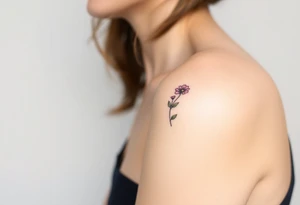
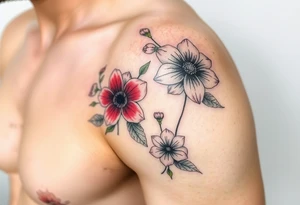
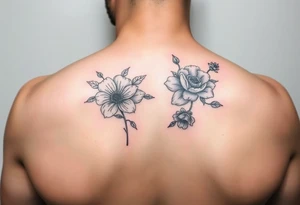
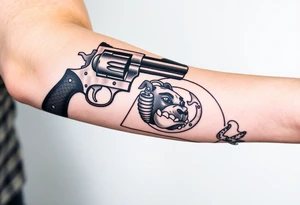
Sleeve Tattoos — 8,000+ designs

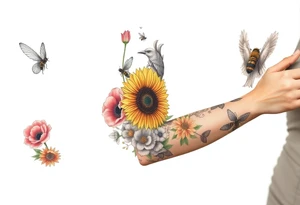
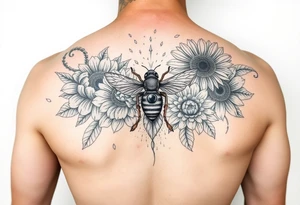
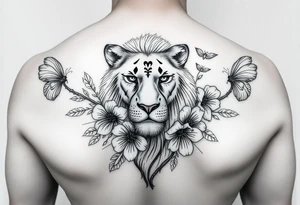
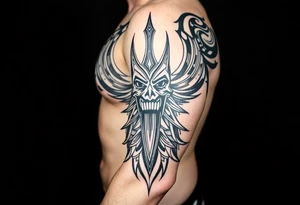
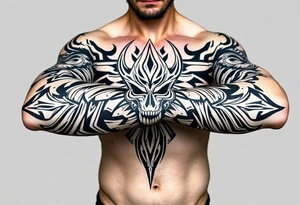
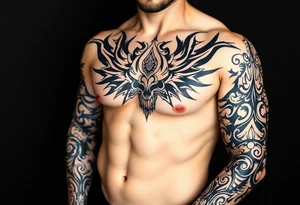
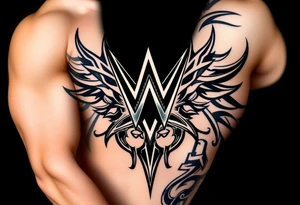
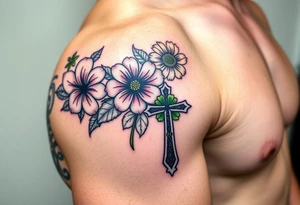
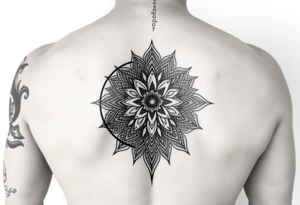
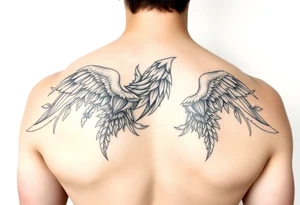
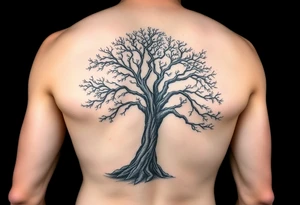
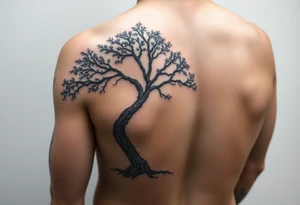
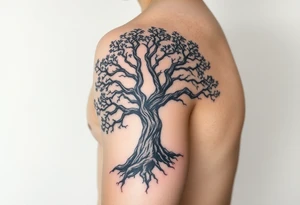
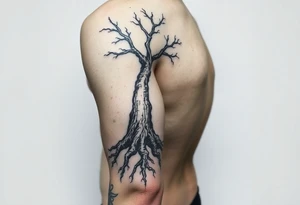
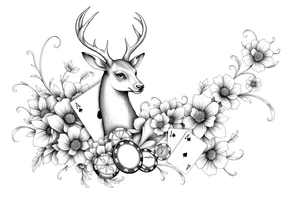
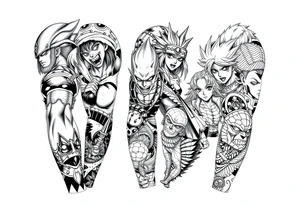
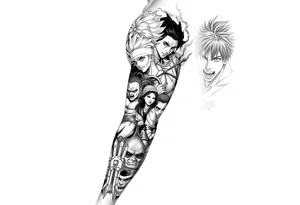
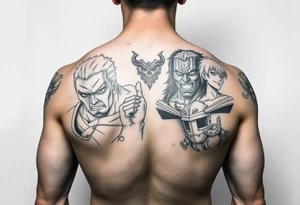
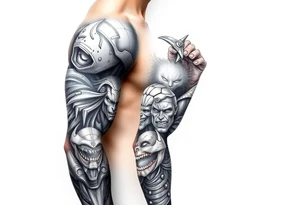
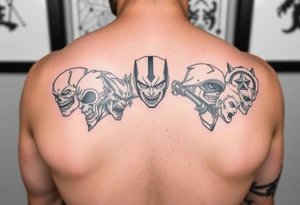
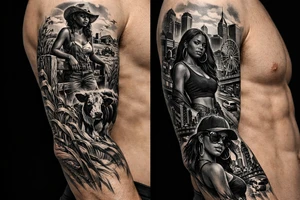
A sleeve is the biggest commitment in tattooing that isn't a bodysuit. It's also the most visible — short sleeves, gym, beach, handshakes. That combination is why the arm rewards planning more than any other placement. The arm isn't a flat canvas: it's a tapered cylinder that twists when you move, so a design has to read from the front, the side and the back without any one angle looking like an accident. Most sleeves that look effortless were mapped in zones first — outer bicep as the anchor, inner arm for softer or smaller work, forearm as the piece people actually see across a table. The 8,214 designs in this gallery span full sleeves, half sleeves from shoulder to elbow, and forearm-only builds, in everything from heavy black Japanese to fine-line geometry. Use them the way an artist would use reference: pull five that share a mood, notice what they have in common, and bring that to a consultation rather than a single image you want copied line for line. Below you will find a collection of sleeve tattoo design ideas for you to browse and get inspired by.

Join 9,635 happy customers.

Full, half or forearm — pick the shape before the subject

A full sleeve runs shoulder to wrist and needs a reason to hold together: a shared background, a repeated motif, a single palette. A half sleeve stopping at the elbow is the most forgiving option — it has a natural border, sits under most short sleeves when you want it to, and can be extended later if the arm stays coherent. Forearm-only work is the most visible and the most social; think about whether you want conversation about it daily. Whichever you choose, decide the outer edges early. Sleeves that end mid-bicep with no logic look unfinished in a way that's hard to fix without adding more.
Styles that hold up on the arm

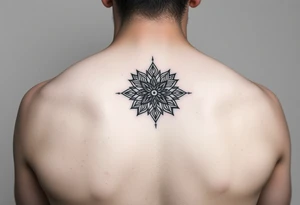
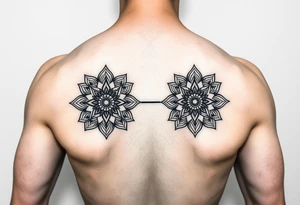
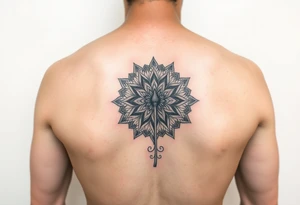
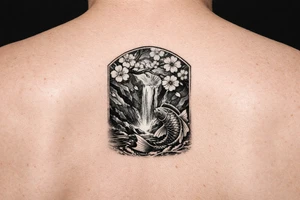
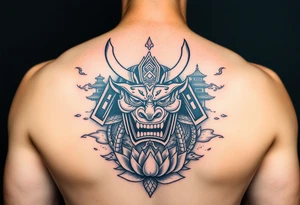
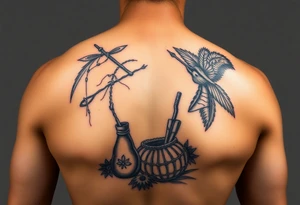
Japanese-influenced work was practically designed for the sleeve — dragons, koi, waves and wind bars wrap the cylinder naturally and the black background unifies everything. Blackwork and heavy ornamental patterns follow the arm's shape and stay legible for decades. American traditional works as a collection of bold, separate pieces with filler, which suits people who like adding over time. Realism and portraiture look incredible but need generous space and a skilled hand; single portraits on a bicep often read better than a whole arm of them. Fine-line geometry and script are popular and delicate — worth understanding that thin lines soften more than bold ones as skin ages.
Sessions, pain and the long game

Sleeves happen over multiple sittings, often months apart, and the inner arm and elbow ditch are generally reported as the more uncomfortable stretches while the outer bicep is easier for most people. Budget for the whole arm rather than the first session, and expect the design to evolve slightly as your artist works with your actual anatomy. Think about sun exposure — forearms take the most of it, and shade holds better when it's protected. If your work has a visible-ink policy, check it before the first needle rather than after. And sit with a mockup on your arm for a week; the ideas that survive that week are the ones worth keeping.

Sleeve tattoos — common questions

How long does a full sleeve take?

Most full sleeves are built across several sessions rather than one marathon, and each needs healing time before the next. Expect a project measured in months, sometimes longer if your artist books out far ahead. Half sleeves and forearm pieces take considerably less. Your artist will map a realistic schedule at consultation.

Can I combine different styles in one sleeve?

It can work, but it needs deliberate design rather than collecting unrelated pieces and hoping. Mixing styles succeeds when something unifies them — consistent line weight, a shared colour palette, or a background that ties zones together. Bring every reference to one artist and let them plan the whole arm before any of it is tattooed.

Should I start at the shoulder or the wrist?

Many artists start at the shoulder or outer bicep, where the largest anchor element usually sits, and work down. Starting at the forearm makes sense if that's the part you most want visible and you're unsure about going full. Either way, agree the overall composition first so early work doesn't limit later choices.