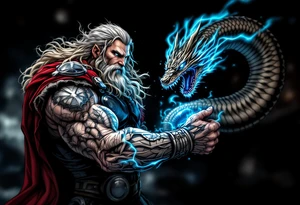
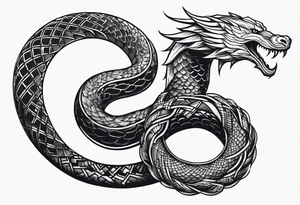
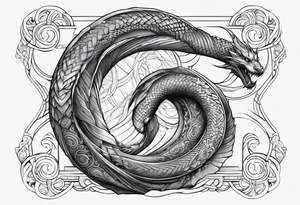
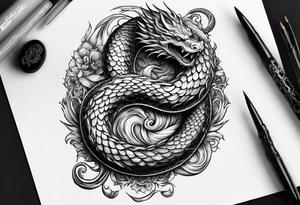
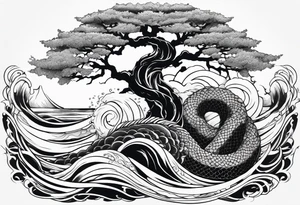
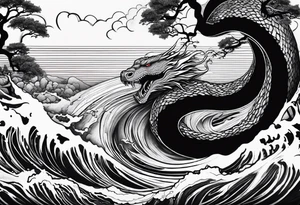
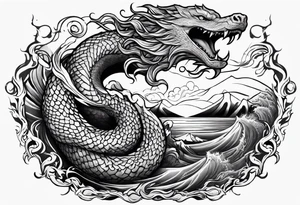
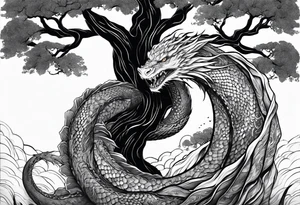
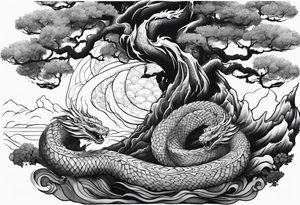
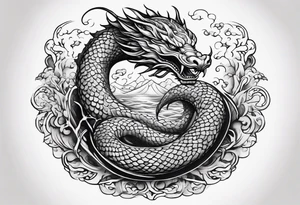
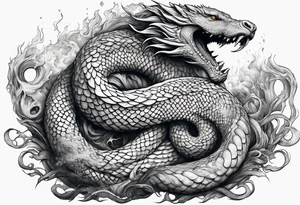
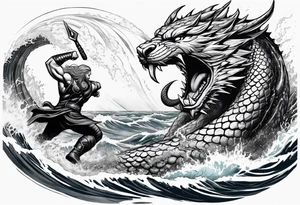
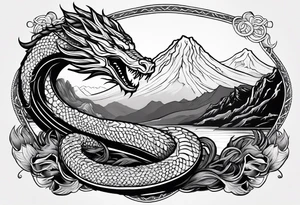
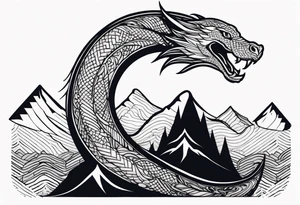
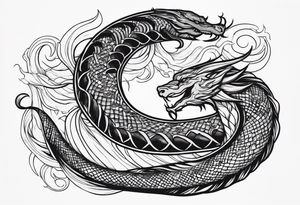
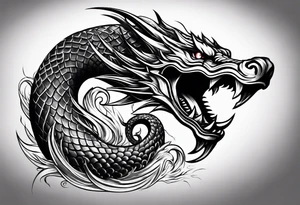
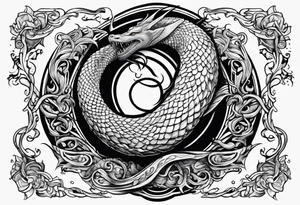
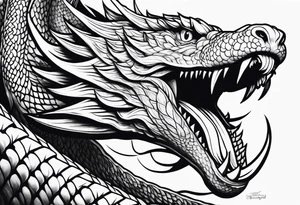
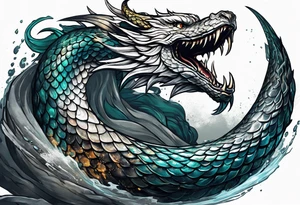
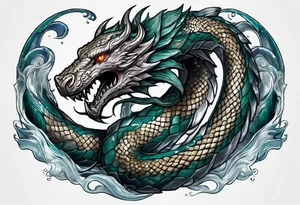
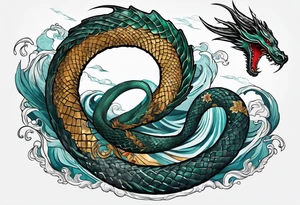
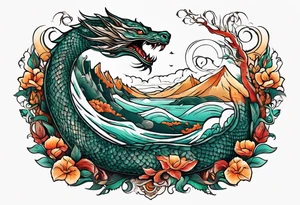
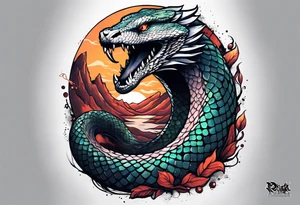
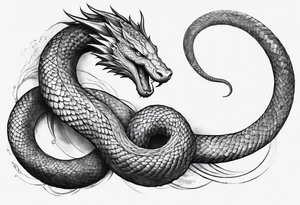
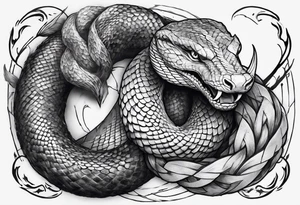
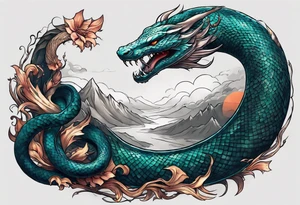
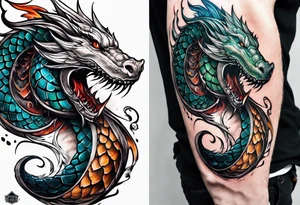
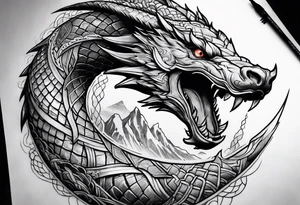
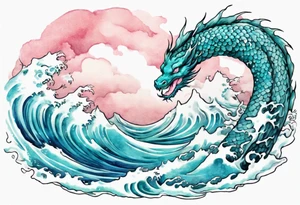
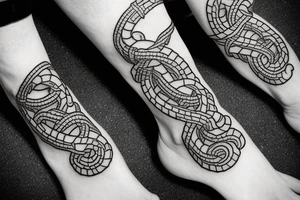
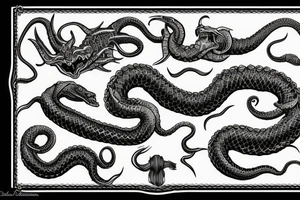
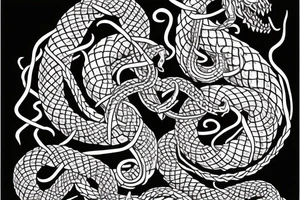
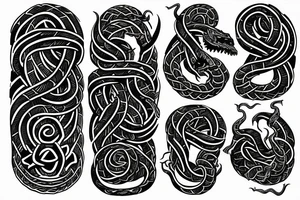
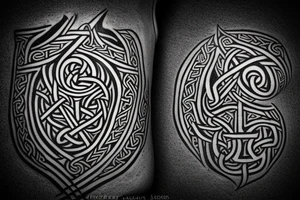
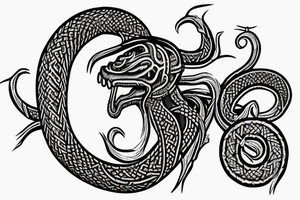
Jormungandr, also known as the Midgard Serpent or World Serpent, is a prominent figure in Norse mythology. A tattoo of Jormungandr can represent chaos or destruction due to its role in Ragnarok, the Norse apocalypse. It can symbolize the cyclical nature of life and the ever-present threat of destruction. Additionally, Jormungandr can be seen as a representation of boundaries, as it encircles the entire world in Norse mythology. This tattoo can be placed on the upper arm or forearm, symbolizing strength and protection, or on the back, representing the serpent's encompassing nature. Below you will find a collection of jormungandr tattoo design ideas for you to browse and get inspired by.

Join 9,635 happy customers.
Beyond chaos and destruction, Jormungandr carries a layered symbolism rooted in inevitability and fate. Cast into the ocean by Odin, the serpent grew so vast it circled the world and grasped its own tail — an image often linked to the ouroboros and the idea of endless cycles, self-containment, and the unity of beginnings and endings. For many wearers, it represents resilience in the face of things that cannot be controlled, or an acceptance of destiny. Its bond with Thor, who is fated to kill and be killed by it at Ragnarok, also makes it a symbol of a defining rivalry — two forces locked together, each incomplete without the other.
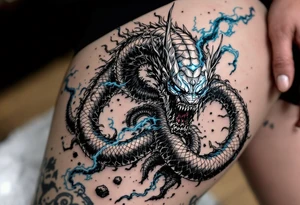
Jormungandr appears in the Norse mythological texts preserved in the Prose Edda and Poetic Edda, written down in Iceland in the 13th century from older oral tradition. He is one of the three monstrous children of Loki and the giantess Angrboda, alongside Fenrir the wolf and Hel. Encircling Midgard — the realm of humans — beneath the sea, he embodies the boundary between the known world and the unknown. In one famous tale, Thor tries to lift him disguised as a cat; in another, he fishes for him. Because these stories come from a specific pre-Christian Scandinavian worldview, the serpent is best understood within that heritage rather than treated as a generic mythical beast.
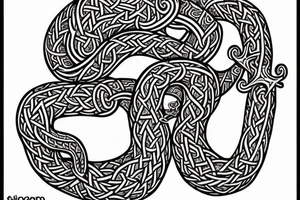
The most common design shows the serpent curled into a full circle, biting its own tail, which suits round placements like the shoulder cap, chest, or between the shoulder blades. Artists often blend the coils with knotwork inspired by Norse and Viking-age art, adding scales, waves, or runic detail. Styles range from bold blackwork and dotwork to fine-line and neo-traditional interpretations. Some pair the serpent with Thor's hammer, Yggdrasil, or ocean imagery to reinforce the cosmic scale. A long, sinuous body wrapping down the forearm or spine emphasises movement, while a tight coiled roundel leans into the eternal-cycle reading.
Norse mythology doesn't frame symbols as simple good or bad omens. Jormungandr represents both destruction and cosmic order, so its meaning depends on your intent. Most wearers choose it for resilience, fate, or the eternal cycle of life rather than any superstition about luck.
No. The tail-biting circle is popular because it echoes the ouroboros and the serpent encircling the world, but many designs show a long, coiling body instead. Choose the form that fits your placement and the meaning you want — the eternal cycle versus movement and strength.
Norse mythology is widely shared cultural heritage, and Jormungandr is not tied to a living restricted practice. It's generally fine to wear respectfully. The main caution is that some Norse imagery has been co-opted by extremist groups, so research symbols and pairings to avoid unintended associations.