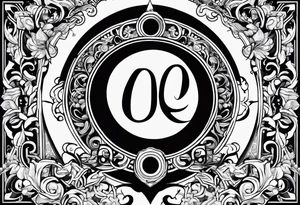
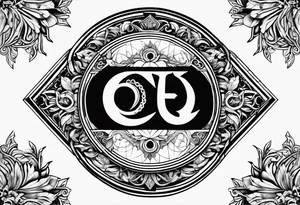
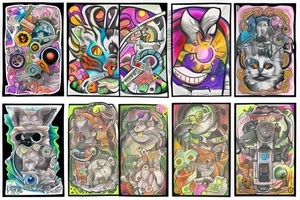
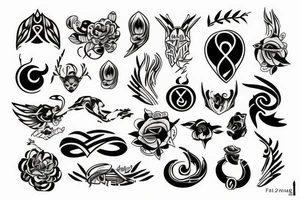
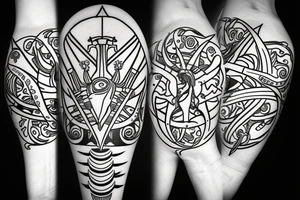
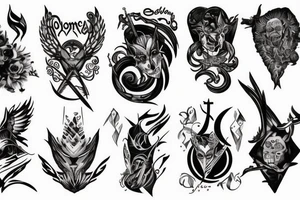
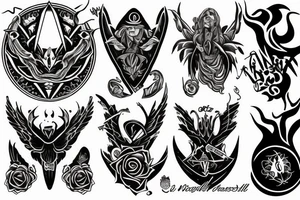
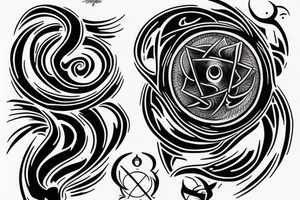
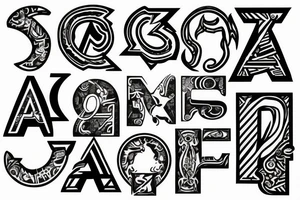
Omega Tattoo Ideas — 40+ designs

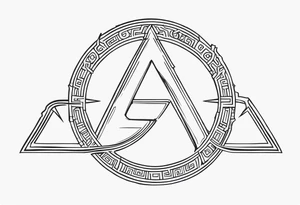
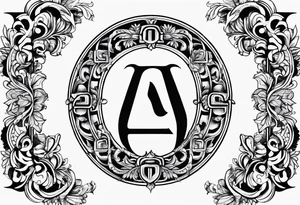
Omega tattoos symbolize the end or finality, as well as completion and wholeness. The omega symbol is the last letter of the Greek alphabet and is often used to represent the end of a cycle or the ultimate outcome. It can also signify the highest or ultimate level of something. Additionally, omega tattoos can represent balance and harmony, as the omega symbol resembles a balancing scale. They can also be seen as a symbol of strength and resilience, as reaching the end or finality can require perseverance and determination. Suitable locations for omega tattoos include the wrist, symbolizing the completion of a journey or cycle, or the back, representing the balance and harmony in one's life. Below you will find a collection of omega tattoo design ideas for you to browse and get inspired by.

Join 9,635 happy customers.

Deeper Meanings Behind the Omega

Beyond finality, omega carries layered meanings that often pair with its counterpart, alpha. In Christian tradition, "I am the Alpha and the Omega" (Revelation) frames God as beginning and end, so many wear omega alongside alpha to express faith in something eternal. Others read it more personally: closing a chapter, surviving grief, or marking the last stage of a hard transformation. In science and mathematics, omega denotes ohms, angular frequency, or the last term in a series — meanings some choose to honour a field of study. Because the symbol reads so many ways, its message depends heavily on what you place around it and where.
Where the Symbol Comes From

Omega (Ω uppercase, ω lowercase) is the twenty-fourth and final letter of the Greek alphabet, its name meaning "great O" to distinguish it from omicron, the "little O." Because it closes the alphabet, Greek speakers used it figuratively for endings long before it reached modern tattooing. Its pairing with alpha as a "first and last" merism appears in early Christian texts and later Christian art, which is why the two letters are so often shown together. The lowercase ω also lives in physics and engineering notation, giving the same shape a very different, technical significance depending on context.

How It's Usually Rendered and What to Consider

Omega tattoos range from a clean uppercase Ω in bold blackwork to the flowing lowercase ω, which some find softer and more organic. Common treatments include fine-line minimalism, ornamental framing, integration into a bracelet or ring around the wrist, or combination with an alpha symbol, a cross, or dates. Before committing, decide which meaning you want read: paired with alpha it signals faith or totality, while alone it leans toward endings and completion. The symbol is small and simple, so placement and surrounding elements do most of the storytelling. Confirm the exact glyph with your artist, since uppercase and lowercase forms send different signals.

Omega tattoos — common questions

What is the difference between an alpha and omega tattoo?

Alpha is the first Greek letter and omega the last, so together they mean "beginning and end" or totality. In Christian use this references God as eternal. Worn alone, omega tends to emphasise endings, completion, or the final stage of something rather than the full span.

Is the omega tattoo religious?

It can be, but it isn't inherently. The alpha-and-omega pairing has strong Christian associations from the Book of Revelation. On its own, omega is just as often chosen for secular meanings like closure, resilience, or scientific and mathematical significance. Its message depends on how you present it.


Should I get the uppercase or lowercase omega?

Uppercase Ω is bold and symmetrical, reading clearly as a symbol and pairing well with alpha. Lowercase ω is curvier and more subtle, often used for minimalist or decorative designs. Choose based on the look you want, and confirm the exact glyph with your artist beforehand.