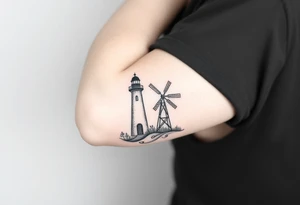
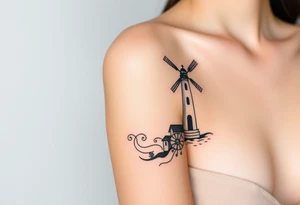
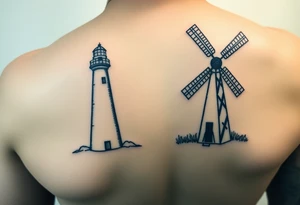
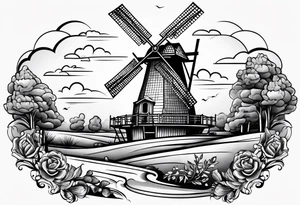
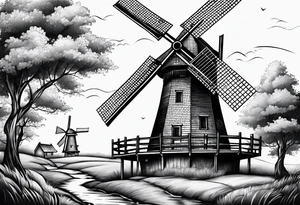
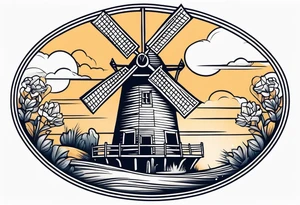
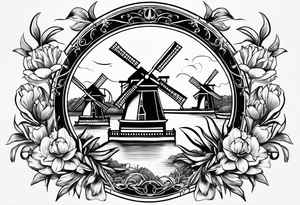
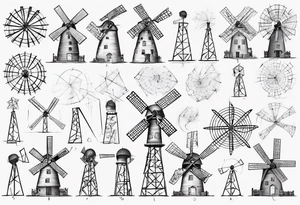
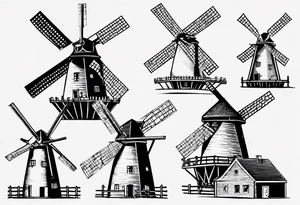
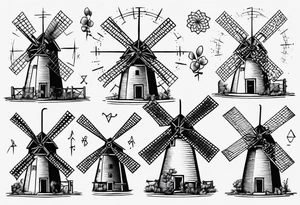
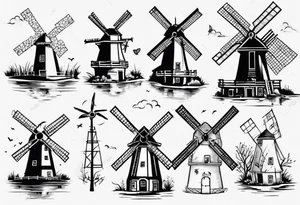
Windmill Tattoo Ideas — 40+ designs

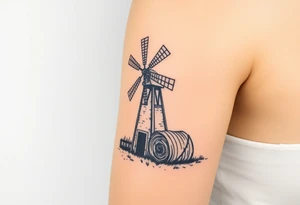
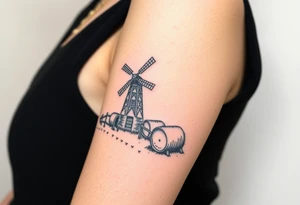
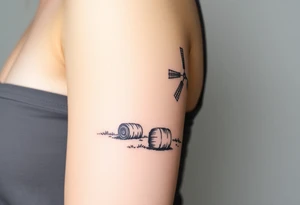
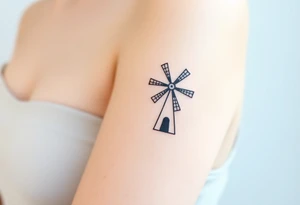
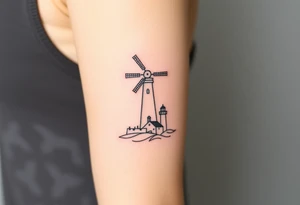
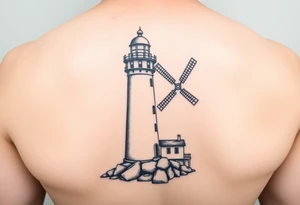
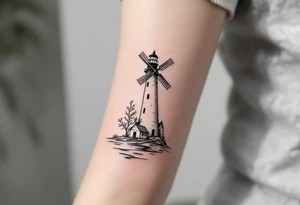
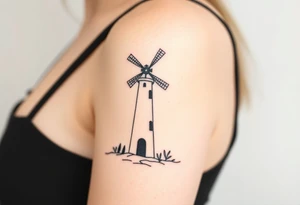
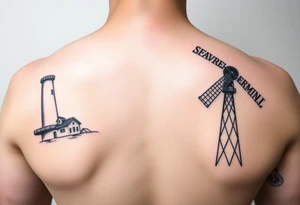
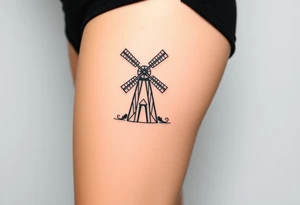
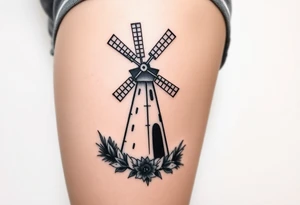
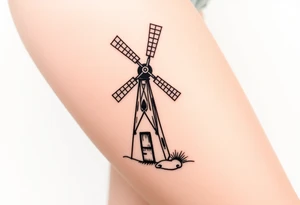
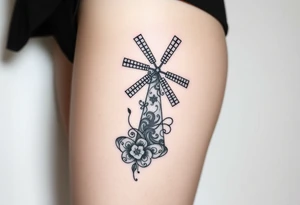
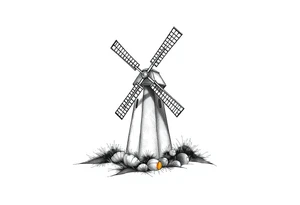
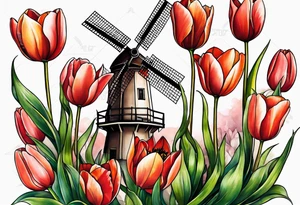
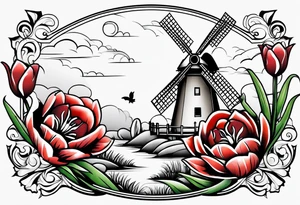
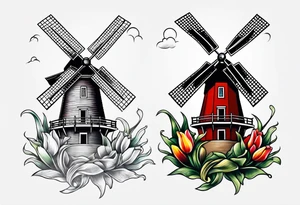
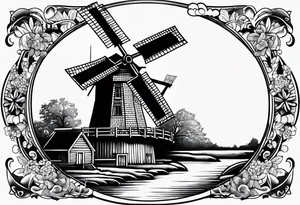
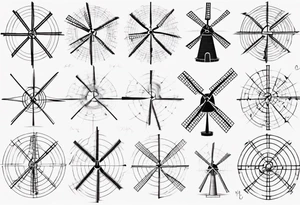
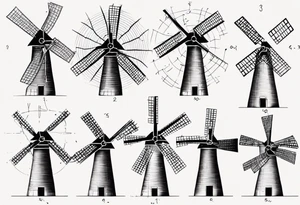
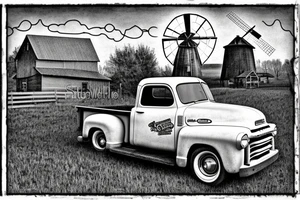
Windmill tattoos often symbolize sustainability and renewable energy, reflecting the importance of taking care of the environment. They can also represent progress and innovation, as windmills harness the power of the wind to generate energy. Additionally, windmills can signify simplicity and a connection to nature, as they were historically used to grind grains and pump water. This tattoo can be placed on the arm, representing strength and movement, or on the back, symbolizing a sense of direction and forward motion. Below you will find a collection of windmill tattoo design ideas for you to browse and get inspired by.

Join 9,635 happy customers.

Deeper Layers of Meaning

Beyond sustainability, a windmill can carry personal weight. Because it only turns when the wind blows, it often symbolizes adaptability — making use of forces you cannot control rather than fighting them. Some wear it to mark endurance, since traditional mills stood for generations against the elements. Others connect it to heritage, especially those with Dutch or rural farming roots, where the windmill is a marker of home and belonging. For fans of Cervantes' Don Quixote, tilting at windmills represents chasing idealistic or impossible battles. The same design can read as calm resilience, restless motion, or nostalgic longing depending on what you bring to it.

Where the Symbol Comes From

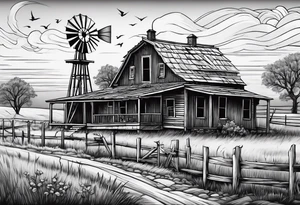
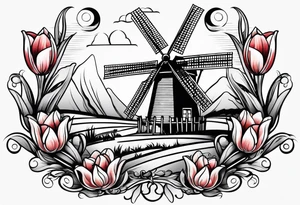
Wind-powered mills appear across many cultures, from the Persian panemone mills of the medieval Middle East to the towering post mills of northern Europe. The Netherlands made the windmill an enduring national emblem, using them to drain water and reclaim land from the sea — which is why the image carries such strong associations with human ingenuity working alongside nature. In North America, the smaller metal farm windmill became a fixture of prairie life, pumping water for isolated homesteads. Modern wind turbines borrow the same silhouette and lend the motif its contemporary link to clean energy, layering old and new meanings onto one recognizable shape.
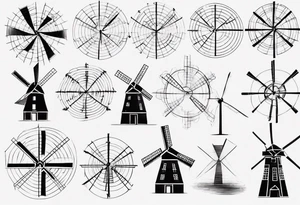
How Windmill Tattoos Are Usually Rendered

Styles range widely. Fine-line and single-needle work suits the delicate spokes and lattice of a classic mill, while bold traditional or neo-traditional versions thicken the outlines and add color. Silhouette designs against a sunset or moon are popular for a quieter, scenic feel, and full landscape pieces set the mill among fields, water, or clouds. Watercolor treatments emphasize movement in the sails. Because the structure is detailed, small tattoos can lose clarity as lines blur over time — a common consideration with any intricate design. Larger placements like the back, thigh, or forearm give the sails and framework room to stay legible.

Windmill tattoos — common questions

Does a windmill tattoo have a religious meaning?

Not inherently. The windmill is primarily a cultural and practical symbol rather than a religious one. That said, some people pair it with themes of provision, harvest, or gratitude drawn from farming life. Any spiritual meaning is personal, so it varies entirely with the wearer's own intention and background.

Is a windmill tattoo specifically Dutch?

It can be, but it isn't only Dutch. The Netherlands has the strongest cultural association, so many choose it to honor Dutch heritage. However, windmills existed across the Middle East, Europe, and rural America, and modern turbines give it a broader environmental meaning that isn't tied to any single nationality.

What should I think about before getting one?

Decide which meaning matters to you — sustainability, heritage, resilience, or scenery — since it shapes the style. Consider size carefully, as the fine lattice detail needs room to age well. Think about whether you want a realistic landscape or a simpler silhouette, and discuss line spacing with your artist.