TattoosAI
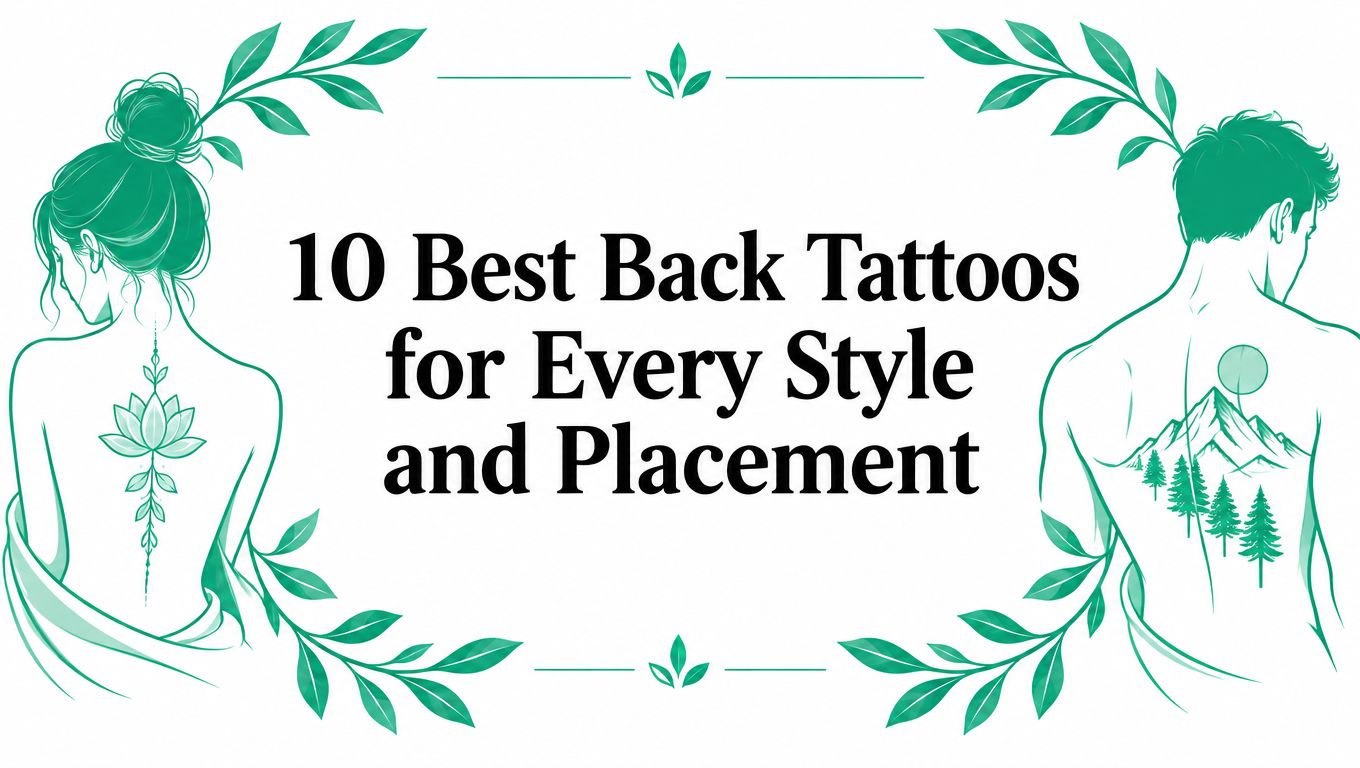
The back is one of tattooing's most versatile canvases because it can hold both a sweeping mural and a precise vertical line without losing impact. That matters in a market that's still expanding, with tattoo revenue projected from USD 2.43 billion in 2025 to USD 5.99 billion by 2034 in one neutral report, and from about USD 3.59 billion in 2025 to USD 6.11 billion by 2033 in another, which points to steady demand for premium, high-skill work like back pieces. The strongest choice still depends on meaning, scale, pain tolerance, long-term commitment, and how often you want it visible.
The easiest way to think about the best back tattoos is simple, choose the story, the placement, the style, and the size before you lock in the motif. That lets you compare a full-back composition, an upper-back symbol, or a centered spine piece on the same practical terms, not just on looks. TattoosAI can help you generate and compare concept directions in minimalist, dotwork, Japanese, watercolor, geometric, 3D, and blackwork before you bring a tighter brief to a tattooist.
Table of Contents
- 1. Full Back Piece Backpiece Mural
- 2. Japanese Back Tattoo or Irezumi Back Piece
- 3. Angel Wings Back Tattoo
- 4. Dragon Back Tattoo
- 5. Spine Tattoo or Vertical Line Design
- 6. Phoenix Rising Back Tattoo
- 7. Religious or Spiritual Back Tattoo
- 8. Landscape or Nature Back Tattoo
- 9. Quote or Script Back Tattoo
- 10. Geometric or Mandala Back Tattoo
- Top 10 Back Tattoo Styles Comparison
- Turn Inspiration Into a Tattooist-Ready Brief
1. Full Back Piece Backpiece Mural
A full back piece is the most complete way to use the back as a single canvas. It gives you room for a narrative scene, layered symbolism, or a composition that feels like one large artwork instead of a collection of separate tattoos. That's why it works so well for mythological battles, mountain panoramas, sacred imagery, or abstract blends that need breathing room.
Compare full-back composition ideas before you book with the image below if you want to see how scale changes the feel of a design.
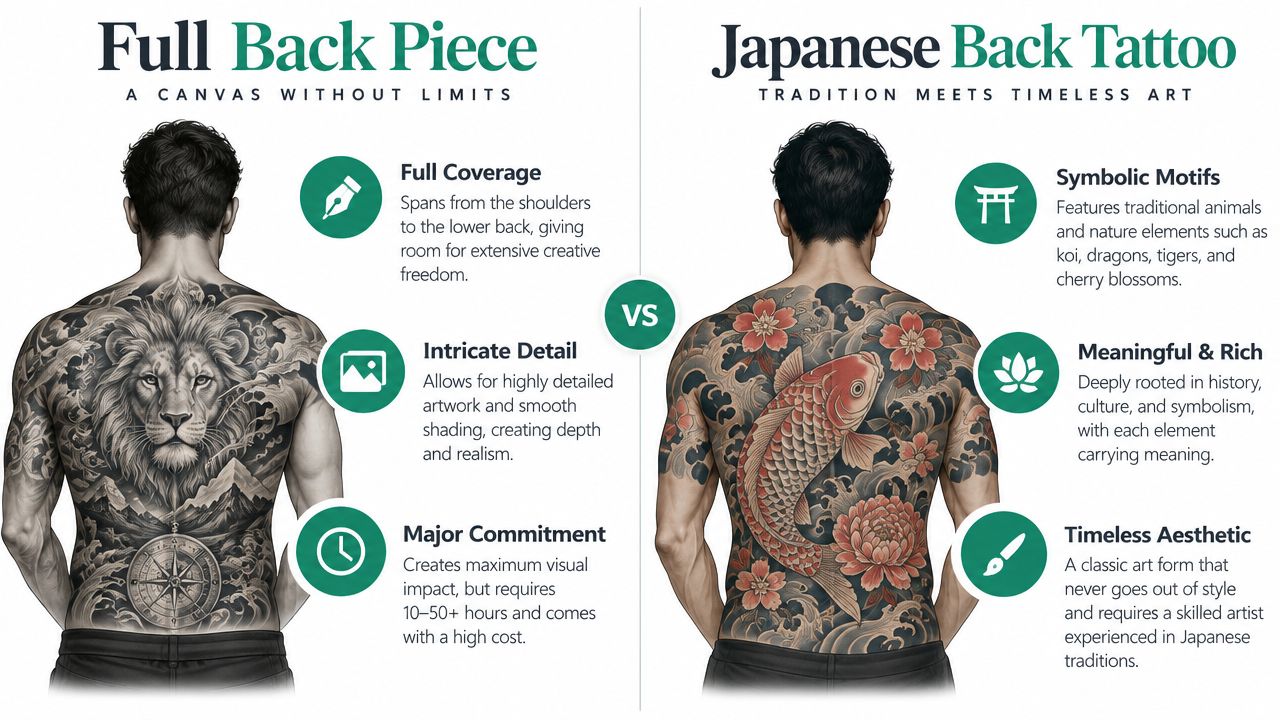
A full-back design also demands real planning. The back is one of the body's best places for multi-session work, and historical back tattooing traditions often treat the surface as a long-form project rather than a one-day appointment, which fits the wider market's move toward premium custom work. Think in layers, foreground, middle ground, and background, so your artist can keep the image readable from a distance and detailed up close.
Practical rule: if the design can't be described in one sentence, it probably needs a full-back layout, not a smaller placement.
A good artist brief for this style should mention the central subject, the emotional tone, the level of realism, and where the design should taper near the neck and lower back. If you're still choosing direction, generate several versions with different balances of blackwork, watercolor, or realism, then bring the strongest two or three references to consultation.
2. Japanese Back Tattoo or Irezumi Back Piece
Japanese back tattoos have a strong reputation because the back gives traditional imagery enough space to flow naturally. Dragons, koi, phoenixes, cherry blossoms, waves, and clouds all benefit from the back's width and symmetry, especially when the composition needs negative space to breathe. In Japanese irezumi, the back often reads like a single visual field rather than a cluster of separate motifs.
Explore Japanese style variations before you settle on a creature, seasonal motif, or background structure. If you want a related cultural reference point, the meanings of Japanese good luck symbols can help you think more carefully about symbolism.
The best Japanese back pieces usually balance movement and restraint. A dragon can curve around the spine, while koi can swim upward through water without crowding the shoulder blades. Leaving deliberate space matters, because the empty areas help the large elements feel grounded instead of overloaded.
If you're briefing an artist, name the creature, the setting, the mood, and whether you want a traditional or more modern reading of the style. A dragon with clouds will ask for a different flow than a phoenix with waves, and the placement should reflect that. For anyone who wants something culturally rooted and visually disciplined, this is one of the strongest answers to best back tattoos because it connects meaning, structure, and body flow.
3. Angel Wings Back Tattoo
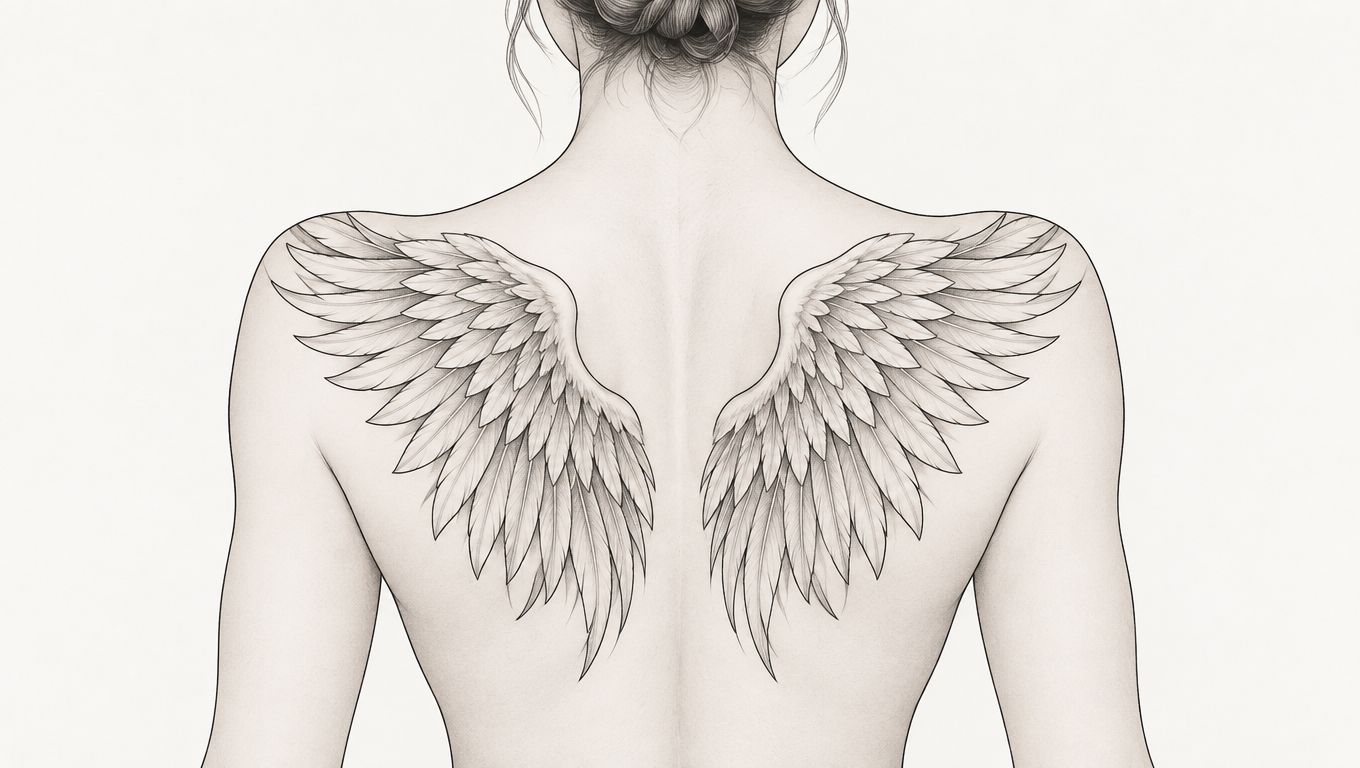
Angel wings work because they use the shoulder blades as a natural frame. That makes the design feel attached to the body instead of floating on top of it, which is why this placement keeps showing up in large back tattoo galleries. The visual effect can be soft and spiritual, or bold and dramatic, depending on whether you choose realism, blackwork, geometric lines, or watercolor shading.
Make the wings match your body line
The biggest mistake with wing tattoos is treating both sides as identical stickers. The shape should respond to shoulder width, the curve of the upper back, and how much of the lower back you want to leave open. A realistic wing with layered feathers reads differently from a silhouette with hard edges, so your choice of style changes how much detail the artist can safely pack in.
Use this design if you want symbolism without a crowded center point. It can stand alone, or it can support a name, date, halo, or small central object between the wings. That makes it adaptable for memorial pieces, faith-based artwork, or a dramatic visual statement.
A useful brief is direct: specify feather density, whether the wings should open upward or sit flatter across the back, and whether you want white highlights, black and grey shading, or color accents. If symmetry matters to you, ask for a placement preview before the outline goes on skin.
4. Dragon Back Tattoo
A dragon is one of the strongest back tattoo concepts because the body of the creature can follow the spine and spread across both shoulder blades at the same time. That gives the artist room to create motion, scale, and tension, which is hard to achieve on smaller placements. It also works in both Eastern and Western traditions, so the same broad idea can become very different tattoos.
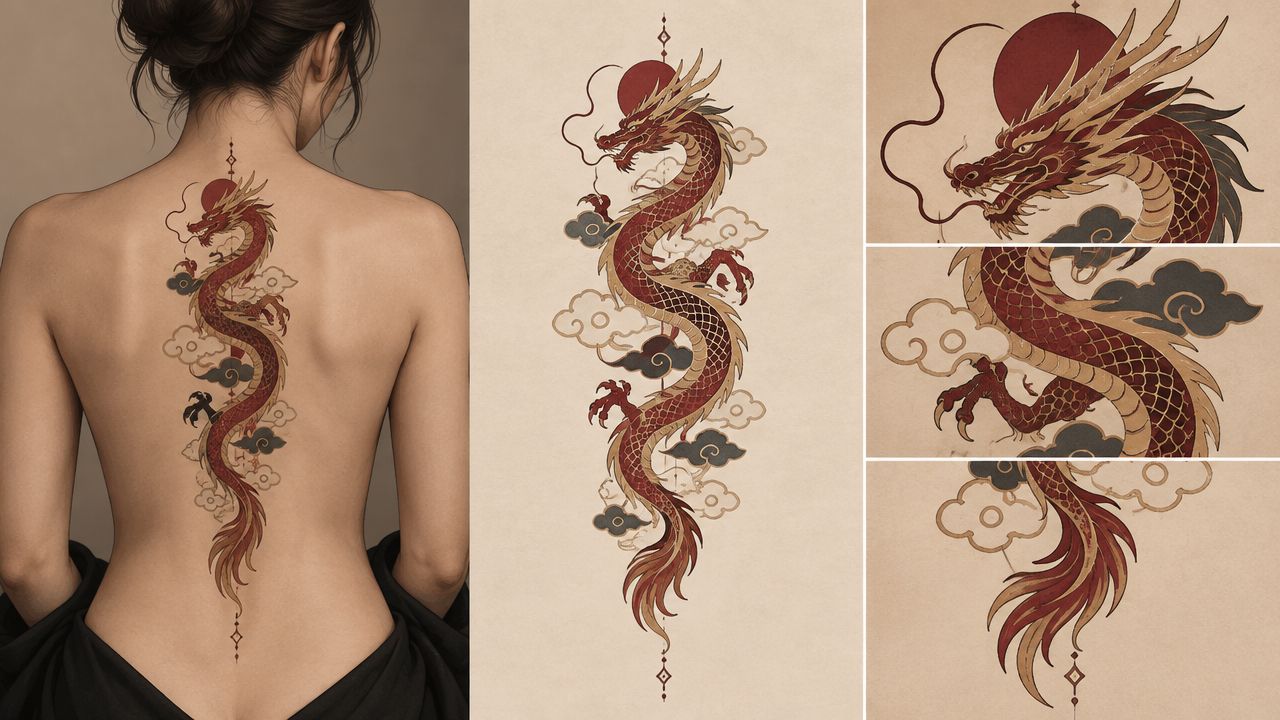
An Asian dragon usually benefits from flowing lines, cloud forms, or water movement. A Western dragon can feel heavier, with wings, fire, and sharper anatomy. Both can work well, but the placement changes the story, a coiled dragon creates containment, while a stretched dragon creates dominance and reach.
Size and pose matter more than the species
A dragon can look elegant on the back, but only if the pose matches the available space. If the head is too high or the tail too low, the design can start fighting the body instead of following it. That's why the spine, shoulder blades, and lower back should all be considered together before the sketch is finalized.
For a strong brief, describe the dragon's orientation, the surrounding elements, and how aggressive or restrained you want the pose to feel. A fire-breathing dragon suggests a different balance than a dragon emerging from clouds or waves. If you want the image to stay readable under clothing, ask the artist how much of the design will still show through open-back tops or low-cut shirts.
5. Spine Tattoo or Vertical Line Design
A spine tattoo is the most direct way to use the back as a vertical line rather than a broad field. It creates a clean center axis and can make the back look longer and more elegant. That's why it suits quotes, celestial chains, floral vines, dotwork sequences, and small symbolic marks spaced along the vertebrae.
Because the spine is one of the more sensitive areas, placement should be chosen carefully. Guidance based on a 1,092-person survey summarized in evidence-based tattoo advice reported average pain of 4.35/10 during tattooing and 2.07/10 immediately after, and that same guidance classifies the spine and shoulder blades as more sensitive while the upper back and mid-back are relatively easier locations. For a spine tattoo, that means the art should be spaced with intention and not overloaded with dense detail.
The best spine pieces look centered from standing height and from photo angle, not just on the stencil paper.
A quote down the spine needs exact word choice and spacing. A celestial line works better when the moon phases or stars are arranged with rhythm rather than packed tightly together. If you're using botanical forms, a vine or feather chain can soften the vertical line while still keeping the composition clean.
This is the placement to choose when the message matters as much as the image. It often reads as more private than a full-back mural, but it still feels deliberate and striking when the line is well centered. Ask your artist to mark the alignment twice, then check how it sits when you stand naturally instead of only when you're lying down.
6. Phoenix Rising Back Tattoo
A phoenix works beautifully on the back because the wings can spread across the upper back while the body rises through the middle. That creates a clear sense of ascent, which is why the motif is so often tied to transformation, recovery, and a new chapter. It can be rendered in bright color, black and grey, watercolor, or geometric interpretation.
The shape itself gives you options. Wings lifted upward can suggest momentum, while wings held level can feel balanced and grounded. A more realistic phoenix will lean on feather texture and fire detail, while a stylized version can focus on motion lines and strong silhouette.
Build the story around the turning point
A phoenix tattoo usually means something personal, so the brief should include the transformation, not just the bird. That can be a recovery period, a major move, a career change, or a personal reset. The artist doesn't need your whole life story, but they do need enough context to make the image feel specific instead of generic.
If you're deciding on colors, warm tones create a classic rebirth feeling, while cooler purples or mixed palettes can give the piece a more modern edge. Ask for a design that shows where the flames end and where the bird begins, because that transition is what gives the tattoo its emotional arc. For many people, this becomes one of the best back tattoos because the placement itself mirrors the idea of rising into view.
7. Religious or Spiritual Back Tattoo
Religious and spiritual back tattoos can carry deep personal meaning because the back offers enough space for reverent detail. Crosses, saints, mandalas, chakras, Bodhi-inspired imagery, guardian figures, and deity representations all benefit from a larger canvas. The key is to treat the symbol with care, not just with decoration.
This style works best when the imagery matches the person's tradition and intent. A mandala with chakra elements has a different visual and spiritual logic than a Christian figure with light rays or a Buddhist design with lotus forms. That means the artist brief should define the tradition first, then the artistic treatment second.
Sacred imagery needs more than visual balance, it needs respect for the symbols being used.
The back is especially useful for pieces that need ornate framing or layered detail. A central figure can sit between the shoulder blades, while supporting elements fall outward or downward without feeling cramped. If you're working with a faith-specific image, it can help to consult someone who understands the tradition so the final composition feels appropriate, not generic.
You should also think about clothing visibility. A religious back tattoo may be meaningful to keep mostly private, or you may want it to appear clearly in open-back clothing. That choice affects placement, size, and how much detail belongs near the neck versus the lower back. When done carefully, this placement combines personal conviction with strong visual structure.
8. Landscape or Nature Back Tattoo
Scenic back tattoos turn the back into a scene you can wear. Mountains, forests, oceans, deserts, sunsets, and starry skies all work well because the broad surface lets the eye travel across the whole composition. The result can feel calm, expansive, or intensely personal, depending on the place you choose.
This is one of the most flexible options for people who want something meaningful without a literal symbol. A mountain range can represent resilience, a forest can suggest quiet and growth, and an ocean scene can give the back movement and depth. Black and grey works especially well if you want the tattoo to age into a softer, more atmospheric look.
Choose a place, not just a theme
A design gains strength when it's tied to a real memory or place you'd return to. That could be a coastline from a childhood trip, a hiking view you never forgot, or a wilderness scene that matches your idea of home. The more concrete the reference, the easier it is for the artist to build depth and horizon lines that feel believable.
Ask your artist how the foreground and background will sit on your body. Trees, peaks, waves, and stars all behave differently across the curvature of the back, so scale matters. If you want a tattoo that shows well under open clothing, make sure the top portion has enough structure to stand alone when only part of the piece is visible.
9. Quote or Script Back Tattoo
Script tattoos on the back work best when the wording actually deserves the space. A short phrase can sit down the spine, while a longer quote or poetic line can stretch between the shoulder blades or curve across the upper back. The placement changes the emotional tone, vertical text feels intimate, while wider text feels more declarative.
This is the easiest design to get wrong if you rush the setup. Spelling, spacing, line weight, and font choice all matter, and the back gives you enough room to notice when one of those details is off. If the quote is long, you need to think about how it reads in motion, while standing, and in photos.
If the words matter, proof them like a document, not like a caption.
A good brief should include the exact text, the preferred script style, and whether you want decorative flourishes around the letters. You should also decide whether the tattoo should be centered or intentionally off-center, because both choices create a different visual rhythm. This placement is strong when the words are personal, durable, and short enough to keep their shape over time.
People often choose script for memorials, family mottos, or phrases that mark a change in mindset. It works best when the text feels like a commitment instead of a slogan. If you're comparing options, ask for a plain version and a more ornate version, then see which one still feels clear when reduced to body scale.
10. Geometric or Mandala Back Tattoo
Geometric and mandala back tattoos are built for symmetry, and the back is one of the best places to show that off. The center line gives the artist a natural axis, while the shoulder blades and lower back provide space for repeated pattern, negative space, and precise balance. That's why these tattoos can feel both spiritual and architectural.
A mandala centered on the spine can create a strong focal point without needing a figurative subject. Sacred geometry, interlocking shapes, and dotwork all work well here because they rely on structure rather than narrative. If you want something meditative and visually disciplined, this is one of the strongest back concepts.
Precision is the design, not just the technique
Geometric work depends on accuracy, and the back can expose even small alignment issues. That makes the artist's experience more important than the motif itself. Ask about template use, symmetry checks, and how they handle central placement across the shoulder blades and spine.
This style also gives you flexibility on scale. A small central mandala can sit between the blades, or the pattern can expand outward into a full-back field. If you want it to feel less ornate, ask for more negative space. If you want it to feel denser, ask how the pattern will wrap without losing clarity.
For clothing visibility, geometric work is especially good because it can peek through open-back tops without needing to show the full piece to make an impression. It's a strong choice for people who want something orderly, contemporary, and easy to adapt later if the design grows into a larger composition.
Top 10 Back Tattoo Styles Comparison
| Design | Implementation Complexity (🔄) | Resource & Time (⚡) | Expected Outcomes (📊) | Ideal Use Cases (💡) | Key Advantages (⭐) |
|---|---|---|---|---|---|
| Full Back Piece / Backpiece Mural | 🔄 Very high, complex composition, multi‑session planning | ⚡ 10–50+ hrs; high cost; multiple sessions | 📊 Maximum visual impact; cohesive narrative; excellent detail retention | 💡 Committed collectors wanting a major statement piece | ⭐ Large canvas for intricate detail; highly customizable; prestigious |
| Japanese Back Tattoo / Irezumi Back Piece | 🔄 High, follows traditional rules and composition; cultural sensitivity required | ⚡ 20–40+ hrs; requires artist experienced in irezumi; moderate–high cost | 📊 Deep cultural meaning; timeless aesthetic; strong symbolic resonance | 💡 Clients valuing cultural heritage and symbolic narratives | ⭐ Rich symbolism; flowing compositions; respected tradition |
| Angel Wings Back Tattoo | 🔄 Moderate, symmetry and feather shading important | ⚡ 5–20 hrs; cost varies with detail | 📊 Instantly recognizable; aesthetically pleasing; spiritual connotations | 💡 First large tattoo seekers; those wanting spiritual/protective symbolism | ⭐ Versatile across styles; easily personalized; universally appealing |
| Dragon Back Tattoo | 🔄 High, anatomical flow, scale texture, and dynamic pose | ⚡ 20–40+ hrs; skilled artist; high cost | 📊 Bold, dramatic visual; mythological power and presence | 💡 Clients seeking powerful, mythic imagery with high impact | ⭐ Striking composition; strong cultural symbolism; versatile styles |
| Spine Tattoo / Vertical Line Design | 🔄 Moderate–high, precision and centering critical | ⚡ 1–10+ hrs; lower coverage but high precision; high pain | 📊 Elegant, intimate look; elongates torso; strong personal significance | 💡 Minimalist or intimate designs, quotes, or symbolic chains | ⭐ Clean, refined aesthetic; ideal for text/symbol sequences; discreet |
| Phoenix Rising Back Tattoo | 🔄 High, complex feather/color work and dynamic flow | ⚡ 15–35+ hrs; color work may need touch‑ups; high cost | 📊 Dramatic, symbolic of rebirth and transformation; visually dynamic | 💡 People marking major life changes or personal renewal | ⭐ Powerful narrative symbolism; excels in color; versatile styles |
| Religious or Spiritual Back Tattoo | 🔄 Variable, depends on iconography complexity and cultural context | ⚡ 5–40+ hrs; artist sensitive to religious significance; variable cost | 📊 Deeply personal; expresses faith and spiritual identity; community resonance | 💡 Devout clients seeking to display spiritual commitment | ⭐ Profound meaning; can be highly detailed; culturally rooted |
| Landscape or Nature Back Tattoo | 🔄 High, requires depth, perspective, and smooth gradients | ⚡ 10–30+ hrs; photorealism/watercolor needs experienced artist | 📊 Immersive, serene visuals; strong personal place connection | 💡 Nature lovers wanting expansive, meaningful scenes | ⭐ Photorealistic depth; calming aesthetic; highly customizable |
| Quote or Script Back Tattoo | 🔄 Low–moderate, typography precision essential (spacing/weight) | ⚡ 1–8+ hrs; lower cost but requires thorough proofing | 📊 Highly personal; clear message; daily reminder | 💡 Clients memorializing phrases, mantras, names, or dates | ⭐ Direct personal expression; elegant; faster to execute than full pieces |
| Geometric or Mandala Back Tattoo | 🔄 High, perfect symmetry and mathematical precision required | ⚡ 10–30+ hrs; skilled artist; may be costly due to precision | 📊 Striking modern aesthetic; meditative and symbolic impact | 💡 Clients seeking symmetry, sacred geometry, or meditative designs | ⭐ Visually arresting; strong negative‑space use; timeless precision |
Turn Inspiration Into a Tattooist-Ready Brief
The fastest way to narrow the best back tattoos for your body is to shortlist the concept that fits the intended placement first, then refine the visual language. Decide whether the design should be full-back, upper-back, or spine-centered, because that one choice changes how much story, detail, and symmetry the piece can hold. After that, define the rough scale and the style, then identify the one personal detail that keeps a familiar motif from looking generic.
If you're stuck between two directions, generate several concept versions and compare them side by side. TattoosAI is useful here because it lets you explore different style treatments quickly, so you can test whether a dragon feels better in blackwork, a phoenix feels better in watercolor, or a mandala needs more negative space before you commit to ink. Bring the strongest references and a clear written prompt to an artist who already works in that style.
Review the final idea through a practical lens before you book. Check symmetry, readability, body flow, clothing visibility, session commitment, and long-term meaning. A back tattoo is large enough to become part of how you present yourself, so the design should still make sense when you're standing, sitting, healing, and living with it for years.
If you're ready to turn a rough idea into a clear back tattoo concept, TattoosAI can help you generate and compare directions before your studio visit. Use it to test style, placement, and composition so you can bring your tattooist a brief that's specific, visual, and easier to refine.