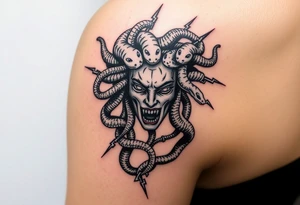
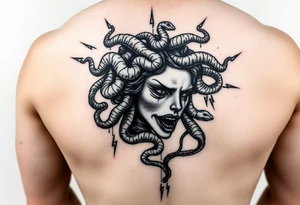
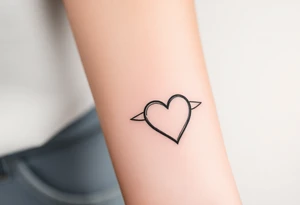
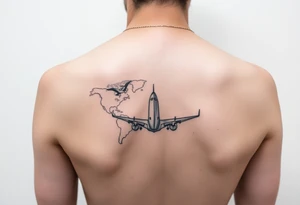
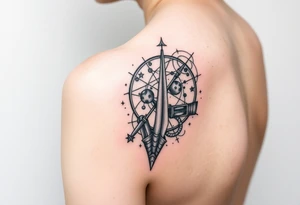
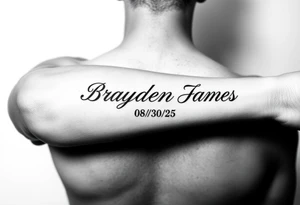
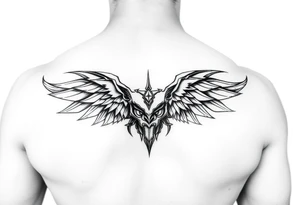
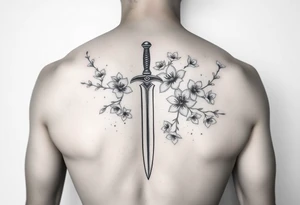
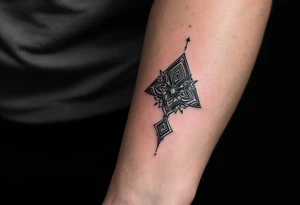
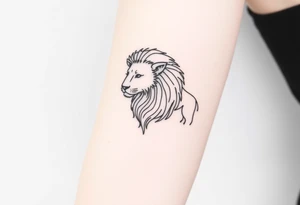
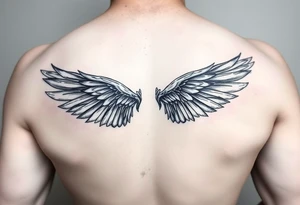
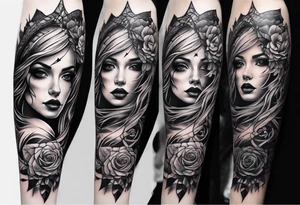
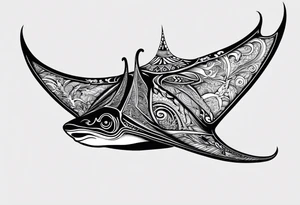
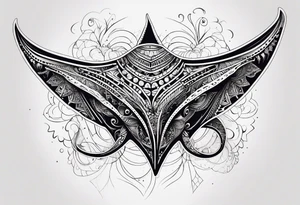
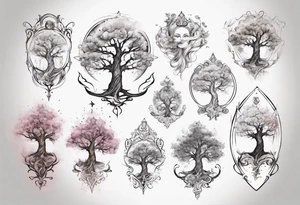
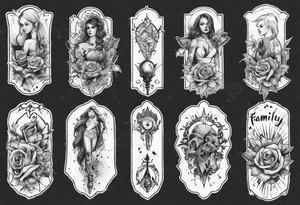
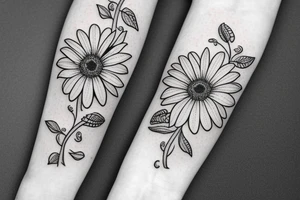
The inner forearm is the more intimate choice — visible when you turn your palm up, hidden when you don't. Skin here is softer and thinner, so it tends to sit among the more sensitive spots on the arm, and very fine detail can soften slightly over time. It suits script, small florals, and delicate line work. The outer forearm is firmer and takes bold outlines, blackwork and heavier shading exceptionally well. It's also more consistently on display, which matters if you work somewhere with a dress code. Many women start on the inner arm for a first tattoo, then move outward as they build.
The forearm is roughly a long, tapering rectangle, and designs that respect that shape age best visually. Vertical compositions — a snake winding wrist to elbow, a single stem of wildflowers, a column of text — use the space naturally. Horizontal bands work too, but keep them narrow so they don't fight the limb's shape. For small pieces, remember that the forearm reads as a wide, open field: a tiny design can look lost unless it's placed deliberately, often just below the elbow crease or a few inches above the wrist. Anything smaller than a couple of inches benefits from simple, confident lines rather than micro detail.
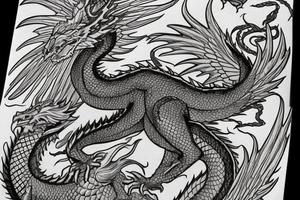
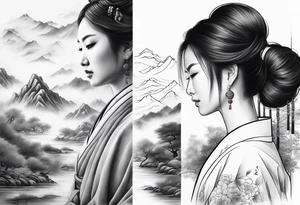
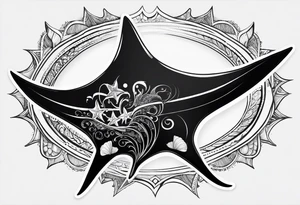
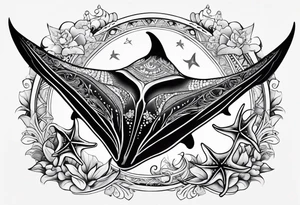
Fine line and single-needle work is the most requested look for women's forearms, especially botanicals, birds and minimal script — it's elegant at close range and doesn't overwhelm a slim arm. Illustrative black and grey handles portraits, animals and celestial themes well, with the room for real shading. Neo-traditional and ornamental designs use the taper cleverly, framing motifs in mandalas, lace patterns or geometric borders. Watercolour and colour work pop against the forearm's usually less sun-exposed inner side. If you want something that will grow into a sleeve, choose a style with clear conventions for filler — traditional, Japanese and blackwork all extend gracefully.
The forearm is generally considered one of the gentler placements — plenty of muscle and few areas of thin skin over bone. The inner forearm is more sensitive than the outer, and the area closest to the wrist and the inner elbow crease tends to be sharper. Most people find a medium-sized forearm session very manageable.
It depends entirely on your industry, but the forearm is the most easily covered of the visible placements — a long sleeve hides it completely. If you're unsure, the inner forearm is the safer choice, since it's only on display when you turn your arm over.
Forearms get more sun than almost anywhere else on the body, and sun exposure is the main reason tattoos lose crispness. Sunscreen on a healed tattoo makes a real difference over years. Bolder lines and higher-contrast designs also tend to hold their shape better than very fine, closely spaced detail.