TattoosAI
A birth flower is only the starting point. The same monthly bloom can become a discreet line tattoo, a saturated watercolor piece, a technical botanical illustration, or a bold blackwork silhouette. Your choice of line weight, color, detail, composition, personalization, and placement gives that flower its personality.
These birth flower tattoo ideas are organized around real design decisions, so you can move from a birth-month reference to a concept you can discuss confidently with an artist. You'll see options for subtle tattoos, large statement pieces, symbolic bouquets, and designs that combine flowers with lettering or astrology.
Birth flowers aren't globally standardized. January is commonly represented by carnation and may also include snowdrop, while December is often linked with narcissus and holly. The tradition developed through seasonal celebrations and the Victorian language of flowers, so you're allowed to compare regional or family traditions before choosing your bloom. The Old Farmer's Almanac explains the history and flexible associations of birth flowers.
TattoosAI can help you compare focused variations before you book a consultation. Treat generated artwork as a planning aid, not as a final stencil. A tattooist still needs to adapt the concept to your skin, anatomy, scale, needle configuration, and safe studio practice.
Table of Contents
- 1. Minimalist Single Birth Flower Line Art
- 2. Watercolor Birth Flower with Splatter Effects
- 3. Botanical Detail Birth Flower with Scientific Labels
- 4. Japanese-Inspired Birth Flower with Irezumi Elements
- 5. Geometric Birth Flower Mandala Fusion
- 6. Dotwork and Stippling Birth Flower Portraits
- 7. Birth Flower with Constellation or Zodiac Integration
- 8. Birth Flower with Lettering and Personalization
- 9. 3D and Shadow Birth Flower Realism
- 10. Blackwork and Negative Space Birth Flower
- Birth Flower Tattoo Ideas: 10-Point Comparison
- Turn the Best Concept Into a Tattooist-Ready Brief
1. Minimalist Single Birth Flower Line Art
A minimalist line-art tattoo reduces the flower to its most recognizable structure. Instead of reproducing every petal, vein, and shadow, the artist uses a restrained outline to preserve the bloom's silhouette. A rose may appear as a few curved contours, while a tulip can be expressed through one continuous flowing line.
This approach suits someone who wants the meaning to remain personal rather than immediately obvious. A single carnation on the inner wrist, a snowdrop behind the ear, or a small dahlia on the ankle can commemorate a birth month without dominating the body area.
Let line weight do the practical work
Fine lines look delicate in a digital concept, but extremely thin marks can be less forgiving as a tattoo ages. Ask your artist whether the design needs slightly thicker lines, more open spacing, or fewer interior details for the selected placement. Areas exposed to friction and sunlight may require especially careful planning.
Good placement options include the inner forearm, upper arm, or another area where the design has room to breathe. Fingers, hands, and frequently rubbed areas may need more maintenance, so don't choose them solely because a tiny preview looks attractive.
Use TattoosAI to generate several versions of the same flower with different line weights. You might compare a continuous-line tulip with a simplified botanical outline, then add a date, coordinates, or initials only after the flower reads clearly on its own.
Practical rule: If the flower stops being recognizable when you remove half the detail, the concept is probably too intricate for a very small tattoo.
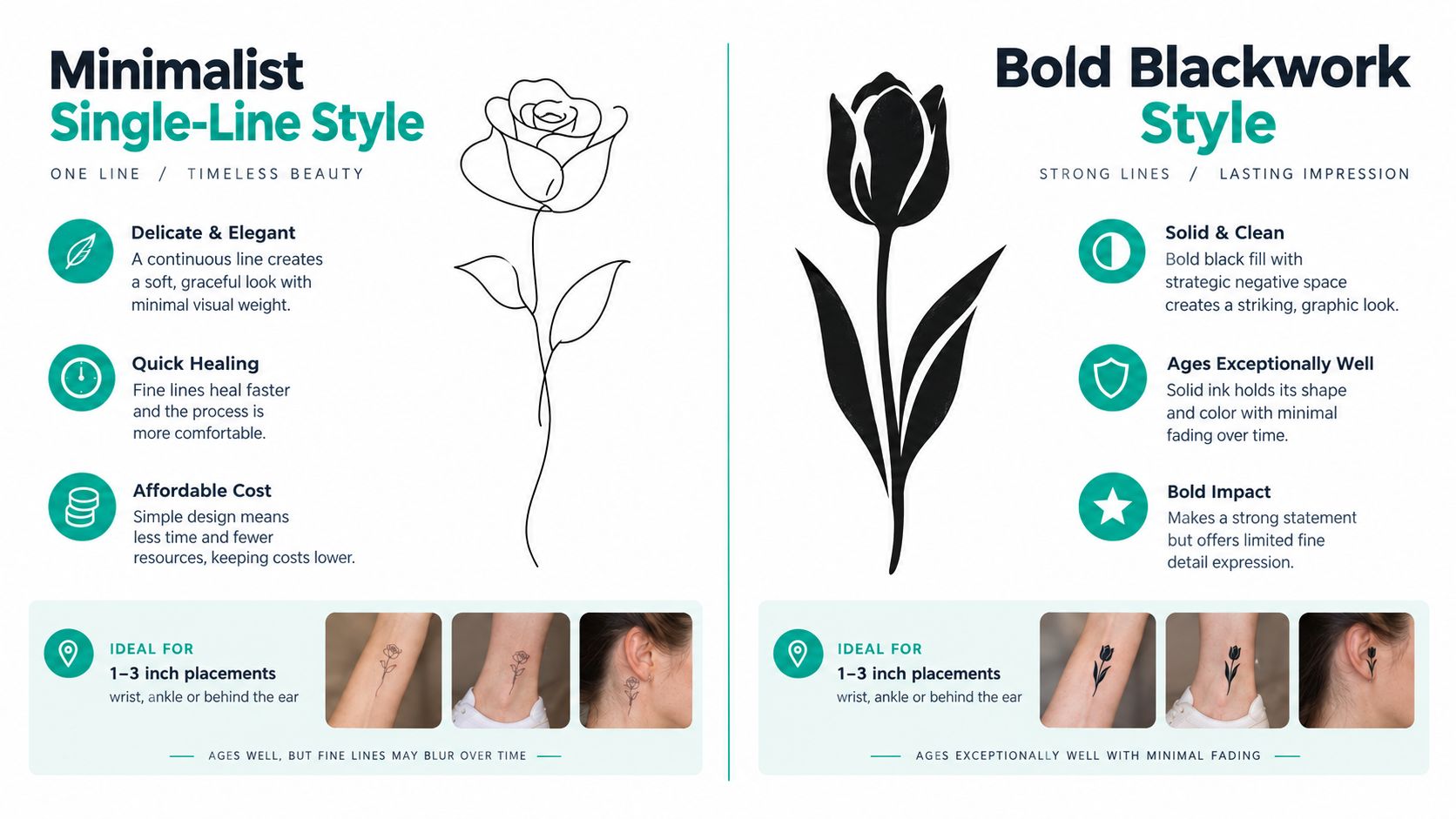
For a quick visual contrast between restrained outlines and heavier silhouettes, review this minimalist and blackwork floral comparison image.
2. Watercolor Birth Flower with Splatter Effects
Watercolor design changes the flower's personality through color movement rather than heavy contouring. Soft gradients, translucent-looking washes, and loose splatter effects can make a birth flower feel expressive and painterly. A peony might shift from pink into purple, while a lily of the valley could sit over a cool blue wash.
This style needs more room than a tiny outline because the color effects depend on spacing and visual flow. A shoulder blade, thigh, upper arm, or broad forearm gives the artist space to let pigment-inspired shapes extend beyond the bloom without making the composition feel crowded.
A realistic digital watercolor effect doesn't guarantee identical behavior in skin. Ask an artist experienced with this approach how they build contrast, define the flower's edges, and plan for healed readability. Sun exposure can affect color over time, so ongoing sun protection and possible touch-ups should be part of the decision.
Build the composition around movement
A single flower can work well, but watercolor designs often benefit from an intentional direction. A stem can curve toward the shoulder, leaves can guide the eye along the forearm, or splatter can echo the flower's natural palette without overwhelming the central bloom.
Generate variations that change one factor at a time:
- Palette: Compare a restrained two-color design with a broader seasonal range.
- Wash direction: Test horizontal, vertical, and radial movement around the flower.
- Outline strength: See whether a fine contour or selective dark accents keep the bloom legible.
- Canvas size: Check how the concept changes when it has room to expand.
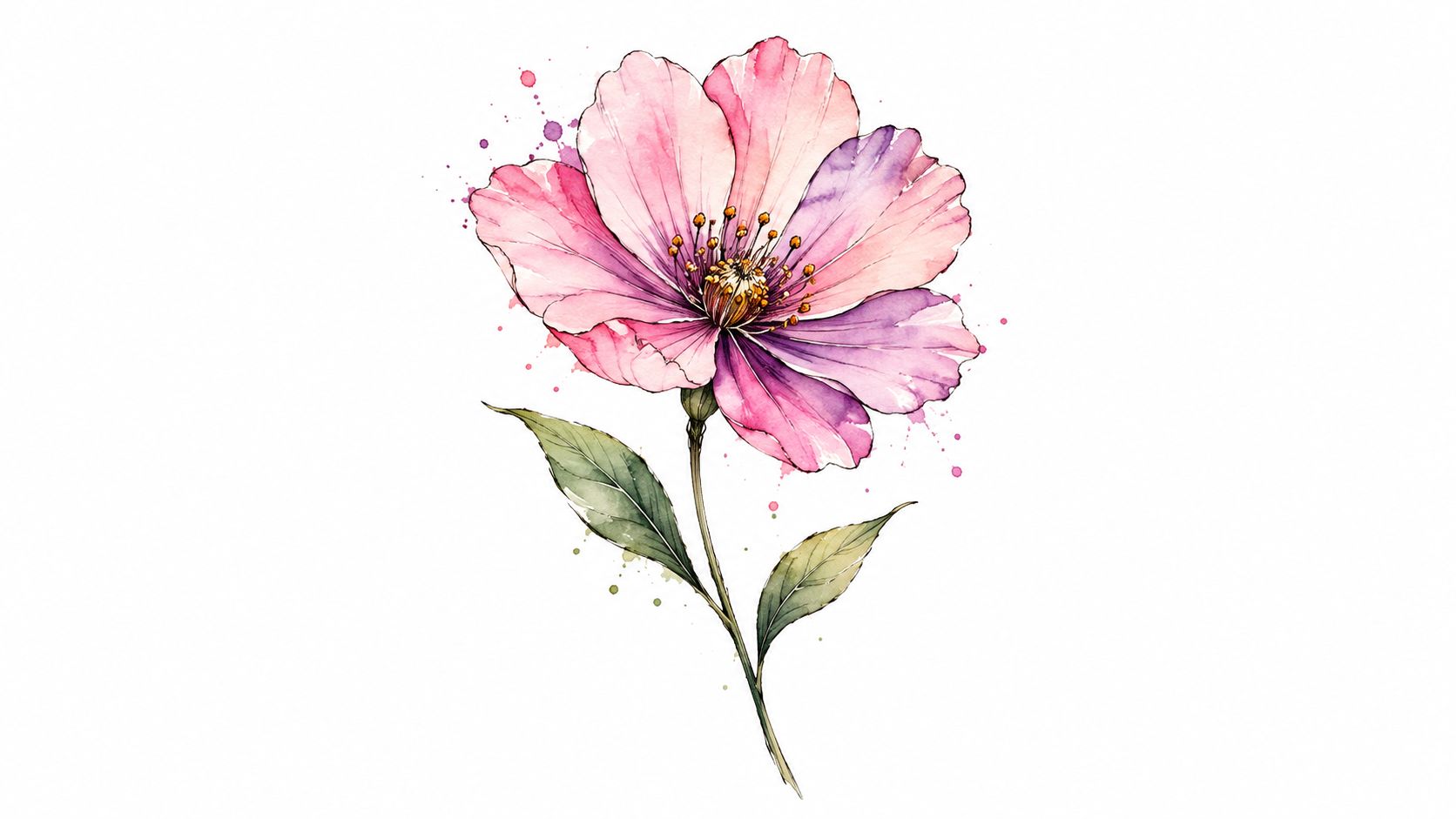
For background on how artists translate painted effects into tattoo work, read how watercolor tattoos work. A soft pink flower with green leaves can provide a useful reference for the relationship between delicate color and botanical structure. View this hand-drawn watercolor flower example.
3. Botanical Detail Birth Flower with Scientific Labels
A botanical birth flower tattoo treats the bloom as both artwork and specimen. It may show the stem, leaves, seed pod, calyx, or root structure, then add a scientific name or restrained annotation. The result suits someone who connects with natural history, plant study, family heritage, or the idea of documenting a meaningful species.
Imagine a rose on the upper arm with selected plant parts labeled in small lettering. A rib piece might pair a birth flower with its Latin nomenclature, while a back design could show the flower at different stages of growth. Each variation shifts the emphasis from decorative symbol toward an educational illustration.
Protect readability before adding information
Scientific labels are only useful if they remain legible. Text that looks clear in a large digital image may become cramped when reduced to skin. Ask the artist to test the lettering at the intended size and to simplify the surrounding linework if the label needs visual priority.
Black or gray ink can help keep the illustration coherent, but the artist should decide how much contrast the design requires. Fine-line stems, stippled shadows, and delicate annotations can compete with one another, especially on a curved body area.
A strong prompt for TattoosAI should name the flower, the actual scientific name, the plant parts you want included, the intended placement, and whether the piece should feel like a vintage plate or a modern field-study drawing. Generate one version focused on the bloom and another that gives equal weight to the stem and seed details.
Choose the specimen, not just the month: If your month has alternative flowers, select the bloom whose structure and personal meaning you'll still want to study years from now.
4. Japanese-Inspired Birth Flower with Irezumi Elements
Japanese-inspired composition makes the flower part of a larger visual story. Bold outlines, dynamic movement, clouds, waves, wind patterns, and seasonal elements can frame the bloom and connect it to the body's shape. A chrysanthemum might sit inside a flowing composition of clouds, while a peony could move with traditional wind bars or water.
This isn't a matter of applying a “Japanese” filter to a flower. Irezumi carries a deep artistic and cultural context, and the flower, season, background, color palette, and placement should work together. Research the symbolism you're borrowing, then discuss the concept with an artist who has genuine experience in the style.
Plan for composition, not a sticker
A small isolated bloom may not provide enough space for the directional movement associated with a larger Japanese-inspired piece. The upper arm, thigh, back, or another medium-to-large area can support a clearer hierarchy between the main flower and its background.
Use TattoosAI to compare versions with different background densities. One concept might place the flower against open skin with only a few cloud shapes. Another might use waves or geometric accents to create a fuller composition. Keep the flower recognizable in every variation, especially if it represents a specific month or person.
Consider whether the design should remain a standalone piece or leave room for future additions. A vertically oriented bloom may integrate into a sleeve more easily than a tightly enclosed circular composition.
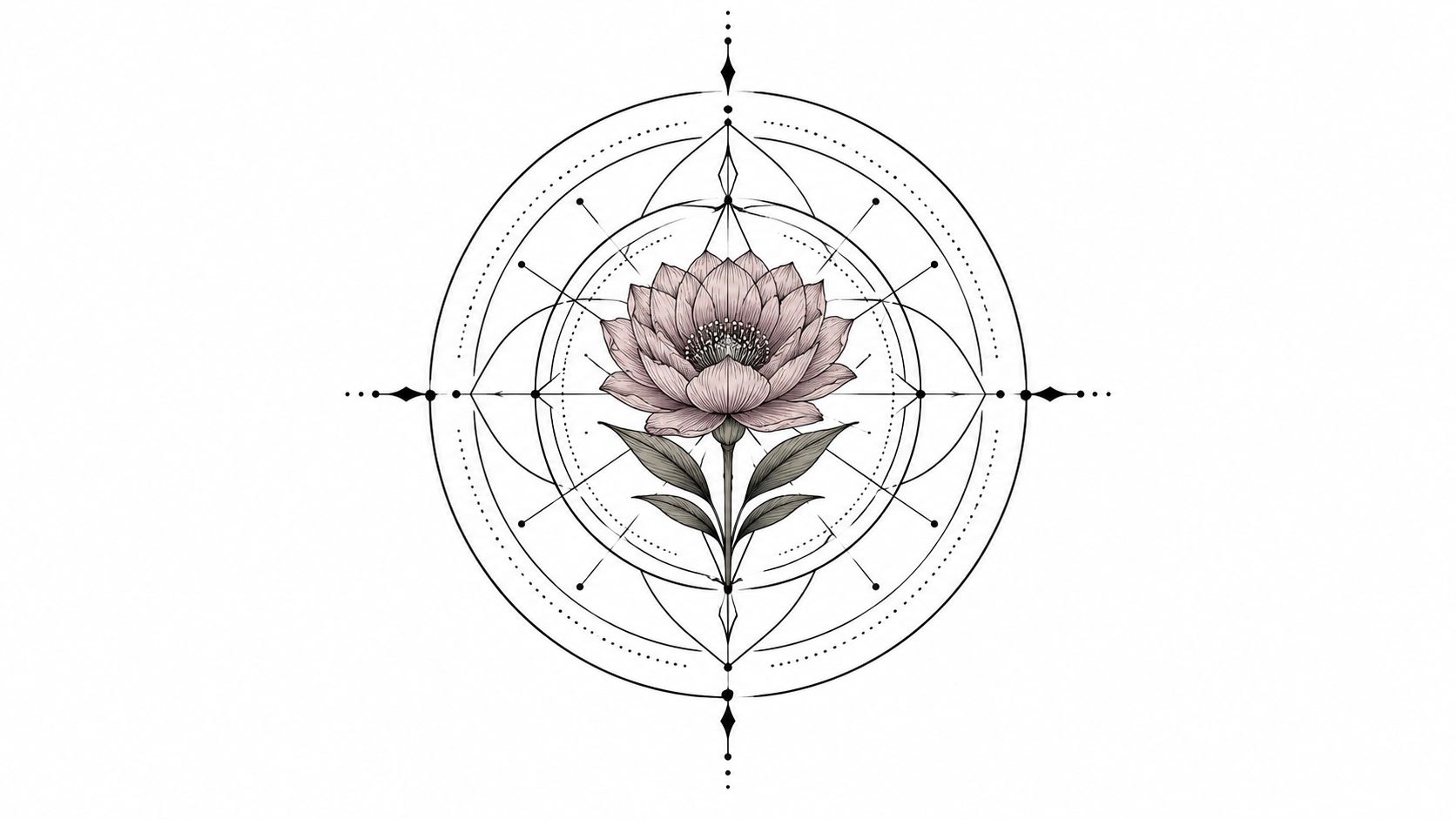
5. Geometric Birth Flower Mandala Fusion
A geometric mandala fusion places the birth flower at the center of a symmetrical framework. Rings, radial lines, repeated petals, and compass-like structures create a deliberate contrast with the irregular shapes of a living bloom. The flower becomes the organic focal point, while geometry controls the surrounding rhythm.
A lotus inside concentric circles can feel calm and balanced. A dahlia surrounded by repeated angular forms may appear more architectural. A shoulder or upper-back design can use the body's natural symmetry, while a chest placement may create a centered emblem with strong visual presence.
Decide what symmetry means to you
Not every geometric tattoo needs to be perfectly dense. Open negative space can make the flower easier to read and can prevent the outer pattern from competing with the central bloom. Ask for variations with different ring counts, spacing, and levels of ornament.
Sacred geometry may carry spiritual or cultural associations, so research any symbol you plan to include rather than choosing it only for decoration. Your artist should create the final stencil on the body, where small changes in scale and alignment matter more than they do in a flat digital image.
Useful planning questions include:
- Central focus: Does the eye go to the flower first?
- Spacing: Are the geometric lines separated enough to remain clear?
- Body fit: Will the circle distort across a curved area?
- Future additions: Does the design leave a natural path for connected work?
Generate several symmetry variations in TattoosAI, then bring the strongest one to an artist for anatomical adjustment. This geometric lotus and compass example shows how a flower can remain central while the surrounding geometry provides structure.
6. Dotwork and Stippling Birth Flower Portraits
Dotwork creates shading through the density and spacing of dots instead of relying on smooth gradients. More closely packed dots produce darker areas, while open spacing preserves highlights and negative space. This can give a rose, chrysanthemum, or dahlia a convincing sense of depth without using color.
The technique changes both the appearance and the planning demands. A flower with layered petals can gain a photographic quality, but the reference needs strong contrast and a clear hierarchy of light and dark. If every surface receives the same dot density, the bloom can lose its shape.
Translate realism into healed readability
Ask your tattooist for healed examples of comparable dotwork, not only fresh photographs. The artist can explain how much spacing to preserve, which areas should remain darker, and whether the design should be simplified for the selected body area.
A detailed forearm piece may show off the shading clearly. A smaller ankle or wrist design may need fewer tonal steps and larger open areas. Dotwork can also work beautifully in a memorial composition, where a single flower carries the image and stippling adds quiet emotional weight.
TattoosAI can create a high-contrast reference that helps you compare a lightly shaded bloom with a denser, more dramatic version. Use it to communicate the intended mood, not to dictate the exact needlework. The artist will decide how to translate the image into stable marks on skin.
For a closer explanation of this visual language, explore the dotwork tattoo style. Before booking, discuss session planning, expected detail, line spacing, and the size required to keep the flower identifiable.
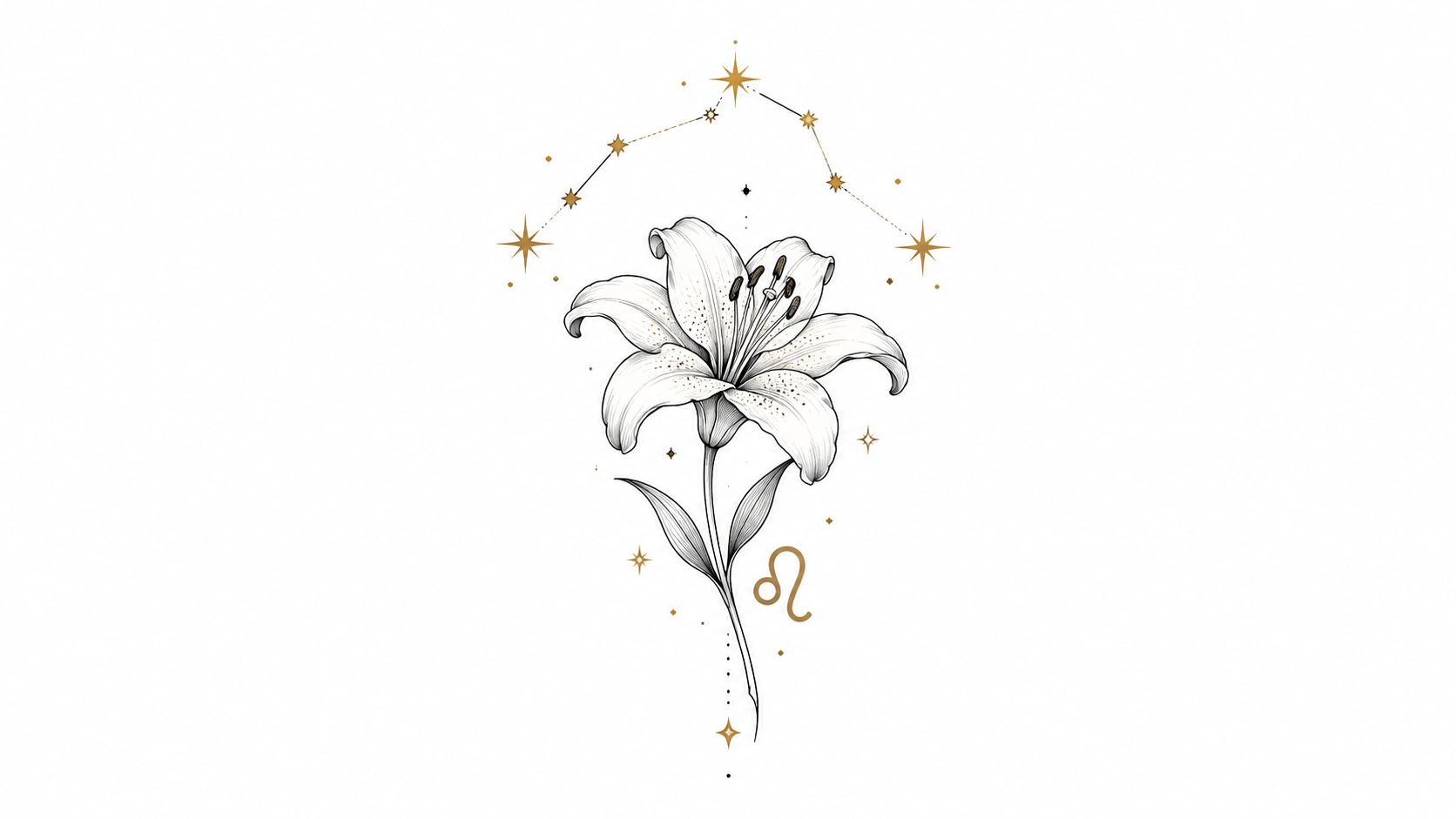
7. Birth Flower with Constellation or Zodiac Integration
A flower and constellation design combines two personal systems. The birth flower represents the month through botanical symbolism, while the zodiac element adds a celestial layer through stars, a glyph, or a sign symbol. The flower should usually remain the primary subject, with the constellation acting as a supporting accent.
A rose with an Aries constellation can create a compact shoulder piece. A lily of the valley with a Taurus glyph may suit a small wrist concept, while a peony surrounded by Leo stars can expand across the ribs. The exact balance depends on whether you want a botanical tattoo with subtle astrology or an evenly divided celestial-botanical design.
Keep the two systems distinct
Constellation points need enough space to remain readable, especially if connected by fine lines. If the stars sit too close to detailed petals, the entire tattoo may appear busy. Generate one version where the constellation floats behind the bloom and another where it follows the stem or arcs around the flower.
Check the constellation against a reliable reference before approving the stencil. Digital generators may produce attractive star patterns that aren't astronomically accurate. You should also decide whether the zodiac glyph is necessary, since using both a constellation and a symbol can create unnecessary repetition.
A restrained black-and-gray design often keeps the two motifs unified. Small color accents can work, but they should support the flower rather than compete with the stars. This lily and Leo constellation reference shows how a botanical subject and celestial detail can share one visual language.
8. Birth Flower with Lettering and Personalization
Lettering turns a birth flower into a direct record of a relationship, milestone, or memory. You might pair a January flower with a date, place a name beneath a rose, or wrap a short phrase around a chrysanthemum. The text can be integrated into the stem, arranged below the bloom, or kept separate as a quiet caption.
This option works for both personal tattoos and memorial designs. A family bouquet can include initials rather than full names, while a single flower can carry a child's birth date or a word associated with a loved one. The strongest compositions give the flower and text different jobs, so neither has to fight for attention.
Treat text as a technical element
Spelling is the first check. Verify every name, date, accent, and punctuation mark before you show the concept to an artist. Then examine the lettering at its intended size. Script may look elegant but can lose separation between letters, while block lettering can remain clearer but feel more graphic.
Generate several versions with different text placements and fonts. Compare:
- Under-bloom text: Direct and easy to read, but it creates a clear baseline.
- Stem-integrated text: More discreet, though it can become crowded.
- Circular lettering: Works with mandalas and bouquets, but requires careful spacing.
- Initials or coordinates: Personal without making the meaning immediately public.
Don't let the generator's typography make the final decision. TattoosAI can help you compare composition, but your artist should redraw or refine the lettering for the skin, scale, and style of the tattoo.
9. 3D and Shadow Birth Flower Realism
Three-dimensional realism makes the flower appear to sit on, rise from, or cast a shadow across the skin. The illusion depends on controlled highlights, directional lighting, layered shading, and a believable relationship between the bloom and its shadow. A rose climbing the arm can feel sculptural, while a peony with dramatic side lighting can appear almost photographic.
This style needs enough canvas for the shadows to remain separate from the flower's darker interior details. The upper arm, thigh, shoulder blade, or broad forearm may offer more flexibility than a narrow placement. Curves also matter because the artist must decide how the imagined light behaves across the body.
Choose a light source before choosing the drama
Ask whether the light should come from above, the side, or behind the bloom. Changing that direction changes the shadow shape and the perceived depth. Generate variations with different lighting angles, then select the one that best suits the body area rather than the one that looks most dramatic on a flat screen.
A specialist in realism can explain how the tattoo will be built and where highlights need to remain open. Bring a detailed mock-up, but expect the artist to simplify some transitions so the image remains legible after healing.
A short visual reference can help you compare how depth and shadow are constructed. Watch this 3D tattoo example before deciding whether the sculptural effect fits your preferred level of realism.
10. Blackwork and Negative Space Birth Flower
Blackwork uses solid black areas and intentional untouched skin to define the flower. Instead of describing every petal with delicate shading, the design relies on silhouette, contrast, and carefully placed cutouts. A tulip can become a bold ankle emblem, while a dahlia can use skin-toned channels to separate dense black petals.
The style works at different scales because its visual language is simple and graphic. A small design needs a strong silhouette with only the negative-space details that are essential for recognition. A larger forearm or thigh piece can support more layered fills, angular shadows, or surrounding ornamental shapes.
Design the empty spaces first
Negative space isn't leftover background. It's part of the structure. If the channels between petals are too narrow, they may become difficult to preserve visually as the tattoo settles. If they're too wide, the flower may lose its bold, unified shape.
Ask your artist to show how the concept will look as a stencil or solid black mock-up. Compare a fully filled silhouette with a version that leaves selected petals open. Consider slightly heavier boundaries where the placement experiences movement or friction, while keeping enough contrast for the flower to read at a glance.
A strong blackwork birth flower often needs less explanation than a highly detailed piece. That makes it useful for someone who wants a durable graphic symbol, a cover-up-friendly direction, or a design that can connect to future blackwork.
Birth Flower Tattoo Ideas: 10-Point Comparison
| Style | Implementation Complexity 🔄 | Resources & Cost ⚡ | Expected Quality ⭐ | Results / Impact 📊 | Ideal Use Cases | Key Tips 💡 |
|---|---|---|---|---|---|---|
| Minimalist Single Birth Flower Line Art | Low–Medium, simple concept, needs steady fine-line skill | Low, short sessions, monochrome ink | Elegant and timeless; fine lines may blur over years | Subtle, personal impact; best for small placements | First-time tattoo seekers; wrist, ankle, behind ear | Request slightly thicker lines, avoid high-friction spots, generate variations |
| Watercolor Birth Flower with Splatter Effects | Medium–High, color blending and organic effects | High, color work, longer sessions, experienced artist | Highly expressive and vibrant but more prone to fading | Bold, eye-catching gallery-quality at medium–large sizes | Artistic personalities seeking colorful statements | Plan for touch-ups, use sun protection, test palettes with previews |
| Botanical Detail Birth Flower with Scientific Labels | High, meticulous detail and readable lettering required | High, fine-line/stippling skill, longer appointment | Precise, educational, classic aesthetic | Conversation-starting, information-rich designs at medium–large scale | Nature lovers, educators, those who want scientific accuracy | Use black/gray for labels, ensure text size/readability, generate focused mock-ups |
| Japanese-Inspired Birth Flower with Irezumi Elements | High, traditional composition and cultural motifs | High, large pieces, specialized irezumi artist | Strong, culturally rooted quality with durable bold lines | Distinctive, high-impact visuals visible at distance | Those valuing cultural depth; medium to large placements | Research symbolism, consult specialists, plan larger canvas |
| Geometric Birth Flower Mandala Fusion | Very High, symmetry and precise geometry required | High, time-consuming stencil work and exacting execution | Balanced, meditative, visually precise | Symmetrical focal pieces that scale well; visually harmonious | Spiritually-oriented clients; chest, back, shoulder | Generate symmetry variants, request stencil to verify alignment |
| Dotwork and Stippling Birth Flower Portraits | Very High, intense dot control and layering | Very High, longest sessions, premium pricing | Exceptional depth and photorealistic potential | Highly artistic, gallery-worthy with strong 3D feel | Collectors valuing technical mastery and fine-art results | Plan multiple long sessions, choose strong ink density, verify artist portfolio |
| Birth Flower with Constellation or Zodiac Integration | Medium, needs compositional balance of two elements | Medium, additional design complexity but moderate time | Personalized, layered symbolism | Meaningful and conversational; may appear busy if small | Astrology-interested clients seeking personalization | Generate flower-first and zodiac-first versions, ensure constellation accuracy |
| Birth Flower with Lettering and Personalization | Medium, composition plus precise lettering | Medium, lettering skill required, careful layout | Deeply personal and commemorative; text risks blurring | Emotional, memorial impact when well-composed | Memorials, tributes, relationship-focused tattoos | Double-check spelling, test fonts and sizes, generate multiple placements |
| 3D and Shadow Birth Flower Realism | Very High, advanced shading, lighting and depth mastery | Very High, world-class artist, extended sessions | Jaw-dropping photorealism and sculptural illusion | Dramatic visual impact; highly technical and striking | Clients seeking cutting-edge realism on larger areas | Generate lighting-angle references, research specialist artists, expect long sessions |
| Blackwork and Negative Space Birth Flower | Medium, bold silhouettes and negative-space planning | Low–Medium, solid black fills, can be large but efficient | Bold, timeless, ages exceptionally well | High-contrast and legible from distance; low maintenance | Those preferring graphic, long-lasting designs | Test negative-space variations, use slightly thicker lines for longevity |
Turn the Best Concept Into a Tattooist-Ready Brief
No single style is best for every birth flower tattoo. A minimalist carnation and a Japanese chrysanthemum can be equally meaningful, but they demand different decisions about space, line weight, color, consultation, and future maintenance. Start with the meaning you want the flower to carry, then let the design language support that meaning.
First, confirm which birth-flower tradition you're using. If your month has more than one accepted bloom, compare the alternatives instead of assuming one answer is universally correct. You might choose the flower tied to your family tradition, the season of your birth, a favorite bloom, a memorial connection, or a symbolism that fits your identity better.
Next, choose the visual language:
- Choose the structure: Decide whether you want a single outline, botanical detail, stippling, blackwork, watercolor, realism, geometry, or a larger cultural composition.
- Choose the scale: Match the intended detail to the available skin. A small tattoo needs open shapes and restraint, while a large botanical illustration can support labels, layered petals, and shadows.
- Choose the placement: Consider movement, friction, sun exposure, and the body's curves. Ask how the flower should be oriented when you look at it and when other people see it.
- Choose color or monochrome: Color can add emotional and cultural meaning, while black and gray may create stronger graphic consistency. Your artist can explain pigment choices and healed expectations.
- Choose personalization: Add a date, initials, constellation, family flowers, or a short phrase only if it strengthens the story. More elements don't automatically create more meaning.
- Prepare focused references: Generate a few variations that change one decision at a time. This makes it easier to explain what you like, rather than presenting an unfocused collection of unrelated images.
TattoosAI is useful at the reference stage because you can describe the flower, placement, mood, color limits, and preferred style, then compare multiple concepts. You can use the strongest result to craft an inspiring creative brief for your studio consultation.
Bring the reference to a qualified tattooist and ask for a final assessment of scale, line spacing, color, anatomy, and application. Check every word in the lettering. Confirm scientific names and botanical details. Review symmetry in geometric work, star placement in constellation designs, and the relationship between highlights and shadows in realism. Ask to see healed examples when longevity is a concern.
A generator can reduce uncertainty before the appointment, but it can't assess your skin, choose a safe needle configuration, or replace an artist's stencil. The FDA warns that tattoo inks can contain bacteria or other microorganisms and that allergic reactions may occur, so discuss known allergies and studio hygiene with your artist. Bring a clear brief, listen to professional advice, and approve the stencil only when the design works on your body rather than only on a screen.
TattoosAI lets you describe a birth flower, placement, mood, color limits, and preferred style to generate multiple concept directions for comparison. Use TattoosAI to refine a focused reference, then take the strongest idea to your tattooist for final adaptation and stencil planning.