TattoosAI
You've saved a delicate wrist paw, a colorful shoulder design, and a memorial print with lettering, but none feels quite like your cat yet. Perhaps you want to remember the paw that tapped your face at breakfast, or you're looking for a quiet symbol of the companion who made your home feel complete. Choose a cat paw tattoo that feels like your cat, rather than copying the most eye-catching picture in your saved folder.
Start with its emotional purpose. A subtle tribute, a faithful memorial, and a bold graphic statement call for different decisions about detail, placement, and scale. Cat imagery has historical associations with protection, domestic life, and good fortune, but those meanings aren't universal, as this overview of cats in art history explains. Your own connection should guide the design.
Pick an aesthetic you'd enjoy wearing even without its backstory. Then give your artist enough room to make its details readable.
Table of Contents
- 1. Minimalist Fine-Line Cat Paw
- 2. Realistic Black-and-Grey Cat Paw with Fur Texture
- 3. American Traditional Cat Paw with Bold Outlines
- 4. Watercolor Cat Paw with Splash Effects
- 5. Geometric or Dotwork Cat Paw
- 6. Memorial Paw Print with Name and Date
- 7. Blackwork Cat Paw with Negative Space and Claw Marks
- Cat Paw Tattoo Styles: 7-Design Comparison
- Turn Your Favorite Idea Into a Tattoo-Ready Concept
1. Minimalist Fine-Line Cat Paw
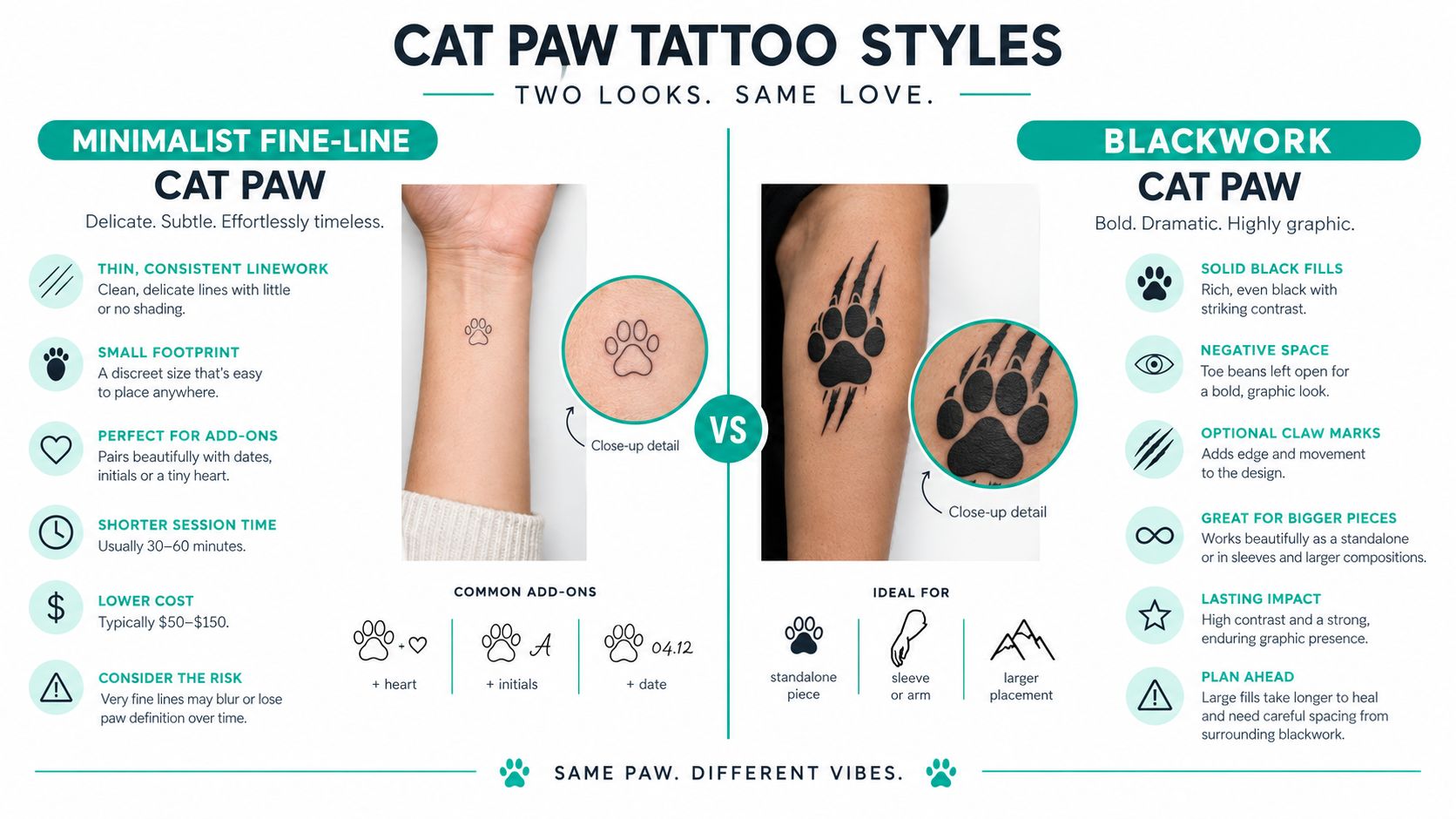
Choose fine-line work for a quiet, understated tribute. An outlined central pad with separate toe beans keeps the focus on the paw rather than surrounding decoration. A small heart above the central pad suits an affectionate cat, while a loose constellation of dots can suggest a companion who always stayed close.
For placement, start by comparing the inner wrist with the upper arm. The wrist makes the tattoo easy for you to see; the upper arm gives you more flexibility to keep it private. Behind the ear is another discreet direction, but use a stripped-back paw rather than squeezing in both dots and a heart.
Keep the Gaps More Important Than the Extras
Don't choose a fixed minimum size from an inspiration image. Have your artist show the design at its intended size, then check whether each pad remains distinct without zooming in. The supplied tattoo aftercare and design guidance supports preserving negative space and avoiding densely packed detail as pigment softens over time.
- Personalization: Use a heart-shaped central pad or your cat's distinctive pad proportions, not a cluster of miniature symbols.
- Budget: Request a quote for the plain paw and another for the embellished version. Don't assume a tiny tattoo automatically means a tiny bill.
- Reference choice: Browse cat tattoo ideas to compare compositions, then narrow your references to the line weight and simplicity you want.
2. Realistic Black-and-Grey Cat Paw with Fur Texture
A tabby paw resting against your arm can feel more personal than a generic footprint. Choose realism when the paw's appearance matters, including its fur pattern, rounded toes, or contrasting pads. This direction suits someone who wants to recognize their own cat immediately.
Bring a sharp, well-lit photograph that shows the paw clearly. Include another view if the first hides the pad edges, and tell the artist which details are emotionally important. A dark-furred cat, for example, needs a composition that separates the paw from its shadows rather than turning everything into an undifferentiated dark patch.
Use the video as a visual reference alongside your own photographs, not as a substitute for reviewing an artist's portfolio.
Give Texture Room
The forearm or calf offers space to explore a portrait-style composition. Ask the artist to compare a compact version with a larger version before you commit, especially if you want individual fur strokes.
Reference priority: Preserve the features that make the paw recognizable. Don't insist on copying every hair or shadow.
Review the stencil on your body while standing naturally. Check whether the paw looks intentional from your usual viewing angle, not just in a close-up photograph. For your budget, request separate estimates for a paw-only study and a composition with background shading; choose the simpler version if the background doesn't add meaning.
3. American Traditional Cat Paw with Bold Outlines
Pick American traditional styling if you prefer a strong outline and a compact, graphic composition. A paw with a heart and name banner makes an affectionate tribute without relying on realistic fur. A paw surrounded by roses suits someone who wants the design to connect visually with other traditional-style tattoos.
The illustrated direction below uses a golden paw, red pads, and a green leaf. Treat that palette as an option, not a requirement.
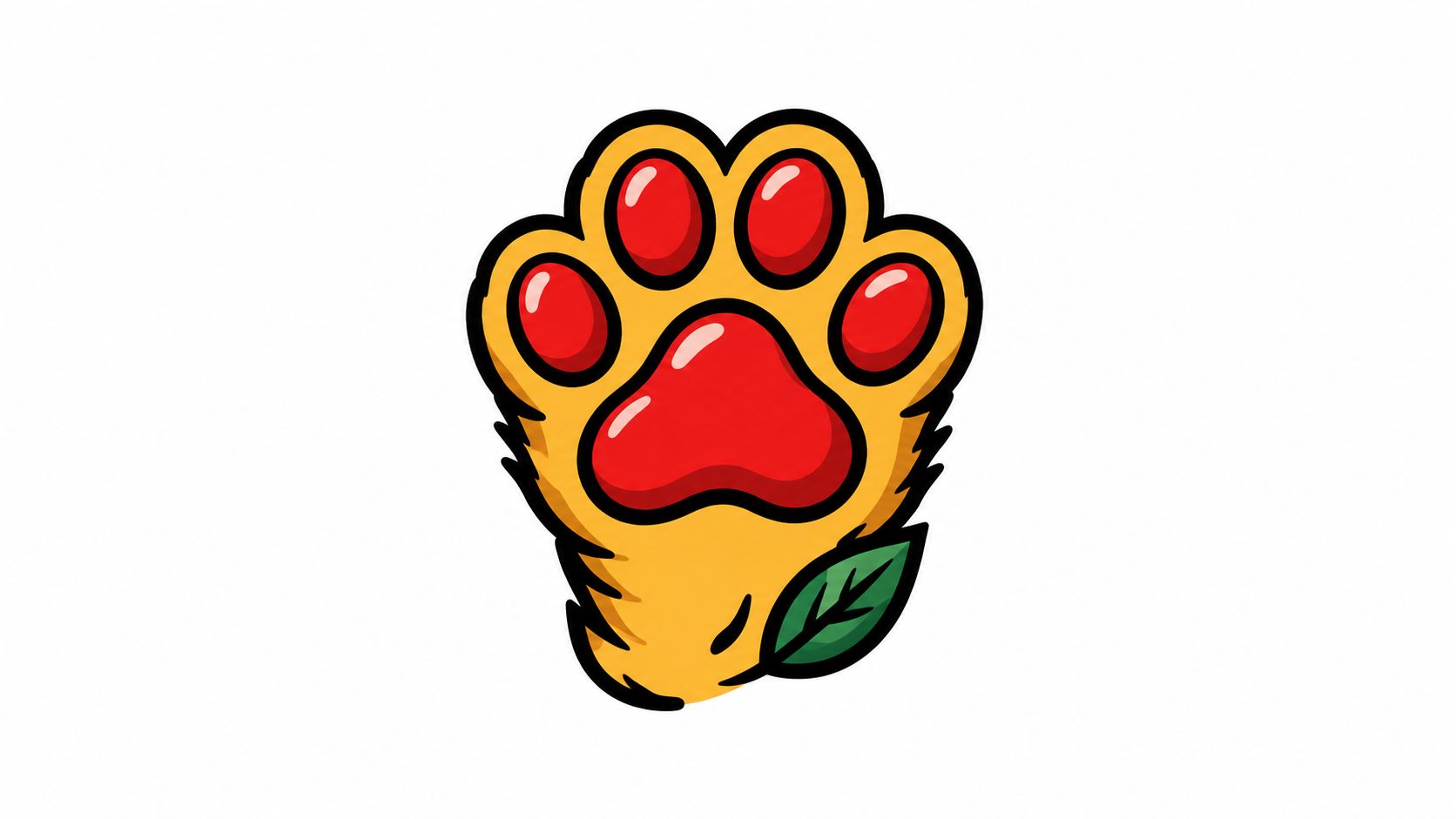
For an upper-arm piece, let the paw remain the main shape and keep the banner readable. On the calf, a floral frame can create a fuller composition, but don't shrink the paw to accommodate every leaf and petal.
- Scale: Size the lettering first if the name is essential. Then build the paw and frame around it.
- Color: Choose a limited palette deliberately. Black outlines with selective color make a different statement from densely filled pads.
- Budget: Ask for a paw-and-banner quote before adding roses or a larger decorative frame.
Discuss Pigment Before Choosing Red
Red deserves a specific conversation with your artist, especially if you've had previous skin reactions. A clinical review of tattoo reactions reports that reactions can appear immediately or as late as seven years after tattooing, with allergic red-pigment reactions among the most frequent complications in the reviewed cases.
That isn't a reason to abandon color. It's a reason to discuss your skin history before making the palette permanent.
4. Watercolor Cat Paw with Splash Effects
For a cat you remember as playful, chaotic, or impossible to ignore, watercolor offers an expressive direction. Try a recognizable paw surrounded by teal and purple splashes, or a softer print with pastel washes extending into a floral background. Choose colors you enjoy wearing, not merely colors that look attractive on a screen.
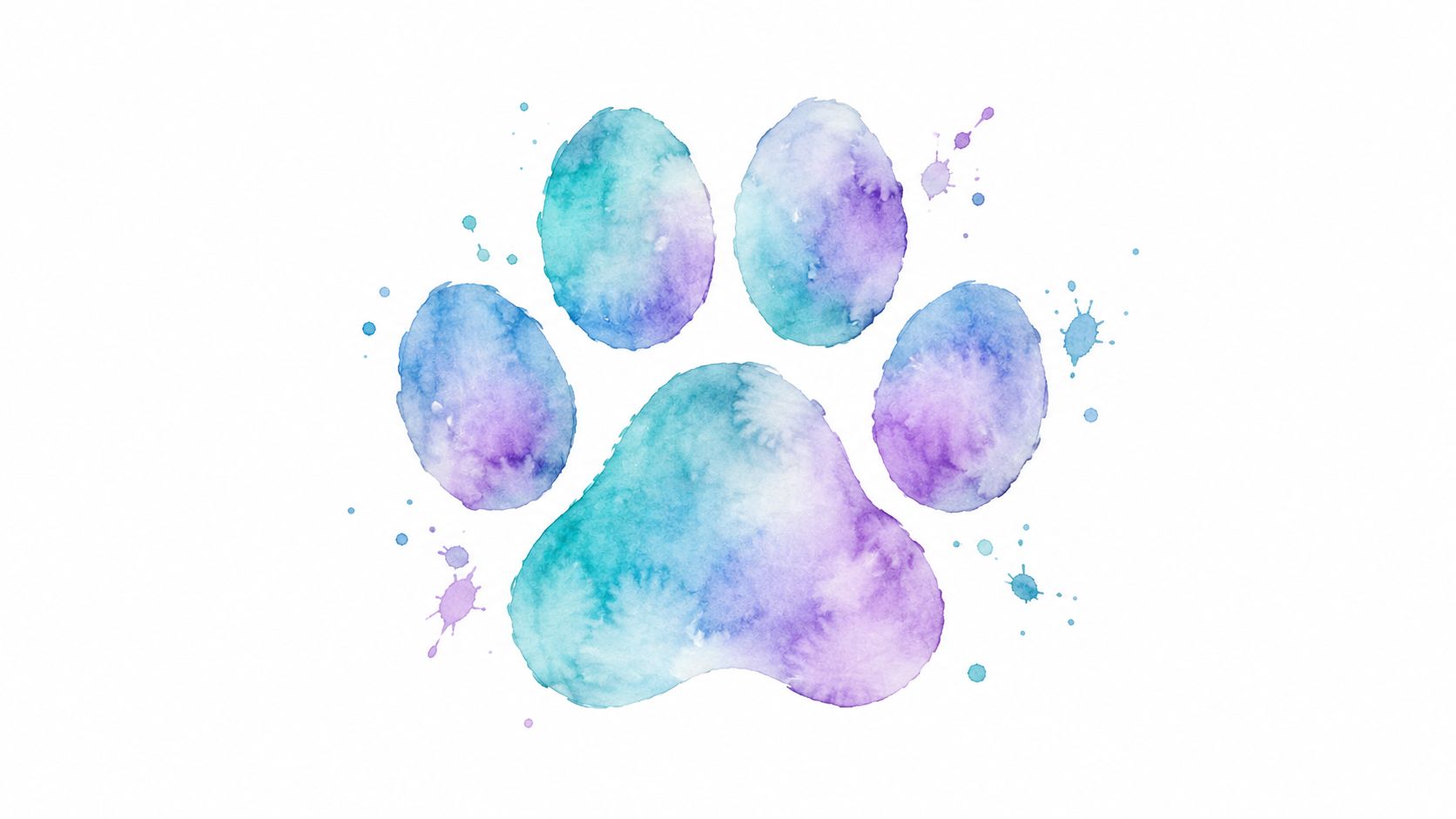
The shoulder suits a contained splash composition, while a forearm design can extend lengthwise with loose brush-like effects. Keep the strongest contrast within the paw itself. If every edge is equally soft, you're choosing an abstract color piece rather than a clearly defined print.
Let the color feel spontaneous, but make the paw's structure deliberate.
Compare Healed Work, Not Just Fresh Color
Ask to see healed examples from the artist whose watercolor work you're considering. Compare how they handle recognizable shapes, soft washes, and separation between neighboring colors. As noted earlier, dense detail and narrow gaps need careful planning regardless of style.
Before booking, discuss color handling and hygiene rather than treating them as background details. A review of tattoo complications and ink microbiology describes inflammatory, allergic, infectious, and granulomatous reactions and cites bacteria detected in 26 of 75 commercial tattoo-ink samples.
Ask how the studio handles sealed inks, what follow-up is included, and how it prices touch-ups. If your budget is tight, reduce the splash area instead of accepting a composition that lacks a clear focal point.
5. Geometric or Dotwork Cat Paw
A paw inside a circle, with measured lines around it, offers a different kind of tribute. Choose geometric or dotwork styling when you prefer structure over softness. It can suggest your cat's watchful, self-contained personality without adding a portrait or sentimental lettering.
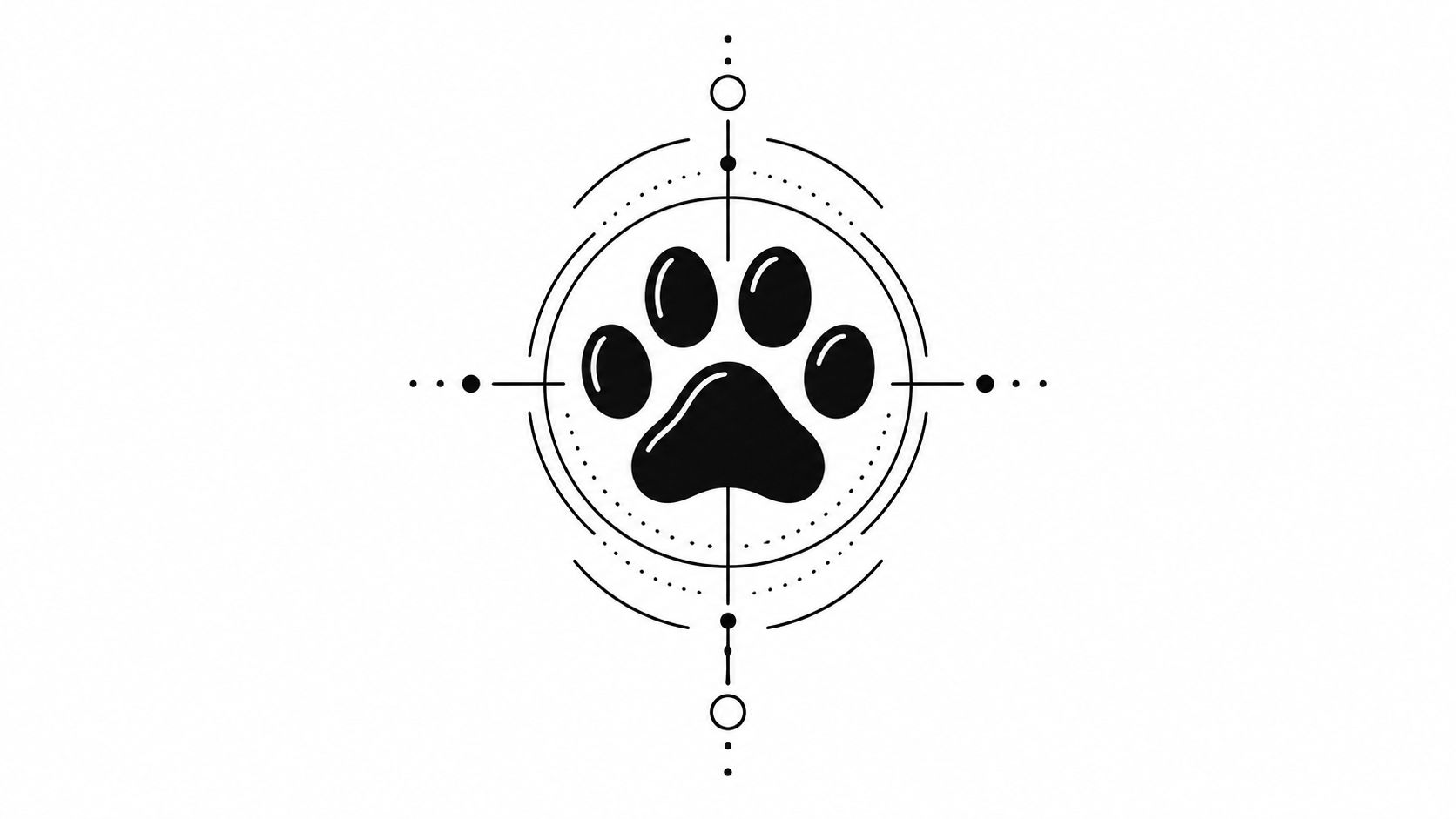
For a chest piece, consider a central paw framed by a circle with restrained stippling outside it. For an ankle piece, choose a simplified paw and an open geometric frame rather than a dense miniature mandala. Both directions can feel precise, but they require different amounts of space.
Check Symmetry on Your Body
Have the artist place the stencil while you're in a relaxed position. A symmetrical drawing on paper still needs adjustment to suit the surface where you'll wear it. Look at the circle, the direction of the paw, and the spacing around the toes before approving the stencil.
- Detail: Keep dense dotwork away from the narrow gaps that define the paw.
- Placement: Compare the chest, upper arm, and calf for the full composition instead of forcing it into your smallest available space.
- Personalization: Use a crescent, orbit-like line, or subtle asymmetry if it connects to your cat's character.
- Budget: Request an estimate for open linework and another for a heavily stippled version.
Don't mistake complexity for individuality. A simple circle with an accurately proportioned paw can feel more personal than an elaborate pattern chosen only because it looks intricate.
6. Memorial Paw Print with Name and Date
Start a memorial tattoo with the reference you already have. An ink card, clay impression, or photograph can guide the design; you don't need to obtain a fresh print to begin the consultation. A cat's paw pattern is individual, and its recognizable structure includes four forward toe pads, a larger central pad, and typically no visible claw marks in a walking print, as described in this account of historical cat paw impressions.
An inner-forearm print with a name underneath keeps the tribute easy to see. A rib-cage design with wings offers a more private memorial, but give the lettering its own space instead of wrapping it tightly around the toes.
Preserve Identity Without Preserving Every Smudge
Photograph the keepsake straight-on with the pad edges in focus. Bring the unedited image and let your artist decide which irregularities to preserve. Tell them whether exact resemblance or clean readability matters more to you.
Memorial decision: Keep the detail you recognize as your cat. Remove the accidental smear you recognize as the printing process.
Explore memorial tattoo ideas for lettering and symbol arrangements. If you're comparing a tattoo with other ways to preserve the print, the ultimate guide for cat lovers provides additional inspiration.
For a simpler budget-conscious composition, prioritize the paw and name before adding wings, dates, or a surrounding frame. If the loss is recent, save the concept and revisit the wording before booking; there's no need to decide every permanent detail immediately.
7. Blackwork Cat Paw with Negative Space and Claw Marks
Choose blackwork for contrast, confidence, and a graphic silhouette. A solid paw on the forearm can stand alone, while a calf piece can use uninked toe beans inside a larger black shape. This is a strong direction for someone who wants the tattoo to feel assertive rather than delicate.
Claw marks change its character. They can suggest your cat's mischievous or fierce side, but they're a stylized addition, not part of the ordinary walking-print anatomy described earlier. Keep them visibly separate from the pads so the design doesn't look like a confused footprint.
Decide What Stays Uninked
Ask your artist to show both versions: black pads on bare skin, and a black field with the paw formed through negative space. Compare them at the intended placement before choosing. The second option needs deliberate spacing so the uninked shapes remain distinct.
- Forearm example: A solid paw with scratch lines extending lengthwise, leaving a clear gap between the print and scratches.
- Calf example: Negative-space toe beans within a contained black shape, with minimal surrounding decoration.
- Longevity priority: Preserve open channels between the pads rather than filling every available space.
- Budget priority: Compare a standalone print with a larger blackwork composition before committing to the surrounding fill.
Ask how the artist will handle solid areas and what follow-up they recommend for that placement. Blackwork shouldn't be an excuse to skip careful design planning; a strong silhouette still depends on accurate proportions and readable gaps.
Cat Paw Tattoo Styles: 7-Design Comparison
| Cat Paw Tattoo Style | 🔄 Complexity & Resources | ⚡ Time & Cost | 📊 Expected Outcome & Durability | ⭐ Ideal Use Case | 💡 Key Advantage |
|---|---|---|---|---|---|
| Minimalist Fine-Line | Low; thin, consistent linework | Short session; lower cost | Subtle and legible at suitable size; fine lines may blur over time | First tattoos, minimalists, discreet placements | Simple to adapt and personalize |
| Realistic Black-and-Grey | High; skilled realism artist and clear reference photo | Longer sessions; higher cost | Detailed, lifelike tribute; fine details may soften over time | Pet owners and realism enthusiasts | Highly personal and recognizable |
| American Traditional | Low to moderate; bold outlines and limited color palette | Often faster and more affordable | Strong contrast and readability; colors may fade or shift | Traditional tattoo fans seeking a bold design | Bold outlines can remain legible as the tattoo ages |
| Watercolor | High; experienced color tattoo artist | Moderate to long; touch-ups may be needed | Expressive blended color; washes may fade or blur faster than black ink | Creatives and color lovers | Flexible, eye-catching palette and composition |
| Geometric or Dotwork | High; precise layout and skilled execution | Moderate; depends on pattern density | Structured, modern look; dense dots may blur over time | Fans of symmetry and mathematical aesthetics | Scales well into larger compositions |
| Memorial Paw Print | Moderate; paw-print reference and legible lettering | Varies with detail and text | Personal memorial; lettering and print details need room to stay legible | Pet owners honoring a companion | Can incorporate the pet's actual paw print |
| Blackwork with Negative Space | Moderate to high; careful planning of solid fills and spacing | Longer healing for large fills; session time varies | Bold, high-contrast graphic impact | Fans of dramatic designs and sleeve work | Strong visual presence and versatile composition |
Turn Your Favorite Idea Into a Tattoo-Ready Concept
Choose one main direction before generating concepts. If you want fine-line work, don't also request realistic fur, dense dotwork, watercolor splashes, and a traditional banner. Keep the paw central, then add only the features that explain something meaningful about your cat.
TattoosAI can generate design concepts from a written description. Use it to compare compositions before your studio consultation, not to determine safe line spacing, approve pigments, or replace an artist's assessment of your skin. A visually appealing output is a reference, not proof that every detail will work as a tattoo.
Write a Prompt with Clear Priorities
Describe the paw's appearance, your cat's personality, the style, intended placement, and preferred contrast. For a footprint, specify pad shapes and proportions; for a pictured paw, describe fur color and pose. State what to leave out as clearly as what to include.
Create a black-and-grey cat paw tattoo concept for the inner forearm, inspired by a gentle tabby cat. Show the paw resting naturally with selective fur texture, distinct toe beans, moderate line weight, and open spacing between details. Keep the paw as the focal point, use a small heart beneath it, and exclude background shading, flowers, and lettering.
Generate variations, then save the strongest concept alongside your original pet photograph or print. For an exact memorial, ask your artist to work from the original impression rather than relying on an AI-generated interpretation. Verify every name and date separately.
- Scale and contrast: Ask the artist which details need enlargement or simplification.
- Placement and lettering: Review the stencil on your body and inspect the text without zooming.
- Budget and follow-up: Confirm the quote, revision process, aftercare instructions, and touch-up policy before booking.
Choose the design you'd still love without its decorative extras. Your artist can refine the drawing, but you should arrive knowing which part of the tribute must remain.
TattoosAI turns written tattoo ideas into generated design concepts you can compare and bring to an artist. Visit TattoosAI, describe your cat's paw and your preferred aesthetic, and save a focused reference for your consultation.