TattoosAI
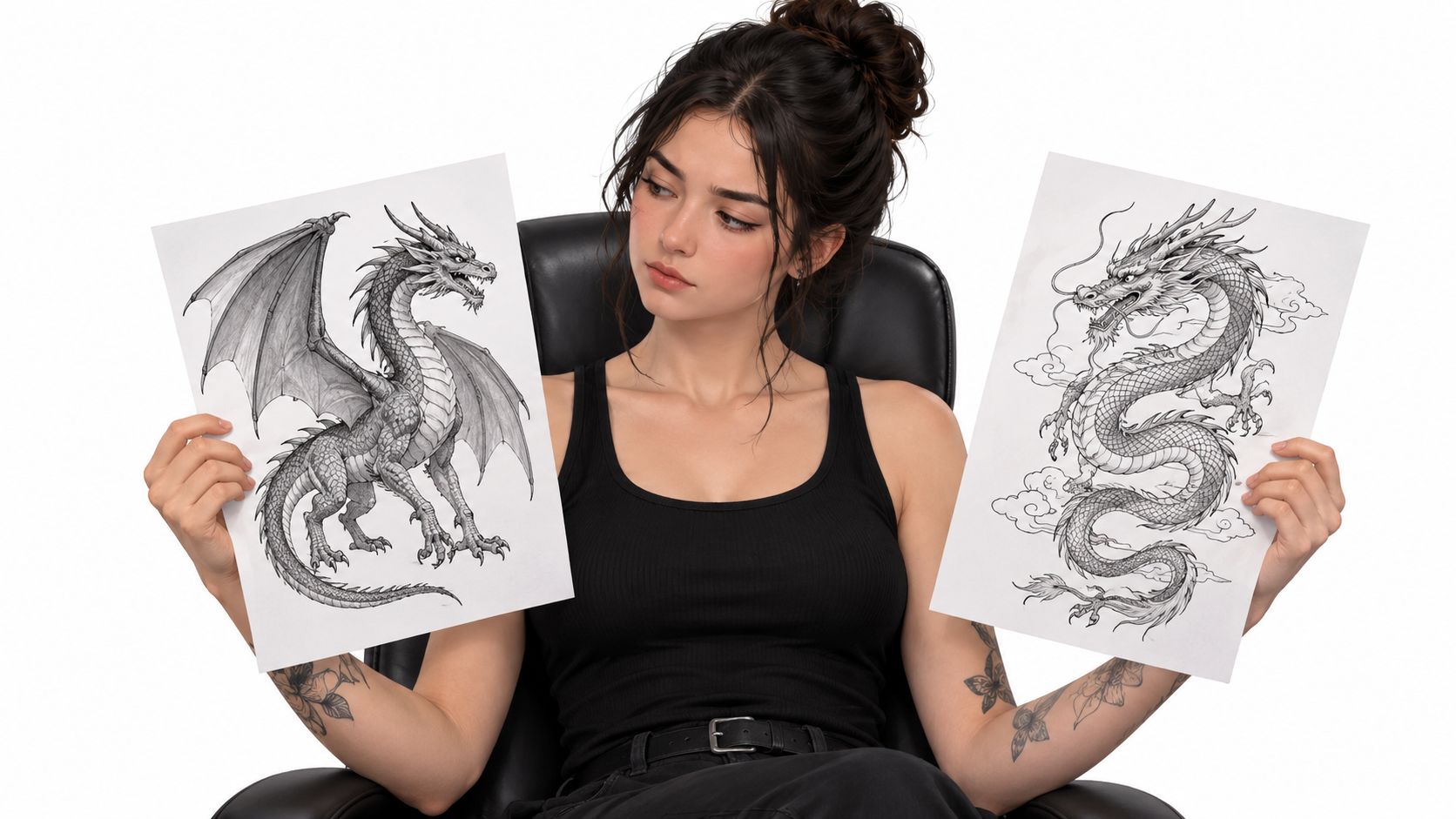
A client once arrived with two dragon sketches: one had wings, fire, and heavy armor, while the other moved in a long, graceful coil through clouds. She liked both, but only one carried the meaning she wanted, protection guided by wisdom rather than conquest. That distinction is the key to understanding the Chinese dragon tattoo symbol.
Table of Contents
- Why the Chinese Dragon Tattoo Symbol Still Speaks After Thousands of Years
- Ancient Origins and Imperial Codification of the Dragon
- Core Meanings Carried by the Chinese Dragon Tattoo Symbol
- Decoding Color, Claw Count, and Direction in the Design
- Designing a Chinese Dragon Tattoo With AI Concept Generators
- Respectful Choices and Common Misreadings to Avoid
- Bringing It All Together Before the Studio Visit
Why the Chinese Dragon Tattoo Symbol Still Speaks After Thousands of Years
A client comparing two dragon sketches may see only a difference in anatomy. One has bat-like wings, a compact body, and the familiar shape of a Western dragon. The other is wingless and serpentine, with whiskers and a long body moving through clouds or waves. For tattoo design, that distinction matters because each form belongs to a different symbolic language.
The Chinese dragon, or long, is a benevolent regulator of natural forces. Its imagery connects rain and water with harvests, seasonal change, authority, and good fortune. Early dragon imagery reaches back more than six millennia to sites such as Xishuipo in Henan, a continuity examined in the historical section that follows.
That long visual continuity gives the tattoo more weight than a generic image of strength. Across ritual objects, imperial clothing, official art, and contemporary designs, the dragon has carried ideas about weather, agriculture, cosmic balance, ancestry, and government.
The silhouette identifies the tradition. Details such as claw count, color, pose, pearl, clouds, and waves refine its message. They work like grammatical marks in a sentence: remove or change one, and the reading can shift. A tightly coiled dragon suggests guarded strength, while an ascending dragon suggests movement, aspiration, or rising influence. A five-clawed imperial figure carries a different historical register from a less formal guardian design.
A wearer may choose the motif for protection, disciplined strength, family heritage, ambition, or a relationship with change. Several meanings can coexist, but a design should give them a clear visual order rather than leave every decision to the viewer.
Start with a specific question: “What kind of power am I trying to carry?” The answer can guide the dragon's historical tier, claw count, color, direction, posture, and surrounding symbols. Those choices turn a striking creature into a tattoo with an intended cultural signal.
Ancient Origins and Imperial Codification of the Dragon
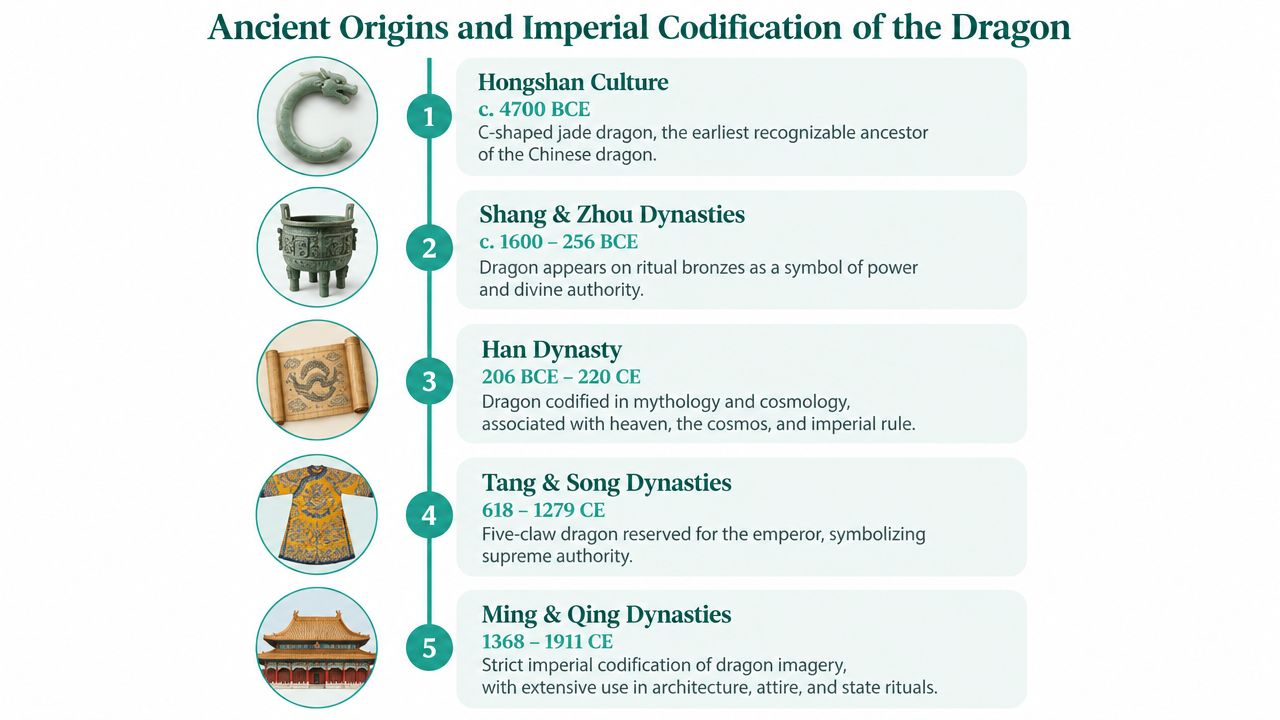
A dragon carved beside a human figure at Xishuipo shows how early this symbol entered Chinese visual history. An early anchor is the 6,500-year-old dragon image from Xishuipo, cited by Cornell's Chinese imperial dragon exhibit as one of the oldest surviving dragon relics. It predates tattoo culture by millennia, so it should not be copied as a ready-made tattoo template. Its value is historical: it places dragon imagery within a long tradition of symbolic design.
Over time, artists and ritual specialists developed the dragon through mythology, ceremonial objects, and cosmology. By the Han dynasty, from 206 BC to 220 AD, rulers had adopted it as an emblem of imperial power. Han-era interpretations connected the creature with authority over natural and political order. The dragon therefore represented more than physical force. It linked governance, weather, and cosmic balance in a single figure.
When the image became a rank marker
During the Tang dynasty, from 618 to 907, the dragon appeared on the emperor's robe as a sign of authority. Its use became more tightly controlled during the Ming dynasty, from 1368 to 1644, when the five-clawed dragon was reserved for the emperor. A historical discussion of the five-clawed dragon describes unauthorized use as potentially treasonous and notes accounts of offenders using imperial dragon imagery during the Song dynasty facing two years in jail.
Claw count was therefore a visible rank marker, not merely an illustrator's preference. The five-clawed dragon occupied the highest imperial tier. Reduced claw counts could signal a lower social or symbolic position within historical visual systems.
A tattoo wearer is not reproducing imperial law on skin, yet the old visual language can still shape interpretation. Five claws may deliberately evoke sovereignty and rank. Another claw count can support a more restrained design centered on water, ancestry, protection, or natural balance.
The same principle applies to AI concept prompts. Naming the historical tier, claw count, setting, and intended symbolism gives the generator cultural instructions instead of asking for a generic fantasy dragon. A Chinese dragon is an encoded figure. Its anatomy, posture, and surroundings guide the viewer toward a particular reading of authority.
The following video offers additional visual context for the dragon's historical development and imagery.
Core Meanings Carried by the Chinese Dragon Tattoo Symbol
A Chinese dragon tattoo can hold several meanings at once, but the composition determines which meaning appears first. Size, body movement, expression, surrounding motifs, and placement all influence the result.
Power without simple aggression
Power is the most familiar association, but Chinese dragon power is often legitimized and disciplined rather than violent. A large dragon wrapping across a shoulder, back, or chest creates visual authority through scale and physical presence. A controlled expression, closed mouth, and deliberate posture can make the figure feel sovereign instead of hostile.
The dragon's political history reinforces this reading. The reference guide to Chinese dragon symbolism in tattoo design connects the creature with imperial legitimacy and cosmic order. A tattoo that uses calm posture and orderly composition can therefore communicate command without relying on flames, weapons, or exposed fangs.
Wisdom and purposeful pursuit
The flaming pearl or luminous pearl gives the dragon a destination. A dragon chasing or protecting it suggests pursuit of wisdom, enlightenment, prosperity, or a meaningful goal. The pearl also prevents the composition from becoming a simple portrait of strength. It introduces thought, direction, and desire.
A dragon with its head turned toward the pearl feels different from one facing outward at the viewer. The first emphasizes an inward or aspirational journey. The second creates a more confrontational display.
Protection as a guardian role
Protection appears through posture and placement. A dragon coiled around a central area can read as a guardian, especially when its body frames negative space rather than attacking an imagined enemy. On a chest, the dragon can be designed as a watchful presence near the heart. On a back, the broad composition can suggest a protective figure carried behind the wearer.
Clouds, waves, jade forms, and pearls support this role because they keep the dragon connected to auspicious and natural symbolism. They're usually more culturally coherent than adding swords, armor, or flames.
Water and seasonal balance
Rain, rivers, clouds, and seasonal change belong to the dragon's traditional symbolic environment. Artists can express this through wave bands, cloud collars, mist, or a body that seems to emerge from water. These elements aren't just background decoration. They show the dragon regulating movement between heaven, earth, and water.
A water-centered design often feels more fluid and contemplative than a battle-centered design. The dragon's power comes from command of forces that sustain life, not from destruction.
Auspicious force and paired harmony
Auspicious power can be expressed through balance. Two dragons facing or framing a central lotus, koi, pearl, or open space create a composition based on guardianship and harmony. The central element determines the emphasis, while the paired dragons establish symmetry and ceremonial weight.
| Meaning | Visual Cue in the Design |
|---|---|
| Power | Large scale, full-body coils, elevated head, controlled posture |
| Wisdom | Flaming pearl, attentive gaze, deliberate pursuit |
| Protection | Guardian pose, enclosing body, chest or back placement |
| Water control | Waves, rain clouds, mist, flowing serpentine movement |
| Auspicious force | Paired dragons, lotus, koi, jade, balanced framing |
A useful design brief should identify the primary meaning and one or two supporting meanings. Trying to show everything equally can produce a crowded tattoo. A focused dragon usually communicates more clearly than one loaded with unrelated symbols.
Decoding Color, Claw Count, and Direction in the Design
Three variables can transform the meaning of an otherwise similar dragon: color, claw count, and movement. Treat them as a symbolic system rather than as separate aesthetic preferences.
Claw count and historical rank
The five-clawed dragon is the most politically charged option. During imperial China, especially under the Ming system, it was associated with the emperor and the highest authority. A tattoo using five claws can intentionally signal sovereignty, command, or an aspiration toward exceptional status.
A four-clawed dragon offers a less imperial reading. Historical visual traditions associated reduced claw counts with lower ranks, so a four-clawed design can retain Chinese authority while avoiding the strongest imperial claim. A three-clawed form can move the concept toward a water spirit or ancestral presence, although exact historical meanings varied across traditions and periods.
The guide to dragon tattoo meaning and design details is useful here because it highlights how claw number, posture, and the flaming pearl change the reading beyond the broad labels of power and good luck.
Color as direction and atmosphere
Color can reinforce the dragon's symbolic environment. Gold or yellow suggests imperial authority, wealth, and high status. Red adds vitality, celebration, and luck. Blue or azure connects naturally with the east, spring, healing, and water. Black can evoke the north and winter, while white has associations with the west and mourning. Green can suggest youth, growth, or the wood element.
These associations shouldn't be treated as a universal code that every viewer will read instantly. They work best when paired with other choices. A blue dragon surrounded by clouds and water makes its natural-force symbolism clearer than blue ink alone.
Pose and direction
A coiled dragon feels contained, watchful, and protective. Its energy gathers around a center, which makes it effective for a shoulder wrap, chest composition, or circular arrangement.
An ascending dragon creates a sense of movement toward the heavens, ambition, transformation, or a goal. The flaming pearl can strengthen that upward pursuit. An outward-facing head creates presence, while a head turned toward the pearl creates intention.
Direction should be planned with the body's movement. A dragon following the arm's length can appear to climb as the wearer moves. A back piece can use the spine or shoulder blades as a structural axis. The artist should see the body in motion, not only in a flat reference image.
Consider these variables together:
| Variable | Option | Encoded Meaning |
|---|---|---|
| Claw tier | Five claws | Imperial authority, sovereignty, highest rank |
| Claw tier | Four claws | Civil or noble authority, a restrained rank signal |
| Claw tier | Three claws | Water-spirit, ancestral, or less hierarchical emphasis |
| Color | Gold or yellow | Imperial status, wealth, elevated power |
| Color | Red | Vitality, celebration, good fortune |
| Color | Blue or azure | East, water, spring, healing, balance |
| Color | Black | North, winter, depth, experience |
| Color | White | West, mourning, transition |
| Pose | Coiled | Protection, containment, watchfulness |
| Pose | Ascending | Ambition, aspiration, movement toward the heavens |
| Pose | Chasing the pearl | Wisdom, purposeful pursuit, enlightenment |
For example, a blue four-clawed ascending dragon could communicate disciplined growth, water, and ambition without presenting itself as an imperial emblem. A gold five-clawed coiled dragon would feel more ceremonial and sovereign, with authority held in reserve rather than directed toward a destination.
The strongest custom designs pair these choices deliberately. Color establishes atmosphere, claw count establishes rank, and direction establishes the dragon's relationship to time and intention.
Designing a Chinese Dragon Tattoo With AI Concept Generators
AI concept tools work best when the prompt describes cultural structure, not just surface appearance. “Powerful Asian dragon tattoo” is too broad. It can produce a hybrid creature with Western wings, European armor, and decorative details that don't belong to the Chinese visual tradition.
Begin with the dragon type. Use terms such as long, mang, or jiaolong, depending on the historical and symbolic direction you want. Add physical anchors such as a sinuous serpentine body, whiskers, a cambered mane, flowing scales, a flaming pearl, cloud forms, and water movement.
Build the prompt in layers
A basic prompt might read:
Chinese long dragon tattoo, wingless serpentine body, flowing whiskers, layered scales, cloud and wave motifs, balanced blackwork composition, designed to follow the forearm.
This establishes the creature, anatomy, context, style, and placement. The order matters less than covering each category clearly.
A more specific imperial concept could say:
Five-clawed Chinese long dragon in a controlled coiled pose, gold and red accents, imperial cloud forms, luminous flaming pearl at the center, ornate but calm expression, vertical composition for the back, traditional Chinese visual language, no Western fantasy elements.
A noble, less imperial brief could use:
Four-clawed mang-inspired Chinese dragon ascending through azure clouds, blue and jade palette, pearl held just ahead of the head, protective and auspicious mood, flowing composition for the shoulder and chest, refined tattoo linework.
For prompt structure and revision methods, consult this prompt engineering guide for tattoo concepts.
Use negative prompts to protect the visual language
Negative terms can help suppress common hybrid results:
- Avoid Western horns: Exclude oversized European horns and heavily armored fantasy anatomy.
- Remove bat wings: Specify wingless, serpentine anatomy.
- Reject fire-breathing: Ask for clouds, rain, mist, or water instead of flames.
- Avoid heraldic framing: Remove medieval shields, castle scenery, weapons, and European banners.
- Preserve the pearl: Keep the flaming pearl or luminous pearl as the compositional focus when wisdom or aspiration matters.
The most controllable revisions are usually claw count and color. Keep the body, pose, and placement stable, then compare a three-clawed, four-clawed, and five-clawed version. Do the same with blue, red, black, or gold before asking the tool to change the anatomy again.
TattoosAI can generate multiple tattoo concepts from a detailed description and lets users explore styles including Japanese, blackwork, watercolor, geometric, minimalist, and other directions. Treat the output as a visual brief for your artist, not as a replacement for the artist's cultural judgment, anatomy correction, or stencil preparation.
Save the prompt beside the chosen image. If a later revision suddenly changes the claw count or turns the dragon toward a different direction, you'll have a clear record of the original symbolic intent.
Respectful Choices and Common Misreadings to Avoid
The first mistake is treating every Chinese dragon as interchangeable. A five-clawed imperial long carries a stronger historical rank signal than a reduced-claw design. If you choose five claws casually because they look more dramatic, viewers familiar with the symbolism may read the tattoo as a claim to imperial authority rather than a general statement of strength.
That doesn't mean a five-clawed dragon is automatically inappropriate for every non-Chinese wearer. It means the choice should be conscious. If you want a guardian or water-centered tattoo without an imperial emphasis, a four-clawed or three-clawed version may communicate your intention more accurately.
The second mistake is importing the Western dragon's narrative of destruction. A winged creature breathing fire and attacking with weapons may look impressive, but it shifts the design toward European fantasy. The Chinese dragon's traditional role is closer to a benevolent regulator of water, weather, seasons, and auspicious power.
Three corrections that improve cultural clarity
- Replace conquest with guardianship. Use a calm expression, enclosing coil, or watchful pose instead of a battle stance.
- Replace fire with natural forces. Clouds, waves, rain, mist, jade, and the pearl support the Chinese symbolic environment more directly.
- Replace generic rank with chosen intent. Decide whether the design centers on wisdom, protection, authority, prosperity, or balance before selecting the claw tier.
The third mistake is combining visual elements from different traditions without understanding their sources. A Chinese dragon with European wings, medieval armor, and unrelated text can become a cultural hybrid that communicates confusion rather than depth. If you include lettering, verify its meaning through reliable cultural and linguistic sources before it becomes permanent.
A careful meaning verification process for tattoo concepts can help identify uncertain symbols, but an experienced tattoo artist and qualified cultural or language advisor remain important for final review.
Research your references before booking. A permanent design deserves more thought than a search result, especially when a small anatomical detail can change the social meaning of the whole figure.
Bringing It All Together Before the Studio Visit
A strong Chinese dragon tattoo begins as a short, specific brief. Before you book, make sure the visual choices agree with the meaning you want the piece to carry.
Use this checklist:
- Name the primary intent. Choose protection, wisdom, strength, prosperity, balance, or a combination that remains manageable.
- Choose the claw tier. Decide whether the historical imperial association of five claws fits your purpose, or whether a reduced-claw design better reflects your intent.
- Set the color language. Select gold, red, blue, black, white, or green based on the atmosphere and associations you want to reinforce.
- Direct the movement. A coil can feel protective, while an ascending body can express ambition or purposeful transformation. Decide where the head faces and whether it follows a pearl.
- Match scale and placement to detail. Long bodies, whiskers, and scale fields need enough room for stable lines and readable contrast.
Technical execution matters as much as symbolism. Tattoo pigment must sit within the appropriate skin layers, and skin-optics guidance for pigment appearance places the relevant range roughly 1.0 to 2.0 mm below the surface, with 1.0 to 1.5 mm often described as a useful compromise for color fidelity. The source also notes that darker skin can benefit from slightly shallower placement around 1.0 to 1.2 mm to preserve contrast. Your artist should adapt technique to your skin, the chosen style, and the amount of color or blackwork involved.
Bring your artist a prompt, references, claw-count confirmation, color notes, and a simple explanation of what the dragon should mean. That preparation gives the studio something better than a copied image. It gives the artist a coherent symbolic direction to refine.
TattoosAI lets you describe a culturally specific dragon, choose from multiple tattoo styles, and generate concept variations that test claw count, color, pose, and composition before your studio visit. Explore your ideas through TattoosAI, then bring the strongest visual brief to a tattoo artist for final refinement.