TattoosAI
That old tattoo on your arm, wrist, or shoulder doesn't have to stay there as a daily reminder of a choice you've outgrown. A strong cover-up can turn a bad fit into a piece that feels intentional, personal, and current. The best cover up tattoo gallery pages don't just show the finished result, they show how artists solve the problem with size, contrast, composition, and sometimes a little patience. If you're comparing ideas right now, this guide will help you read those images like a working plan instead of a scrollable mood board. For readers also thinking about medical scar areas, best tattoos to cover incisions is a useful adjacent reference.
Table of Contents
- 1. The Traditional Rework Using Bold Lines and Solid Color
- 2. Large-Scale Transformations Turning Old Sleeves Into New Masterpieces
- 3. The Strategic Fade When Rework Is Smarter Than Removal
- 4. The Organic Cover-Up Using Florals and Flowing Shapes
- 5. Advanced Realism Covering Large Dark Tattoos
- 6. The Hybrid Approach Blending Black and Grey with Strategic Color
- 7. High-Contrast Styles Japanese and Trash Polka for Maximum Coverage
- 7-Style Cover-Up Tattoo Comparison
- Your Turn Planning Your Perfect Cover-Up with AI
1. The Traditional Rework Using Bold Lines and Solid Color

A traditional rework succeeds because it gives the eye fewer weak spots to grab onto. Bold outlines, dense color packing, and strong shapes can swallow old script, symbols, and small dated pieces while still reading as a clean tattoo on their own. That's why a gallery with many examples from multiple artists is useful, because you can compare how different hands solve the same problem, especially when a shop accepts daily walk-ins and also books appointments through a central studio location like Tattoo Factory's cover-up portfolio.
Why bold styles hide old work better
Old tattoos tend to fail visually when the new design leaves too much open space over the darkest parts. Traditional work reduces that risk because the structure is already built around decisive shapes, clear outlines, and solid fills. The cover-up math is simple, the stronger the contrast inside the new piece, the less likely the old piece is to peek through.
Practical rule: if the original tattoo has a name, a small symbol, or a compact shape, a broader traditional motif usually has more room to absorb it than a delicate line-only design. That's why artist variety matters. A shop with several specialists gives you more chances to match the new concept to the old tattoo, instead of forcing one style to do a job it wasn't built for.
The best traditional cover-ups don't pretend the old tattoo never existed, they overpower it with structure.
The downside is practical, not artistic. If pricing isn't public, you'll need to call or visit to understand the budget. And when a portfolio mixes older and newer pieces, it can take extra attention to compare healed results against fresh work. Even so, this kind of gallery is a strong starting point because it shows the range of what a bold rework can disguise.
2. Large-Scale Transformations Turning Old Sleeves Into New Masterpieces

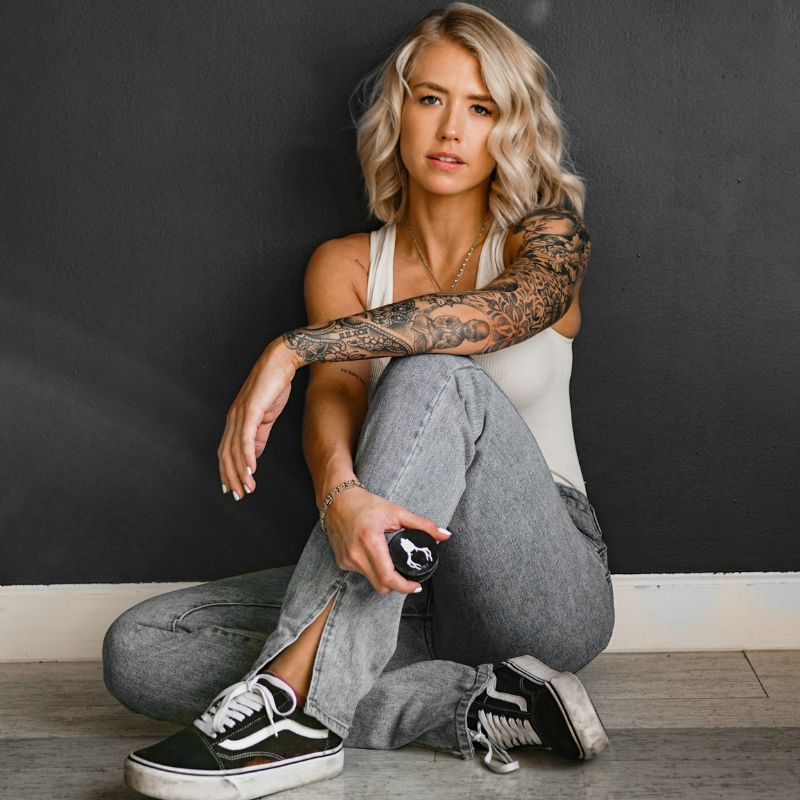
Large cover-ups work because they stop treating the old tattoo like a single object and start treating the whole arm or leg as a new composition. That's the logic behind large before-and-after galleries from multi-location studios like Inkaholik's cover-up collection, where you'll find scar cover-ups, sleeve transformations, and multiple style approaches in one place. When the old piece sits inside a bigger visual field, the artist can shift attention away from the problem area instead of trying to bury it directly.
How sleeve-level planning changes the result
Flow becomes more important than a single focal point. A sleeve can use dark zones, open breathing room, and directional movement to make the old tattoo feel like part of the background. That matters because many cover-up issues aren't about the subject alone, they're about whether the shape of the new tattoo gives the artist enough room to hide the old one naturally.
A sleeve concept also benefits from seeing lots of transformations in one gallery. You can compare how different artists handle dense black, awkward placement, and mixed subject matter. The site's online scheduling and payment tools make the consult-to-booking process easier, which helps when you know a cover-up may need more than one session.
If you're sketching a larger concept, this sleeve idea generator can help you test how a new design might wrap around an old area before you ever sit down with a tattooer. That's especially useful when the original tattoo sits inside a bigger rework.
What to look for in the photos
- Dark-to-light transitions: Good sleeves don't put the lightest visual weight over the darkest old pigment.
- Repeated texture: Feathers, smoke, scales, or ornamental shading can hide former edges better than flat fields.
- Multiple focal points: The eye should move through the whole sleeve, not land on the old tattoo.
- Recent healed examples: Fresh ink can look stronger than it heals, so healed results matter.
3. The Strategic Fade When Rework Is Smarter Than Removal
Some tattoos don't need total erasure, they need smarter planning. A good gallery from a studio like Sueño Tattoo's cover-up page is valuable because it explains feasibility, size, darkness, and placement instead of pretending every tattoo can be handled the same way. That kind of honesty saves time, especially when the old tattoo is too dark for a quick fix.
When a cover-up beats starting over
A cover-up is often the better choice when the existing tattoo still has usable shape, but the placement or style no longer works. The artist can build around the old lines, place darker elements strategically, and use texture to make the original unreadable. That's a different job from removal, because the goal is concealment through design, not elimination through fading.
If the darkest part of the old tattoo sits where a face, petal, or clean highlight needs to live, the design probably needs to change before you book.
That's why this kind of gallery should feel like a guide, not a promise. If the page shows a step-by-step assessment process, use that to judge how a studio thinks. You want an artist who talks about limits clearly, because the biggest mistakes happen when people try to force a small, light concept over saturated ink.
For readers comparing options, see tattoo removal outcomes can help you understand what fading can and can't do before a new tattoo is planned. The point isn't to push removal first, it's to recognize when a staged approach creates more design freedom.
4. The Organic Cover-Up Using Florals and Flowing Shapes
Florals, vines, smoke, and phoenix forms work so well in cover-ups because they don't depend on rigid geometry. A studio like Brass Knuckles Ink in the Bronx shows how organic shapes can soften awkward old tattoos and turn them into something that feels built into the body. That's especially useful when the original piece has uneven edges, a harsh name, or a shape that needs to be absorbed rather than boxed in.
Why flowing shapes are so forgiving
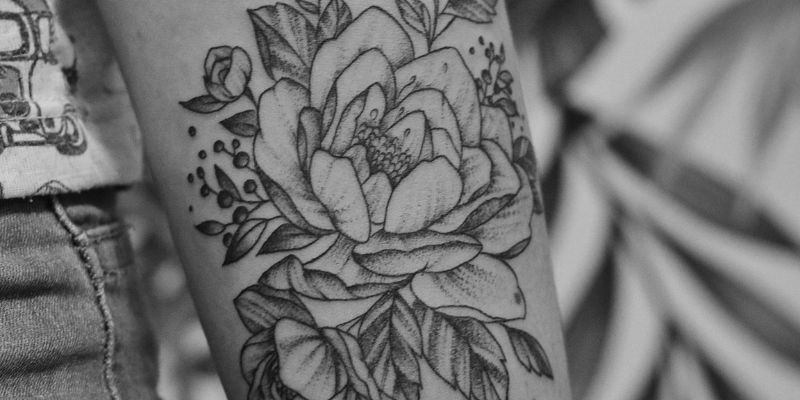
A flower petal can cover a sharp line. A stem can redirect the eye. A layered background can bridge between old and new without looking forced. That flexibility is why ornamental and feminine cover-up designs show up so often in strong galleries, and why they're a natural fit for larger transformations like back pieces and scar camouflage in certain cases.
The best examples here usually show more than one kind of flow. You might see large petals with darker centers, or a phoenix body that creates a central dark mass while the wings stretch outward to distract from the old work. Those choices matter because contrast does the hiding, while movement keeps the tattoo from feeling heavy.
What makes the design strategy work
- Dark centers: These can sit over the parts that need the most masking.
- Extended edges: Long petals, leaves, or feathers widen the canvas without looking like a simple patch.
- Layered texture: Repeated shading gives the artist more room to bury old forms.
- Body-following placement: Organic cover-ups often look best when they mirror the muscle line or spine.
The site's online booking flow helps if you're ready to move from browsing to consultation, but the photos are still the main event. Ask for full-resolution healed images if the compressed site photos leave questions, because the actual test is whether the old tattoo still reads once the skin settles.
5. Advanced Realism Covering Large Dark Tattoos
Realism cover-ups are for clients who need the artist to build illusion, not just make a bold mask. A private studio like Art by Tony Ray is useful to study because it shows labeled transformations and a session-based process for difficult projects. When a cover-up is large, dark, or visually cluttered, realism can give the artist enough surface detail to break up the old tattoo without turning the new one into a flat block.
Why realism works when the old tattoo is dense
Realism relies on light, shadow, texture, and focal depth. That gives the artist more ways to steer the eye away from the old work. Hair, fabric folds, skin tones, metallic surfaces, and background contrast can all be placed with purpose, so the darkest old marks sit under the noisiest or least important parts of the composition.
This is also where transparency matters. A studio that posts session-based pricing and application-only booking tells you the work is being filtered for complexity. That's a good sign on a hard cover-up, because it suggests the artist is thinking in terms of structure, time, and feasibility rather than just selling an image.
Practical insight: if the original tattoo is large and saturated, ask how the artist plans to distribute dark values across the new piece. A good answer should sound like composition, not camouflage jargon.
The downside is access. Selective intake means you may wait longer, and premium pricing usually reflects the amount of planning involved. But for a difficult rework, that can be a fair trade if the goal is a tattoo that still looks solid after healing. Realism is unforgiving when rushed, and the best galleries make that obvious.
6. The Hybrid Approach Blending Black and Grey with Strategic Color
A hybrid cover-up can solve a common problem, pure black can hide old ink, but it can also make the new tattoo feel too heavy if the whole composition is packed the same way. Eugene Pro Tattoo is a good example of a studio that blends black and grey with strategic color, which gives the artist more room to create readable depth while still masking what was there before. This approach works especially well when the old tattoo is awkwardly shaped, but the client still wants a design with some visual softness.
How artists balance coverage and style
The trick is not using color everywhere. It's using color where it supports the cover-up. Darker shading can sit over the oldest lines, while lighter transitions, highlights, or selective color accents keep the tattoo from collapsing into one heavy mass. That's why hybrid work often feels more breathable than full blackout-style solutions.
The studio's public rate guidance is also helpful because it shows that cover-up work can be estimated in a real, appointment-based way. Even when the final quote is project-specific, having a posted framework makes it easier to plan. If you're comparing artists, that kind of transparency usually signals that the studio expects clients to ask detailed questions before booking.
What to study in a hybrid gallery
- Black placement: Look for where the darkest values sit and whether they hide the old ink.
- Color restraint: Strategic color should support the cover-up, not fight it.
- Edge control: Soft fades can disguise old borders better than hard transitions.
- Style consistency: The tattoo still needs to look like one coherent piece.
Hybrid work is especially strong when you want a cover-up that feels custom instead of purely corrective. The artist gets to use all the tools, shape, value, and controlled color, instead of relying on one visual trick.
7. High-Contrast Styles Japanese and Trash Polka for Maximum Coverage
High-contrast work is one of the most reliable ways to tackle stubborn old tattoos because it gives the artist built-in visual weight. A cover-up gallery from Sacred Saint shows how Japanese influences, black and grey, and trash-polka-inspired reworks can all create enough contrast to bury heavy lines. Style choice becomes a coverage tool, not just an aesthetic preference.
Why contrast matters so much
The U.S. tattoo market is broad enough that cover-up work is no longer niche, and the pool keeps expanding. Pew reported that 32% of Americans had at least one tattoo in 2023, with 22% of tattooed adults having more than one, which suggests plenty of experienced clients eventually want revisions, additions, or cover-ups Pew Research. In that kind of market, styles that can solve hard problems quickly become especially relevant.
Japanese compositions work well because they use flow, movement, and dense structure to create large readable fields. Trash polka adds stark contrast and aggressive layering, which can be useful when the old tattoo is especially stubborn. The posted hourly rate, minimum session length, and deposit policy on the site also help clients plan around a larger project, because cover-ups often need more than one sitting.
If you're exploring that route, Japanese sleeve concepts can give you a starting point for a design that has enough movement and visual power to cover older work. That's useful before a consult, especially if the original piece is black, thick-lined, or placed in a wide area like the forearm or upper arm.
A strong high-contrast cover-up doesn't just hide the old tattoo, it makes your eye look somewhere else.
7-Style Cover-Up Tattoo Comparison
| Approach | Implementation Complexity 🔄 | Resource Requirements ⚡ | Expected Outcomes ⭐📊 | Ideal Use Cases 💡 | Key Advantages |
|---|---|---|---|---|---|
| 1. The Traditional Rework: Bold Lines & Solid Color | Moderate, studio team + varied styles 🔄 | Multiple artists, daily walk-ins + appointments; pricing on inquiry ⚡ | Consistent concealment across common old work, ⭐⭐⭐ 📊 | Quick consults, common name/symbol disguises | Large, multi-artist portfolio; easy access |
| 2. Large-Scale Transformations: Old Sleeves → New | High, multi-artist, multi-session projects 🔄 | Several Miami locations, online booking/payment; high sample volume ⚡ | Strong before/after results for large pieces and scars, ⭐⭐⭐⭐ 📊 | Full-sleeve reworks, scar camouflage, major transformations | Extensive gallery; streamlined booking and accessibility |
| 3. The Strategic Fade: Rework vs Removal Guidance | Moderate, assessment-led planning 🔄 | Educational intake, online consults; curated examples ⚡ | Clear suitability guidance; targeted reworks when appropriate, ⭐⭐⭐ 📊 | Clients deciding between cover-up and removal; borderline/difficult cases | Good expectation-setting; explains limits and strategy |
| 4. The Organic Cover-Up: Florals & Flowing Shapes | Moderate, custom ornamental planning 🔄 | NYC presence, online consults, emphasis on custom design ⚡ | Effective for color-forward ornamental cover-ups, ⭐⭐⭐ 📊 | Feminine back-pieces, floral/phoenix reworks, story-driven tattoos | Tailored ornamental solutions; scar camouflage options |
| 5. Advanced Realism: Covering Large, Dark Tattoos | Very high, technical realism, multi-session 🔄 | Application-only intake, session-based pricing, specialist availability ⚡ | High-quality realism on heavy/ dark tattoos, ⭐⭐⭐⭐⭐ 📊 | Large dark sleeves, chest pieces, high-difficulty cover-ups | Transparent session pricing; proven complex-case expertise |
| 6. The Hybrid Approach: Black & Grey + Strategic Color | High, blended techniques and single-artist focus 🔄 | By-appointment specialist, tiered pricing guidance (B/G vs color) ⚡ | Cohesive single-artist transformations across styles, ⭐⭐⭐⭐ 📊 | Clients wanting a unified aesthetic combining realism and traditional | Detailed portfolio; clear rate ranges reduce surprises |
| 7. High-Contrast Styles: Japanese & Trash Polka | High, bold coverage, large-scale rules 🔄 | Hourly/session pricing with deposit, consultation required ⚡ | Predictable high-coverage outcomes for bold styles, ⭐⭐⭐⭐ 📊 | Large-scale Japanese, trash-polka, maximum-coverage needs | Transparent rates/policies; wide stylistic range for heavy cover-ups |
Your Turn Planning Your Perfect Cover-Up with AI
Feeling inspired? The key to a successful cover-up is planning, not panic. Before you book a consultation, you can test ideas in different styles and see how a new design might solve the old one. Try prompts like “a large Japanese dragon covering my upper arm” or “a blackwork floral design to hide old script,” then compare how each concept handles contrast, spacing, and shape.
That matters because good cover-ups are usually about tradeoffs. A design may need to be larger than you expected, or darker than your original idea, or built around the old tattoo instead of directly over every line. A tool like TattoosAI can give you a visual starting point so you and your artist aren't guessing from scratch. You bring the problem, the style direction, and the placement, then the studio conversation gets much more specific.
The smartest approach is to use AI ideas as reference material, not as a final answer. Let the generated concepts show you what's possible, then ask a tattoo artist how those shapes, values, and textures would work on your actual skin. That's how you move from regret to a cover-up plan that feels deliberate, realistic, and personal.
If you're ready to turn a cover-up idea into something you can discuss with a tattoo artist, visit TattoosAI and start generating concepts that match your placement, style, and coverage needs. Use it to prototype the design before your consult, so you walk in with a clearer plan and better questions.