TattoosAI
You're comparing three very different ideas on your screen: a quiet dolphin silhouette, a vivid ocean scene, and a bold blackwork design influenced by a specific cultural tradition. All three can work, but they won't communicate the same feeling or age in the same way. A dolphin can suggest playfulness, intelligence, freedom, guidance, protection, connection to the sea, or remembrance, depending on its pose, surrounding elements, line quality, and placement.
That flexibility comes from a long symbolic history. Dolphins have been described as “one of the oldest continuous symbolic sea motifs” in Western iconography, with documented cultural use across multiple traditions, including ancient Greek and Roman associations with protection at sea and safe passage. Later Christian and medieval symbolism connected the animal with purity and spiritual renewal, while modern designs can also express conservation or environmental identity. You can explore these meanings through dolphin tattoo symbolism and history.
The eight ideas below pair each artistic treatment with practical decisions about style, scale, body placement, detail density, and collaboration with a tattooist. TattoosAI can help you generate and compare original concepts before a consultation, but a professional artist should refine the artwork for skin, movement, aging, and safe application.
Table of Contents
- 1. Minimalist Line Art Dolphin
- 2. Watercolor Dolphin
- 3. Geometric Dolphin
- 4. Japanese-Inspired Dolphin
- 5. 3D Realism Dolphin
- 6. Dolphin With Ocean Wave Integration
- 7. Dotwork and Stippling Dolphin
- 8. Tribal and Polynesian Dolphin
- 8-Style Dolphin Tattoo Comparison
- Turn a Favorite Concept Into a Tattoo-Ready Brief
1. Minimalist Line Art Dolphin
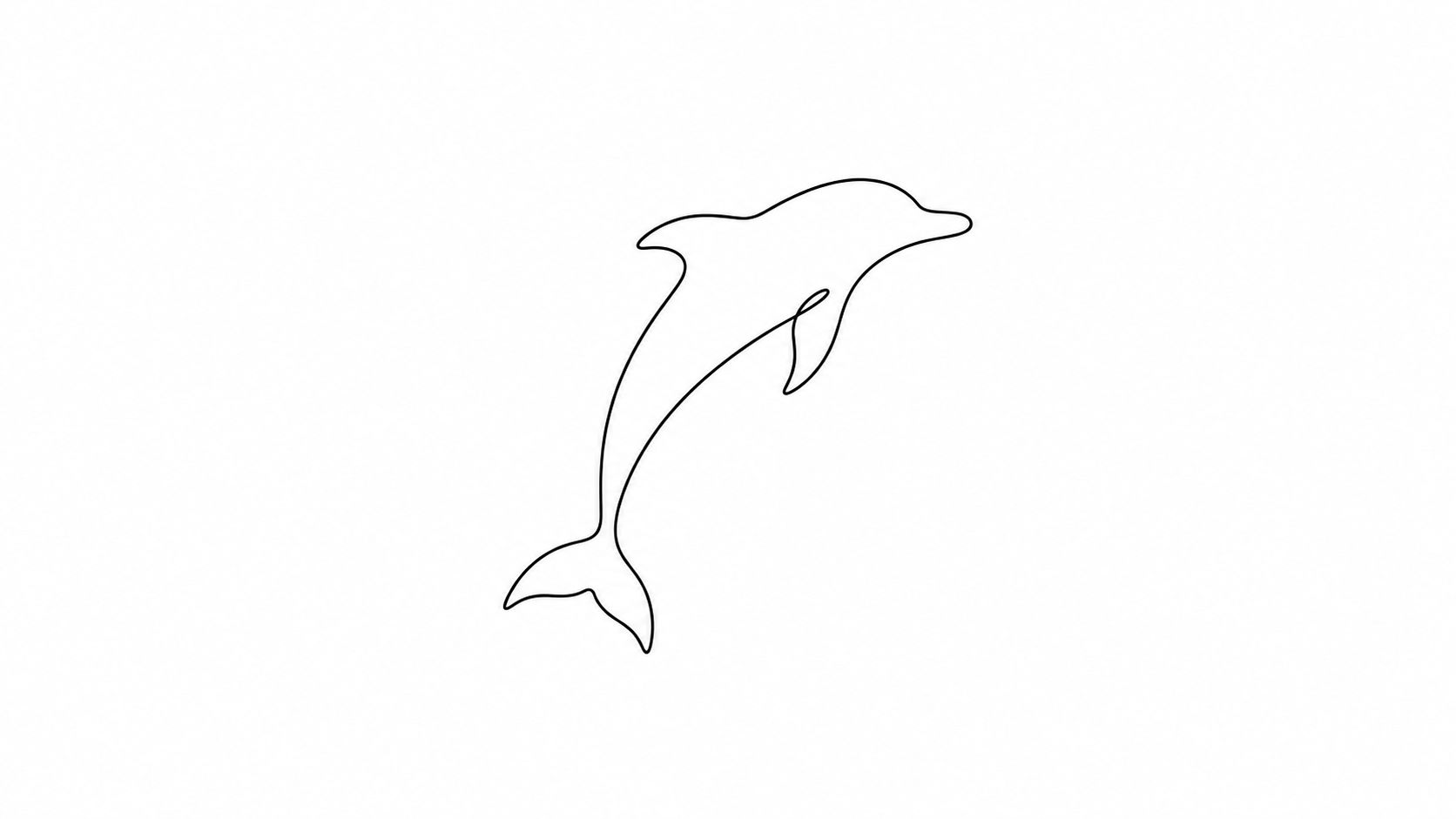
A minimalist dolphin relies on proportion and movement rather than shading. A single curved line can suggest the animal's back, snout, dorsal fin, and jump, creating a design that feels personal without demanding much visual space. It's a strong choice if you're getting your first tattoo and want something understated, especially on the wrist, ankle, finger, or behind the ear.
The main decision is whether the dolphin should look recognizable at a glance or more abstract. A simple jumping silhouette reads clearly from a distance. A single-line profile feels more artistic but may need careful spacing so the snout and fins don't disappear as the tattoo settles. Negative space can also form the wave, eye, or splash without adding extra ink.
Nature-inspired tattoo concepts grew 23% in 2023, while minimalist tattoos represented 31% of new tattoo requests globally in 2023, according to tattoo trend statistics from ZipDo. Those figures are broad proxies, not dolphin-specific demand, but they support the practical appeal of compact nature motifs.
Make a small design readable
Ask your artist to assess the smallest size that preserves the dolphin's silhouette. Very thin lines can look elegant initially, but excessive delicacy may reduce clarity as the ink naturally softens over time.
Useful prompt directions include:
- Pose: “A dolphin leaping in a clean side profile.”
- Line treatment: “Continuous fine-line outline with consistent stroke weight.”
- Composition: “Use negative space to imply a small wave.”
- Placement: “Designed for the inner wrist or outer ankle.”
A geometric dolphin head can suit a finger, while a leaping silhouette usually needs more length. Generate several line variations with TattoosAI, then show the strongest options to an artist who can adjust line weight, spacing, and proportions for your chosen body zone.
2. Watercolor Dolphin
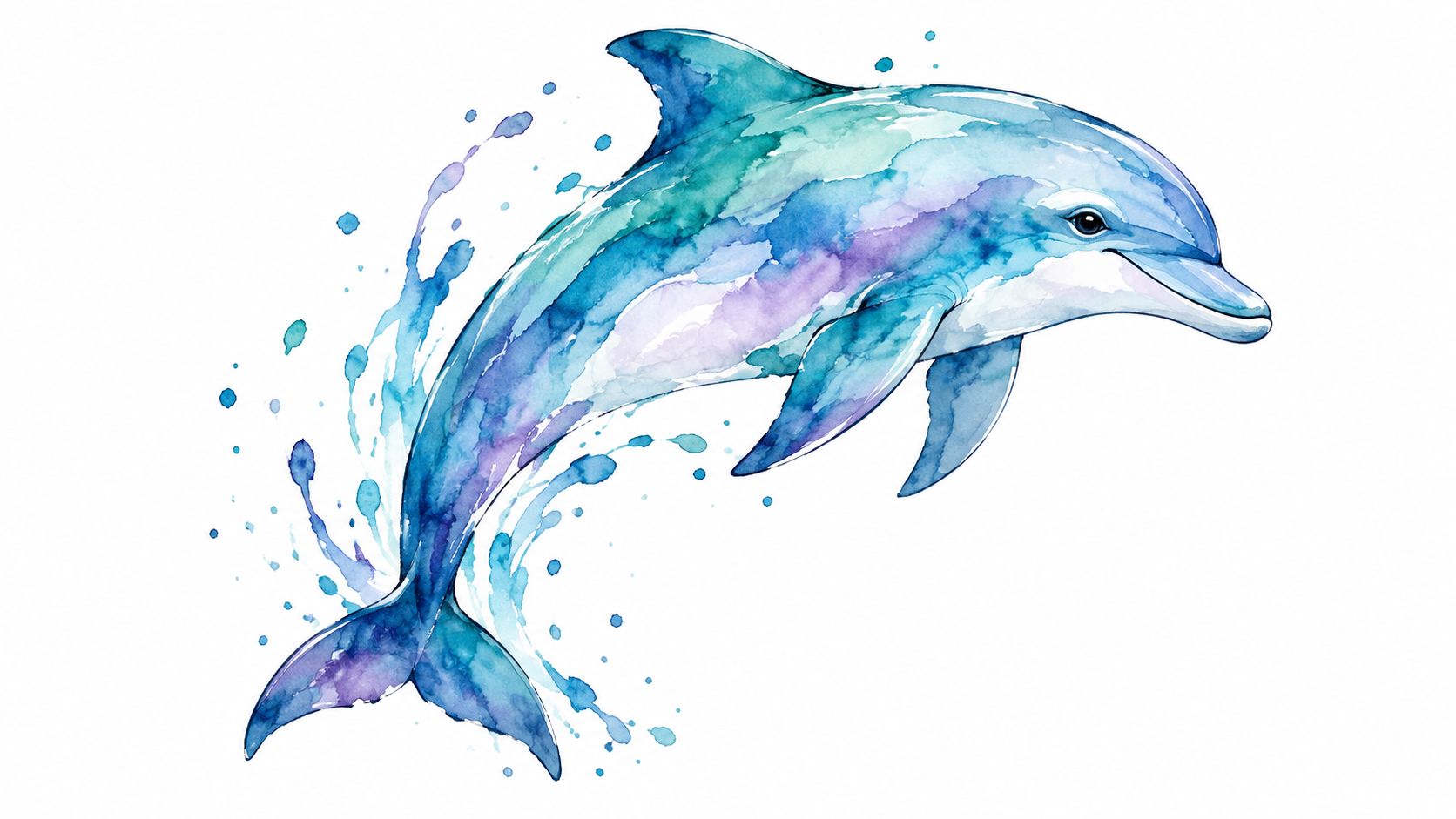
A watercolor dolphin can suggest open water, a remembered place, or a more imaginative mood through color alone. Blue washes keep the connection to the sea clear. Orange and pink can create warmth or nostalgia, while purple gives the image a dreamlike quality. Splashes around the body add motion, yet they also make the tattoo more dependent on the artist's control of pigment, saturation, and spacing.
Treat the design like a small painting placed on skin. The dolphin remains the subject, while the washes act like atmosphere around it. On a tiny placement, those layers can crowd one another and lose contrast. The upper arm, shoulder blade, thigh, calf, or ribs gives the artist room to balance the silhouette, transitions, and open skin.
Your skin tone, sun exposure, aftercare, and the artist's technique will influence how the colors settle. Because watercolor effects use softer boundaries than traditional linework, discuss whether the design needs a defining outline, selective black accents, or extra contrast around the eye and dorsal fin. Ask how the pigments may soften and whether a future touch-up could help.
Choose the palette according to the feeling you want:
- Ocean blues: A direct link to water and movement.
- Sunset tones: A joyful, nostalgic, or memorial mood.
- Galaxy purples: A dreamlike, imaginative interpretation.
- Limited black accents: More structure and clearer long-term readability.
For TattoosAI concept work, specify the subject, palette, and restraint together: “A leaping bottlenose dolphin with transparent ocean-blue washes, restrained purple splashes, open negative space, and no dense background.” Generate variations, then ask your tattooist to adapt the paper-like effect to your skin and chosen placement. Review how watercolor tattoos work before the consultation so you can discuss technique with realistic expectations.
3. Geometric Dolphin
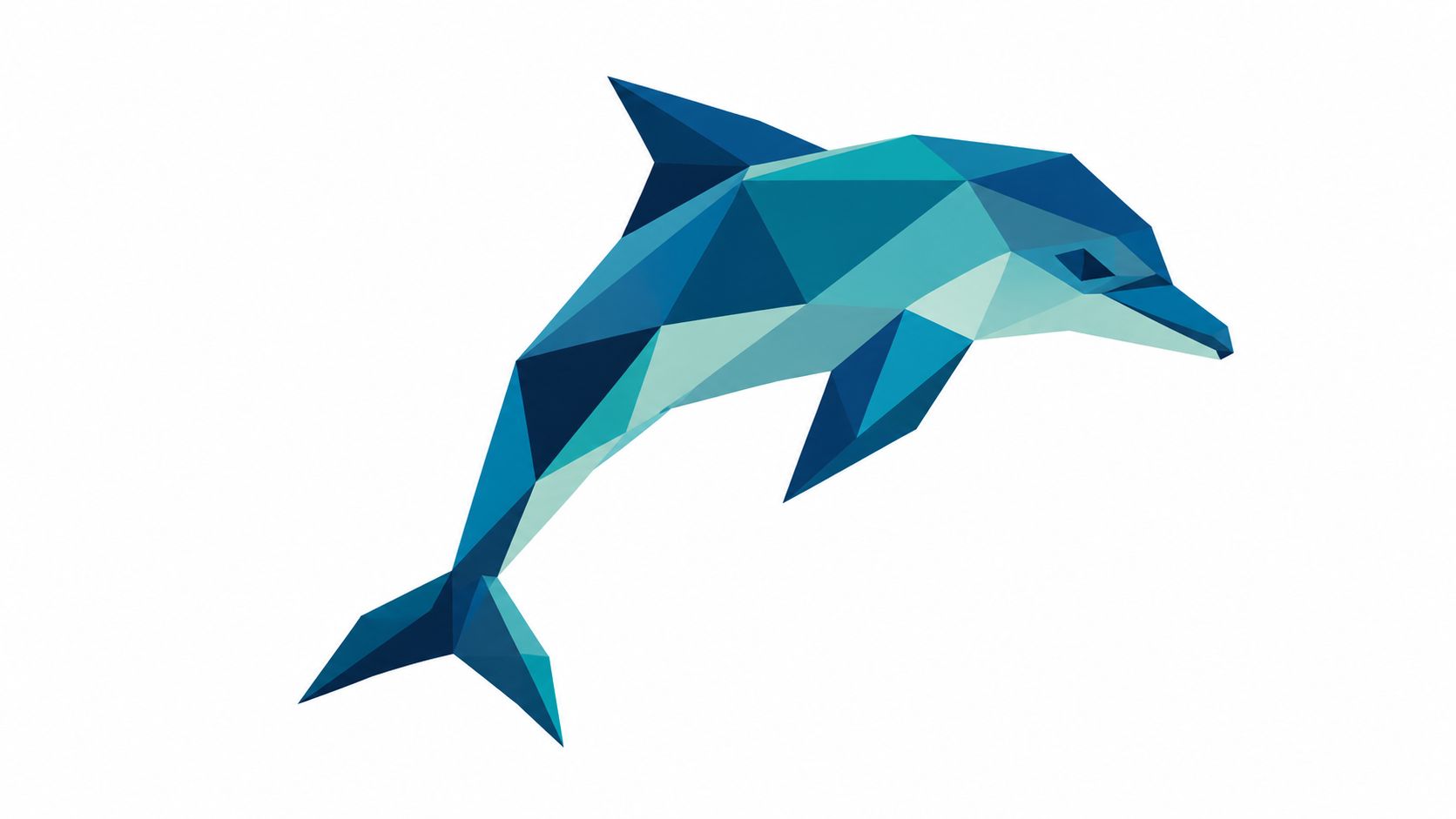
A geometric dolphin turns flowing movement into an organized visual system. Angular planes can make the animal feel contemporary or futuristic, while symmetrical framing gives it the presence of an emblem. A low-poly treatment keeps the dolphin recognizable through a few clear facets; a mandala-based version shifts attention toward ornament and pattern.
Begin with a black-and-grey draft. It lets you assess the silhouette, internal planes, and open skin before color affects the design. Large, well-spaced shapes usually remain clearer on smaller placements. Dense crystalline lines or a detailed mandala need more room and an artist who can keep intersections clean.
Placement should follow the design's geometry. The upper arm, thigh, back, and chest can hold a balanced composition. On the biceps, the artist must map the angles around the curve so the dolphin does not look stretched when the arm moves. A vertical dolphin can suit the forearm, while a wide polygonal arrangement generally needs a flatter area.
Practical rule: Ask to see the design mapped to your actual body contour, not only displayed as a flat digital image.
For TattoosAI concept work, build the prompt around decisions your tattooist can use:
- Subject: “A sleek bottlenose dolphin in a rising jump.”
- Structure: “Low-poly planes with clear triangular facets.”
- Complexity: “Moderate detail, readable silhouette, no overcrowded background.”
- Color: “Black and grey first, with optional muted blue accents.”
- Placement: “Designed to follow the outer upper arm.”
Use sacred geometry references with care. Their shapes carry visual associations, so choose them because you understand the language they suggest, not as filler. Bring the selected concept to your tattooist, who can simplify overlapping forms, correct perspective, and preserve the pattern's rhythm at the final size.
4. Japanese-Inspired Dolphin
A dolphin breaking through stylized waves can read like a complete story, with each surrounding motif guiding the viewer's attention. Clouds add movement behind the figure, blossoms soften the scene, and a rising sun can suggest renewal. The dolphin should remain the visual anchor, much like the main character in a print, while the environment establishes mood and direction.
This approach needs room for its visual rhythm. A back piece, sleeve, thigh, or chest can support several connected elements. Smaller placements work better with one dominant companion, such as waves or blossoms. Crowding every possible motif into a small design can blur the silhouette and make fine details age poorly.
Build meaning before decoration
Research the motifs before selecting them. Wave patterns, framing devices, colors, and written characters each carry associations within Japanese-inspired art. If you want kanji, confirm the intended meaning with a qualified speaker or reliable language source. A generated character may look convincing while communicating something unintended.
Context also changes the dolphin's meaning. Ancient Greek tradition treated dolphins as sacred, and killing one was considered a sacrilege comparable to murder, according to classical sources such as Pliny the Elder's Natural History, as discussed in dolphin tattoo meaning and cultural context. That history can support a protective or reverent reading, but it does not make a Japanese-inspired composition culturally accurate by itself.
Start with the message, then choose the visual treatment:
- Playfulness: A high leap, open water, bright accents, and a loose sense of motion.
- Guidance: A dolphin leading through directional waves toward a visible horizon.
- Memory: Calm water, a restrained palette, and one meaningful date or symbol.
- Spiritual renewal: Upward movement, open space, and carefully selected natural motifs.
For TattoosAI, prompt the desired wave density, framing, palette, and emotional direction. Use the results to compare compositions. Your tattoo artist should then adjust line weight, spacing, symbols, and color for the chosen body area, keeping the design respectful and readable at its final size.
5. 3D Realism Dolphin
A realistic dolphin depends on anatomy, light, and depth. The eye, beak, dorsal fin, skin texture, water reflections, bubbles, and splash direction all need to support the illusion that the animal is moving through or emerging from the skin. A weak reference can lead to a generic marine mammal, so choose clear imagery that shows the body angle you want.
This style usually needs a larger canvas than a minimalist design. The plan notes for this concept recommend a piece of 4 to 6 inches for detail retention, but that is a design guideline rather than a universal rule. Your artist may recommend a different size based on the pose, body area, skin, and amount of environmental detail.
Choose the artist before the effect
Look for a tattooist with healed realism work, not only fresh photographs. Ask how they handle highlights, soft gradients, and the boundary between dolphin and water. A realistic face on the forearm may be highly visible, while a back or upper thigh can offer more space and less daily exposure to sunlight.
A clear prompt might read: “Photorealistic bottlenose dolphin turning upward through dark ocean water, side-lit from above, realistic eye reflection, controlled bubbles, high contrast, black and grey with restrained blue, designed for the outer upper arm.”
Use TattoosAI to compare angles and expressions, but don't treat the generated image as an anatomical reference. AI concepts can combine details in ways that look attractive on screen but need correction before tattooing.
Ask for healed examples. Fresh realism shows saturation. Healed work shows whether the artist's detail, contrast, and edges remain convincing over time.
Realism can create maximum impact, but it also demands more from the artist and from your maintenance habits. Protect the healed tattoo from unnecessary sun exposure, follow aftercare instructions, and discuss whether touch-ups might be needed.
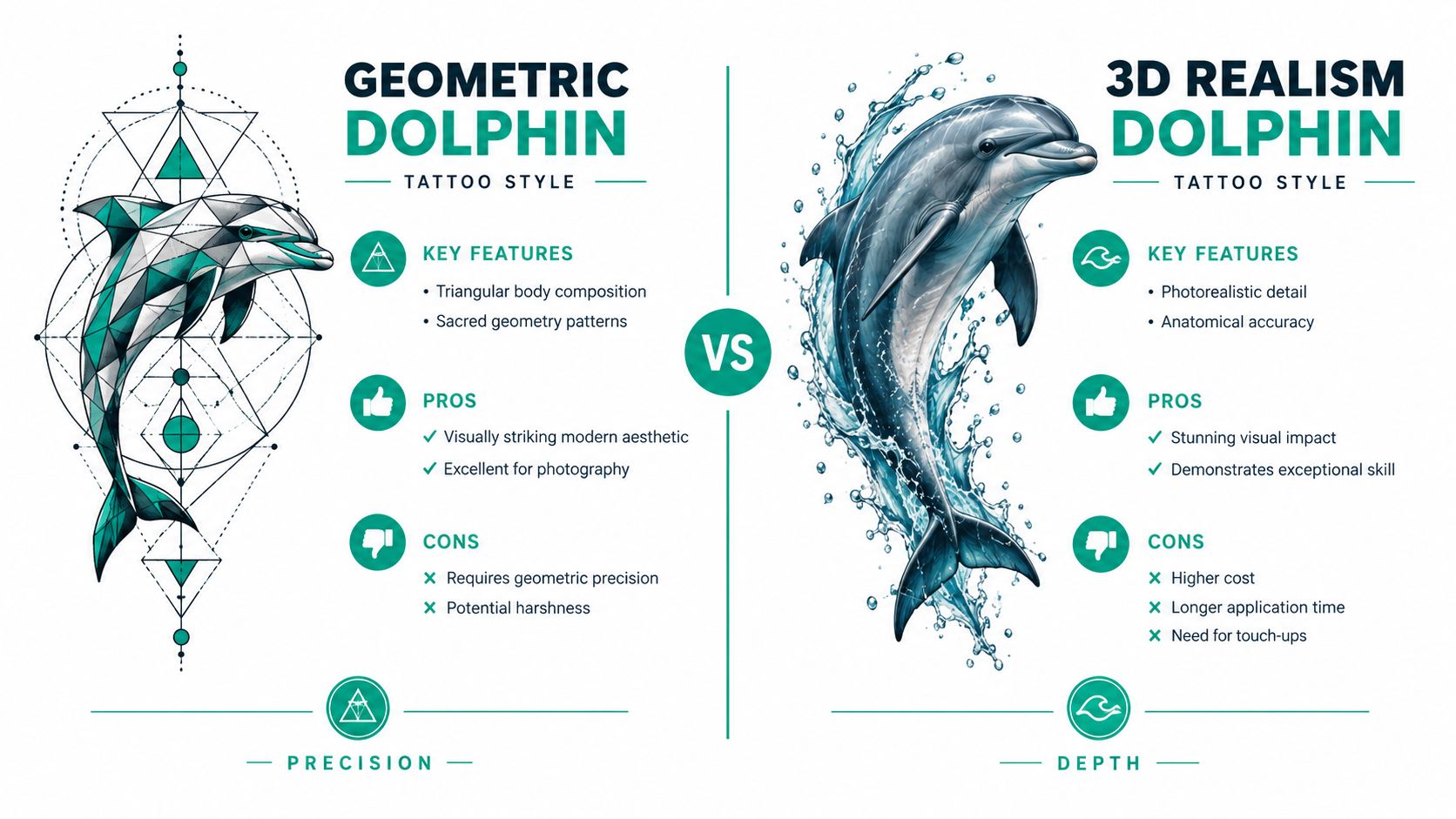
This video offers another visual reference for comparing geometric structure with realistic depth:
6. Dolphin With Ocean Wave Integration
A dolphin and wave composition works when the water creates direction rather than filling empty space. The dolphin can leap through a crest, dive beneath a curling line, or move inside concentric water patterns. The surrounding ocean tells viewers how to read the animal, from a simple connection to the sea to a more elaborate story about travel, freedom, or renewal.
Placement should guide the composition. A forearm supports a vertical leap or diving motion. A calf can hold a dolphin moving upward along the leg. A larger sleeve can connect waves across the arm, but the artist needs to plan how the design behaves when your elbow bends and your muscles shift.
Let the body shape the water
Start by photographing the placement in a relaxed position. Your tattooist can then decide whether the dolphin should follow the length of the limb, cross a joint, or sit inside a flatter zone. Curved wave lines often work better when they echo the body's movement rather than fight it.
Try prompt variations such as:
- Minimal wave: “Single-line dolphin jumping through two open wave curves.”
- Abstract wave: “Dolphin surrounded by flowing Japanese-inspired water ribbons, open negative space.”
- Geometric wave: “Angular water rings framing a central dolphin silhouette.”
- Realistic sea: “Dolphin breaking the surface with controlled foam and limited background detail.”
The emotional message changes with the pose. A dolphin moving upward can suggest optimism or freedom. A diving dolphin feels quieter and more private. Two dolphins facing one another can suggest connection, partnership, or a shared memory.
Ask your artist to remove any element that competes with the focal point. A successful ocean composition doesn't need every possible maritime symbol. One strong wave system, carefully scaled to the body, can communicate more clearly than a crowded seascape.
7. Dotwork and Stippling Dolphin
Dotwork builds the dolphin from controlled points rather than conventional gradients. Closely packed dots create shadow, while wider spacing lets skin show through as highlight. The result can feel soft, textured, antique, or highly ornamental, depending on dot size and the density of the surrounding pattern.
This technique suits people who want detail without a fully shaded realism piece. A stippled dolphin portrait can emphasize the eye and facial shape. A mandala-style design can turn the body into a decorative pattern. A dotwork wave background can provide atmosphere while keeping the animal itself readable.
Judge density at the intended size
A design that looks beautifully open on a large screen may become crowded when reduced. Ask your artist to show a size-appropriate stencil or mock-up and discuss how much skin should remain visible. Dot spacing matters just as much as the shape of the dolphin.
The dotwork tattoo style guide can help you identify the difference between stippling, pointillism, and ornamental dot patterns before writing a prompt. Then specify the practical result you want, not just the label.
For example: “A side-profile dolphin formed with medium-density stippling, clear open highlights along the belly, a lightly dotted wave beneath it, no solid black background, designed for the shoulder blade.”
A larger back, thigh, or upper-arm placement gives the artist more control over gradual shading. Small dotwork can still work on the ankle or forearm, but the artist may need to simplify the eye, waves, and internal texture. Extended sessions are possible because the technique requires precision, so ask about session planning and healing between visits.
Keep the focal points open. The eye, snout, and dorsal fin need enough contrast to remain identifiable after the surrounding dots soften.
8. Tribal and Polynesian Dolphin
A tribal or Polynesian dolphin should begin with cultural research, not a generic style filter. Pacific traditions use distinct visual systems, motifs, and protocols, so a design inspired by Samoan, Māori, or Hawaiian art shouldn't be treated as interchangeable decoration. The dolphin may represent ocean connection, navigation, ancestry, or spiritual significance, but the meaning of a pattern depends on the tradition and the way it's used.
The practical choice is to identify a specific cultural direction before you generate concepts. “Polynesian dolphin” is broad. A better starting brief names the intended tradition, the type of pattern language, and the reason you're drawn to it. Then consult an artist with genuine experience in that tradition and ask how the design should be adapted respectfully.
Avoid a borrowed pattern without context
A dolphin built from navigation stars and ocean bands may suit someone whose story centers on travel or finding a path. A pair of dolphins within a structured band may express family or connection. Those interpretations should come from your own meaning and from informed collaboration, not from assuming one universal definition.
Use TattoosAI for early visual exploration, while keeping the prompt specific:
- Tradition: “Inspired by [specific tradition], with research-informed pattern references.”
- Subject: “A dolphin integrated into a balanced symbolic form.”
- Purpose: “Personal connection to ocean travel and guidance.”
- Composition: “Clear silhouette, controlled pattern density, no random decorative symbols.”
- Placement: “Designed as a forearm panel with a readable outer contour.”
Discuss attribution and protocol with your artist before booking. A qualified tattooist may recommend changing motifs, simplifying the design, or working with a cultural practitioner. That adjustment isn't a compromise. It's part of making the tattoo meaningful, legible, and respectful.
8-Style Dolphin Tattoo Comparison
| Style | 🔄 Implementation Complexity | ⚡ Resource & Time Requirements | ⭐ Expected Outcomes | 📊 Ideal Use Cases | 💡 Key Advantages |
|---|---|---|---|---|---|
| Minimalist Line Art Dolphin | Low, single/double continuous lines; high precision needed | Low, short session, low cost; minimal aftercare | Clean, timeless, subtle silhouette; high clarity at small sizes | Small placements, first-time tattoos, minimalist looks | Quick, affordable, versatile placement; specify line weight |
| Watercolor Dolphin | Medium, color blending and soft edges require skill | Medium–High, experienced colorist, longer sessions, more aftercare | Vibrant, expressive, painterly result; more prone to fading | Larger pieces, sleeves, colorful wearable art | Highly eye‑catching and emotional; define palette and ask about color retention |
| Geometric Dolphin | Medium–High, precision geometry and symmetry | Medium, skilled artist for crisp lines; moderate time/cost | Modern, striking, photogenic; precise visual language | Design‑savvy clients, biceps/thighs/backs, sacred geometry fans | Visually bold and symbolic; request black‑and‑white draft first |
| Japanese‑Inspired Dolphin | High, traditional composition and cultural motifs | High, specialist artist, time‑intensive, higher cost | Timeless, narrative‑rich, culturally grounded aesthetic | Large sleeves, storytelling pieces, traditional enthusiasts | Deep symbolism and heritage; research and honor cultural context |
| 3D Realism Dolphin | Very High, advanced shading, anatomical accuracy | Very High, realism specialist, long sessions, costly, touch‑ups | Photorealistic, high "wow" factor; strong depth and detail | Large focal pieces, portfolio showpieces, collectors | Exceptional visual impact; requires budget, size and experienced artist |
| Dolphin with Ocean Wave Integration | Medium–High, integrated composition and flow planning | Medium–High, larger footprint, skilled composition, expandable | Cohesive narrative with dynamic movement; scalable | Forearms, calves, sleeves, environmental storytelling | Narrative flexibility and easy future expansion; plan for body contours |
| Dotwork and Stippling Dolphin | High, meticulous dot placement and density control | Very High, extremely time‑consuming, high cost, specialist | Intricate textured shading, timeless monochrome depth | Large back or sleeve pieces, fine‑art tattoo enthusiasts | Unique texture and depth; preview dot size/density and budget sessions |
| Tribal and Polynesian Dolphin | Medium, pattern work plus cultural specificity | Medium, skilled traditional artist; moderate time | Bold, distinctive, culturally meaningful graphic result | Any size, spiritual/cultural connection, statement tattoos | Strong contrast and longevity; research symbols and work respectfully |
Turn a Favorite Concept Into a Tattoo-Ready Brief
Choose the meaning before choosing the visual effect. Decide whether you want the dolphin to express playfulness, freedom, protection, guidance, remembrance, spirituality, or environmental identity. A dolphin with an open leap and bright water will read differently from a calm profile paired with a moon or a restrained memorial element.
Next, shortlist one artistic treatment. Minimalist linework supports subtle scale and quick visual recognition. Watercolor emphasizes atmosphere and color, while geometric work prioritizes structure. Realism needs careful reference selection and an experienced specialist. Wave integration makes the ocean part of the story, dotwork creates texture through spacing, and culturally informed blackwork requires research and respectful collaboration.
Then decide how much canvas the idea needs. A single dolphin can fit an ankle, wrist, or forearm if the silhouette stays clear. A pod, detailed wave system, realistic splash, mandala, or cultural pattern usually needs more room. Placement affects more than visibility. Curvature changes how the design is read, joints interrupt flow, sun exposure affects maintenance, and excessive detail can reduce clarity when the tattoo settles.
Use TattoosAI to generate several concepts that test composition, color, and density. The platform describes a workflow in which you enter an idea, choose from 18+ styles, and receive multiple concepts that match your preferences. Treat those outputs as references for a studio discussion, not as a substitute for a tattooist's anatomical judgment or technical adjustments.
A compact prompt formula can keep your brief focused:
“A [dolphin pose] expressing [personal symbolism], in [artistic style], using [palette], with [surrounding elements], designed for [body placement], approximately [intended scale], with [line weight or detail density].”
For example: “A single dolphin diving beneath a small crescent wave, expressing guidance and a connection to the sea, in minimalist fine-line style, black ink only, with open negative space, designed for the outer ankle, compact vertical composition, consistent medium-thin lines.”
Before you book, verify any cultural reference, especially kanji, sacred geometry, tribal pattern systems, or Japanese-inspired motifs. Ask the artist to show how the design will translate onto your skin, including a stencil or placement mock-up when possible. A professional may change the pose, remove fine details, enlarge the composition, strengthen contrast, or alter the flow. Those changes protect the design's readability and help turn an attractive concept into a tattoo that works in real life.
Choose the strongest reference, write down what the dolphin is meant to represent, and bring both to a qualified tattooist. The best final design will be a collaboration between your story, the visual direction you prefer, and the artist's understanding of skin, movement, healing, and longevity.
TattoosAI lets you describe a dolphin pose, symbolism, style, palette, and placement direction, then compare multiple concept variations before your studio consultation. Explore the possibilities and start shaping your own dolphin design tattoo with TattoosAI.