TattoosAI
The design that looks striking in a screenshot can lose its shape when it wraps around your arm. A rose may sit well on the shoulder, while the elbow bend and forearm twist change how the rest reads. Plan the full shoulder to wrist composition before settling on separate motifs.
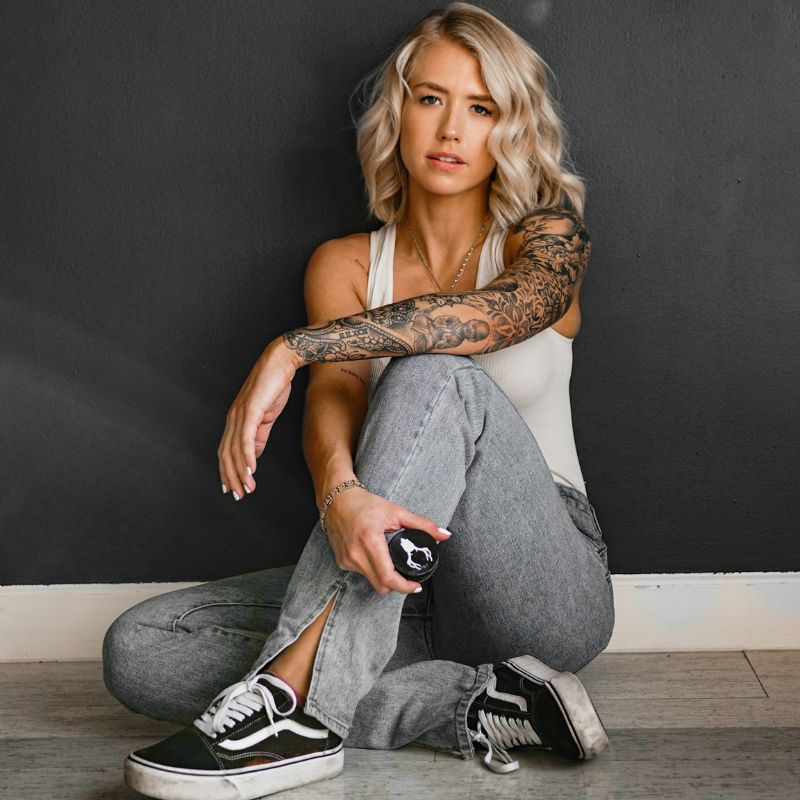
The strongest female sleeve ideas work with the arm's shape. Set the focal piece, leave deliberate areas of open skin, and check how the design reads as your arm moves. A sleeve also takes multiple sessions, with time, cost, and healing to plan for. Treat it as one connected composition that must age together, not a collection of unrelated images.
What to Judge in Every Idea Below
Judge flow, scale, placement, and aging before choosing small details. Ask where the eye enters, how it travels past the elbow, and what remains readable from across a room. If visible ink needs to work with everyday clothes, the golf outfit advice beyond neutral polos offers a separate perspective on tattoo-inspired apparel.
The eight concepts below range from soft to bold and sparse to saturated. Each includes a worked example and a practical trade-off. Use an AI-generated concept as a reference prompt for your tattooist, not a final stencil. The artist still needs to adapt the design to your arm, its movement, and the way the composition will read across the whole sleeve.
Table of Contents
- What to Judge in Every Idea Below
- 1. Floral Botanical Sleeve
- 2. Japanese Irezumi Sleeve
- 3. Fine-Line Minimalist Sleeve
- 4. Geometric and Dotwork Sleeve
- 5. Watercolor Sleeve
- 6. Celestial and Moon Sleeve
- 7. Blackwork Ornamental Sleeve
- 8. Portrait and Memorial Sleeve
- How the 8 Female Sleeve Ideas Compare at a Glance
- Turn Your Sleeve Idea Into a Plan That Holds Together
1. Floral Botanical Sleeve
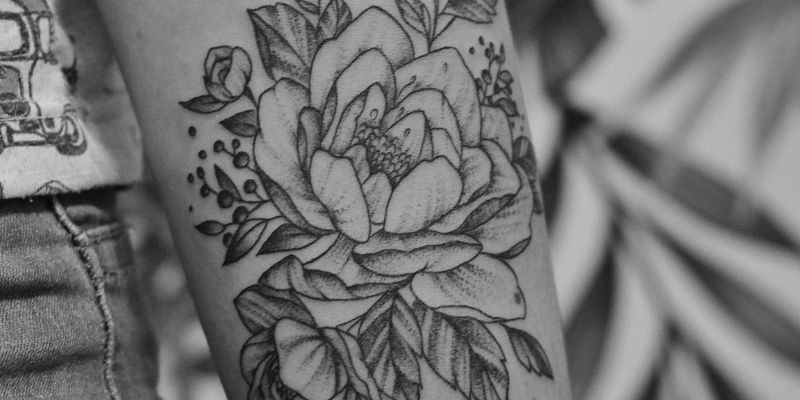
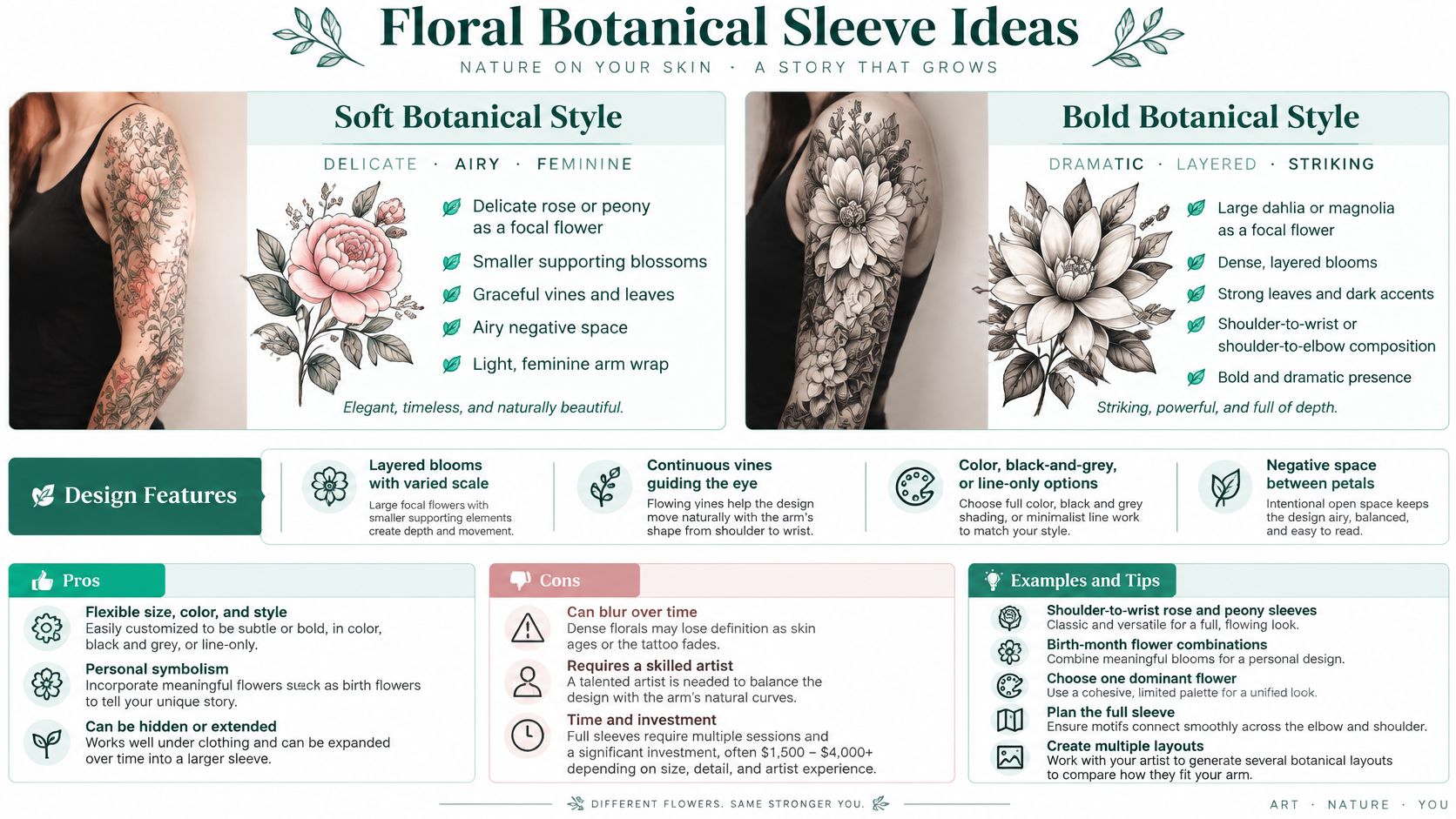
A botanical sleeve works because plants already know how to climb. Stems follow the forearm's twist, leaves fill awkward gaps near the elbow, and a large bloom can anchor the outer upper arm where you have the widest, flattest canvas.
Pick one dominant flower first. A peony, rose, magnolia, or dahlia should carry the shoulder or outer bicep. Smaller blooms and greenery support it. They shouldn't compete with it.
The image below compares soft and bold ways to build that structure.
A Worked Example That Holds Together
Say you want birth-month flowers for three family members. Don't line them up like a chart. Place the largest bloom on the outer upper arm, let a vine carry the second flower around the elbow ditch with space to bend, and finish with the smallest cluster near the wrist.
That gives you a story and a clear size hierarchy. It also leaves negative-space corridors so the sleeve doesn't turn into floral wallpaper.
Demand is broad, not niche. In 2025, 30% of U.S. women reported having at least one tattoo, compared with 19% of men, according to YouGov's survey of 1,115 U.S. adults. You're planning in a mature market, so good floral artists book out. Plan early.
- Limit the palette: Keep it to three to five colors so sessions match months apart.
- Plan the elbow early: Ask how petals or leaves will distort when you bend and straighten your arm.
- Compare layouts first: Generate several botanical options, then study floral arm sleeve tattoo layouts against your own arm photos.
I recommend a neo-traditional version if you want color that stays readable. Fine realism can be beautiful, but it needs larger scale and stricter sun care.
2. Japanese Irezumi Sleeve
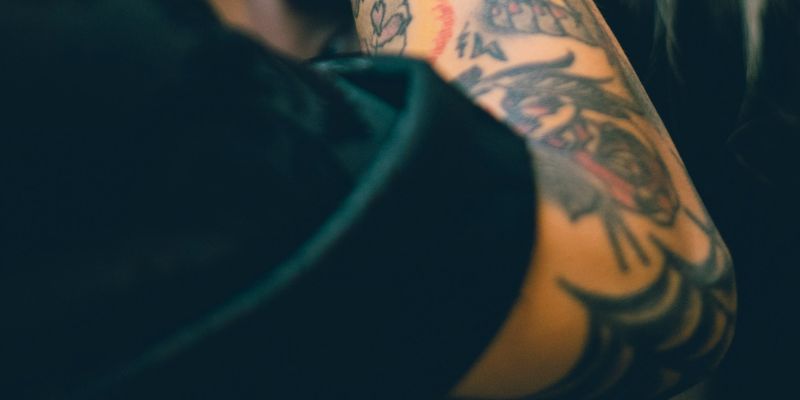
Japanese sleeves don't treat background as filler. Waves, wind bars, and clouds are the structure. They push a koi, dragon, peony, or chrysanthemum forward and carry your eye around the arm without dead stops.
That built-in flow is the main advantage. You don't have to invent transitions between motifs. The background does that work, from shoulder cap to wrist.
Watch how a full composition connects before you commit to single motifs.
Where People Get This Style Wrong
They pick five favorite symbols and ask the artist to squeeze them in. Irezumi needs restraint. One main creature, one or two seasonal flowers, and consistent background usually beat a crowded wish list.
Women's arm tattooing also isn't a new invention. Greek vase paintings from the fifth century BCE depict Thracian women with tattooed arms described as "sleeves", according to The Conversation's history of the female tattoo. The modern shift is visibility and scale, not the idea itself.
Say you choose a koi moving up the forearm through waves, with peonies at the elbow and shoulder. The direction matters. So does seasonal logic. Research each motif before your consult, and don't mix symbols just because they look good in separate pins.
- Choose a specialist: Look for healed Japanese work with smooth background shading, not just bold outlines.
- Test the wrap: Review front, side, and back views, and explore Japanese tattoo styles and motif combinations before you brief the artist.
- Budget for saturation: Dense color and background take multiple long sessions. That's the price of cohesion.
The trade-off is commitment. This style covers a lot of skin and doesn't lend itself to tiny additions later.
3. Fine-Line Minimalist Sleeve
Fine-line sleeves look effortless in fresh photos. Healed, they're less forgiving. Thin lines soften, tiny gaps close, and small icons can lose their edges if they're packed too tightly.
That doesn't mean you should avoid the style. It means you need readable silhouettes, consistent spacing, and a simplified fallback for any micro-detail.
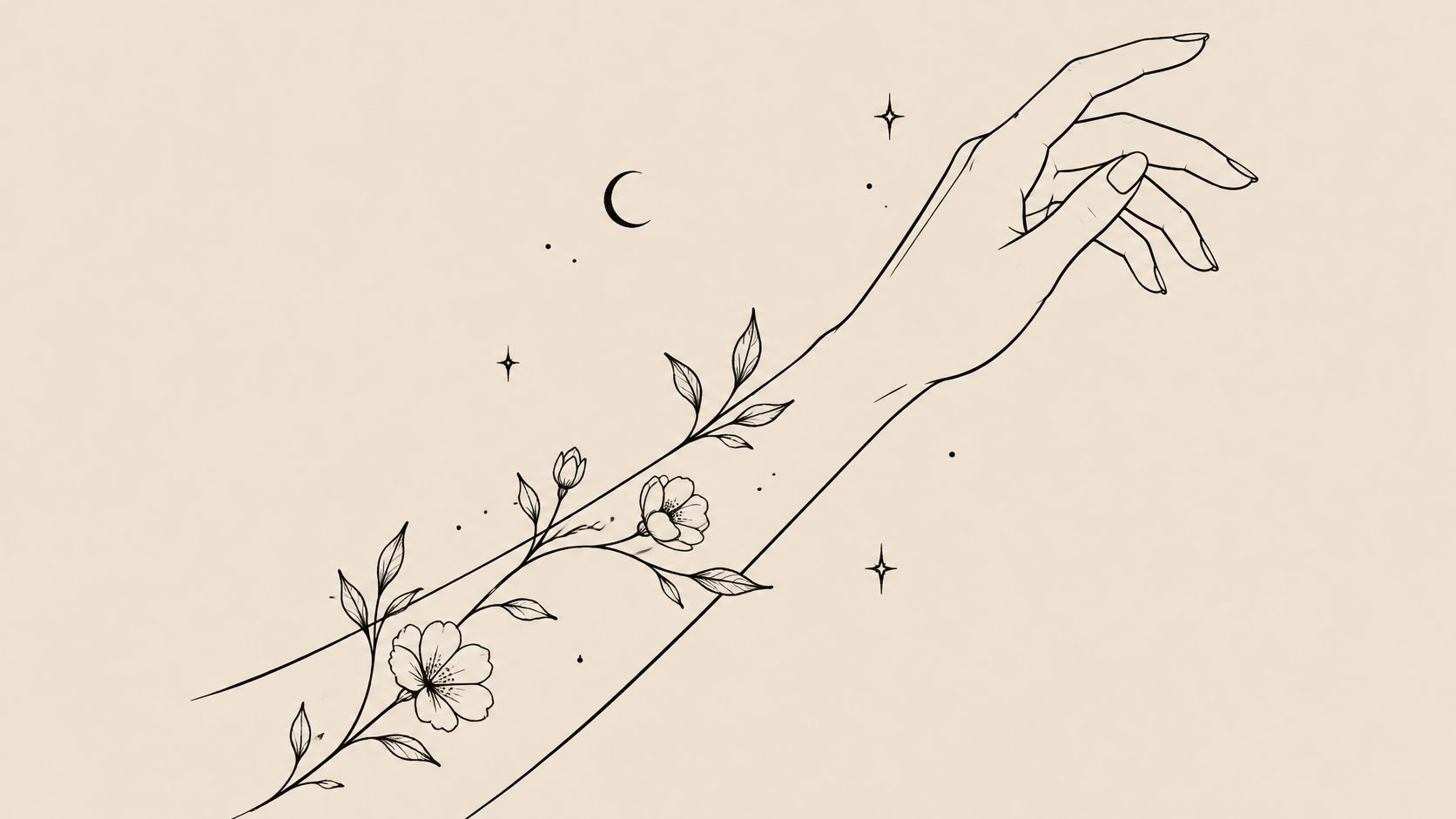
The line drawing below shows the spacing that makes this approach work.
Scale Is Your Insurance Policy
Tattoo needles generally deposit pigment approximately 1 to 2 mm into the dermis, where the ink becomes permanent, as described in the Journal of Law and the Biosciences article on tattooing. You can't edit that placement later like a digital layer. Review the design at life size on your arm.
Say you want a constellation linking small blossoms from wrist to shoulder. Keep each icon in a similar size range. Let a fine stem or dotted path connect them, but leave open skin between clusters at the inner elbow and wrist, where movement and friction are constant.
Practical rule: If you can't identify each motif from arm's length in a printed mock-up, it's too small for a fine-line sleeve.
- Judge healed portfolios: Fresh fine line always looks crisp. Healed work tells the truth.
- Set a line hierarchy: Slightly stronger outer contours help delicate inner detail survive.
- Generate spacing tests: Compare several minimalist layouts against photos of your arm at rest and bent.
I like this style for a first sleeve if you want room to expand. Just don't mistake subtle for low-maintenance. You'll likely need touch-ups sooner than with bolder work.
4. Geometric and Dotwork Sleeve
Geometry exposes every placement mistake. A mandala that's perfectly round on paper will warp over the elbow, shoulder curve, and forearm twist unless your artist maps it directly to your body.
When it's mapped well, the payoff is rhythm. Repeating triangles, radial mandalas, and stippled shading can make the arm look intentionally structured from every angle.
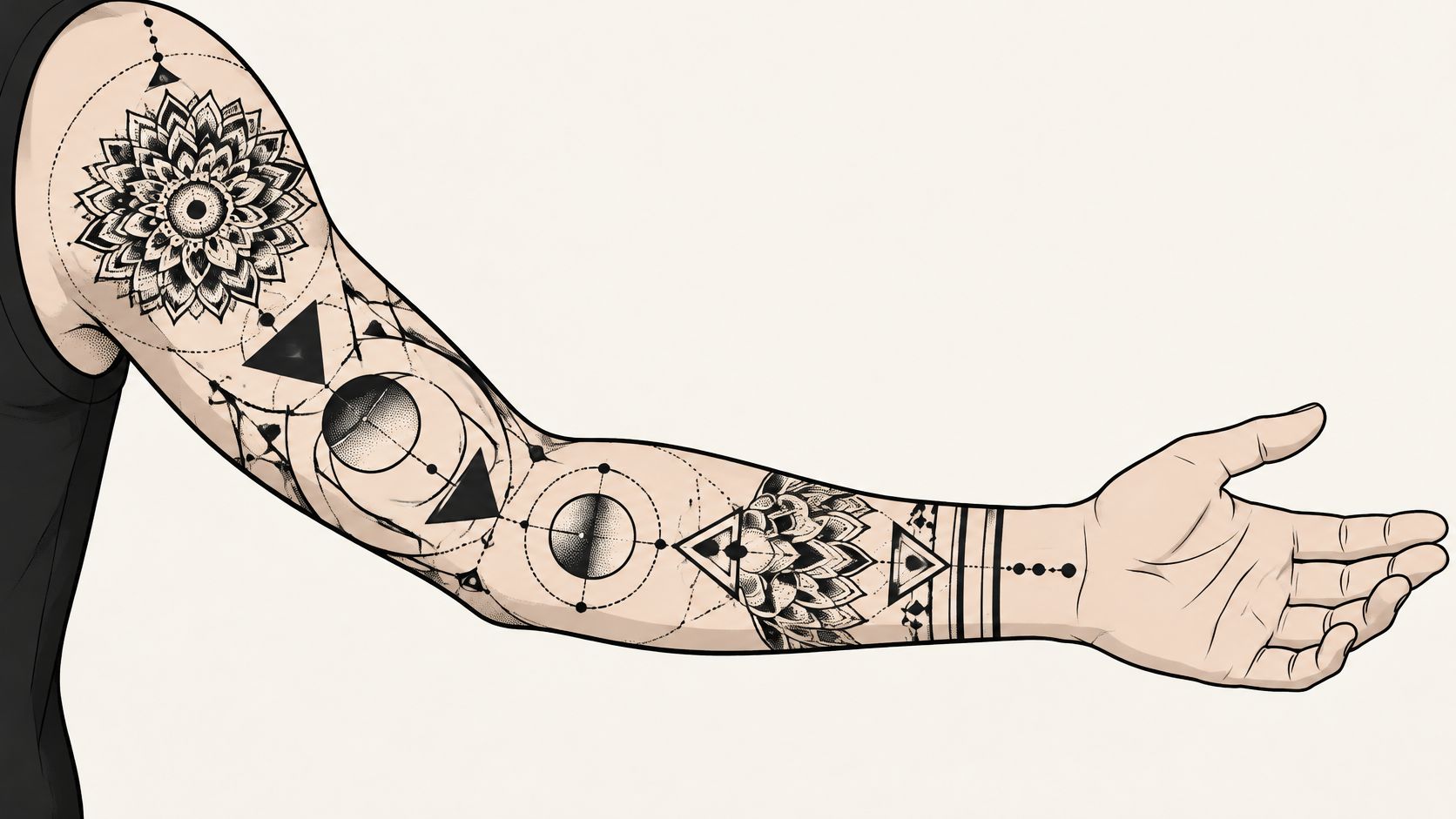
This example shows how mandala and celestial geometry can share one system.
Build Around Joints, Not Through Them
Place the most symmetrical element on a stable area, such as the outer forearm or outer upper arm. Use dotwork gradients, bands, or smaller repeating shapes to cross transition zones. Those forgiving textures hide natural distortion better than a long, straight line.
Say you want a wrist-to-shoulder mandala sleeve. Anchor one large mandala on the forearm, a second smaller one above the elbow, and connect them with dotted arcs and line bands. You get symmetry where the skin allows it and flow where it doesn't.
Arms are already a leading placement choice. In survey research involving 3,033 respondents, the most common tattoo locations were the upper arm at 41.5%, upper back or shoulder at 35.4%, and lower arm at 34.5%, according to a population-based analysis published in BMC Public Health. Many geometric sleeves grow naturally from joining upper and lower arm pieces with planned bands.
- Stencil on the body: Ask for mapping with your arm bent, straight, and rotated.
- Check dot density healed: Dots spread slightly. Tight stippling can turn muddy.
- Preview scale changes: Test how the pattern enlarges at the shoulder and compresses at the wrist.
The cost driver is time. Precise dotwork is slow, but rushing it shows.
5. Watercolor Sleeve
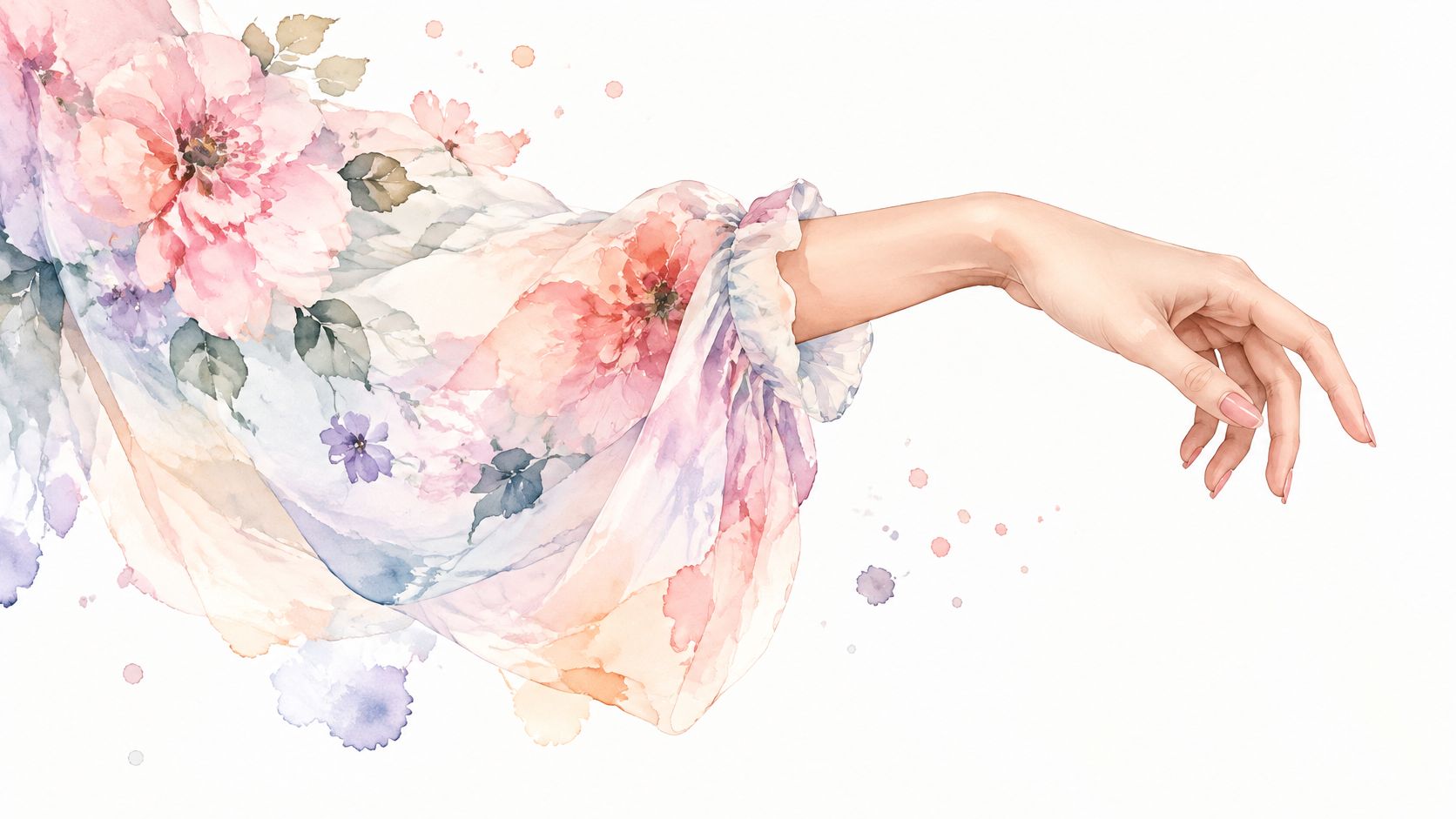
Watercolor gives you movement that hard outlines can't. Soft washes, splashes, and bleeding edges suit florals, animals, and abstract sleeves that should feel painted rather than drawn.
The trade-off is control. Without enough structure underneath, pale washes can fade into a bruise-like blur. Strong watercolor sleeves usually hide a solid drawing under the looseness.
The painting below captures the soft edge and flow clients usually want.
Color Choice Is a Materials Conversation
Commonly labelled tattoo pigments include titanium dioxide at 32%, carbon black at 22%, and Pigment Blue 15 at 14%, according to a 2024 medical-toxicology review in the Journal of the European Academy of Dermatology and Venereology. That same review states that no tattoo pigments have been approved by the U.S. FDA specifically for use in tattoo inks.
Ask for exact manufacturer and pigment information. Discuss allergy history and prior reactions before a large color sleeve, especially with bright reds, yellows, and white highlights.
Say you want an animal silhouette dissolving into color across the forearm. Keep the silhouette dark and readable. Let washes extend toward the wrist and elbow, but reserve clean skin at the edges so future touch-ups have somewhere to go.
Don't maximize pigment coverage just to make a preview look dramatic. Breathing room protects the design as colors settle.
- Review healed color: Ask how pastels and splashes look after full healing, not just on day one.
- Protect it from sun: Use sunscreen once healed and cover it during prolonged exposure.
- Test palettes digitally: Compare warm, cool, and limited palettes before anyone opens ink.
I recommend watercolor as an accent system if you want longevity plus softness. Pure wash with no anchor is the riskiest version.
6. Celestial and Moon Sleeve
Celestial sleeves succeed on spacing. Moons, stars, planets, and constellations need dark or empty sky between them. Cram every phase and zodiac sign onto one arm and you'll lose the calm that made you choose the theme.
Start with one organizing device. A moon-phase sequence can run down the outer arm. A date-specific constellation can spread across the forearm. A sun and moon pairing can anchor shoulder and wrist.
A Personal Sky, Not Clip Art
Say you map the night sky from a meaningful date. Bring an accurate star chart, then let your artist simplify it. Real constellations often need fewer stars and stronger connecting lines to read on skin.
Place the largest moon where the arm is widest. Let smaller stars and dotwork taper toward the wrist. That taper follows the arm's natural shape and stops the sleeve from feeling like evenly spaced stickers.
Interest isn't limited to one country. In 2025, 44% of Argentine women aged 25 to 49 reported having tattoos, according to a Voices! opinion poll reported by Buenos Aires Times. Celestial work travels well because the symbols are personal without needing text.
- Balance negative space: Empty skin is your night sky. Protect it.
- Mix rendering carefully: Fine-line stars pair well with blackwork moons, but keep line weights consistent.
- Compare full layouts: Generate celestial concepts and check them from front, side, and back before booking.
The best version feels quiet from a distance and detailed up close. If every element shouts, cut half of them.
7. Blackwork Ornamental Sleeve
Blackwork is the boldest choice on this list. Solid fills, graphic ferns, ornamental bands, and folk-inspired silhouettes create contrast that reads across a street.
It's also the least reversible visually. Dense black covers future options and can feel heavy if you don't plan breaks. Negative space isn't a compromise here. It's what gives the black its shape.
Plan Healing Like Part of the Design
A clinical review reports that tattoo reactions can include irritation, infection, hypersensitivity, fibrosis, and granulomatous inflammation, and a ten-year retrospective study it cites found persistent complications in 6% of 405 tattooed patients, as summarized in PMC's clinical review of tattoo reactions. Large, saturated areas deserve a serious healing plan.
Divide dense fills across sessions. Don't saturate the inner elbow, wrist, and upper arm all at once if you need that arm for work, training, or childcare during healing. Ask how your artist stages high-friction zones.
Say you want blackwork ferns wrapping the forearm and elbow. Use solid leaves on the outer forearm, switch to dotwork and open skin through the elbow crease, then resume bolder shapes on the upper arm. You keep drama without forcing the hardest area to carry the heaviest fill.
- Ask about your skin: Discuss how dense fills heal and age on your skin type and tone.
- Use ornamental bands wisely: Bands can frame the wrist or elbow, but they must align when your arm rotates.
- Preview contrast: Test bold compositions in black only before adding grey shading.
I recommend blackwork if you want longevity and graphic clarity. I don't recommend it if you think you may want soft color later. Build for the future you'll choose.
8. Portrait and Memorial Sleeve
A portrait sleeve carries emotion, so technical standards matter more, not less. A weak likeness doesn't become acceptable because the meaning is strong. Choose the artist for healed realism first and framing second.
Give the portrait the flattest, largest area you can. The outer upper arm or outer forearm usually distorts a face less than the inner arm or near the elbow. Botanicals, architecture, or geometric frames should support that focal point.
References Decide the Ceiling
Bring high-resolution photos with clear lighting and no heavy filters. Bring more than one angle if you have them. For a pet portrait, include a close image that shows fur direction and eye detail clearly.
Say you want a loved one's portrait framed by roses. Place the face on the outer upper arm, let roses and leaves wrap toward the shoulder and elbow, and keep any lettering large enough to survive softening. Dates and tiny script are often the first elements to blur.
Repeat sessions are common for work at this scale, so schedule realism in stages. Outline and value structure first. Detail and framing after healing lets your artist judge contrast accurately.
Artist test: If their portfolio has no healed portraits that still look like the reference person, don't be their practice piece.
- Pay for specialization: Portrait realism is not general tattooing with a photo nearby.
- Simplify backgrounds: Busy scenery steals size and contrast from the face.
- Use concepts for framing: Explore layouts digitally, then let your artist redraw for your arm's proportions.
The trade-off is vulnerability. You'll see this person or pet daily. Take time between consult and first session to sit with the final drawing.
How the 8 Female Sleeve Ideas Compare at a Glance
The best sleeve choice depends on how its elements work across the arm, not just how a single design looks. Compare the flow, detail, and likely session demands before settling on a direction. Session counts vary with coverage and complexity, so treat the commitments below as planning guidance rather than fixed schedules.
| Item | Best For | Longevity | Session Commitment |
|---|---|---|---|
| Floral Botanical Sleeve | Flexible, personal nature-inspired designs | Dense details may blur over time | Many sessions for a full sleeve |
| Japanese Irezumi Sleeve | Bold storytelling and rich symbolism | Bold lines hold up well; protect color from sun | Time-intensive, often many sessions |
| Fine-Line Minimalist Sleeve | Subtle, delicate designs with open spacing | Fine lines may blur or spread over time | Faster to complete; easy to extend gradually |
| Geometric and Dotwork Sleeve | Structured patterns, symmetry, and modern style | Dots may fade or blur if not well healed | Dotwork can take many hours |
| Watercolor Sleeve | Vibrant, painterly color and artistic designs | Color may fade faster; touch-ups may be needed | Ongoing care and possible touch-ups |
| Celestial and Moon Sleeve | Personal symbolism and flowing celestial motifs | Small, dense details may blur over time | Usually several sessions, with fine stars and linework added in stages |
| Blackwork Ornamental Sleeve | High-contrast, dramatic graphic designs | Solid black holds up well over time | Usually several sessions, with solid fills split across stages |
| Portrait and Memorial Sleeve | Personal tributes and detailed storytelling | Portrait likeness may soften with age | Often substantial time and investment |
Use the table to narrow the style, then judge the concept as a whole-arm layout. An AI-generated concept can help communicate motifs, scale, and flow to your tattooist. Treat it as a reference prompt, not a final stencil. Your artist must adapt the design to your arm and make sure the transitions work from shoulder to wrist.
Turn Your Sleeve Idea Into a Plan That Holds Together
Pick one dominant theme before you collect another hundred references. Floral, Japanese, celestial, blackwork, or portrait should lead. Everything else is support. If you can't name the lead in one sentence, your sleeve will probably read as separate tattoos sharing an arm.
Next, set a palette of three to five colors or commit fully to black and grey. Write down whether the sleeve is fine line, saturated color, dotwork, or mixed media. That decision affects session count, healing, contrast, and how touch-ups will blend later.
Sketch the Flow Before the Detail
Draw a simple map from shoulder to wrist. Mark the anchor piece, the elbow transition, the wrist ending, and two or three areas of open skin. Add approximate sizes in centimeters and note which side of the arm each element must be visible from.
Bring that map, clear arm photos, and a small reference set to your consult. Ask for front, side, and back views. Ask what they'd simplify for aging, where they'd split sessions, and how they'd handle work, sun, and exercise while each stage heals.
Visibility deserves the same honesty. Roughly 80% of young tattooed women in one 2025 study did not try to conceal their tattoos at work or school, according to research published in Critical Public Health. Social comfort and hiring outcomes aren't the same thing, though. If your industry is conservative, consider a half sleeve that common work clothing covers, then expand later if your circumstances change.
Use AI Concepts the Right Way
Our generator works in three steps. You enter your idea, select style and color, then get your tattoo design. That output is a reference for a tattoo artist, not a stencil, and the artist must adapt it to your body, skin, and how the design will age.
We don't currently offer a way to preview a tattoo on your body. Test layouts against your own arm measurements and photos instead. Print concepts at realistic size, tape them loosely around your arm, bend your elbow, and photograph the result. You'll spot crowding and distortion fast.
Plan for revision from the start. Leave negative space for touch-ups and future expansion. Keep pigment details, session dates, and aftercare notes in one file. If you ever change direction years later, you can also explore professional tattoo removal, but good planning makes that a backup, not the strategy.
Your sleeve should still make sense when the trend cycle moves on. Strong flow, honest scale, and a specialist who'll tell you no will protect it better than any single beautiful motif.
Turn your shortlist into clear visual references with TattoosAI, where you can describe your sleeve idea, choose a style and color direction, and generate concepts to compare before your consult. Bring the strongest layouts, your arm measurements, and your questions about flow and aging to your tattooist, so together you can turn a digital starting point into a sleeve built for your body.