TattoosAI
A flower and a heart can look familiar, yet the combination has deeper roots than modern tattoo culture. The Royal Horticultural Society's history of botanical tattoos notes that flowers were already recorded in early Western tattooing, including among seafarers and people transported from Britain to Australia. The heart supplies an immediate visual language of love, devotion, grief, or self-love, while the flower controls the mood, from delicate and restrained to dramatic and highly ornamental.
That makes flower and heart tattoo designs easier to personalize than they first appear. The same basic symbol can become fine-line artwork, a bold blackwork emblem, a Japanese-inspired composition, or a dimensional realistic piece. Compare the meaning, scale, line density, color, placement, and artist specialty before you book.
The eight ideas below connect each visual direction to its symbolism, practical demands, customization choices, and a ready-to-adapt TattoosAI prompt. Use the concepts to explore possibilities, then take your strongest references to a professional tattooist for a design that fits your body and skin.
Table of Contents
- 1. Classic Rose with Heart Fusion
- 2. Minimalist Line Art Flower Heart
- 3. Watercolor Flower with Heart Gradient
- 4. Geometric Floral Heart Design
- 5. Japanese-Inspired Floral Heart with Kanji
- 6. 3D Realistic Flower and Heart Tattoo
- 7. Blackwork and Dotwork Flower Heart Mandala
- 8. Vintage and Retro-Inspired Flower Heart Locket
- Turn a Favorite Concept Into a Tattooist-Ready Brief
- Flower & Heart Tattoo Designs: 8-Style Comparison
1. Classic Rose with Heart Fusion
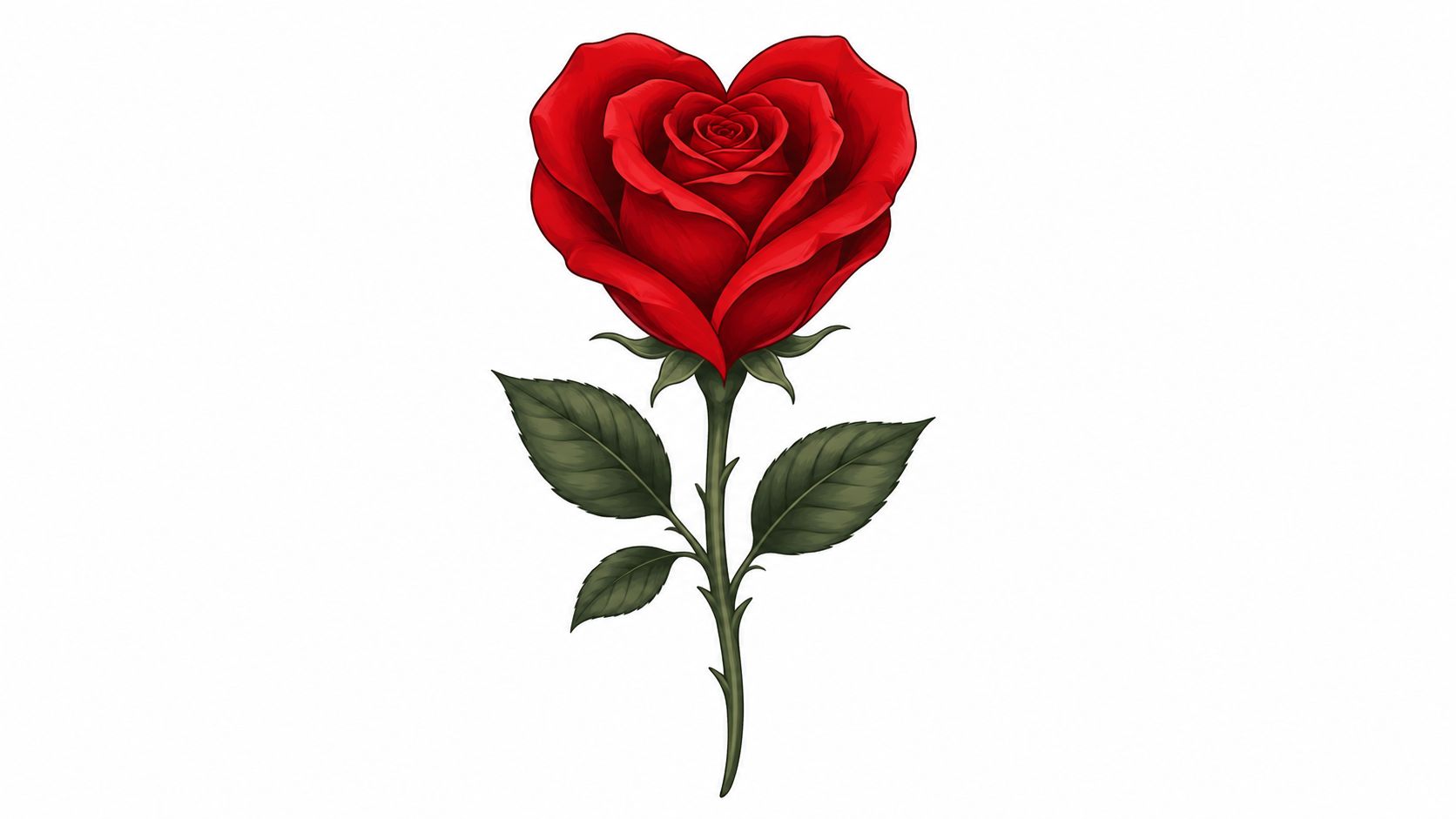
The rose-and-heart fusion is the most immediately recognizable option in this collection. A rose can wrap around a heart, grow through it, or use its petals to form the heart's outline. The result expresses romantic love, passion, loyalty, remembrance, or self-love without requiring a complicated visual explanation.
The design's structure determines whether it feels traditional or contemporary. A compact heart with a single rose reads clearly at a smaller scale, while layered petals, leaves, thorns, and a winding stem create a richer composition for the upper arm, chest, thigh, or shoulder blade. Red and green create a classic tattoo palette, but black-and-gray shading gives the image a quieter, more memorial quality.
Build the symbol around your story
An initial, date, small banner, or meaningful object can sit inside the heart, but restraint matters. Too many additions can hide the rose's silhouette and make the tattoo harder to read. If you want a complementary design with a partner, match the overall structure or flower family rather than copying every detail.
Artists such as Ariana Grande have worn rose tattoo variations, and rose-heart hybrids appear frequently in tattoo portfolios and couples' designs. Treat those references as direction, not a template. Your artist should redraw the concept for your anatomy and preferred line weight.
Prompt to adapt: “Rose intertwined with a heart, deep red petals, black-and-gray leaves, visible thorns, balanced heart silhouette, subtle initials inside the heart, clean tattoo composition for the outer upper arm, realistic style.”
Practical method: Generate realistic and watercolor versions, then compare the petal arrangement, heart visibility, and color density. Ask your tattooist which details will remain legible at the intended size.
2. Minimalist Line Art Flower Heart
Minimalist line art turns the flower and heart into a visual suggestion rather than a detailed illustration. One continuous line might begin as a heart, curl into a stem, and finish as a tulip, daisy, or small wildflower. Broken lines and carefully placed negative space can create the same effect with a lighter, more open rhythm.
This style suits people who want a discreet tattoo that feels personal without dominating the body. A fine-line flower heart can work on the inner forearm, wrist, ankle, rib area, or behind the arm, although small placement doesn't eliminate the need for careful planning. Delicate details need enough separation to remain readable as the tattoo settles and ages.
Keep simplicity intentional
The strongest minimalist designs have one clear gesture. A geometric heart with a flower stem feels more structured than a loose single-line drawing, while a botanical outline feels softer and more organic. Decide whether the heart should be obvious at first glance or discovered after someone follows the line.
Use these choices to guide the design conversation:
- Line behavior: Choose a continuous line for fluidity, or broken contours for a lighter, more editorial look.
- Flower identity: Select a flower with a readable silhouette, such as a daisy, tulip, poppy, or small branch.
- Scale testing: Ask to see the concept at its intended size, not only as a large screen image.
- Future planning: Leave enough visual space if you may add other minimalist symbols later.
Artists known for minimalist work, including Dr. Woo, demonstrate how much expression a restrained line can carry. Your tattooist should still decide the appropriate needle grouping and line weight for your skin, placement, and desired longevity.
Prompt to adapt: “Minimalist single-line tattoo combining a small heart and a wildflower stem, elegant black ink, generous negative space, no shading, refined composition for the inner forearm, delicate but readable.”
3. Watercolor Flower with Heart Gradient
A watercolor flower heart uses color movement as its main structural device. Instead of enclosing the heart with a hard outline, the artist may let pink, red, violet, or blue pigment diffuse from the petals into a soft heart-shaped wash. The flower remains identifiable, but the surrounding color creates an atmospheric emotional field.
Cherry blossoms, poppies, peonies, and loose botanical branches work especially well because their petals can dissolve naturally into translucent color. A sunset palette feels warm and romantic. Pastels feel gentle and airy. Jewel tones create stronger contrast, while monochromatic color keeps the design more controlled.
Balance painterly freedom with tattoo structure
Watercolor tattoos depend on an artist's command of color placement, contrast, and linework. Before booking, review portfolios that show healed color tattoos, not only fresh photographs. Discuss how the design will remain recognizable if the softest washes become less distinct over time, and ask whether a defined outline or selective black accents would improve clarity.
For a deeper technical overview, read how watercolor tattoos work before your consultation. It can help you ask better questions about pigment behavior, contrast, and the relationship between painterly effects and tattoo technique.
Prompt to adapt: “Cherry blossom branch merging into a soft heart-shaped watercolor wash, pastel pink and lavender palette, selective fine black outlines, airy negative space, balanced color intensity, composition for the shoulder blade.”
A visible placement can showcase the color, but the best location still depends on your lifestyle and how much exposure the tattoo will receive. Save several generated versions with different color intensity, then ask your artist to translate the strongest concept into a skin-appropriate design.
4. Geometric Floral Heart Design
Geometry turns a flower-and-heart tattoo into a visual system. A heart can frame a mandala, sit within polygons, or form from repeating petals and radial lines. The flower carries the emotional focus, while symmetry gives the image order and a modern, architectural character.
Use this style when you want love or self-connection expressed through symmetry and intentional design. A mandala structure can suggest calm and reflection. Repeated, fractal-like petals can represent growth, while angular edges make the heart feel sharper than a soft botanical design.
Let the body shape guide the geometry
Precision affects both the artist choice and the placement. Clean circles, equal spacing, and repeated intersections must follow a surface that moves and curves. The sternum, center chest, spine, and upper back can support strong alignment. An outer forearm or calf may suit a less centered version, provided the artist reshapes the pattern for the body rather than applying a flat graphic unchanged.
Study geometric blackwork tattoo techniques to see how linework, solid black areas, and negative space work together. In a consultation, review healed examples with circles, repeated forms, and fine intersections. Ask where the artist would simplify the design so small gaps remain readable.
Choose a prompt according to the structure you prefer:
- Symmetrical: “Geometric heart containing a chrysanthemum, mandala symmetry, crisp black linework, balanced negative space, centered upper-back composition.”
- Organic geometric: “Botanical heart with angular petals and subtle fractal geometry, black and muted red, controlled asymmetry, outer forearm placement.”
- Tessellated: “Heart formed from repeating floral tessellations, clean linework, no gradients, modern tattoo design for the calf.”
Give the pattern enough space to breathe. A design that appears simple from a distance can become dense up close, so let the tattooist remove crowded intersections before stencil day.
5. Japanese-Inspired Floral Heart with Kanji
A Japanese-inspired floral heart combines a Western romantic symbol with elements associated with Japanese tattoo composition. Peonies, cherry blossoms, chrysanthemums, waves, clouds, and flowing nature backgrounds can frame or transform the heart. The result is less like a standalone emblem and more like a scene with movement.
The chosen flower affects the design's emotional tone. Cherry blossoms can suggest change and impermanence. Peonies create a fuller, more luxurious silhouette. Chrysanthemums bring a layered, graphic flower structure that can support larger compositions. These meanings vary by context, so don't treat a single translation as universal.
Handle lettering with care
Kanji should never be selected from an attractive image alone. A character can carry multiple readings or change meaning when combined with another character, and a visually small mistake becomes permanent. Verify the intended wording with a qualified native speaker or language professional, then show your tattooist the confirmed reference.
The broader composition also deserves cultural care. Ask whether the artist has genuine experience with Japanese-influenced work, understands background flow, and can explain how the flowers, clouds, or waves support the central heart instead of using them as decorative filler.
Prompt to adapt: “Japanese-inspired heart framed by peonies and drifting cherry blossoms, flowing cloud background, restrained black and muted red palette, open composition for the upper arm, no lettering until separately verified.”
If lettering is essential, generate the floral composition first and add the text only after verification. That keeps a language error from becoming the foundation of the entire design.
Let the artist adapt the motif to Japanese composition principles rather than copying isolated symbols from unrelated references.
6. 3D Realistic Flower and Heart Tattoo
A realistic flower and heart tattoo relies on light, shadow, texture, and perspective. The heart might appear as a polished anatomical form beneath petals, a glass ornament wrapped in flowers, or a dimensional emblem casting a shadow on the skin. The flower's structure matters because realistic petals need convincing folds, edges, and tonal transitions.
This approach suits a large, visible placement where the artist has room to establish depth. The upper arm, thigh, chest, shoulder, and upper back can support complex shading better than a cramped location. A small realistic design may lose its most important transitions, so ask for a preview at the actual planned scale.
Choose the reference, not just the effect
Bring clear photographs of the flower you want. A rose, peony, orchid, and chrysanthemum each reflect light differently, and an experienced realism artist can use those references to build a more convincing arrangement. Discuss the light direction before the session. If the petals are lit from the left but the heart's shadow falls right, the illusion weakens.
The visual reference should support consultation, not replace it. TattoosAI can help you compare black-and-gray realism with color realism, but your artist must make decisions about skin tone, contrast, anatomy, and how the tattoo will heal.
Prompt to adapt: “Photorealistic peony wrapped around a dimensional anatomical heart, directional light from upper left, deep natural shadows, black-and-gray realism, detailed petals, composition for the outer thigh.”
Realism often requires careful scheduling because the artist may need time to build smooth tonal transitions and refine small details. Ask about session planning, healing between visits, and touch-ups before committing to a highly detailed concept.
7. Blackwork and Dotwork Flower Heart Mandala
A mandala succeeds through controlled repetition. In a flower-and-heart tattoo, the heart establishes the central silhouette while petals, leaves, and dotwork radiate around it. The result can resemble a rosette, a woven textile, or an ornamental emblem, depending on the spacing and weight of each mark.
Start with the structure before choosing texture. A heart placed at the center feels intimate and contained. A floral frame makes the heart easier to read from a distance, while repeated petals create a more formal mandala. Slight irregularity can make the design feel organic, whereas precise mirroring gives it a measured, geometric character.
Design method: reserve the darkest black for the focal shapes, then use dotwork to guide the eye toward them. Open skin can separate the heart from the surrounding petals and prevent the tattoo from becoming a solid block. Ask your artist to show the concept at its intended size, because fine dots and narrow gaps may merge as the tattoo heals.
Use these choices to define the brief:
- Contrast: Set the heart, selected petals, or outer border as the solid-black anchors.
- Texture: Choose sparse dots for a lighter surface or tighter stippling for stronger shadow.
- Symmetry: Request mathematical mirroring for a formal mandala or controlled variation for a natural flower.
- Placement: The outer calf, forearm, and upper arm can support a centered radial composition without forcing the circle to bend sharply.
Prompt to adapt: “Blackwork and dotwork mandala built around a central heart and lotus, bold black petals, controlled stippled shading, strong radial symmetry, clear negative space, outer calf placement.”
Dot consistency and clean solid fills deserve the same attention as the drawing itself. Review healed examples, discuss the final dimensions, and ask whether dense areas should be divided across sessions. TattoosAI can help compare open, airy layouts with heavier ornamental versions before you bring a selected direction to the artist.
8. Vintage and Retro-Inspired Flower Heart Locket
A vintage flower-heart locket gives the romantic symbol a physical history. Build the heart as an openable keepsake, then decide what it contains: initials, a small portrait, or a blank interior left for mystery. A chain can make it appear suspended, while roses, keys, banners, scrollwork, and filigree establish the period reference.
The strongest designs keep the era consistent. Victorian linework uses ornate curves, a framed locket, roses, keys, and fine decoration. Art Deco replaces those soft details with symmetry, stepped geometry, fan shapes, and a sharper heart. Retro Americana relies on bold outlines, limited colors, banners, and familiar rose forms.
Design method: choose the era before adding symbols. A key can suggest access, trust, or a hidden memory. A banner can hold a short phrase, but lettering needs enough room to remain readable. The frame should support the heart rather than bury it in decoration.
Use this quick decision guide:
- Victorian: Best for delicate filigree and an antique keepsake mood.
- Art Deco: Suits a structured, symmetrical composition with crisp edges.
- Retro Americana: Works well when bold lines and restrained color matter most.
Prompt to adapt: “Vintage heart locket surrounded by red roses, antique key and short blank banner, Victorian ornamental flourishes, bold readable outlines, black and muted red, placement for the upper arm.”
Ask a traditional tattoo artist to simplify crowded interior details and check the design at its intended size. Review classic flash for proportion and line weight, then request an original drawing that combines the chosen era with your flower and personal symbols. This keeps the tattoo recognizable after fine details settle.
Turn a Favorite Concept Into a Tattooist-Ready Brief
Start with the feeling, not the visual trend. Decide whether the heart represents romantic love, family, grief, resilience, self-acceptance, or a private promise. Then choose the flower that gives that feeling a specific personality. A rose is direct and familiar. A cherry blossom can feel lighter and more transient. A peony creates fullness. A wildflower branch feels personal and less formal.
Next, define the style and the physical requirements. A fine-line heart may need a simple silhouette and generous spacing. A realistic rose needs room for petals and tonal depth. A geometric design needs an artist who works accurately with symmetry. A blackwork mandala needs enough surface area for contrast, while a watercolor concept needs a palette that remains readable without relying only on the softest washes.
Write the brief in this order:
- Meaning: State the emotion or memory in plain language.
- Flower: Name the flower and explain why it belongs.
- Style: Choose minimalist, watercolor, geometric, Japanese-inspired, realistic, blackwork, dotwork, or vintage.
- Composition: Explain whether the flower forms, frames, wraps around, or grows from the heart.
- Color: Specify full color, black-and-gray, or a limited palette.
- Placement: Name the body area and whether the design should follow a curve or sit symmetrically.
- Scale: Give an approximate size to your artist, then let them refine it for readability.
- Details: Add lettering, dates, initials, keys, banners, or ornamental elements only if they strengthen the central idea.
TattoosAI can generate multiple concepts when you name the subject, style, color preferences, composition, and placement context. Treat those outputs as reference material, not as a substitute for a tattooist's judgment. The artist still needs to redraw the piece for your anatomy, skin, line weight, needle choice, contrast, and healing expectations.
Compare every concept at its intended size. A design that looks elegant when enlarged on a screen may become crowded when reduced to the wrist, ankle, or rib area. Verify all lettering and kanji independently, especially before an artist transfers a stencil. Review the tattooist's portfolio for the specific skill you need, not just attractive general work.
Placement also affects comfort and scheduling. A survey of 1,092 tattooed adults recorded mean tattoo pain of 4.35 out of 10, and identified session duration, stress, and skin bleeding as stronger practical predictors of worse pain than body area alone in the source summary reviewed here. That supports a useful planning principle for dense flower-and-heart designs. If the concept requires extensive linework, shading, or color packing, ask whether a shorter session or multiple visits would make the experience more manageable.
Body area still matters. Ribs, sternum, spine, hands, feet, and armpits are commonly reported as more uncomfortable than fleshy outer-arm or outer-thigh locations, as outlined in this tattoo pain placement guide. A heart wrapped with flowers can often be rotated, enlarged, or simplified to suit a flatter area, while a compact bone-heavy placement usually benefits from fewer intricate details.
Finally, discuss healing, aging, aftercare, and touch-ups before booking. Design decisions affect maintenance, and aftercare has become a more commercially relevant part of the tattoo conversation, with the global tattoo aftercare market projected to rise from USD 158.55 million in 2026 to USD 247.04 million by 2034, according to the trend source covering heart tattoo inspiration and aftercare context. Choose a concept you'll still understand when the initial excitement fades, then let a skilled artist turn that concept into a tattoo made for your body.
Flower & Heart Tattoo Designs: 8-Style Comparison
| Design | 🔄 Implementation Complexity | 💡 Resource Requirements | ⚡ Speed / Efficiency | ⭐ Expected Outcome (Quality) | Ideal Use Cases |
|---|---|---|---|---|---|
| Classic Rose with Heart Fusion | Medium, detailed petal composition, needs refinement | Skilled artist for petal detail; moderate sessions; color optional | Moderate, longer than simple line work | ⭐⭐⭐⭐, recognisable, emotionally resonant | First tattoos, couples, romantic symbolism |
| Minimalist Line Art Flower Heart | Low, simple continuous/broken lines, high precision required | Fine-line artist; single session; minimal ink | Fast, quick application and healing | ⭐⭐⭐, subtle, elegant from close range | Professionals, minimalism enthusiasts, wrist/finger placements |
| Watercolor Flower with Heart Gradient | High, color blending and soft edges demand technique | Expert colorist; multiple sessions; higher ink use; touch-ups likely | Slow, longer sessions and more touch-ups | ⭐⭐⭐⭐⭐, highly artistic and visually striking | Art lovers, large visible pieces, social-media-forward designs |
| Geometric Floral Heart Design | High, precise symmetry and geometry-critical execution | Specialist in geometric/mandala work; careful sizing; may need multiple sessions | Moderate–Slow, precision increases time | ⭐⭐⭐⭐, original, balanced, visually satisfying | Design-focused creatives, architecture enthusiasts, symmetrical placements |
| Japanese-Inspired Floral Heart with Kanji | High, traditional motifs + correct kanji integration | Artist familiar with irezumi; research/translation; larger canvas | Slow, larger pieces and culturally informed process | ⭐⭐⭐⭐, rich symbolism and timeless aesthetic | Culture enthusiasts, those with Japanese heritage, meaningful storytelling |
| 3D Realistic Flower and Heart Tattoo | Very High, advanced shading, perspective and lifelike rendering | Master-level artist; multi-session; high cost; large reference set | Very Slow, lengthy sessions, multiple appointments | ⭐⭐⭐⭐⭐, dramatic photorealism and standout impact | Investment pieces, perfectionists, gallery-style tattoos |
| Blackwork and Dotwork Flower Heart Mandala | High, dense stippling and solid black work require patience | Dotwork specialist; multiple sessions; careful spacing and technique | Slow, time-intensive dotwork application | ⭐⭐⭐⭐, striking contrast, long-lasting visual texture | Detail-oriented clients, mandala lovers, large textured pieces |
| Vintage & Retro-Inspired Flower Heart Locket | Medium, traditional lineweight and ornamental detail | Artist versed in vintage flash; moderate sessions; potential color accents | Moderate, comparable to classic styles | ⭐⭐⭐⭐, timeless, narrative-driven aesthetic | Nostalgia enthusiasts, storytellers, fans of traditional tattoo history |
Use TattoosAI to explore flower and heart tattoo designs across minimalist, watercolor, geometric, Japanese, realistic, blackwork, and vintage directions before your studio consultation. Describe your flower, symbolism, colors, composition, and placement, then visit TattoosAI to generate focused concepts you can refine with your tattooist.