TattoosAI
You know you want a lock and key tattoo, but the idea still feels unfinished. Should it look like vintage flash, a tiny fine-line symbol, an ornate antique object, or a design split between two people? The style changes more than the appearance. It affects how clearly the tattoo reads, how much detail your skin can hold, how it may age, and what your tattooist will need to change before using a needle.
The symbolism is flexible, too. A key can suggest freedom, identity, knowledge, responsibility, or a new stage of life, while a lock can represent privacy, protection, guarded memories, or selective access. Together, they can express romance, friendship, family, memorial, personal transformation, or a boundary you've chosen to protect. Historical examples support that wider reading. Keys have long been linked with authority and access, while medieval locks also expressed privacy, ownership, secrecy, and technical complexity through their mechanisms and decoration (Cooper Hewitt's historical collection, The Metropolitan Museum of Art).
The eight lock and key tattoo designs below are worth comparing before you book. Each includes a practical prompt, a placement check, and the trade-offs an experienced artist is likely to raise.
Table of Contents
- 1. Traditional American Lock and Key
- 2. Locked Heart With Key
- 3. Minimalist Fine-Line Lock and Key
- 4. Blackwork Geometric Lock and Key
- 5. Victorian Ornate Lock and Key
- 6. Watercolor Lock and Key
- 7. Japanese Irezumi-Inspired Lock and Key With Koi or Waves
- 8. Matching Couple or Friendship Lock and Key Set
- 8-Style Lock & Key Tattoo Comparison
- Turning Your Lock and Key Idea Into a Booked Session
1. Traditional American Lock and Key
A traditional American lock and key tattoo relies on bold outlines, simple shapes, and a restricted palette. Think of a heavy padlock, a clearly shaped key, a red rose, and a banner that carries initials or a short word. The style works because the silhouette remains readable from a distance, even when the composition is viewed quickly on an upper arm or calf.
A useful starting prompt for TattoosAI is: “American traditional lock and key, thick black outline, red banner, bold flat colors.” Use the result to discuss proportions and color direction with your artist, not as a stencil. A traditional tattooist will redraw the concept around your anatomy and decide how thick the lines need to be.
The strongest placements are fleshy, relatively stable areas such as the upper arm, outer forearm, or calf. These areas give the lock body and key blade enough room for clear separation. A wrist can work, but shrinking the design too far usually forces the artist to remove banner lettering, small teeth, or decorative hardware.
What ages well
Bold linework and solid color generally give this style a dependable visual structure. The design still needs enough open space between the key teeth and inside the shackle. Packing every gap with color may make the tattoo look powerful on the appointment day but muddy as the ink settles and the skin changes.
Practical rule: Ask for the smallest version that still makes the keyhole, shackle, and key teeth obvious without a close-up.
Before booking, ask yourself whether you want the lock and key to look romantic, nautical, memorial, or purely decorative. A rose and banner push the meaning toward classic affection or remembrance, while a plain padlock with a key can feel more personal and less literal. Review an American Traditional style guide and bring references that show line weight, not just subject matter.
2. Locked Heart With Key
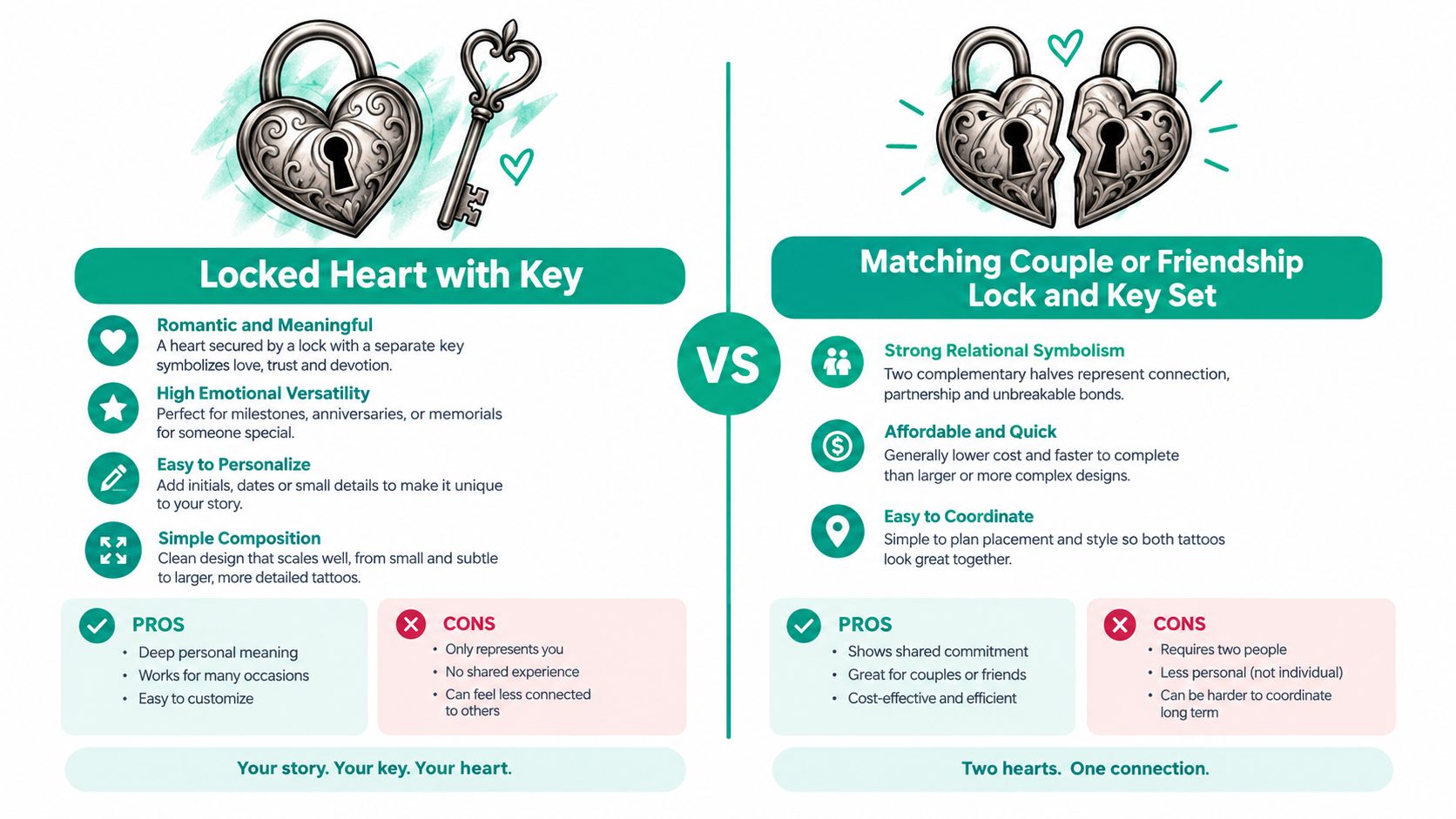
A locked heart makes the emotional message immediate, but small choices change what the tattoo communicates. A key inserted into the lock suggests access, commitment, or a relationship that has been opened deliberately. A separate key can suggest distance, possibility, or a person who holds emotional significance without being physically present.
The design suits couples, memorial tattoos, anniversaries, and private milestones. It can also represent self-protection. A closed heart isn't automatically a romantic promise. It may stand for a guarded emotional life, a boundary after loss, or the decision to protect something valuable.
Use a prompt such as “a heart locked with a key, soft watercolor, romantic mood” if you want TattoosAI to explore mood as well as subject. Add a date or initials only after deciding whether the lettering belongs on the lock plate, along the heart, or outside the main silhouette. Tiny text often becomes the first detail an artist removes when the available space is too small.
Decide what the key is doing
The key's position is the main meaning decision. Is it inserted, hanging from a chain, held beside the heart, or absent altogether? Each option creates a different emotional reading. Couples should also decide whether both people will receive the same heart or whether one person gets the heart and the other gets the key.
For broader symbolism around the key itself, compare this design with the explanations in this guide to key tattoo meaning. Then bring your chosen interpretation to the consultation in plain language.
A fine-line heart can suit the wrist, inner forearm, or upper chest, but the artist will still check scale. Fingers and hands expose delicate work to frequent movement, friction, washing, and fading. If you want the heart to include filigree, a date, or a detailed lock plate, choose a larger placement rather than asking the artist to compress everything into a tiny symbol.
“I want the heart to mean protection, not possession” is a more useful brief than “make it romantic.”
3. Minimalist Fine-Line Lock and Key
Minimalist lock and key tattoo designs look simple, but simplicity increases the importance of every line. A single outline has nowhere to hide. If the key blade is too narrow, the lock shackle too close to the body, or the keyhole reduced to a dot, the design may stop reading as a lock and key.
This style suits first tattoos and small placements such as the inner forearm, wrist, or behind the ear. It's also effective for matching friendship tattoos, especially when each person receives a separate key with a slightly different profile. Keep the design visually complete on its own. A tattoo shouldn't become meaningless when the other person isn't standing beside you.
The minimum-size conversation
Ask your tattooist to show the lock and key at the actual intended size, preferably as a stencil or temporary transfer. A design that looks elegant on a phone can lose its negative space when reduced on skin. Your artist may simplify the teeth, enlarge the keyhole, remove interior shading, or separate the lock and key to protect legibility.
Avoid placing the finest lines over the hands, feet, or inner elbows if long-term clarity matters. High movement and friction make those areas harder on delicate designs. The inner forearm often gives you a better balance between visibility, control, and enough uninterrupted skin.
The design also deserves a healing check. Choose a placement you can see easily, so you can monitor irritation and follow aftercare instructions without constantly touching the tattoo.
Design test: Cover the key with your hand. If the remaining lock still looks intentional, the composition has enough independence.
Use “minimalist fine-line lock and key, single line, no shading” as a starting prompt, then ask your artist to redraw it at the final size. For a quick comparison between emotional pairings, review the lock and key tattoo comparison.
4. Blackwork Geometric Lock and Key
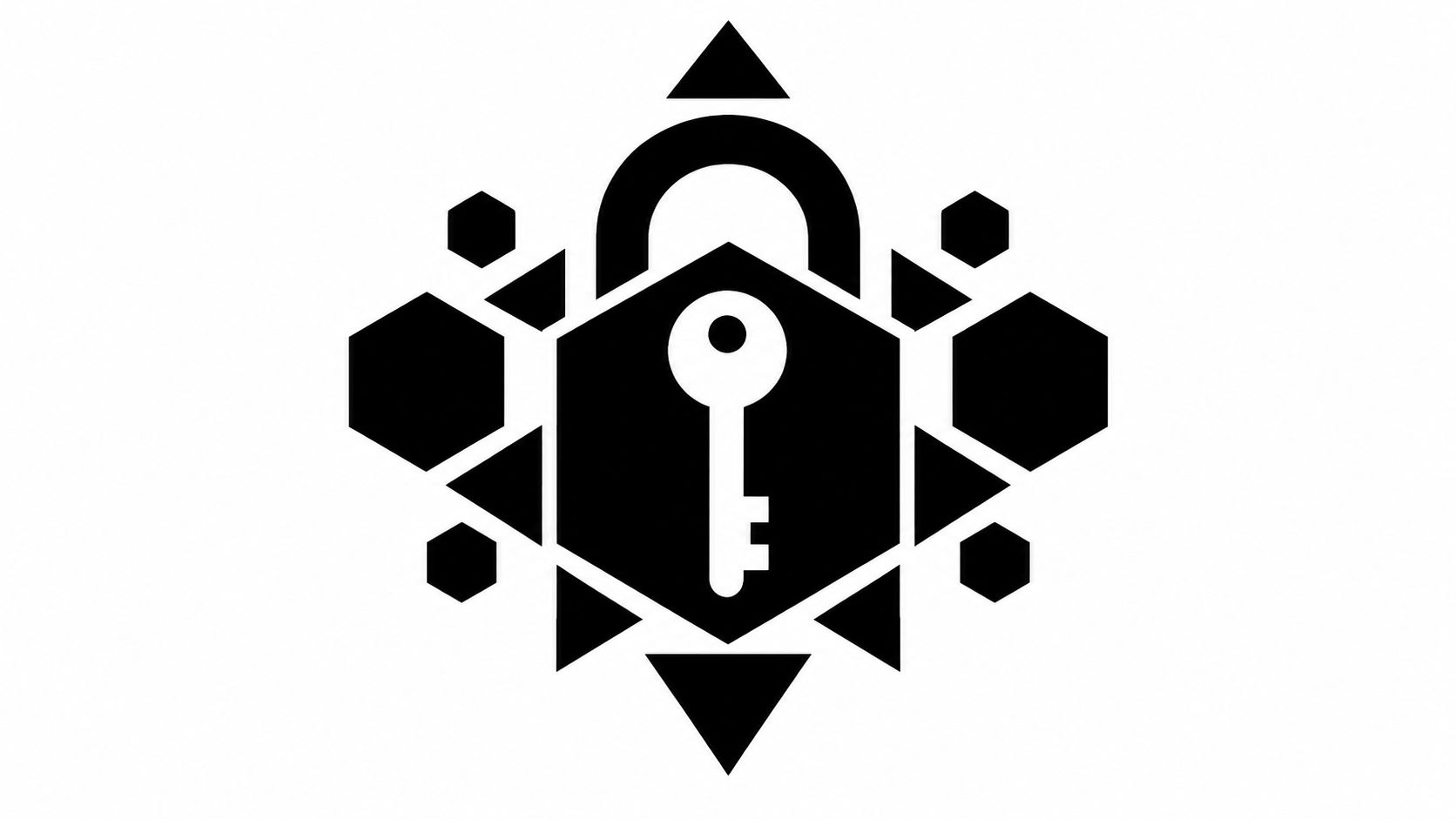
Blackwork turns the lock and key into a graphic object. Solid black shapes, angular borders, triangles, dots, and hard-edged negative space can make the design feel modern rather than sentimental. It's a strong choice if you like abstract geometry but still want the familiar symbolism of access and protection.
The best blackwork compositions are planned around the body, not dropped onto it as a flat rectangle. A key can follow the length of the forearm, while a lock can sit wider across the upper arm, thigh, or back. On a curved area, rigid geometry may distort unless the artist adjusts the pattern for the body's movement.
Saturation and skin preparation
Solid black requires careful packing. Ask the artist how they'll balance saturation, line weight, and negative space. Large black areas may need a deliberate healing plan, and overloading a small design with dense fills can erase the distinction between the lock body and its internal details.
A prompt such as “blackwork geometric lock and key, solid black, triangular patterns” can help you compare angular directions before the consultation. Generate variations with the lock as the dominant shape, then with the key as the dominant shape. The difference matters if one object represents your identity and the other represents a person, decision, or opportunity.
Request a stencil preview in the actual placement. Check the pattern while the body is relaxed and flexed. The artist will also look for friction from clothing, movement near a joint, and whether the geometry follows the natural flow of the limb.
The design is usually more successful at medium or large scale. If you want a small geometric tattoo, reduce the number of triangles and interior lines rather than shrinking a complex pattern. A clean black silhouette will age more convincingly than compressed geometry that loses its gaps.
5. Victorian Ornate Lock and Key
A Victorian ornate lock and key suits a design that should feel like a personal artifact rather than a simple symbol. Filigree, antique key bows, Gothic tracery, floral metalwork, initials, and heraldic shapes give the motif a distinct period character. Historical locks and keys also used miniature architecture, animals, figures, monograms, and decorative devices, so these details have a clear visual precedent.
This style needs room for its fine structure. The forearm, shoulder, sternum, thigh, and upper back can hold a larger centerpiece with readable curls and shaded hardware. A small tattoo behind the ear may retain the outer silhouette while losing the details that make it recognizably Victorian.
Choose the era before the details
“Vintage” covers too many directions for a useful consultation. Decide whether you want ecclesiastical ornament, Gothic architecture, Victorian ironwork, a jewelry-like key, or a severe antique lock. Bring a reference image showing the key proportions you prefer. Your artist can adapt its bow, blade, and patina while creating an original composition.
Use the prompt “Victorian ornate lock and key, filigree, black and gray realism” in TattoosAI to compare visual directions. Treat the output as a starting reference, not a finished stencil. The tattooist will simplify tiny curls, separate overlapping lines, and set shading levels that keep the lock readable after healing.
Ask: “Which details will still read clearly after the smallest lines soften?” That answer should guide the final size. Dense filigree can blur as the tattoo ages, while clear gaps and controlled line weight preserve the hierarchy between the lock body, keyhole, and key.
Check the stencil in the intended position while the skin is relaxed and moving. A key inserted into a lock can lose alignment across a wrist or elbow crease, and clothing friction may affect healing. A larger, more stable placement gives the artist better control of contrast and negative space.
Watch this ornate lock and key video before choosing between a decorative object and a realistic one. Each option requires a different approach to shading and line density.
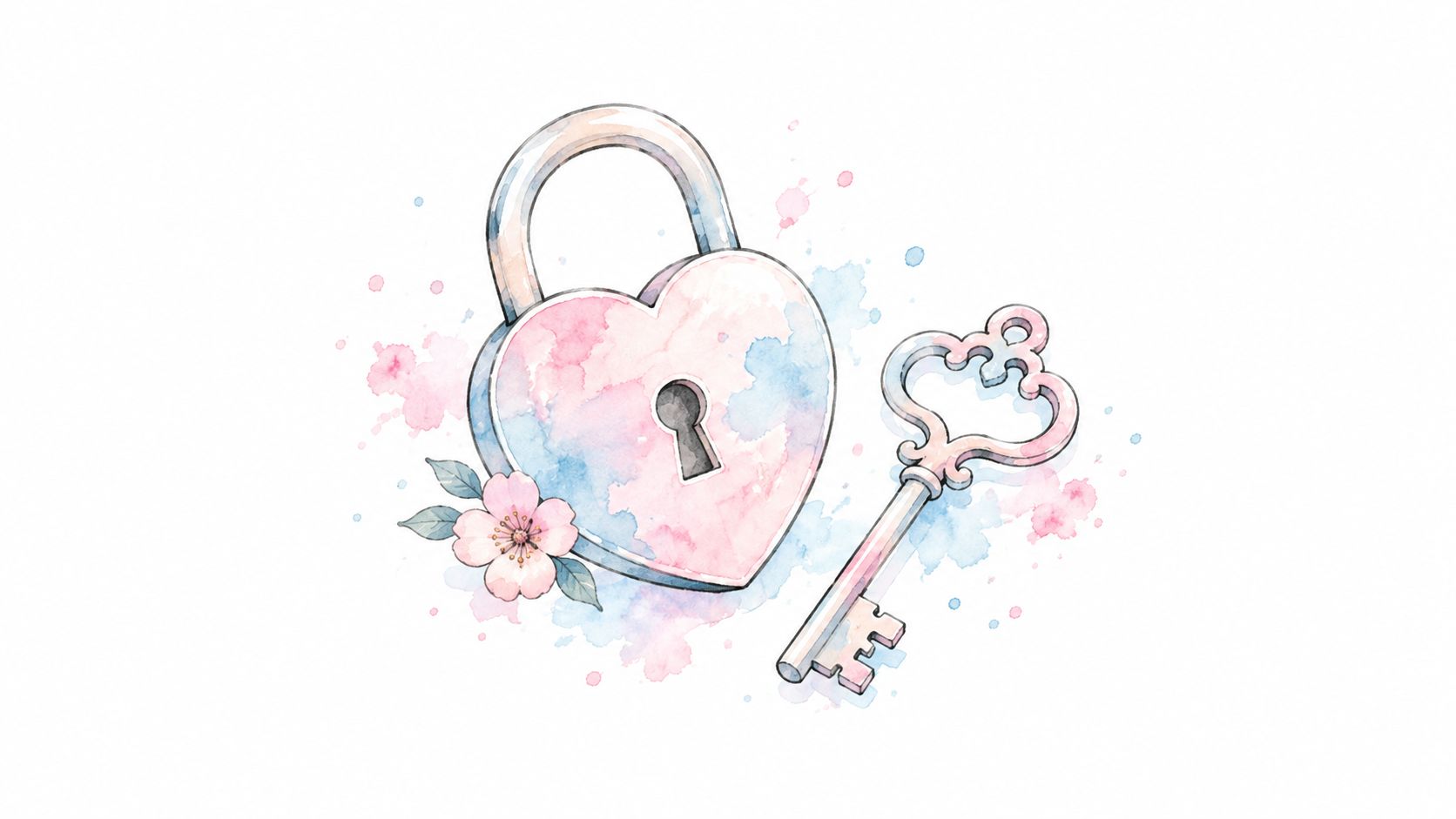
6. Watercolor Lock and Key
A watercolor lock and key suits someone who wants the image to feel soft, expressive, or slightly unfinished rather than sharply traditional. Washes, blended color, splashes, and bleeding edges can create a dreamy or mournful mood around flowers, leaves, clouds, or abstract marks. The design still needs a clear visual structure to heal into a recognizable lock and key.
Ask your artist how the shackle, keyhole, blade, and lock plate will remain readable. Dark-gray or black accents may be needed around those parts, especially if the surrounding color is pale. Without enough definition, the tattoo can heal as a loose patch of pigment instead of a convincing object. Check the stencil on the intended placement while the skin is relaxed and moving, since a crease or frequent friction can affect how the shapes sit and heal.
Control the palette
Choose a limited palette you will still accept after the novelty fades. Red can provide a strong rose or heart accent, but discuss it directly with your artist. Dermatology literature identifies red pigment as disproportionately associated with hypersensitivity reactions. A bicentric hospital analysis of affected cases recorded red pigment in 29 of 32 cases, or 90.6%, among that complication population, as reported in a hospital analysis of tattoo pigment reactions. This figure does not represent the probability of a reaction among all tattoo customers.
Tell the tattooist about previous pigment reactions, eczema, psoriasis, unusual scarring, or other skin concerns. Ask about pigment composition, sanitation, and patch-testing policy where appropriate.
Use the prompt “watercolor lock and key, pastel splashes, soft bleeds” in TattoosAI to compare warm and cool directions. Bring the preferred concept to the consultation, then let the artist decide where color can fade and where the lock must stay crisp. Ask: “Which parts need a dark framework so they still read after healing?” Also discuss whether faded watercolor areas can be refreshed later without overpowering the softer effect. Read this guide to how watercolor tattoos work before choosing a design with very little outline.
7. Japanese Irezumi-Inspired Lock and Key With Koi or Waves
A Japanese irezumi-inspired lock and key design works as part of a larger composition, not as a Western object pasted onto a Japanese background. Waves, koi, peonies, clouds, wind bars, and strong directional movement can frame the lock and key while giving the tattoo a clear body flow.
This approach suits sleeves, backs, chests, and large shoulder pieces. The lock and key might serve as a focal accent, but they shouldn't compete with a koi's movement or overpower the main floral structure. Scale is the first conversation. If the key is too large, it can make the surrounding Japanese elements feel like decoration. If it's too small, it becomes an unreadable detail inside a busy field.
Choose the right specialist
Review an artist's completed Japanese or irezumi work, not just isolated drawings. Look for consistent wave rhythm, controlled outlines, balanced backgrounds, and compositions that follow the body. A generalist may be capable of drawing a lock, but that doesn't mean they're the right person to build a coherent Japanese-style sleeve.
Try a starting prompt such as “Japanese irezumi lock and key with koi and waves, bold outlines.” Generate several compositions with different focal points. Then let the tattooist redraw the concept. The artist needs to adapt the waves, background, and object placement to your anatomy, existing tattoos, and future plans.
Discuss the body flow while standing, sitting, and moving. A sleeve that looks balanced with the arm straight can become crowded when the elbow bends. A chest design needs a different rhythm from a back piece. The stencil should show whether the lock and key follow the body's contours rather than fighting them.
The meaning can remain personal, but avoid adding motifs only because they look attractive in a prompt. Every flower, animal, and wave should support the story or the composition. Otherwise, the lock and key becomes a visual interruption instead of an integrated focal point.
8. Matching Couple or Friendship Lock and Key Set
A matching set gives each person one part of the relationship. One person may wear the lock and the other the key, or both designs may align when placed side by side. Couples often choose this format, but it also works for siblings, close friends, family bonds, and shared milestones.
The emotional appeal is obvious. The practical risk is that one tattoo may become too dependent on the other. A strong pair should look intentional when the people are together and still read clearly when they're apart.
Design both tattoos as complete pieces
Start with the relationship meaning, then decide how visible you want the tattoos to be. A wrist or ankle placement makes alignment easy to show, while an upper arm or rib placement can keep the connection more private. Finger and hand tattoos may feel intimate, but they also face more friction and exposure than many other sites.
Generate paired concepts with “matching lock and key pair, minimalist, two complementary pieces.” Compare whether both halves have similar visual weight. A large ornate lock beside a tiny key may create an imbalance unless that contrast is intentional.
Before the appointment, both people should review:
- Independent readability: Each tattoo should retain a recognizable silhouette when viewed alone.
- Placement alignment: Test the designs on both bodies with physical stencils, then photograph them in relaxed and flexed positions.
- Motion and friction: Keep key teeth, lock openings, and lettering away from high-motion creases where possible.
- Future flexibility: Choose a design that still represents your own story if circumstances or locations change.
The best matching tattoos don't require constant physical contact to make sense.
A professional artist will check how the key blade, lock opening, and any text align at the intended body positions. They may simplify teeth or filigree if the design leaves too little negative space. Booking both sessions at the same studio can help maintain consistent line weight, but each person still needs an individual skin and placement assessment.
Before choosing a romantic interpretation, remember that lock-and-key imagery can also suggest boundaries, secrecy, kink-related signaling, inheritance, or personal protection depending on composition and placement. A collar or neck design, for example, may carry social readings you didn't intend. Review a discussion of collar lock and key tattoo meanings if you're considering a visible placement with strong contextual associations.
8-Style Lock & Key Tattoo Comparison
| Style | 🔄 Implementation Complexity | ⚡ Resources & Time | ⭐ Expected Durability / Quality | 📊 Ideal Use Cases | 💡 Key Advantage / Tip |
|---|---|---|---|---|---|
| Traditional American Lock and Key | Low, bold shapes, simple stencil | Low, short sessions, limited palette | ⭐⭐⭐⭐, bold lines age predictably | Forearm, calf, classic flash, approachable first tattoos | Thick outline + restricted palette preserves look |
| Locked Heart with Key | Low–Medium, straightforward composition | Low, small to medium scale, easy to personalize | ⭐⭐⭐, depends on style (color vs. B&W) | Couples, memorials, commitment pieces, milestones | Decide if key is separate or locked in to set meaning |
| Minimalist Fine-Line Lock and Key | Low, precise needle control required | Low, quick sessions but skilled artist needed | ⭐⭐, fine lines can blur over time | Wrist, behind ear, inner forearm; discreet placements | Avoid high-friction spots; set a minimum size for legibility |
| Blackwork Geometric Lock and Key | Medium–High, pattern planning and packing | Medium–High, larger areas, longer sessions | ⭐⭐⭐⭐, solid black holds well over years | Forearm, thigh, back; statement or sleeve work | Discuss saturation and stencil flow with your artist |
| Victorian Ornate Lock and Key | High, fine filigree and shading detail | High, longer sessions, higher cost | ⭐⭐⭐⭐, high quality when sized adequately | Forearm, sternum, gothic/vintage focal pieces | Choose larger scale to keep ornamentation clear |
| Watercolor Lock and Key | Medium, color blending, softer edges | Medium, color work and future touch-ups likely | ⭐⭐, colors fade faster; edges may blur | Shoulder, upper arm, floral or dreamy compositions | Keep some dark structure and limit palette for longevity |
| Japanese Irezumi-Inspired Lock and Key with Koi or Waves | High, large-scale composition and cultural elements | Very High, multiple sessions, experienced artist required | ⭐⭐⭐⭐, ages well if executed with bold lines | Back, chest, sleeves; integrated irezumi compositions | Hire an artist experienced in irezumi; respect cultural context |
| Matching Couple or Friendship Lock and Key Set | Low, simple paired designs but needs coordination | Low, quick and affordable when small | ⭐⭐⭐, durability varies by chosen style | Matching wrists, ankles, fingers; couples or friends | Align both wearers with artist and consider future changes |
Turning Your Lock and Key Idea Into a Booked Session
Start with one decision in each of three areas: style, placement, and meaning. Choosing “an ornate lock and key” isn't enough. Decide whether you want traditional flash, fine-line minimalism, geometric blackwork, watercolor, Japanese-inspired composition, or a paired set. Then decide whether the tattoo is about romance, friendship, privacy, freedom, memory, responsibility, or a transition in your life.
Placement should follow the design rather than being chosen afterward. A traditional or blackwork lock needs enough skin for bold shapes and clean negative space. A Victorian design needs room for filigree. A fine-line tattoo can be smaller, but the keyhole, shackle, and key teeth still need to remain identifiable. A paired tattoo needs alignment testing on both bodies, not just a matching image on a screen.
Bring a TattoosAI concept to the consultation as a visual reference, not a promise that the image can be tattooed unchanged. Explain what you like about it. You might want the key profile, the lock proportions, a specific wave pattern, or the relationship between blackwork and open skin. Your artist should then adjust the line weight, scale, contrast, and color for your skin and body shape.
A concept generator can show possibilities quickly, but it can't replace a professional skin assessment or sterile tattoo practice. One retrospective ten-year clinical study of 405 tattooed patients reported acute skin reactions in approximately 70%, systemic harmful effects in 7%, and persistent complications in 6% (clinical study). These findings support a careful consultation, but they shouldn't be read as the expected outcome for every new tattoo.
Ask your artist how they'll simplify details, how much negative space the final design needs, and what pigment colors they plan to use. People with eczema, psoriasis, sarcoidosis, prior pigment allergy, or unusual scar formation should seek medical advice before tattooing. Your artist can assess the design and the skin in front of them, while a medical professional can advise on relevant health concerns.
Use a physical stencil or temporary transfer before the appointment. View it while relaxed and flexed. Check whether the key blade crosses a crease, whether text remains readable, and whether clothing or jewelry will rub the area during healing. If the design only works when two people stand in one exact position, simplify it before booking.
The strongest lock and key tattoo designs aren't necessarily the most intricate concepts. Controlled simplification often gives the tattoo better readability, easier execution, and a more stable visual identity over time. Choose the version that still communicates your meaning without depending on tiny mechanical details.
TattoosAI can help you generate lock and key concepts across styles such as minimalist, watercolor, Japanese, geometric, and blackwork, with prompts and color choices you can refine before your consultation. Explore the possibilities at TattoosAI, then bring your preferred concept to a professional tattooist for final sizing, placement, and technical adaptation.