TattoosAI
Does a mens flower tattoo have to look tough because of the flower itself? Usually, no. The masculine feel comes more from structure, styling, scale, placement, and surrounding elements than from choosing a particular bloom.
A rose can look sharp with thorns and geometric framing, while a lotus can feel restrained and architectural in blackwork. A peony can become a large Japanese-inspired centerpiece, and a wildflower cluster can carry several personal stories without looking overly formal. The right choice depends on how the flower fits your body, wardrobe, work life, and existing tattoos.
The ideas below compare recognizable classics, culturally rooted blooms, mixed botanicals, bold statement flowers, and minimalist designs. Each one focuses on a practical decision, from visual language and symbolism to scale, color restraint, prompting, and artist collaboration.
Before booking a consultation, TattoosAI can help you test different flower styles and prompt directions. Use those concepts to clarify what you like, not to replace a tattooist's judgment about anatomy, skin, line weight, and long-term readability.
Table of Contents
- 1. Rose Tattoo for Classic Symbolism and Modern Versatility
- 2. Peony Tattoo for Bold Florals with Japanese Roots
- 3. Sunflower Tattoo with Optimism and Masculine Structure
- 4. Lotus Flower Tattoo for Spiritual and Philosophical Meaning
- 5. Wildflower Mix Tattoo for Botanical Complexity and Personal Narrative
- 6. Chrysanthemum Tattoo for Cultural Meaning and Artistic Depth
- 7. Dahlia Tattoo Placement for Statement Backs and Sleeve Centerpieces
- 8. Minimalist Single-Line Flower Tattoo for Modern Simplicity
- Mens Flower Tattoos: 8-Style Comparison
- Turn a Favorite Concept into a Tattooist-Ready Brief
1. Rose Tattoo for Classic Symbolism and Modern Versatility
The rose remains one of the safest starting points for a mens flower tattoo because its outline is instantly recognizable and its structure adapts to almost any visual language. A tightly closed bud can suggest restraint, while an open bloom creates a broader, more decorative shape. Thorns, leaves, stems, and broken petals let you shift the mood without losing the identity of the flower.
A rose can represent love, strength, memory, sophistication, or a relationship that has both beauty and difficulty. Its meaning becomes more personal when you connect it with an initial, date, number, place, or another symbol. A single rose can stay understated on the forearm, while several blooms can anchor a sleeve or chest composition.
Build the mood through contrast
Black and gray gives a rose a serious, durable visual language. Fine-line work creates a quieter result, while realism depends on careful shading and enough space between petals. Geometric framing, dotwork, or a single restrained color accent can make the design feel contemporary without crowding the flower.
Public examples show how widely the rose can shift. Harry Styles has worn a minimalist neck rose, Post Malone has used watercolor-like rose designs, and Zayn Malik has explored geometric rose variations. Those references can help you describe direction, but your artist should redraw the concept for your anatomy rather than copy another person's tattoo.
Practical rule: Decide whether your rose should feel fierce, romantic, memorial, or refined before choosing color or placement.
Try several versions in TattoosAI, changing one variable at a time. Ask for a thorned black-and-gray rose with geometric framing, then a fine-line single bloom, then a restrained red accent. A detailed prompt produces a more useful starting point than just entering “rose tattoo.”

For botanical reference and additional rose inspiration, browse rose designs. Save the versions that have the best silhouette, then bring those references to your tattooist.
2. Peony Tattoo for Bold Florals with Japanese Roots
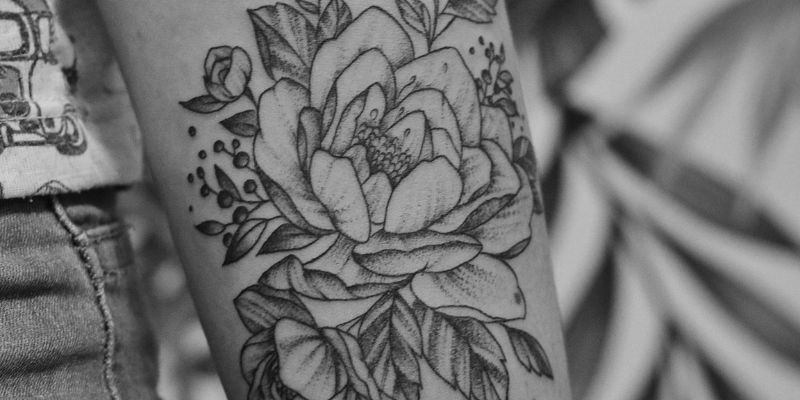
A peony suits someone who wants a flower to occupy real visual space. Its layered petals create a dense, sculptural form, so the tattoo can feel powerful without relying on skulls, weapons, or heavy lettering. The bloom also gives an artist plenty of room to show controlled shading, petal rhythm, and depth.
Peonies are commonly associated with prosperity, romance, and strength. Those meanings can support a personal story about ambition, loyalty, family, or confidence, but the design doesn't need to explain itself. The flower's broad shape and overlapping petals already give it visual authority.
Let the surrounding elements establish the culture
Japanese-inspired peony work often gains context from leaves, bamboo, wind bars, waves, or other botanical elements. Those additions should form a coherent composition rather than act as decoration added at the last minute. If you're considering an East Asian visual language, study the full system through Japanese tattoo styles, then discuss respectful adaptation with your artist.
A large peony usually benefits from a larger canvas such as the chest, back, thigh, or outer upper arm. On a small area, the petals may need simplification, and excessive detail can make the bloom difficult to read. Watercolor and neo-Japanese approaches can create different moods, but each requires a clear decision about saturation, contrast, and how much open skin should remain.
“Romantic yet powerful” is more useful to an artist than “make it masculine.”
Use TattoosAI to compare a traditional Japanese peony, a watercolor bloom with abstract elements, and a black-and-gray version with strong outlines. Specify whether you want a centered composition, a flowing sleeve section, or a standalone flower. You can then ask your tattooist which details will survive at your intended size.

3. Sunflower Tattoo with Optimism and Masculine Structure
A sunflower suits positive symbolism with a clear, structured visual language. Its circular center and radiating petals already provide an organized framework, much like a wheel with distinct spokes. That geometry can support dotwork, realism, minimalist line work, or geometric treatment without relying on delicate styling.
People often choose the flower for loyalty, growth, resilience, longevity, or a tribute to someone important. The personal story gives the image its specific meaning. A single stem can communicate a direct tribute, while a larger bloom with coordinates or meaningful objects can record a more detailed memory.
Use proportion to control the tone
Scale determines whether the sunflower reads clearly from a distance. On a small design, the center and petals may merge if too much detail is retained. A larger version gives the center, petal spacing, and stem room to remain distinct. The goal is a usable size, not an oversized tattoo.
Placement should follow the flower's structure. An outer forearm can suit a single sunflower with a long stem because the vertical format supports its direction. A cluster may work better on the upper arm or thigh, where the composition has more room to spread. Check how the petals face while your arm is relaxed, since a rotated design can change the intended emphasis.
Black and gray create a restrained, architectural effect. Controlled yellow or ochre preserves the flower's natural identity while limiting the look of a bright decorative patch. A stronger edge can come from a tool, coordinate mark, mountain outline, or another personal symbol. The added object should explain the story, not just make the design appear tougher.
Prompt for strength, not a generic mood
Give the artist usable instructions: strong, bold, black-and-gray sunflower with a geometric center and clean negative space. Specify the approximate size, preferred placement, color limits, and whether the stem should remain visible. Generate geometric, dotwork, and minimalist alternatives, then compare their silhouettes at the expected scale.
Bring the clearest version to your tattooist. Ask which details will remain legible on skin, which areas need simplification, and how the design should follow the body's movement. A screen can preserve fine detail that becomes crowded after sizing, so consultation should decide the final balance between symbolism, structure, and readability.
4. Lotus Flower Tattoo for Spiritual and Philosophical Meaning
The lotus is a strong choice for someone who wants a tattoo about transformation rather than decoration. Its familiar story, a bloom rising above muddy water, gives the image a clear connection to rebirth, transcendence, meditation, and enlightenment. That symbolism can resonate with someone who has moved through hardship, changed direction, or built a more disciplined life.
The flower's shape also works across contrasting styles. A clean single-line lotus feels modern and quiet. Dotwork and mandala elements create a meditative, detailed effect, while blackwork gives the bloom a more graphic presence. Japanese-inspired water, koi, moon phases, or other natural elements can make the design feel like part of a larger narrative.
Choose the bloom state carefully
An open lotus tends to communicate arrival, clarity, or full expression. A closed bud can suggest potential, privacy, or an ongoing process. Those differences are subtle, but they give you a practical way to connect the image to your own experience without adding a long written explanation.
Cultural context matters here. If you're drawing on Buddhist, Hindu, or other Eastern traditions, research the symbols you want to include and talk with an artist who understands the visual language. Sanskrit lettering, religious imagery, and mandala forms should be handled carefully rather than treated as interchangeable decoration.
Respectful design starts with understanding the symbol before simplifying it.
A useful TattoosAI prompt might request a black-and-gray lotus representing rebirth, with restrained dotwork, water elements, and an open bloom. Create another version with a closed bud and minimal line work. Compare how the emotional tone changes before you decide on the final direction.
For placement, consider the forearm, chest, shoulder, or upper back. The artist can adjust the petals and surrounding geometry to follow the body instead of placing a flat digital image onto a curved surface.
5. Wildflower Mix Tattoo for Botanical Complexity and Personal Narrative
A wildflower mix gives you more room to tell a personal story than a single dominant bloom. Instead of asking one flower to carry every idea, you can combine species connected to family members, places, seasons, memories, or important stages of life. The result can look natural and slightly untamed, especially when the stems and leaves follow an irregular rhythm.
Dandelions, lupines, cornflowers, and bachelor's buttons create different silhouettes and textures. A botanical illustration approach can make each species identifiable, while fine-line work keeps the group light. Watercolor can add atmosphere, but a black-and-gray arrangement may be easier to integrate with existing tattoos.
Curate the mix instead of filling space
A cluster becomes confusing when every flower receives equal size, detail, and contrast. Choose one primary bloom, a few supporting forms, and enough open space for the stems to remain readable. You can also use scattered flowers, seed heads, or specific leaf types to make the arrangement feel more like a meadow than a formal bouquet.
A natural arrangement can suggest freedom and resilience. A structured bouquet can feel more intentional and commemorative. Neither approach is automatically more masculine. The visual result depends on line confidence, scale, contrast, and the way the composition follows your body.
Use a detailed TattoosAI prompt that names the flowers, desired palette, mood, and arrangement. For example, request a monochrome botanical cluster with one prominent lupine, scattered seed heads, and an irregular stem layout. Generate a second version with muted color and a more structured bouquet. Save the strongest parts from each concept for your consultation.
Give every flower a reason to be there, even if only you know the reason.
A wildflower mix can suit the forearm, outer upper arm, chest, back, or thigh. The larger the placement, the more room the artist has to preserve species-specific details. If the design is small, simplify the number of flowers rather than shrinking a crowded meadow into an unreadable patch.
6. Chrysanthemum Tattoo for Cultural Meaning and Artistic Depth
The chrysanthemum offers a less expected alternative to the rose or sunflower. Its layered petals create a dense, almost explosive structure, and the flower can look elegant, severe, or highly decorative depending on the treatment. That range makes it useful for a man who wants floral imagery without choosing the most familiar motif.
In Japanese tradition, chrysanthemums can represent loyalty and devotion. Across Asian cultural contexts, they're also associated with truth and optimism. Those meanings can support a tattoo dedicated to a relationship, a personal principle, or a period when you chose persistence over comfort.
Make the petal structure readable
The chrysanthemum's complexity creates a practical design challenge. If every petal receives the same dark outline and shading, the center can become visually congested. An experienced artist may vary line weight, leave selected areas open, and simplify the inner structure so the flower retains depth after healing.
Japanese, realism, watercolor, and dotwork each solve that challenge differently. Japanese work may use bold contours and surrounding motion, while realism depends on tonal transitions. A black-and-gray approach can emphasize depth and remain visually coherent as a high-contrast piece.
Ask TattoosAI for several versions with different petal layering, not just different colors. Include a mood such as elegant and refined or bold and striking, then compare how the prompt changes the flower's posture and density. Treat the generated concepts as visual conversation material, since your tattooist will need to redraw the petals for your chosen placement.
A chrysanthemum can stand alone on the upper arm or shoulder, or it can join water, leaves, waves, or other flowers in a larger composition. Before adding cultural elements, explain what they mean to you and ask the artist how to combine them respectfully.
7. Dahlia Tattoo Placement for Statement Backs and Sleeve Centerpieces
The dahlia works best when its geometric, sculptural bloom has enough room to remain readable. Start with the available body surface, then choose the flower's visual language. A tightly layered design can look refined at a larger scale, while excessive detail may turn muddy when reduced.
A large dahlia can anchor a back piece, center a chest composition, or connect sections of a sleeve. On the upper arm, its circular form can follow the muscle and link with leaves or background shading. The thigh offers a broad canvas for a personal statement while keeping the tattoo less visible during daily activities.
Test the design at real scale
Zoomed artwork makes small details seem clearer than they may appear on skin. Request both a detailed version and a simplified version, then compare the outer silhouette, petal spacing, and solid-black areas. Traditional and Japanese approaches often rely on bold outlines and controlled shading for structure. Minimalist and watercolor treatments require more careful decisions about fine lines, open space, and color because those elements may soften or fade more noticeably over time.
Scale affects more than detail. Placement changes daily visibility, clothing friction, healing logistics, and the space available for future work. An outer upper-arm dahlia can join a sleeve easily, while a back design gives the artist a broad, uninterrupted surface. Check the design while your shoulder, chest, or arm is moving, not only in a flat digital preview.
Use TattoosAI to generate dahlia concepts in realism, Japanese, watercolor, and geometric styles. Request one standalone bloom and another version built into a sleeve. Bring both options to your tattooist and ask which petals should be enlarged, removed, or redirected around your anatomy.
Prepare specific questions for the consultation: What size preserves the center's structure? Which details need stronger contrast? How can leaves or shading guide the eye without crowding the flower? For a larger composition, review sleeve tattoo ideas before deciding how the dahlia should connect with future work.
8. Minimalist Single-Line Flower Tattoo for Modern Simplicity
A single-line flower works when you want the image to feel intentional without taking over your appearance. The artist may use one continuous line, broken lines, or a small number of confident strokes to suggest a rose, lotus, sunflower, or wildflower. The result depends less on shading and more on proportion, negative space, and line quality.
This style can look understated on the wrist, ankle, inner arm, or forearm. A larger fine-line piece can become more visible while keeping the same quiet visual language. The main trade-off is that minimalism leaves little room to hide weak drawing. Every curve must be deliberate.
Let simplicity guide the prompt
Ask for a continuous-line black rose with two leaves, a broken-line lotus with open space, or a one-line sunflower with a long stem. If you want a more masculine presentation, focus on scale, placement, and composition rather than adding unnecessary heavy elements. A clean forearm design can feel just as strong as a dense sleeve when the proportions are right.
Minimalist doesn't mean careless. It means every mark carries more responsibility.
Use TattoosAI to generate multiple flowers in fine-line and minimalist styles, then test them at the approximate size you want. Digital previews can't replace a placement consultation, but they can help you decide whether a rose, lotus, or wildflower cluster has the strongest silhouette.
Small designs may pair well with coordinates, dates, initials, or a short word. Keep added elements subordinate to the flower, especially if the tattoo needs to remain readable from a distance. Ask your artist about line weight, spacing, skin movement, and how the design may change as it heals.

Mens Flower Tattoos: 8-Style Comparison
| Design | 🔄 Implementation complexity | ⚡ Resource requirements & scale | 📊 Expected outcomes | 💡 Ideal use cases | ⭐ Key advantages |
|---|---|---|---|---|---|
| Rose Tattoo - Classic Symbol with Modern Versatility | Moderate, scalable from minimalist to hyper-realistic; flexible complexity | Medium, suitable small-to-large; realistic/color requires experienced artist and upkeep | Timeless, versatile result that photographs well; variable impact depending on style | Chest, forearm, shoulder, neck; standalone or sleeve element | Universally recognized; highly customizable; balances masculinity and refinement |
| Peony Tattoo - Bold Masculine Florals with Japanese Roots | High, layered petals demand detailed shading and depth | High, best at larger scale (chest/back/sleeve); longer sessions and skilled artist | Bold, statement-making piece with strong visual depth and photographic appeal | Upper back, chest, full sleeve, thigh, centerpiece work | Distinctive (less common than roses); excels in Japanese/watercolor styles; impressive at scale |
| Sunflower Tattoo - Optimism with Masculine Edge | Moderate, geometric center simplifies composition but needs proportion care | Low–Medium, works small-to-large; dotwork/geometric styles efficient | Strong, optimistic focal point with clear geometry; immediate visual harmony | Inner forearm, upper arm/shoulder, calf, back of neck | Bold geometric structure; suits dotwork/minimalist approaches; masculine when styled carefully |
| Lotus Flower Tattoo - Spiritual Symbolism and Eastern Philosophy | Moderate, clear forms but requires respectful symbolic treatment | Medium, scalable; pairs with mandalas/Sanskrit; artist should understand cultural context | Deeply symbolic, contemplative result that supports spiritual narratives | Chest, upper back, inner wrist, forearm, spiritual placements | Profound meaning (enlightenment/rebirth); versatile across dotwork, blackwork, Japanese styles |
| Wildflower Mix Tattoo - Botanical Complexity and Personal Narrative | High, composition planning and balance critical | High, multi-element designs need detailed planning, longer sessions and artist collaboration | Personalized, narrative-rich outcome; visually complex and organic | Full sleeve, back, forearm clusters, shoulder, storytelling pieces | Highly customizable; excellent for symbolism/commemorative work; organic, fresh aesthetic |
| Chrysanthemum Tattoo - Cultural Symbolism and Artistic Depth | High, intricate layered petals require precise execution | Medium–High, benefits from experienced artist; works medium-to-large | Sophisticated, culturally rich results with notable depth and texture | Upper back/shoulder, chest, inner forearm, full sleeve | Unique eastern symbolism (loyalty, truth); artistic depth that stands apart from common florals |
| Dahlia Tattoo Placement - Statement Backs and Sleeve Centerpieces | High, demands large, well-planned placement to show geometry | High, requires large canvas (back/chest/thigh), long sessions and strategic placement planning | Dramatic, sculptural statement piece with strong visual impact | Full back, chest, upper arm/shoulder, thigh, centerpiece or sleeve transition | Striking geometric form; ideal as a focal statement; rewards large-scale execution |
| Minimalist Single-Line Flower Tattoo - Modern Simplicity and Fine-Line Artistry | Low design complexity but high execution precision, clean confident lines required | Low, faster sessions and typically lower cost; longevity depends on line weight | Understated, modern result with subtle impact; ages well when executed properly | Inner wrist, behind ear, ankle, forearm, collarbone, finger | Sophisticated minimalism; quick to apply; excellent for first-timers and fine-line lovers |
Turn a Favorite Concept into a Tattooist-Ready Brief
A strong mens flower tattoo starts with a flower you can explain in personal terms, but it becomes usable only after you make decisions about structure, size, placement, color, and execution. Don't choose a bloom solely because it looks good in a reference image. Ask what you want the tattoo to communicate, whether you want that meaning to be obvious, and how the design should fit the rest of your body art.
Start by writing one clear sentence about the concept. It might describe a rose connected to a family memory, a lotus representing personal change, or a wildflower group built around several important places. That sentence gives your artist a reasoned direction instead of a loose request for “something masculine.”
Next, select the visual language that supports the flower's structure. Bold outlines and controlled shading suit traditional, neo-traditional, and Japanese-influenced work. Fine-line and minimalist approaches can create a quieter result, but they need enough space and careful execution. Style guidance identifies traditional and Japanese floral systems as generally more structurally durable, while minimalist and watercolor designs can require more caution around line spreading and color fade over time. Read independent floral tattoo style guidance with your intended longevity in mind.
Define approximate size and placement before generating final concepts. Forearm and outer upper-arm areas are commonly favored because they offer cushioning, manageable contours, and practical access, according to tattoo pain and placement guidance. Pain varies by person, and your artist should also consider movement, clothing, visibility, healing, and how a future sleeve might develop.
Prepare better prompt variations
Use TattoosAI to create several focused directions rather than one vague image. Change one decision at a time:
- Visual language: Compare blackwork, dotwork, Japanese, geometric, watercolor, and fine-line treatments.
- Scale and composition: Request a standalone bloom, a vertical stem, a sleeve centerpiece, or a broad chest arrangement.
- Color restraint: Test black and gray, monochrome with one accent, and a muted palette.
- Symbolic elements: Add thorns, water, leaves, coordinates, dates, tools, or other details only when they support the story.
- Anatomy awareness: Describe the intended body area and ask for a design that follows its natural direction, while remembering that an artist must make the final anatomical adjustments.
Bring your preferred concepts, not a single image you expect the artist to reproduce exactly. Ask how the design should be adapted to your anatomy, how much detail can remain legible at the chosen size, and which lines or color areas may need simplification. A professional tattooist can also point out problems that an AI image won't show, including awkward joins, impossible shading, poor flow, and details that may not age well.
TattoosAI is most useful as a focused starting point for that conversation. It can help you compare recognizable flowers, refine prompt language, and communicate a mood before your appointment. The final tattoo should come from collaboration between your idea and an artist's trained judgment.
Choose the flower, write the meaning, decide the style, mark the placement, and test the concept at a realistic scale. Then book a consultation with an artist whose portfolio demonstrates the kind of floral work you want. That process gives you a clearer brief and leaves room for the tattooist to create a design that belongs to your body rather than merely resembling a digital reference.
TattoosAI lets you describe a flower tattoo idea, compare styles such as Japanese, blackwork, geometric, watercolor, and minimalist, and refine concepts with color options. Visit TattoosAI to develop several mens flower tattoo directions before taking your preferred references to a tattooist.