TattoosAI
The strongest micro realism tattoo ideas balance a recognizable subject with enough open space for details to remain readable, and specialists commonly charge around $150–$300 per hour because this style demands slow, precise work. The best concept is rarely the most crowded one. It's the design that keeps its silhouette, focal detail, contrast, and emotional meaning at a scale your skin can support.
Micro realism isn't a realistic tattoo made smaller. It grew from older realism and single-needle traditions, while becoming a distinct miniature style mainly within the past decade. The form uses compressed photographic detail, tone, texture, and fine transitions instead of relying on bold outlines. A design may be coin-sized or a few inches across, but the artist still has to make the subject readable from a normal viewing distance.
That makes subject choice, scale, placement, and ink direction inseparable. A portrait needs enough room for facial values. A flower needs space between petals. An animal eye depends on a strong focal point, not an overload of fur or feather marks. Recent trend coverage describes the style shifting from “tiny and cute” toward “tiny but high quality,” with stronger contrast, simplified shapes, and cleaner silhouettes helping details survive healing and aging (recent micro realism trend coverage).
The 25 concepts below are organized into seven motif groups. Each includes a creative direction, practical size and placement guidance, black-and-gray or color advice, a variation route, and a ready-to-use TattoosAI prompt. Use the prompts to explore original directions, then bring a focused reference to an experienced tattooist for advice on anatomy, skin, spacing, and execution.
Table of Contents
- 1. Hyperrealistic Portrait Tattoos
- 2. Botanical and Floral Micro Realism
- 3. Animal Eyes and Wildlife Detail Micro Realism
- 4. Geometric-Realism Hybrid Micro Designs
- 5. Insect and Arachnid Micro Realism
- 6. Miniature Food and Culinary Micro Realism
- 7. Celestial Objects and Space Micro Realism
- 7-Style Micro Realism Tattoo Comparison
- Turn a Favorite Motif Into a Tattooist-Ready Brief
1. Hyperrealistic Portrait Tattoos
A hyperrealistic portrait tattoo succeeds when the face remains identifiable after the smallest details are removed. The eyes, nose, mouth, hairline, and main shadow shapes must work together like the key pieces of a photographic crop. Skin pores and isolated hairs usually matter less than the value pattern that gives the person their likeness.
A black-and-gray memorial portrait in a softly cropped oval is a practical starting point. Keep the eyes as the focal point, then use limited hair or clothing to frame the face. A compact few-inch portrait may suit the forearm, calf, or thigh better than a narrow wrist or ankle because the broader surface gives the artist more room to separate facial planes and soften transitions.
Micro realism artists often build portraits in layers. Fine needle configurations, such as a 3RL for texturing, can establish delicate marks while darker tones develop gradually, as described in this technical interview on micro realism technique. This pacing helps protect expression if the shadows soften or merge during healing. Ask to see healed portfolio work and discuss which parts of your reference the artist would simplify.
Portrait concept brief
- Detail priorities: Set eye spacing, mouth shape, nose shadow, and the strongest facial contour first. Reduce pores, tiny jewelry, and background clutter.
- Size and placement: Plan a compact few-inch composition for the inner or outer forearm, calf, or thigh, subject to the artist's assessment of your skin and reference.
- Ink direction: Black and gray provides restrained tonal structure. A small color accent, such as an eye or garment, can add focus if it remains secondary to the face.
- Variation route: Replace a plain crop with a vintage photograph frame, soft halo, or meaningful date integrated as a quiet design element.
- TattoosAI prompt: “Micro realism black-and-gray portrait tattoo of a loved one, close facial crop, realistic eyes and soft cheek shadows, simplified hair texture, clean negative space, healed-tattoo readability, forearm composition, fine tonal layering, no dense background.”
For more visual direction, review realistic tattoo style references from TattoosAI, then bring one focused reference to your tattooist. The reference should show the expression and lighting you want, rather than several conflicting poses or edits.
Simplification protects the identity of the whole face. An experienced portrait tattooist may also recommend multiple sessions when the design needs carefully separated layers.

A short visual reference can help you compare portrait structure, tonal depth, and miniature composition before a consultation.
2. Botanical and Floral Micro Realism
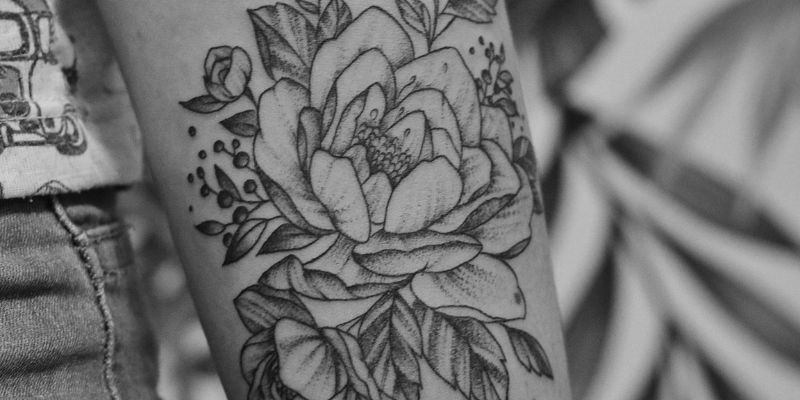
A successful floral micro realism tattoo depends on choosing the right details, not preserving every detail. Petal overlap, the flower's outer silhouette, and one clear focal area carry more visual weight than dozens of fine creases. That hierarchy keeps a small bloom readable as it heals.
A micro realism peony shows this clearly. Its rounded outline can remain recognizable, while deeper shading defines selected central folds. The tattooist can leave other overlaps as open skin, much like a botanical sketch that uses a few confident marks instead of outlining every surface.
Start with the plant's identity. A garden peony, rose, orchid, and wild rose have different petal structures, so reference photographs should show the actual species rather than a generic flower icon. This distinction can preserve both botanical accuracy and personal meaning.
Use the following brief as a consultation checklist, then adapt it for an AI concept:
- Detail priorities: Protect the outer silhouette, central structure, petal overlaps, stem direction, and a small number of decisive leaf veins. These features should survive reduction better than repeated surface lines.
- Size and placement: A few-inch bloom can suit the inner forearm, upper arm, collarbone, or outer calf. Fine stems need protection from repeated clothing friction. A wrist can work, but the available space may make the same design feel tighter.
- Ink direction: Black and gray gives the piece a botanical-illustration character. Color can identify the species, such as pink for a peony or purple for an orchid, if the artist simplifies the palette at the intended size.
- Variation route: Convert the flower into a pressed-specimen study, add a seed-packet border, or include a meaningful date or latitude. Each option changes the composition without requiring more petal detail.
- TattoosAI prompt: “Micro realism botanical tattoo of a single pink peony, realistic layered petals and restrained leaf veins, clean open negative space, delicate stem, soft black-and-gray structure with muted pink accents, inner forearm placement, simplified for long-term clarity, no ornamental clutter.”
Placement deserves the same planning as species and ink. Forearms, collarbones, ribs, inner biceps, wrists, ankles, and behind-the-ear areas are requested locations, but movement and daily wear can affect fine detail, as discussed in this placement and durability discussion. Ask the artist to compare a wrist version with an inner-forearm version, where the bloom may have more breathing room.

Bring the preferred flower and a simpler backup. The comparison helps reveal which petal relationships remain clear at the chosen size.
3. Animal Eyes and Wildlife Detail Micro Realism
A wildlife tattoo can feel vivid through one carefully designed eye rather than a complete animal portrait. The eye acts like a window into the subject's character, while a narrow fur edge, feather cluster, brow, or scale pattern establishes the species. This approach suits limited spaces because context supports recognition without filling every area with texture.
Start by choosing the animal and the visual anchor. A wolf eye in black and gray can create a quiet, atmospheric result. A husky eye with a restrained blue iris adds color while keeping the rest of the design controlled. Preserve clear boundaries between the iris, pupil, eyelid, and surrounding texture. One reflection point is usually enough. If every zone becomes equally dark, the gaze loses its expression.
Design the eye like a small portrait
- Detail priorities: Give the iris pattern, pupil shape, single catchlight, and nearest fur or feather texture priority. These details carry identity after the tattoo heals.
- Size and placement: Plan a few-inch circular or almond-shaped design for the outer forearm, upper arm, calf, or shoulder. The artist should compare movement, curvature, and sun exposure before confirming the scale.
- Ink direction: Black and gray suits wolves, owls, and other monochromatic wildlife. A controlled color iris can suit a tiger, eagle, or husky when darker surrounding values keep the gaze readable.
- Variation route: Turn the eye into a partial animal face, place it within a subtle natural frame, or reflect a mountain, moon, or person in the catchlight. Each route changes the story without requiring a denser texture field.
- TattoosAI prompt: “Micro realism tattoo of a wolf eye, sharply recognizable iris and pupil, single natural catchlight, soft surrounding fur texture, strong black-and-gray contrast, circular forearm composition, open negative space, simplified details for healed clarity, no full face.”
Use a high-resolution reference of the chosen animal. Mixing features from several breeds can produce an eye with inaccurate proportions or unclear surrounding texture. An eagle eye, wolf eye, and reptile eye each require different eyelid shapes, surface patterns, and framing. Ask the artist whether a partial head improves recognition or adds detail the intended size cannot support.
Placement changes how the design reads over time. Wrists and behind-the-ear areas may photograph beautifully, yet movement, friction, and sun exposure can challenge tiny highlights. A calmer forearm or upper arm may give the same eye more visual stability. Request healed examples in a similar size, especially when the design depends on fine reflections.
Practical rule: Protect the eye's identity first. Add fur, feathers, or scales only after the iris, pupil, and silhouette still read clearly without them.
Plan color as part of the tonal structure rather than asking for “more detail.” Muted golden tones can support a lion or tiger, while cool blue can suggest a husky or wolf. Dark structure still needs to surround those accents so the gaze remains legible as the tattoo settles. Bring one preferred reference and one simpler backup to the consultation.
4. Geometric-Realism Hybrid Micro Designs
A geometric frame can make a tiny realistic motif easier to read, provided the two visual languages have different jobs. A rose, animal, or eye supplies irregular shading and natural texture. Circles, diamonds, triangles, and sacred-geometry patterns supply boundaries and rhythm. The frame should guide attention toward the organic subject, like a window that shapes the view without covering it.
A realistic rose emerging through a geometric diamond frame is a strong starting point. Give the petals the tonal range, then keep the diamonds fine, open, and evenly spaced. A lion inside a polygonal structure needs a simpler face, because facial texture and nested angles can compete at miniature scale. Review more geometric tattoo ideas from TattoosAI to compare open frames, enclosed shapes, and subject-led compositions before writing a brief.
Build the design around one anchor
Choose the visual anchor before adding decoration. If the rose carries the focus, simplify intersections around its petals. If the geometry leads, reduce facial or botanical texture so the lines remain readable. Equal density makes a small tattoo feel crowded.
- Detail priorities: Preserve the subject's silhouette, key light and shadow changes, and the frame's major boundaries. Remove repeated intersections before removing the marks that identify the motif.
- Size and placement: Several nested shapes need the forearm, upper arm, calf, or thigh. A narrow area may suit one circle or diamond, while a compact sacred-geometry system needs more surface room and less bending.
- Ink direction: Black and gray usually gives shading and linework a clear relationship. A small color area can identify the flower or animal while the geometry stays monochromatic. Test whether the design still reads when color is omitted.
- Variation route: Interrupt the frame at one edge, let the subject cross its boundary, or replace the full pattern with a single compass-like construction. These changes preserve structure while reducing visual weight.
- TattoosAI prompt: “Micro realism geometric hybrid tattoo, realistic rose emerging from a minimalist diamond frame, soft black-and-gray petals, precise thin geometry with generous spacing, clear focal hierarchy, forearm composition, simplified intersections, no overcrowding.”
Print or stencil the concept at its intended skin size. A pattern that looks balanced on a phone can become dense after transfer, especially where the skin curves. Ask the tattooist to remove secondary intersections, widen tight gaps, or enlarge the focal motif if the composition feels busy. Request a healed example in a similar scale when fine lines or small color areas carry the design.

This approach suits a collection that combines natural imagery with architectural shapes. Repeating a frame language across future tattoos can create cohesion while each piece keeps a different subject.
5. Insect and Arachnid Micro Realism
Micro realism insects succeed through selective anatomy, not miniature clutter. Segments, wing veins, antennae, compound eyes, and the exoskeleton give each species a built-in framework. The artist can preserve that framework with a few sharp marks, much like identifying a bird from its beak and posture rather than every feather.
Start with the species and viewing angle. A beetle can center attention on an iridescent shell, while a butterfly depends on wing symmetry and vein placement. A spider reads through its body shape and leg rhythm. Fine hairs or web strands should remain secondary because too many thin marks can disappear as the tattoo heals.
Build the concept around one readable silhouette
A consultation can follow this order:
- Choose the anatomical anchor. Keep body segmentation, shell or wing structure, limb direction, and the outline that makes the species recognizable.
- Set the practical scale. A small insect can suit the inner forearm, upper arm, shoulder blade, or calf. Give antennae and legs room away from constant rubbing, since narrow tips need clear separation.
- Set the ink direction. Black and gray can resemble a scientific plate. Color can describe iridescence, translucent wings, or a species-specific pattern, but the outline should still read without color.
- Choose the variation. Add a host plant, place the insect on a realistic leaf, or frame part of the specimen like a vintage natural-history illustration.
For an AI concept, use a prompt with the anatomy, scale logic, and color limits already defined:
“Micro realism anatomical beetle tattoo, detailed segmented body and iridescent shell, accurate legs and antennae, restrained jewel-tone color over black-and-gray structure, clean negative space, inner forearm composition, realistic but simplified for long-term readability.”
Use reliable scientific or entomological reference images, preferably showing the body from the angle you want tattooed. For a butterfly, decide whether natural asymmetry gives it a living quality or a balanced display view better suits your design.
The motif can carry meaning through posture and space. A dragonfly may suggest transformation, a moth can establish a nocturnal mood, and a spider may represent patience or craft. Text is optional. Wing position, body angle, and surrounding negative space can communicate the idea more subtly.
The strongest miniature insect designs preserve the few anatomical features that make the species immediately recognizable.
Before approving the stencil, specify the intended treatment: living creature, pinned specimen, or decorative natural-history illustration. Each choice changes the angle, shadow, background, and breathing room around the subject.
6. Miniature Food and Culinary Micro Realism
Food tattoos carry memory through familiar shapes. A croissant can recall a city, a family ritual, or a love of baking. A coffee cup can mark a daily habit. Their apparent simplicity is deceptive: flaky layers, glossy fruit, rice grains, seeds, and foam each require different marks, much like using a small illustration to suggest an entire dish.
Start with the feature that makes the food identifiable. A micro realism croissant should use a side-angle silhouette, several readable folds, and a warm highlight. Too many pastry layers create a dark center. For avocado toast, separate the bread, green flesh, seed, and any plate edge clearly enough that they do not merge after healing.
Choose the design brief before choosing the garnish:
- Detail priorities: Select one surface effect, such as flaky pastry, glossy fruit, latte foam, or rice texture. Treat that feature as the focal point, then keep the outer shape uncluttered.
- Size and placement: A small culinary object can suit the inner forearm, upper arm, calf, or thigh. Avoid tiny seeds, foam lines, and plate edges in areas where friction may reduce their separation.
- Ink direction: Color gives fruit, pastry warmth, and garnish an immediate identity. Black and gray can make the same subject feel like a vintage menu illustration or a fine culinary study.
- Variation route: Add a meaningful ingredient, a cookbook-style label, or a simple café-table shadow. These changes add context without competing with the food.
- TattoosAI prompt: “Micro realism tattoo of a golden croissant, crisp recognizable silhouette, selected flaky layers, soft buttery highlights, warm muted color with black-and-gray shading, inner forearm placement, open background, no excessive crumbs or tiny text.”
Use food photographs that show the surface under controlled lighting. A flat image may conceal the texture that gives the dish meaning, while harsh shadows can become confusing dark patches on skin. Bring the reference to the consultation and identify which highlight, edge, or texture must survive at a small scale.
Color also needs a maintenance discussion. Warm tones and gentle gradients may define the subject at first, yet stronger contrast can help the form remain legible after healing. A hybrid treatment often works well: black-and-gray structure with a restrained accent on the fruit, foam, or glaze.
Culinary motifs can become abstract while keeping their identity. A single strawberry, coffee cup, or sushi cross-section may tell the story without a complex background. Let the object carry the meaning.
7. Celestial Objects and Space Micro Realism
Celestial motifs make a small tattoo feel expansive. The moon, Earth, Saturn, a nebula, or a planetary alignment can represent curiosity, memory, travel, science, or a private connection to the night sky. Their rounded silhouettes also give the tattooist a clear compositional boundary.
Start with the subject's shape, then decide how much texture the skin can support. A realistic moon is a practical choice because craters can read as tonal variation instead of fragile lines. Saturn demands more planning: its rings need visible separation, while the planet's bands should support the silhouette rather than compete with it. A galaxy or nebula can work in color, provided darker contrast anchors keep it from becoming an indistinct cloud.
Choose one focal object and let space support it
For a reliable consultation brief, define the design through five decisions:
- Detail priorities: Preserve the planetary outline, major craters or ring structure, and one clear light direction. A few intentional stars usually communicate depth better than a crowded field.
- Size and placement: A small circular design can suit the forearm, upper arm, calf, or thigh. More surface area allows clearer planetary texture, orbital paths, or a restrained star field.
- Ink direction: Black and gray creates a lunar, archival, or scientific mood. Color can describe nebulae, atmospheric bands, or planetary surfaces, but a limited palette keeps the focal shape readable.
- Variation route: Add a coordinate-inspired layout, a personal astronomical reference, a constellation, or one orbital path that leads the eye toward the main object.
- TattoosAI prompt: “Micro realism celestial tattoo of Saturn, realistic planet surface and clearly separated rings, soft black-and-gray shading with restrained blue and gold accents, clean circular composition, minimal star field, forearm placement, strong contrast and open negative space.”
Reference accuracy should match the purpose of the tattoo. NASA imagery and astronomy databases can help you decide whether the result should feel scientifically grounded or artistically atmospheric. Bring those references to the consultation and identify which features must remain accurate, such as ring direction or surface pattern, and which can be interpreted.
Scale changes the design's visual grammar. At a smaller size, every extra star behaves like another punctuation mark, making the image harder to read. A dense digital mockup may therefore translate poorly to skin. One planet with a single orbital cue can suggest a full solar system more clearly than many tiny marks.
Micro realism works through disciplined compression. The tattoo feels expansive through value, silhouette, and spacing, not through attempting to place an entire universe inside a surface that cannot support it.
7-Style Micro Realism Tattoo Comparison
| Title | 🔄 Implementation Complexity | ⚡ Resource & Skill Requirements | ⭐ Expected Outcome | 💡 Ideal Use Cases | 📊 Key Advantages |
|---|---|---|---|---|---|
| Hyperrealistic Portrait Tattoos | Very high, extreme precision, multi-session | Master portrait artist, high‑res photos, long studio time, higher cost | ⭐⭐⭐⭐⭐, lifelike, emotional fidelity | Memorials, loved ones, celebrity likenesses, forearm/thigh placements | Deeply personal keepsake; showcases top technical skill; high visual impact |
| Botanical and Floral Micro Realism | Moderate–high, fine line and botanical accuracy | Artist experienced in botanical illustration, clear plant references | ⭐⭐⭐⭐, accurate, elegant, ages well | Birth flowers, nature‑themed sleeves, delicate wrist/ankle pieces | Versatile placement; strong longevity due to structure; symbolic variety |
| Animal Eyes & Wildlife Detail | High, concentrated focal detail, tiny highlights | Precision realism artist, multiple animal references, touch‑ups | ⭐⭐⭐⭐, intense focal pieces, emotive | Minimalist focal tattoos, symbolic traits (vision, loyalty), chest/arm | High impact at small scale; versatile placement; strong viewer engagement |
| Geometric‑Realism Hybrid Micro Designs | High, requires dual precision (geometry + realism) | Artist skilled in clean geometry and realism, planning/proofs | ⭐⭐⭐⭐, visually striking, Instagram‑friendly | Statement pieces, large placements, modern/abstract compositions | Strong contrast between order & organic; geometric ages well; creative freedom |
| Insect & Arachnid Micro Realism | Moderate–high, anatomical detail, tiny structures | Entomology references, fine‑detail artist, careful placement | ⭐⭐⭐, unique, educational, niche appeal | Conservation symbolism, niche collectors, botanical pairings | Uncommon subject matter; highly detailed and scientifically accurate options |
| Miniature Food & Culinary Micro Realism | Moderate, texture & color fidelity at small scale | Food photography references, color realism skills, touch‑ups | ⭐⭐⭐, playful, personal, may require color maintenance | Chefs, foodies, cultural/food memory tattoos, small visible spots | Highly personal and fun; excellent at small scale; endless subject variety |
| Celestial Objects & Space Micro Realism | Moderate–high, spherical shading, tiny star detail | Scientific/ NASA references, gradient shading skill, color fidelity | ⭐⭐⭐⭐, symbolic, scientifically accurate options | Astronomy enthusiasts, birth moon/coordinates, transcendent motifs | Enduring symbolism; appeals to STEM & cosmic aesthetics; flexible color or B&W |
Turn a Favorite Motif Into a Tattooist-Ready Brief
Start by choosing one subject, not a category. “Nature” is an appealing theme, but it isn't yet a tattoo brief. “A black-and-gray peony with one open central fold, a curved stem, and no background” gives an artist something they can evaluate at a specific size. The same applies to portraits, animal eyes, insects, food, and celestial objects.
Your next decision is the focal detail. A portrait may depend on the eyes. A beetle may depend on the shell pattern. A moon may depend on crater contrast. Choose the one feature that must survive if the artist removes half the secondary detail. That choice keeps the design emotionally and visually coherent.
Reduce the brief to four decisions
- Subject: Name the exact person, species, flower, object, or planet.
- Focal detail: Identify the feature that makes the tattoo recognizable.
- Size and placement: Give a realistic target area, then let the tattooist adjust it for skin, movement, and spacing.
- Ink direction: Choose black and gray, restrained color, or a hybrid structure with selected color accents.
Scale should come before decoration. Micro realism is defined by ultra-fine realistic imagery at a miniature size, often no larger than a coin or a few inches, so every added texture competes for limited visual space (micro realism history and style definition). A realistic concept can look excellent in an AI image and still need fewer details before it becomes a workable tattoo.
Placement also changes the design, not just its location. A forearm allows a different crop from a collarbone. A wrist may require a simpler silhouette than an upper arm. Motion-heavy or high-wear areas can be less suitable for preserving micro detail, which is why your preferred photograph location shouldn't automatically decide the final placement.
Use prompts to compare, not to skip consultation
TattoosAI can help you generate multiple directions from the same core idea. Keep the subject constant while changing one variable at a time. Try black and gray versus muted color, a circular crop versus an open composition, or a partial animal face versus a single eye. This makes it easier to identify what you like instead of reacting to unrelated images.
A useful prompt should name the style, subject, focal detail, approximate composition, ink direction, placement, and exclusions. For example: “Micro realism black-and-gray orchid, three clearly separated petals, one curved stem, inner forearm, open negative space, realistic shading, no dense background, simplified for healed readability.” The prompt won't replace a tattooist's judgment about needle spacing, skin suitability, or how a design will age, but it can give you a clearer starting point.
One expert guide estimates that a well-executed micro realism tattoo may retain about 80–90% of its detail after healing, while also warning that motion-heavy placements and aging can cause blur (micro realism longevity guidance). Treat that as a reminder to prioritize long-term legibility over the number of visible marks in a fresh mockup. Ask your artist to show healed work in a comparable style and size, and be open to enlarging the design or simplifying the reference.
For a focused studio conversation, prepare two or three concepts rather than a large gallery. Mark the elements that must stay, circle the details you're willing to lose, and write down the placement you prefer plus one practical alternative. A clear creative brief gives the tattooist room to solve the technical problem instead of guessing what matters most to you.
Save two or three TattoosAI concepts, identify the subject and focal detail you can't compromise on, remove elements that compete at the intended scale, and take the refined prompt, reference images, and placement preferences to your tattooist. The right final design may be simpler than the first version, but it should be more recognizable, more intentional, and better suited to your skin.
Use TattoosAI to explore multiple micro realism tattoo concepts by adjusting the subject, focal detail, placement direction, and black-and-gray or color treatment. Generate a small set of variations, choose the strongest two or three, and bring them to your tattooist to turn the idea into a practical studio brief.