TattoosAI
Are minimalist tattoos smaller versions of ordinary tattoos, or do they require a different kind of design thinking? A small tattoo depends on restraint, spacing, legibility, and confident execution. With less ink on the skin, every line, gap, curve, and letter carries more responsibility.
This guide organizes eight minimalist tattoo ideas by motif and by the decisions that make each one work: personal meaning, practical scale, line weight, placement, variations, and a ready-to-refine TattoosAI prompt direction. You'll find continuous-line faces, geometric forms, stippled moons, symbolic icons, lettering, botanicals, celestial imagery, and animal silhouettes.
Use the process in order. Choose a subject, explain what it means to you, select a body area, then refine the size, line weight, spacing, and visual treatment. TattoosAI can generate multiple minimalist concepts from a detailed description, but a professional tattoo artist should review the final design, scale, and suitability for your skin and placement.
Simplicity gives every line more responsibility.
The later sections also cover how to choose an artist and how to approach basic aftercare. The aim isn't to find the tiniest possible design. It's to create a clear, personal tattoo that stays visually convincing.
Table of Contents
- 1. Single Line Tattoos
- 2. Geometric Minimalist Designs
- 3. Dotwork and Stippled Minimalist Tattoos
- 4. Minimalist Symbol and Icon Tattoos
- 5. Minimalist Lettering and Script Tattoos
- 6. Minimalist Floral and Plant Tattoos
- 7. Minimalist Celestial and Astronomical Tattoos
- 8. Minimalist Animal and Wildlife Silhouette Tattoos
- 8-Style Minimalist Tattoo Comparison
- Turn Inspiration Into a Tattoo-Ready Brief
1. Single Line Tattoos
A single-line tattoo is the right choice when you want an expressive gesture rather than a detailed illustration. The design follows one continuous stroke, or strongly suggests that uninterrupted movement, to form a face, animal, plant, or abstract shape. Its appeal comes from fluidity, not decoration.
A one-line face might rely on the curve of a forehead, nose, lips, and chin. An animal profile may need only the angle of its ears, muzzle, or back. A plant can become a stem with one leaf, while an abstract scene can reduce a horizon, ridge, or wave to a graceful contour.
The subject must remain recognizable through shape, direction, and negative space. Adding extra ornaments can weaken the concept, so test the simplest version first. A face can become more intimate through a turned profile, an animal can gain movement through a lifted head, and a flower can feel more organic through a bent stem without losing its one-line character.
Choose the gesture before the detail
Placement affects how the line is read. A wrist or inner forearm gives the design visibility, while behind the ear creates a more discreet reveal. Curved areas can add movement, but the artist must adapt the design to the body rather than applying a flat image without adjustment.
For a TattoosAI prompt, specify:
- Subject and pose: A side-profile face, perched bird, sleeping cat, or distant mountain line.
- Emotional quality: Calm, playful, quiet, romantic, or contemplative.
- Line treatment: Continuous black line, delicate contour, open negative space, or slightly bolder stroke.
- Placement: Inner wrist, forearm, behind the ear, or another chosen area.
Generate several variations before taking one to your artist. Ask for a face with a softer curve, a bird with a more open wing, or a plant with fewer turns. Your tattooist should determine whether the line weight and scale will translate cleanly, especially because thinner lines demand precise execution.
2. Geometric Minimalist Designs
Geometric tattoos look simple, but precision is the entire design. A circle, triangle, hexagon, or polygon can feel balanced only when its angles, axes, spacing, and proportions work together. A small error that disappears in a sketch may become obvious once the design is placed on skin.
Start with the visual language you prefer. A single circle can suggest continuity or wholeness. A triangle can feel directional and structured. A repeating pattern can reference sacred geometry, while a geometric fox or wolf can combine a recognizable animal with an architectural framework. Floral elements can soften an arrangement without making it ornate.
Flat, stable surfaces usually give geometric work the clearest presentation. The forearm, chest, and thigh can support shapes that need consistent alignment, although your artist should still account for body movement and natural contours.
Control complexity with the prompt
A useful TattoosAI brief should describe:
- Core shape: Triangle, circle, hexagon, polygon, or mixed arrangement.
- Symmetry: Strictly symmetrical, deliberately uneven, radial, or mirrored.
- Negative space: Open and airy, moderately dense, or tightly arranged.
- Line weight: Fine, medium, or visibly bold.
- Complexity and placement: A simple forearm mark, larger chest design, or geometric animal composition.
Use the TattoosAI geometric tattoo style to create alternatives with fewer elements, wider spacing, or a larger overall format. Those variations help your artist judge what can remain readable rather than forcing every attractive detail into a compact area.
Practical rule: Ask to see the design at its intended physical size, not only as a large digital image.
A geometric tattoo may need more room than you first expect. Bring a high-resolution concept to the appointment, but treat it as a communication tool, not a final stencil. Your artist can correct proportions, simplify intersections, and adjust line weight for the chosen body area.

3. Dotwork and Stippled Minimalist Tattoos
Dotwork is a texture decision, not automatically a tiny-tattoo decision. An image can use sparse dots for a quiet celestial mark, or denser stippling to create the shading and depth of a mandala, animal, or scene. The design stays minimalist when the dots have enough space to remain distinct and the composition avoids unnecessary clutter.
A stippled crescent moon may use a few dots to suggest shadow. A mandala may require a more organized field of dots, with density changing across the shape. A dotwork animal portrait can use clusters to imply fur or facial depth, but the artist still needs a clear silhouette and readable features.
Define the job of the dots before generating a concept. Should they replace the outline, create shading inside an outline, or build the entire image? Also specify the intended contrast, scale, and placement. The TattoosAI dotwork style can help you compare sparse, medium, and dense treatments before you discuss the idea with a specialist.

Give the dots room to breathe
Larger, relatively open areas can make it easier for an artist to preserve separation between dots. An inner arm, upper chest, thigh, or calf may offer more flexibility than a tightly curved or frequently rubbed location. A specialist can also explain how the chosen density may affect future touch-ups and readability.
Dotwork takes concentration, so choose an artist whose portfolio shows healed examples and consistent spacing. Ask to see mandalas, celestial pieces, or stippled shading similar to your concept. TattoosAI can show the visual direction, but it can't replace a technical consultation about needle groupings, skin response, or practical scale.
Begin with a clear prompt such as: “Minimal crescent moon made from sparse black stippling, open negative space, soft asymmetrical shading, no decorative border, designed for the inner forearm.” Then create a denser version and let the artist decide which one has enough breathing room.
4. Minimalist Symbol and Icon Tattoos
A familiar symbol can carry strong meaning, but familiarity also creates a risk of making your tattoo feel interchangeable. An arrow may represent direction or progress. An anchor can suggest stability. A semicolon may connect with mental health awareness, while moon phases can express transformation or cycles.
The personal element doesn't need to be complicated. You might change the orientation, open part of the shape, add one small supporting mark, or use negative space to create a distinctive proportion. A heart can become an uneven hand-drawn outline. An infinity symbol can incorporate a subtle break. A religious or cultural symbol can remain visually simple while still requiring respectful research into its context.
Let the meaning guide the treatment
Describe the symbol and its intended interpretation in your TattoosAI prompt. Include whether you want the result to feel literal, abstract, softened, symmetrical, or combined with another motif. Mention black ink or a restrained color accent if that matters, then name the placement and preferred visibility.
Inner wrists, ankles, and behind-the-ear placements can work well for high-contrast icons when you want the design to remain easy to identify. A hidden rib or upper-chest placement may suit a meaning that's more private. Size should follow the symbol's detail level, not a wish to make it as small as possible.
Use a simple decision sequence:
- Meaning first: Write the personal reason in plain language before choosing the image.
- Interpretation second: Decide whether the icon should look direct, abstract, softened, or combined.
- Context third: Research religious or cultural references and discuss respectful representation with your artist.
- Placement last: Choose whether the tattoo should function as a visible reminder or a private marker.
A tiny icon can be powerful because it doesn't explain itself to everyone. It should still explain itself to you.
5. Minimalist Lettering and Script Tattoos
Lettering looks uncomplicated until a single incorrect character, cramped gap, or overly delicate stroke changes the entire result. Before committing, verify the spelling, language, capitalization, character forms, font direction, and alignment. If the phrase comes from another language, confirm its meaning and grammar with a reliable speaker rather than trusting an automatic translation.
Text also has to follow the body. A short word may sit naturally along the inner forearm, while a date or coordinate line may need a stable, relatively flat area. Script that looks elegant on a screen can become difficult to read when reduced too far, so ask your artist to show the lettering at the intended physical size.
Build a lettering brief
A strong TattoosAI prompt includes the exact text, capitalization, font mood, line weight, alignment, orientation, and placement. You can request several treatments, such as clean serif lettering, restrained cursive, narrow typewriter forms, or simple handwritten text. Tell the tool to keep the composition uncluttered and avoid unnecessary flourishes.
Use the generated images to compare direction, not as a stencil. Your artist may redraw the letters, adjust spacing, simplify joins, or alter the size so the tattoo has a better chance of remaining legible over time.
A practical pre-appointment check includes:
- Text accuracy: Verify every letter, accent, number, and punctuation mark.
- Font character: Decide whether the design should feel intimate, formal, modern, or handwritten.
- Spacing: Check the gaps between letters, words, and lines.
- Body flow: Confirm whether the text should follow a natural curve or sit straight.
- Long-term clarity: Ask whether the smallest version will remain readable in that placement.
Coordinates, names, meaningful dates, and short mantras can all work, but the meaning should be yours rather than chosen only because the format is popular.
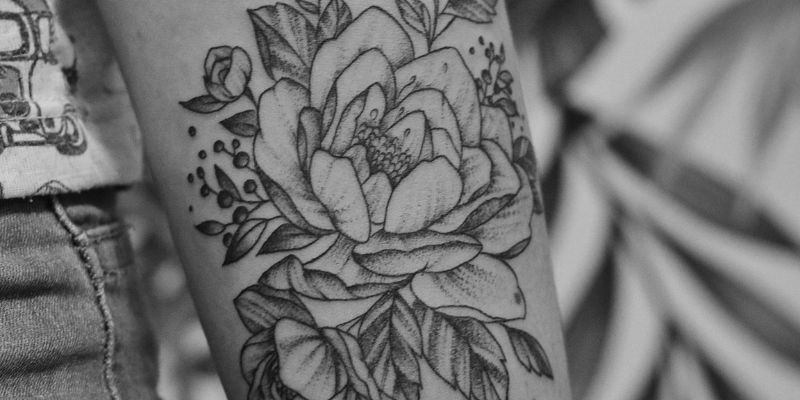
6. Minimalist Floral and Plant Tattoos
Botanical tattoos offer a wide range of minimalist tattoo ideas because plants can be reduced to silhouette, stem, leaf rhythm, and negative space. A single rose can focus on its outer contour. A fern can rely on the repeating angle of its fronds. A wildflower arrangement can use several stems, provided the gaps between them remain open.
Choose the plant before choosing its style. Its meaning may come from a favorite flower, a personal memory, a birth-flower association, or the qualities you connect with growth and nature. Then decide how much of the plant the tattoo needs. A single stem uses less visual information than a leafy branch, while a botanical grouping asks for more room and clearer separation.
Preserve the plant's identity
Your TattoosAI prompt should name the exact plant, viewpoint, number of leaves or blooms, line quality, negative-space level, and placement. “Minimal single-stem fern, botanical outline, three open fronds, fine black line, no shading, inner forearm” gives a more useful direction than “small plant tattoo.”
TattoosAI can produce different versions of the same subject, including a single bloom, a side-view branch, or a looser botanical arrangement. Bring the preferred concept and reference images of the plant to your artist. A tattooist can simplify the anatomy without turning the flower into a generic shape.
Inner arm, thigh, and calf placements can offer room for delicate work. A slightly more generous size may protect the spaces between leaves and petals from becoming crowded. Your artist should also consider whether the design will sit over a curve, stretch with movement, or experience regular friction.

7. Minimalist Celestial and Astronomical Tattoos
Celestial designs work through atmosphere and symbolism. A crescent moon can feel private and reflective, while a sequence of moon phases can suggest change. A star, constellation, planet, or simplified celestial map can connect the tattoo to astrology, memory, curiosity, or a sense of place.
Decide whether you care more about astronomical reference, personal symbolism, or visual mood. A constellation needs accurate point placement if you want it to represent a real formation. A symbolic star pattern can be arranged for balance instead. A simplified Saturn may prioritize its recognizable rings over scientific detail.
Choose between reference and interpretation
TattoosAI prompts should identify the celestial object, technique, orientation, negative-space level, and placement. For example: “Minimal black crescent moon with one small star, open negative space, delicate outline with sparse dots, upright orientation, inner arm placement.” You can then compare a cleaner outline with a softer stippled version.
Chest, back, and inner-arm areas can give the design enough room to be appreciated, but the best placement depends on how private or visible you want the symbol to feel. If you're using a constellation, bring a dependable reference and ask your artist to verify the arrangement before finalizing it.
Personal details can make a familiar celestial motif more specific. A moon may sit beside a small plant, a star may accompany a meaningful initial, or a celestial circle may incorporate coordinates. Keep the supporting detail restrained. One carefully chosen element usually adds more personality than a crowded night-sky scene.
A clear concept might be a small crescent with a single open star, a thin moon-phase progression with generous spacing, or a planet reduced to its defining ring shape. The choice should follow the story you want the tattoo to carry.
8. Minimalist Animal and Wildlife Silhouette Tattoos
An animal tattoo becomes minimalist when it keeps the features that make the creature recognizable and removes everything else. For a bird, that might be the wing angle and tail. For a fox, it could be the pointed ear, muzzle, and sweeping neck. For a cat, the head tilt and ear shape may matter more than fur detail.
Choose the animal's essential contour before choosing the technique. An outline can feel open and delicate. A solid silhouette gives stronger contrast and may need a different practical scale. A single-line sketch adds movement but can become ambiguous if the contour crosses itself too often.
Match the treatment to the animal
Build a TattoosAI prompt with the animal, viewpoint, pose, emotional tone, technique, line weight, placement, and any secondary motif. A useful direction might be: “Minimal side-profile fox, alert but calm expression, clean continuous line, open negative space, no shading, inner forearm placement.” Generate alternatives with a lowered head, curled tail, or small botanical accent.
The artist should simplify the concept for skin, not copy every detail from a reference image. Bring several photographs showing the animal's important features, especially if you want a realistic profile rather than a generic icon. Discuss whether the finished tattoo should look naturalistic, abstract, playful, or symbolic.
Consider the pose and body area together:
- Birds: Flying forms can follow a horizontal space, while perched birds may suit a compact vertical placement.
- Foxes and wolves: Profiles can preserve character with fewer lines than frontal faces.
- Cats and dogs: Ear shape, muzzle, and posture can make a simple outline personal.
- Butterflies and insects: Wing symmetry can support a clean geometric or line-work treatment.
- Horses and deer: Neck curves and head angles can create an elegant silhouette.
A plant, star, or moon can connect the animal to a larger personal story, but it should support the main contour rather than compete with it.
8-Style Minimalist Tattoo Comparison
| Style | Implementation Complexity 🔄 | Resource & Time ⚡ | Expected Outcomes ⭐ 📊 | Ideal Use Cases & Key Advantages 💡 |
|---|---|---|---|---|
| Single Line Tattoos | High, continuous execution, little margin for error | Fast sessions; low ink; requires highly skilled artist | ⭐⭐⭐⭐, Elegant, minimalist; subtle visual impact, ages well | Best for first-timers and expressive, contour-focused designs; versatile and quick |
| Geometric Minimalist Designs | Medium–High, precise alignment and symmetry required | Moderate time; benefits from flat placement and careful planning | ⭐⭐⭐⭐, Striking, timeless; high clarity when placed correctly | Ideal for design/math lovers; scales well, customizable, ages cleanly |
| Dotwork and Stippled Minimalist Tattoos | Very High, meticulous dot placement and density control | High time & cost; multiple long sessions; specialist artist needed | ⭐⭐⭐⭐⭐, Rich texture and depth; strong visual impact, durable detail | Best for mandalas, celestial and fine‑art pieces; unique texture and subtle shading |
| Minimalist Symbol and Icon Tattoos | Low, simple execution but requires cultural sensitivity | Low time & cost; small and quick to apply | ⭐⭐⭐, Clear personal meaning; low visual footprint | Ideal for meaningful, discreet marks; affordable, easily concealable |
| Minimalist Lettering and Script Tattoos | Medium, demands typographic legibility and spacing | Low–moderate; quick sessions but careful proofing required | ⭐⭐⭐⭐, Highly personal; impactful if sized for legibility | Best for names, mantras, dates; customizable typography, very personal |
| Minimalist Floral and Plant Tattoos | Medium, delicate linework needs steady hand and spacing | Low–moderate; thin lines require careful aftercare | ⭐⭐⭐⭐, Elegant, timeless; moderate visibility; symbolic | Ideal for nature lovers and botanical symbolism; versatile and feminine |
| Minimalist Celestial and Astronomical Tattoos | Low–Medium, simple motifs easy; constellations need accuracy | Low–moderate; works in dot or line styles; verify references | ⭐⭐⭐⭐, Symbolic and versatile; pairs well with other motifs | Great for astrology/space enthusiasts; meaningful cosmic symbolism |
| Minimalist Animal and Wildlife Silhouette Tattoos | Medium, capturing essence with few lines is skillful | Low–moderate; placement affects recognition; artist expertise important | ⭐⭐⭐⭐, Strong symbolic impact when sized appropriately | Best for animal lovers and totemic symbolism; timeless, personal designs |
Turn Inspiration Into a Tattoo-Ready Brief
The strongest minimalist tattoo ideas become easier to evaluate when you turn inspiration into a short, specific brief. Start with one motif and one personal meaning. “A moon because I'm interested in cycles” gives your artist a usable foundation, while a long list of unrelated symbols makes the design harder to simplify.
Next, select a realistic placement. Think about visibility, work and family preferences, clothing friction, body movement, and how the motif's natural orientation will sit on the skin. A design that looks balanced on a screen may need rotation, spacing changes, or a different shape once it follows a wrist, forearm, rib, ankle, or another curved area.
Then define the minimum comfortable size with your artist. Don't decide based only on the smallest image TattoosAI can display. Confirm whether the chosen line treatment, dot density, lettering, or silhouette will remain clear at the intended scale. A slightly larger design may communicate the idea more successfully than an ultra-small version with cramped details.
Your artist-selection checklist should include:
- Relevant portfolio evidence: Look for healed work in the specific style you want, such as continuous line, geometric, dotwork, lettering, botanical, or silhouette tattoos.
- Scale communication: Choose an artist who explains how line weight, spacing, and body contours affect the design.
- Adaptation skills: Ask whether they're comfortable simplifying or redrawing an AI-generated concept for skin.
- Consultation quality: The artist should listen to the meaning behind the motif and explain trade-offs clearly.
- Technical fit: Their portfolio should show that they regularly create the kind of work you're requesting.
TattoosAI can generate multiple original concepts, test prompt variations, and help you arrive at a focused studio conversation. It's useful for comparing a one-line flower with a botanical outline, or a sparse moon with a denser dotwork version. The tattooist should still make the final technical decisions about scale, line weight, placement, and application.
After the appointment, follow your artist's aftercare instructions. Keep the area clean, avoid picking at peeling skin, and reduce unnecessary friction while it heals. If you notice concerning healing changes, seek professional medical advice rather than relying on online assumptions.
The strongest minimalist tattoo isn't the smallest possible design. It's the clearest one that fits the person, the placement, and the artist's technique.
TattoosAI lets you describe a motif, choose a minimalist or related style, and generate multiple concepts to refine before your appointment. Explore the possibilities and turn your preferred direction into a more focused conversation with your tattooist by visiting TattoosAI.