TattoosAI
Could a morning glory tattoo be more than a pretty flower reference? The answer depends on how you develop the idea. The same trumpet-shaped bloom can look delicate and botanical, bold and Japanese-inspired, loose and painterly, or precise enough to feel almost technical. Style, scale, placement, line weight, color, and artist skill all change what the finished tattoo communicates.
This guide treats every design as a practical brief. You'll see seven distinct approaches, along with the symbolism each one supports, the body areas that suit it, the compromises involved, and the kind of tattooist you'll need. The morning glory's history adds further depth. It's associated with renewal, love, spiritual growth, impermanence, and the fleeting nature of life across cultural traditions, as explained in this overview of morning glory flower meaning.
Before booking a consultation, AI-generated concepts from TattoosAI can help you compare compositions and refine prompts. You can also use a meaningful floral idea as the basis for flower captions for Instagram, then turn the strongest visual direction into a studio-ready reference.
Table of Contents
- 1. Classic Botanical Morning Glory with Vine Details
- 2. Minimalist Single Morning Glory Line Art
- 3. Japanese-Inspired Morning Glory Irezumi Style
- 4. Watercolor Morning Glory with Bleeding Color Effects
- 5. Geometric Morning Glory with Sacred Geometry Elements
- 6. Dotwork Morning Glory with Stippled Shading
- 7. 3D Realism Morning Glory with Photographic Detail
- 7 Morning Glory Tattoo Styles Compared
- Turn Your Favorite Flower Concept Into a Studio Brief
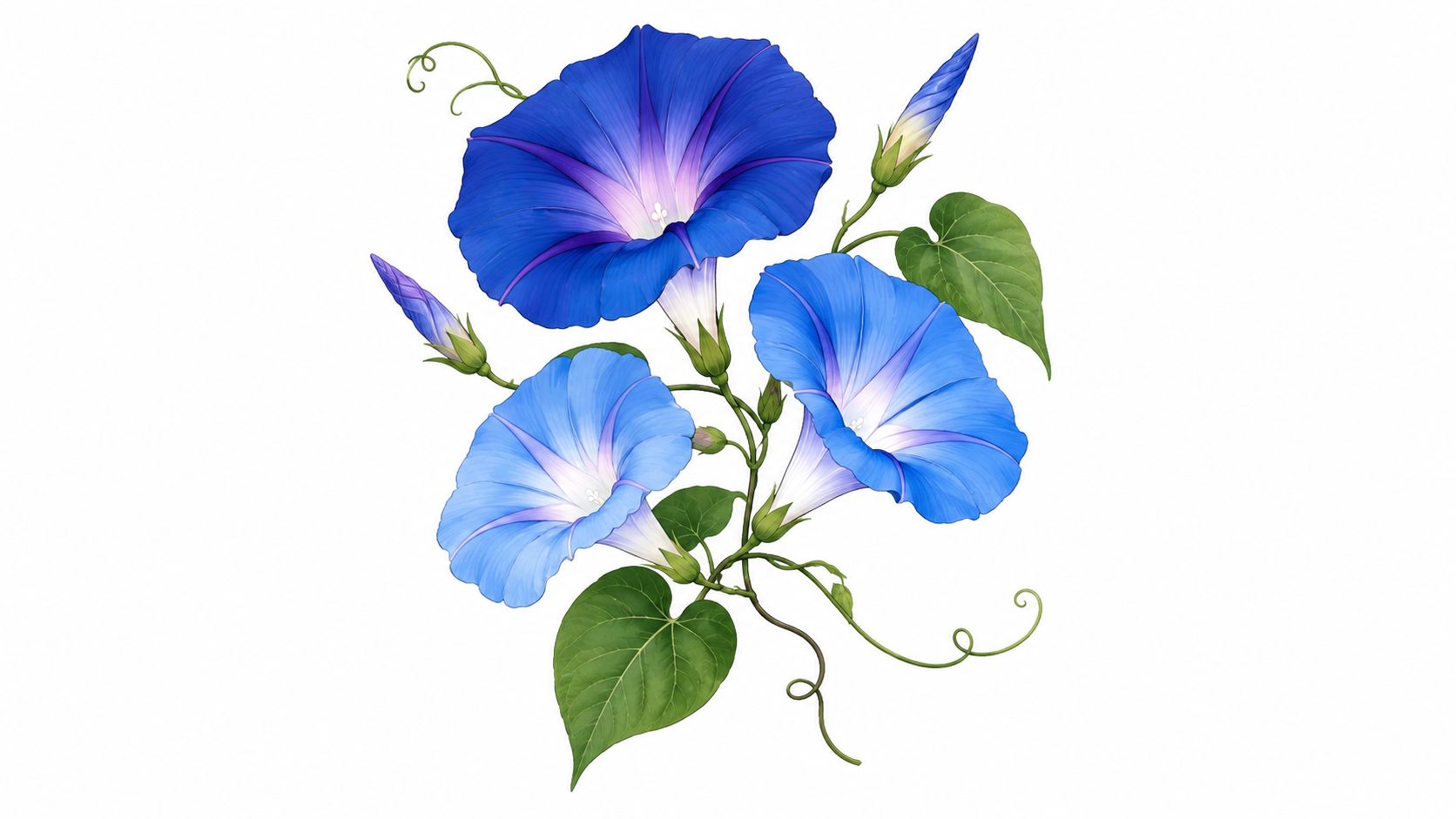
1. Classic Botanical Morning Glory with Vine Details
A botanical morning glory tattoo succeeds when the flower remains the focal point and the vine supports it instead of swallowing it. Trumpet-shaped blooms, heart-shaped leaves, curling tendrils, and a visible stem create a natural composition with movement. The design can feel soft and elegant, but it needs enough structure for the artist to preserve the plant's anatomy over time.
This approach works particularly well for a climbing composition on the arm, a foliage-led back piece, or a vine that wraps naturally around the lower leg. An ankle-to-calf arrangement can create a graceful spiral, while an arm design can lead the eye upward from a smaller bloom toward a larger focal flower.
The symbolism is unusually balanced. Morning glories open with sunrise and close by sunset, giving them a strong connection to transience, mortality, renewal, and attention to the present. Their vigorous climbing growth adds a contrasting message of resilience, enduring bonds, and overcoming obstacles, as discussed in this guide to morning glory tattoo symbolism.
Build the brief before you generate
Use TattoosAI's realistic or botanical illustration direction, then compare versions with different bloom density and vine paths. One concept might place three open flowers near the shoulder, while another might use a single bloom with leaves doing most of the visual work. Both may represent the same idea, but they'll require different stencil planning.
- Choose the palette deliberately: Blue and purple can emphasize the flower's ethereal quality, while black and gray will make the silhouette easier to simplify.
- Protect the focal blooms: Too many leaves and tendrils create visual noise, especially on a smaller placement.
- Ask about line weight: Fine lines can look refined, but medium-weight structure may remain clearer as the tattoo settles.
- Test stable placement: Areas with less friction and movement usually give detailed botanical work a more predictable canvas.
You can also use a botanical reference while planning botanical ad creatives, especially if you want to compare natural foliage arrangements before your appointment.
2. Minimalist Single Morning Glory Line Art
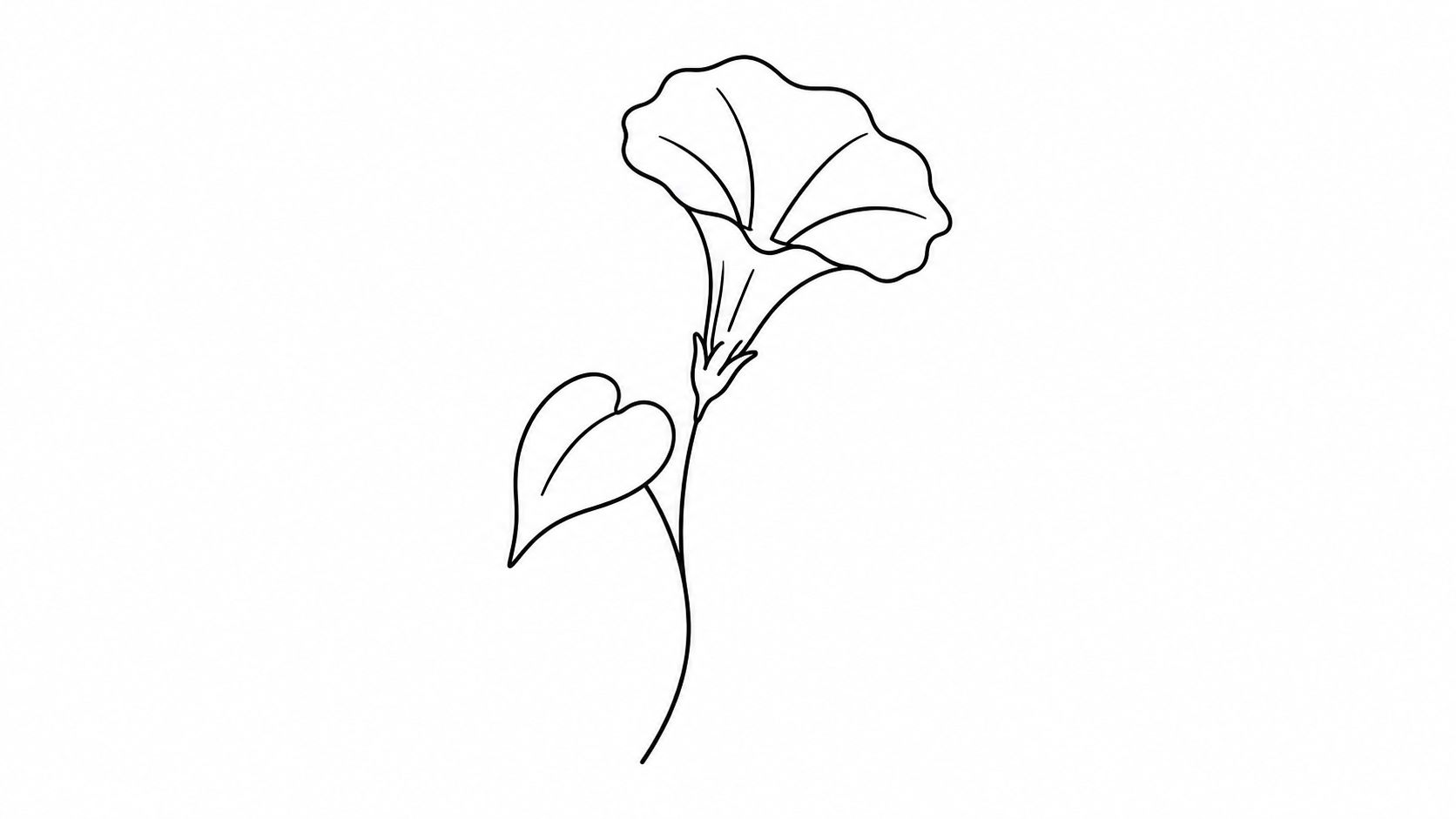
A minimalist single morning glory turns a botanical subject into a precise design brief. The trumpet-shaped bloom, one curved stem, and a carefully placed leaf must communicate the flower without relying on dense detail. Negative space carries much of the image, so every mark needs a clear purpose.
The format suits a discreet wrist, hand, or behind-the-ear tattoo. It also works for a memorial or relationship symbol that should remain personal rather than decorative. One bloom keeps the concept focused, while the chosen angle and leaf position can suggest openness, reflection, or a new beginning.
Design decisions matter more at small scale
Minimalist work demands control. With fewer lines, every curve, gap, and junction remains exposed. A heavy section can alter the flower's character, and a stem positioned too close to the bloom can make the composition feel cramped. Ask the artist to show the design at its intended size before approving the stencil.
Generate monochromatic concepts in TattoosAI's minimalist or line art direction. Compare an open bloom, a side-facing bloom, and a partially closed flower. The first may feel more receptive, while the latter options can create a quieter or more reflective reading. Treat these versions as alternatives for discussion, not finished tattoo instructions.
Use black-ink references to judge whether the line structure works without color support. Compare negative space inside and around the trumpet at the actual planned scale. Show healed examples to assess how the artist's fine lines settle over time. Consider friction carefully before choosing fingers or hands, where movement and daily contact can affect a delicate design.
The trade-off is clear. A minimalist morning glory will omit some botanical detail, but it can produce a quiet, portable mark connected to a specific person, season, or personal change. Placement, scale, and line weight should be agreed together so the final concept reaches the studio ready for practical adjustment.
3. Japanese-Inspired Morning Glory Irezumi Style
Japanese-inspired morning glory work needs a larger visual conversation than a flower floating by itself. Bold outlines, controlled color planes, and integrated background elements can place the bloom within waves, clouds, foliage, or a carefully balanced sleeve composition. The result should feel designed for the body, not pasted onto it.
Asagao, the Japanese name for morning glory, is connected with summer and impermanence. The Japanese cultural reading of mono no aware emphasizes awareness that all things pass, giving the flower a thoughtful symbolic foundation beyond its surface appearance. Chinese interpretations, by contrast, often place more emphasis on affection, marital bliss, and the meeting of lovers, so the intended cultural reference should be clear before the design is finalized. A practical discussion of these distinctions appears in this guide to Japanese-inspired morning glory tattoos.
Treat the background as part of the tattoo
A leg sleeve might use morning glory vines to connect the ankle and thigh while clouds control the negative space. A back piece could place the blooms alongside chrysanthemums and water, provided the artist has the experience to balance every element. A shoulder-to-wrist composition can also use the flower as a secondary motif rather than the dominant subject.
TattoosAI's Japanese or irezumi direction can help you explore background integration and palette options. Use the generated image as a conversation starter, not as proof that an artist can reproduce traditional methods. Select a tattooist with documented irezumi work, study the portfolio for healed pieces, and discuss cultural appreciation respectfully during the consultation.
Practical rule: The flower, background, and body contour should be planned together. A strong standalone bloom may fail when forced into a sleeve that was never designed around it.
This style rewards commitment to composition. It isn't the best fit if you want a tiny, isolated flower, but it can turn the morning glory's themes of impermanence, affection, and persistence into a coherent full-body visual language.
4. Watercolor Morning Glory with Bleeding Color Effects
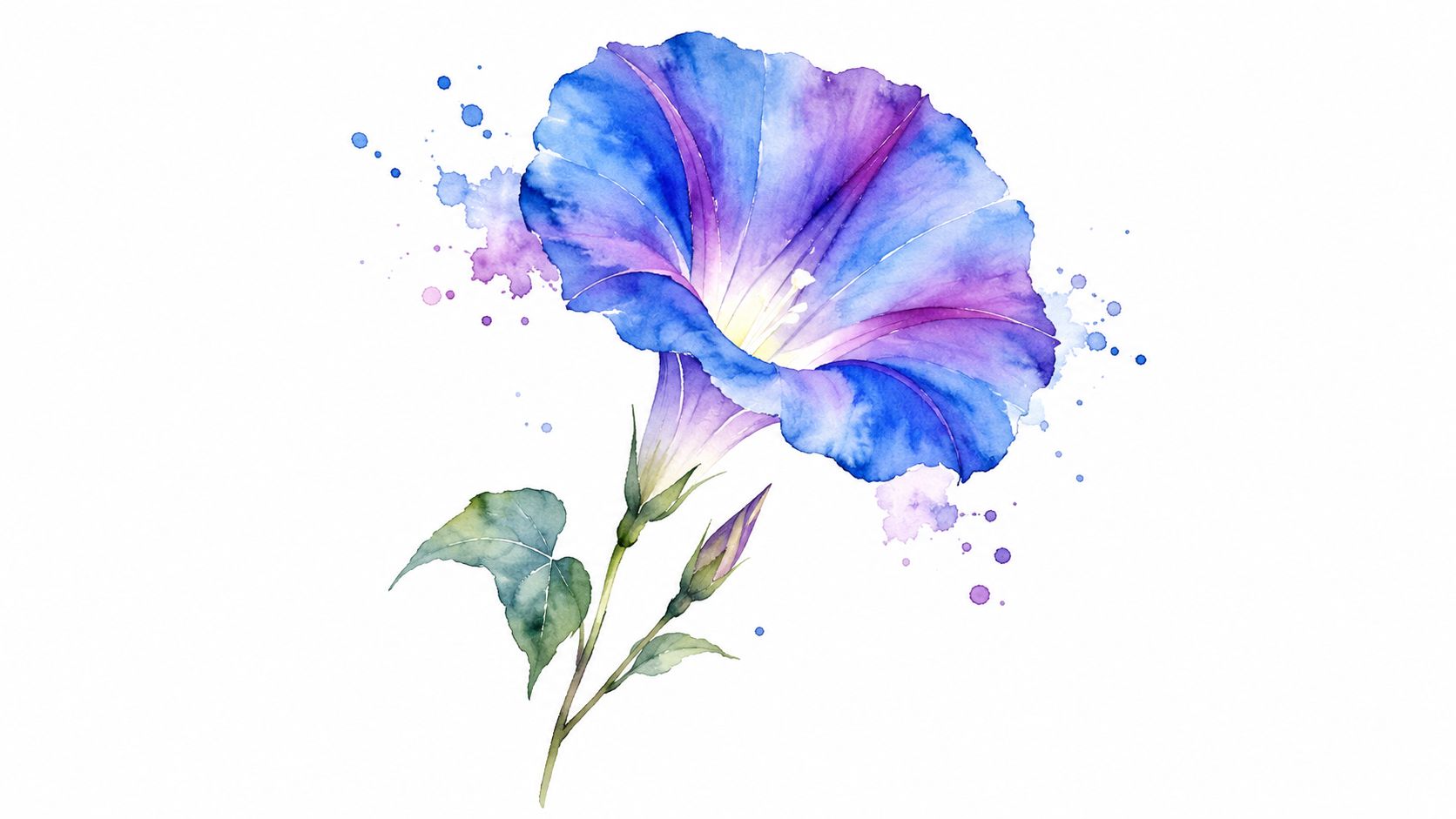
Watercolor morning glory tattoos turn botanical structure into a looser color study. Fine lines can define the trumpet, leaves, and stem, while blue, purple, and green pigment extends beyond the edges through controlled splashes or translucent layers. The result feels airy and emotional, but the design still needs enough structure to remain recognizably a morning glory after healing.
Start with the design brief: decide whether the flower or the color movement should dominate, then set the scale and placement around that choice. A thigh gives a painterly composition room to breathe. On the forearm, a realistic bloom can shift into abstract washes along the vine. An upper-arm design can use a gradient to connect flower and stem without surrounding every element with a hard outline. Each option needs enough open skin to keep the linework separate from the color effects.
Build the concept before choosing the artist
Use TattoosAI's watercolor setting to compare restrained washes with more expressive bleeding effects. Bring the strongest reference to a tattooist who can explain how the outline, shading, and pigment will be applied. This explanation of how watercolor tattoos work can help you prepare specific questions about technique and longevity.
Ask the artist to address these points during the consultation:
- Keep structure visible: Request a clear flower outline and defined stem so the color remains atmospheric rather than muddy.
- Review healed work: Fresh saturation can look stronger than the softened result after healing, so inspect healed watercolor tattoos in the portfolio.
- Match scale to detail: Painterly transitions need room. A very small design may reduce the bloom to an indistinct patch of color.
- Choose placement carefully: Areas with less rubbing can make color retention easier to manage.
- Plan aftercare and touch-ups: Ask what healing changes to expect and whether a future refresh may be appropriate.
Watercolor suits someone who values mood, movement, and suggestive color over strict realism. Choose another approach if you want crisp edges, consistently dense saturation, or tiny botanical details to carry the design.
5. Geometric Morning Glory with Sacred Geometry Elements
Start with a design brief, not a collection of isolated symbols. A geometric morning glory pairs the flower's curved petals and climbing vine with measured forms such as mandalas, triangles, or hexagons. The result can express growth guided by structure, emotional depth with clear direction, or natural change shaped by intention.
Placement affects how convincingly the geometry reads. A chest composition can center the bloom inside a mandala. On the shoulder, a hexagonal frame can contain the flower, while a thigh wrap can let the vine travel through repeating patterns. Broad, relatively flat skin usually gives the artist more control over circles, angles, and alignment. Curved areas require adjustments because a straight line or symmetrical shape may look uneven once it follows the body.
Symmetry needs a clear role in the brief. The morning glory winds and reaches, so a rigid framework may make it appear confined. A loose arrangement of geometric shapes can also seem careless if the spacing does not relate to the bloom. Decide whether the flower should lead, share focus with the geometry, or sit within a deliberately measured frame.
TattoosAI's geometric direction can help you generate starting concepts with different mandala complexity and symmetry. Use those images to compare proportions and identify the structure you want. The final stencil should be rebuilt by the tattooist for your body, rather than traced directly from an AI image.
Bring these questions to the consultation:
- Can I review a paper or digital stencil at the intended placement?
- How will you measure circles, angles, and repeated shapes?
- Which tools or alignment methods will you use to keep the geometry consistent?
- Will black geometry overpower a lightly shaded flower, or should the values be adjusted?
Give each shape a reason to exist. Sacred geometry strengthens the concept when it carries personal meaning or clarifies the composition. It weakens the design when it fills empty space without supporting the flower.
6. Dotwork Morning Glory with Stippled Shading
Dotwork gives a morning glory tattoo a tactile, granular quality. Instead of relying on conventional outlines and smooth fills, the artist creates tone through dot density, spacing, and variation. Dense stippling can describe the darker center of a trumpet bloom, while widely spaced dots can suggest a lighter petal or fading edge.
A forearm design can keep the flower compact and graphic. A shoulder piece can combine the bloom with a stippled background, while a calf composition can use a larger flower to show a broader range of tone. The design benefits from clear tonal separation, because a dotwork reference that looks detailed on a bright screen may read much more subtly on skin.
Match the design to the artist
Dotwork is not just linework with dots added afterward. The artist needs control over spacing, consistency, gradients, and the transition between dense and open areas. Find a tattooist known for this specific technique and examine healed work before you commit. The dotwork tattoo style guide offers useful terminology for discussing the finish.
TattoosAI's dotwork direction can help you compare a soft stippled bloom with a high-contrast, almost illustrative version. Ask for variations that show different density levels, then bring the clearest reference to the consultation.
Dotwork rewards patience. If the design depends on subtle tonal transitions, a rushed session can compromise the texture that makes the style distinctive.
A complex stippled flower may require more time and planning than a comparable line-art design, so discuss the session approach and budget before booking. Choose a placement where you can stay still and protect the tattoo during healing. This style suits people who want texture, shadow, and a quieter black-ink finish rather than vivid color.
7. 3D Realism Morning Glory with Photographic Detail
Can a morning glory tattoo look as though it is lifting from the skin? 3D realism depends on a disciplined design brief: petal anatomy, light direction, contrast, and cast shadows must all support the same illusion. If the light source changes between the petals and the shadow, the flower may look heavily shaded rather than dimensional.
Start with the body area and scale. An upper-arm composition can make the vine appear to travel naturally across the skin. A thigh provides enough surface for a single bloom to seem suspended above the body. The chest can support several flowers and a more developed background, but curved or highly distorted areas may force the artist to simplify the perspective. A photographic reference still needs a clear silhouette and a believable fit on the body.
Choose the tattooist before finalizing the prompt. TattoosAI's 3D realism setting can help test lighting direction, viewing angle, and flower arrangement. Create a few versions of the same concept under different light sources, then bring the clearest reference to an artist whose portfolio shows strong photorealism. The artist must adapt that reference to your contours, skin texture, scars, and likely healing changes.
Before booking, address the practical risks:
Inspect healed realism. Fresh tattoos can appear sharper and more saturated than settled work, so request healed examples.
Discuss skin condition. Texture, scars, and uneven areas can reduce the clarity of a floating or raised effect.
Plan aftercare carefully. Healing affects fine shading and color, making the artist's instructions part of the design outcome.
Ask about maintenance. Discuss color longevity and whether a future touch-up could restore small areas of contrast.
Prioritize composition over spectacle. A convincing illusion needs breathing room, an intentional viewing angle, and enough size for the shadows to remain readable.
This approach creates strong immediate impact, but it demands specialized execution and careful placement. Very small areas rarely provide enough room for photographic detail, and an artist focused mainly on minimalist work may not have the required realism technique.
7 Morning Glory Tattoo Styles Compared
| Style | Implementation Complexity 🔄 | Resource Requirements 💡 | Expected Outcomes ⭐📊 | Ideal Use Cases | Key Advantages ⚡ |
|---|---|---|---|---|---|
| Classic Botanical Morning Glory with Vine Details | High 🔄, intricate fine-line and layering | Experienced artist; larger canvas; moderate–high time & cost | High ⭐⭐⭐⭐, realistic botanical accuracy, strong visual interest 📊 | Sleeves, back pieces, ankle wraps where detail shows | Timeless naturalism; scalable; works in B&W or color ⚡ |
| Minimalist Single Morning Glory Line Art | Low–Medium 🔄, simple form but needs steady execution | Skilled line artist; low time & cost; small stencil | Medium–High ⭐⭐⭐, clean, long‑lasting, discreet impact 📊 | Wrist, finger, behind-ear; first tattoos and minimalist looks | Quick application, low pain, ages well, highly portable ⚡ |
| Japanese-Inspired Morning Glory Irezumi Style | High 🔄, bold outlines, integrated backgrounds | Irezumi-trained specialist; large canvas; higher cost | High ⭐⭐⭐⭐, culturally rich, bold longevity 📊 | Full sleeves, back pieces, leg sleeves with traditional motifs | Strong cultural depth; bold outlines age well; cohesive with other Japanese elements ⚡ |
| Watercolor Morning Glory with Bleeding Color Effects | Medium–High 🔄, color bleeding and soft edges require control | Color-specialist artist; touch-ups likely; medium–high cost | High ⭐⭐⭐⭐, painterly, striking visuals but color fade risk 📊 | Thigh, forearm, upper arm; cover-ups; expressive placements | Unique, artistic, photogenic; flexible palettes ⚡ |
| Geometric Morning Glory with Sacred Geometry Elements | High 🔄, precision and perfect symmetry required | Geometric-focused artist; flat area recommended; larger design | High ⭐⭐⭐, precise, spiritual impact; symmetry emphasizes detail 📊 | Chest, back shoulder, thigh where stencil fidelity holds | Merges organic with mathematical harmony; durable black-line clarity ⚡ |
| Dotwork Morning Glory with Stippled Shading | Very High 🔄, extensive dot density control and time | Rare dotwork specialist; very long sessions; premium cost | High ⭐⭐⭐⭐, textured depth, ages gracefully, black permanence 📊 | Forearm, shoulder, calf, back areas sized for tonal detail | Unique pointillist texture; exceptional depth and permanence ⚡ |
| 3D Realism Morning Glory with Photographic Detail | Very High 🔄, advanced shading, lighting consistency | World-class realism artist; excellent skin canvas; highest cost & upkeep | Very High ⭐⭐⭐⭐⭐, photorealistic, immediate impact but maintenance heavy 📊 | Upper arm, thigh, chest for gallery‑quality realism | Striking illusion of depth; highly shareable and gallery‑level work ⚡ |
Turn Your Favorite Flower Concept Into a Studio Brief
The right morning glory tattoo isn't automatically the most detailed or dramatic option. Choose minimalist linework if you want a discreet mark built around a few intentional curves. Choose botanical realism if accurate leaves, tendrils, and natural growth matter most. Watercolor suits a painterly, emotional effect, while Japanese-inspired work gives the flower a broader cultural and compositional setting.
Geometric designs work well when you want organic growth contained within a deliberate structure. Dotwork is the better choice for stippled texture, quiet contrast, and a tactile black-ink finish. 3D realism offers maximum visual impact, but it requires the most demanding combination of artist skill, placement planning, and long-term care.
Your consultation should answer practical questions before you discuss a booking date. Bring a reference that shows the flower, not only a style label, and clarify what the bloom represents to you. Morning glory symbolism can point toward love, renewal, spiritual growth, memorial, transition, or impermanence. Japanese asagao associations may emphasize summer and mono no aware, while Chinese interpretations may emphasize affection and marital connection, so the cultural direction should match your intention.
Use this final brief:
- Symbolism: Write the personal message in one clear sentence.
- Placement: Decide whether the tattoo should be discreet, visible, wrapped, or built into a larger piece.
- Scale: Give the artist enough room for the chosen linework, color, texture, or realism.
- Ink approach: Choose black and gray or color based on the mood and maintenance you want.
- Healed references: Request healed examples in the same style.
- Line weight: Explain whether you want delicate contours or stronger structural lines.
- Artist specialization: Match the technique to a tattooist who regularly performs it.
TattoosAI lets you describe an idea, compare concepts across 18+ styles, and refine prompts with color options before you meet your tattooist. You can use those concepts as references, but the selected artist should redraw and adapt the design for your skin, placement, anatomy, and long-term goals. A generated image starts the conversation. The studio brief makes that conversation useful.
Use TattoosAI to generate and compare morning glory tattoo concepts in minimalist, botanical, watercolor, Japanese, geometric, dotwork, and 3D directions. Refine the flower, palette, composition, and symbolism first, then bring your strongest reference to a specialist tattooist for a design that fits your body and heals well.