TattoosAI
You've got the feeling clear enough. Growth after a hard year, roots after a move, a quiet marker for someone you lost. What you don't have is an image you can hand to an artist without waving your hands for ten minutes. That's exactly where small tree tattoos work well. The shape is instantly readable, but you can shift the meaning with style, branch structure, roots, size, and placement.
You're not picking a passing novelty, either. The Royal Horticultural Society guide to botanical tattoos notes that tattooing may date back roughly 45,000 years, with plant imagery used across cultures as decoration and allegory. Today the audience is mainstream. Pew Research Center reported in 2023 that 32% of U.S. adults had at least one tattoo in a survey of 8,480 adults. Below are seven distinct routes, each with a usable TattoosAI prompt, a sensible size, and an honest note on aging.
Table of Contents
- 1. Minimalist Single-Line Tree
- 2. Dotwork Tree of Life
- 3. Blackwork Birch Tree with Negative Space
- 4. Geometric Pine Tree
- 5. Japanese-Style Bonsai Tree
- 6. Watercolor Splash Tree
- 7. Small Family Tree with Roots
- How the Seven Small Tree Tattoo Styles Compare
- Turning Your Favorite Small Tree Into a Studio-Ready Brief
1. Minimalist Single-Line Tree
Start here if you want the lowest-commitment version that still reads clearly. A single-line tree draws the trunk into the branches in one continuous or near-continuous stroke, with no shading and no filler leaves. On the inner wrist or back of the ankle, it looks deliberate rather than unfinished, and an artist can assess it in seconds.
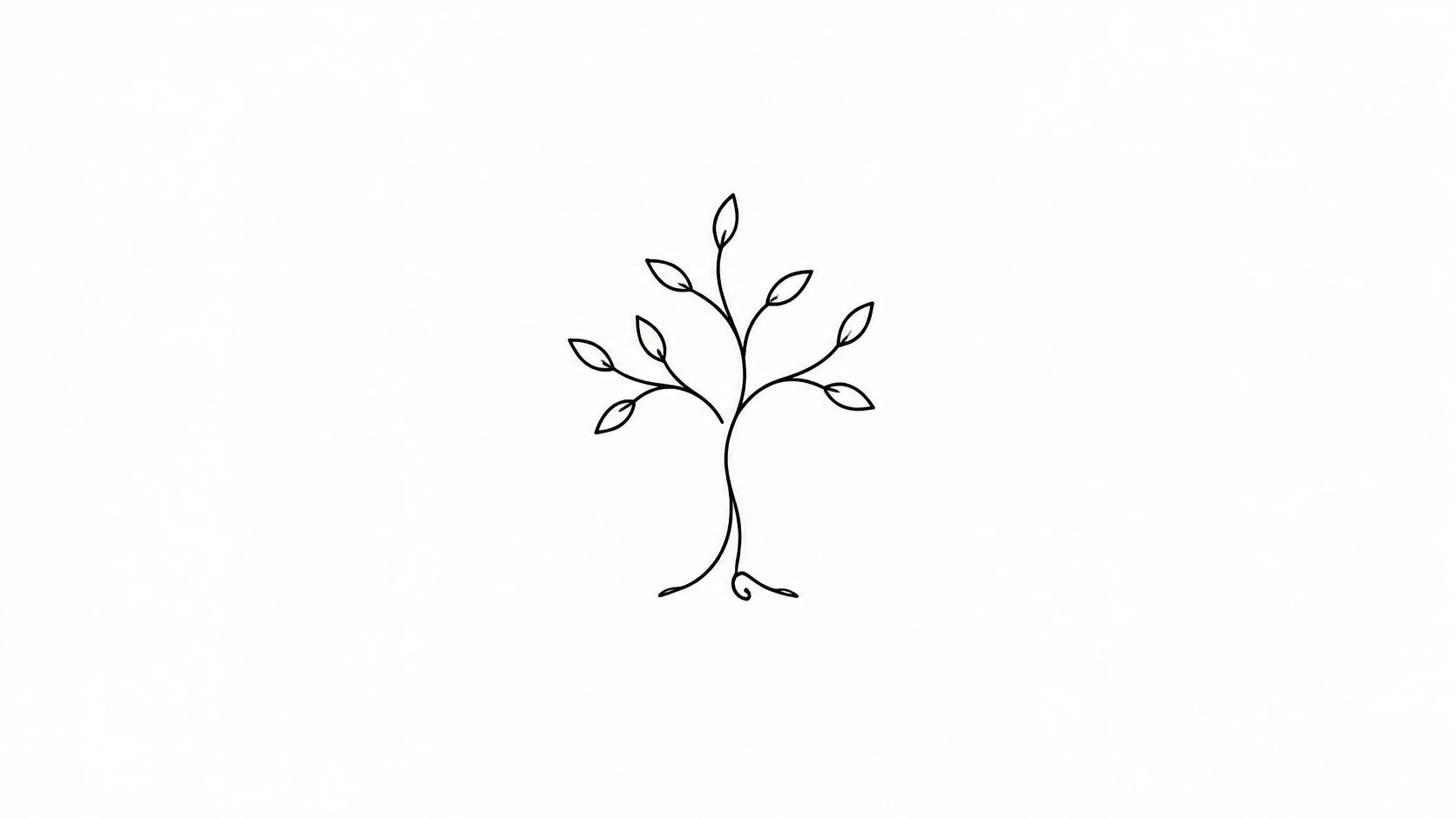
Say you want five branches for five siblings. Keep those five, drop everything else. Adding tiny twigs between them is where small tree tattoos start to fail, because close parallel lines merge visually as skin changes.
Your Brief for This Style
- TattoosAI prompt: "single line, minimalist, continuous line tree, five branches, no shading, high contrast, open spacing"
- Size and placement: Try 1.5 to 2 inches on the inner wrist, or slightly larger behind the ankle where skin moves less than you expect when walking.
- Aging note: A single clean line softens, it doesn't turn into a blob. That's the trade-off worth taking. Ask your artist for the minimum size that holds that line weight, then test it with a printed stencil.
Pick a branch curve that feels like yours, upright and tidy or slightly wind-bent. I recommend generating three curve variations. Generic comes from accepting the first result.
2. Dotwork Tree of Life
A dotwork tree of life builds the canopy and roots from stippled dots instead of solid lines, so the edges feel soft and handcrafted. The classic version is circular and symmetrical, branches above mirroring roots below. It's the right pick if you want symbolism front and center without bold black fill.
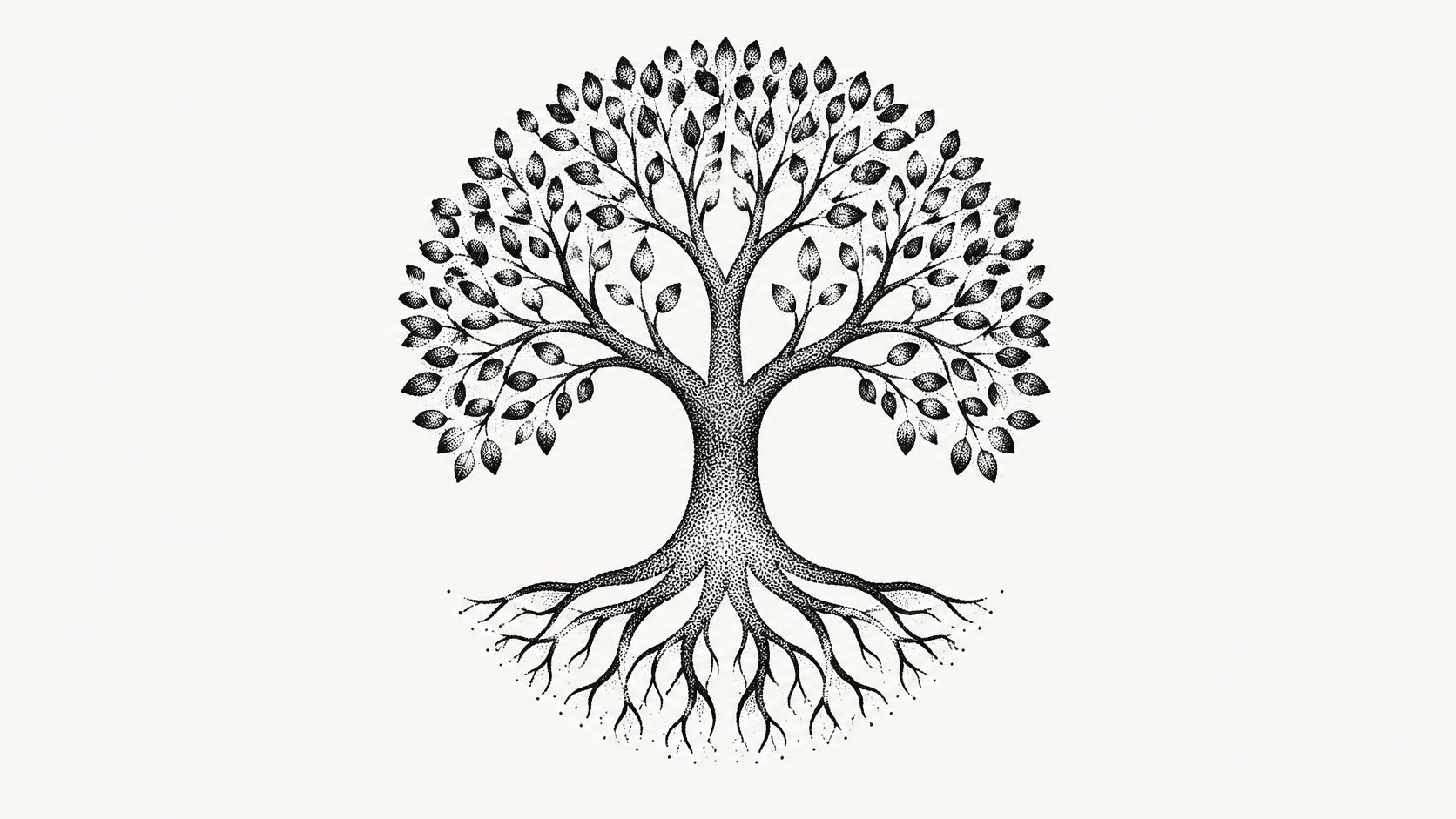
A 2-inch piece centered on the sternum works because that flat, central placement suits symmetry. Roots wrapping the upper arm can also work, but your artist needs to check how the circle distorts when you flex. If you're new to the technique, the guide to the dotwork tattoo style shows how density changes the whole effect.
Practical rule: In dotwork, spacing is the design. Dots packed tight for a darker canopy today become a solid smudge later.
Use the prompt "dotwork tree of life, stipple, light dot density, symmetrical roots and canopy, clear negative space." Don't go below 2 inches for this one. The roots need room to taper, and the canopy needs gaps between dot clusters. Expect the softest aging of any style here, which suits the meditative look, but plan on a possible touch-up if you want the outer dots to stay crisp.
3. Blackwork Birch Tree with Negative Space
Birch suits negative space: bold black stripes define the trunk, while the pale bark marks are left as untattooed skin. The contrast keeps the tree from reading as a solid block, and its tall, slim silhouette works well in vertical placements.
A 3-inch birch running down the outer forearm gives the stripes room to show; two trunks create a paired look, while a single trunk can sit on the inner bicep. Ask your artist how the skin gaps will read against your skin tone and how wide to make them. Those gaps are part of the design, not leftover space.
A published review of tattoo pigment in skin describes pigment particles ranging from roughly 10 to 5,000 nm that may gradually migrate within the dermis over time. Ink can spread slightly as a tattoo ages, so generous gaps between stripes are safer than tight ones.
Your Brief for This Style
- TattoosAI prompt: "blackwork birch tree, negative space bark, bold trunk stripes, sparse branches, vertical composition"
- Size and placement: 2.5 to 3 inches tall on the outer forearm or calf.
- Aging note: Bold black holds well, while tight negative space may become less distinct. Check the stencil in a mirror at arm's length. If the bark gaps look too narrow, widen them before the tattoo begins.
4. Geometric Pine Tree
If you think in clean angles, build the pine from stacked triangles. A geometric pine uses two to four triangular tiers over a short straight trunk, no needles, no texture. It pairs easily with stars, moons, or coordinates, and it scales down better than almost any other tree because there's so little internal detail to lose.
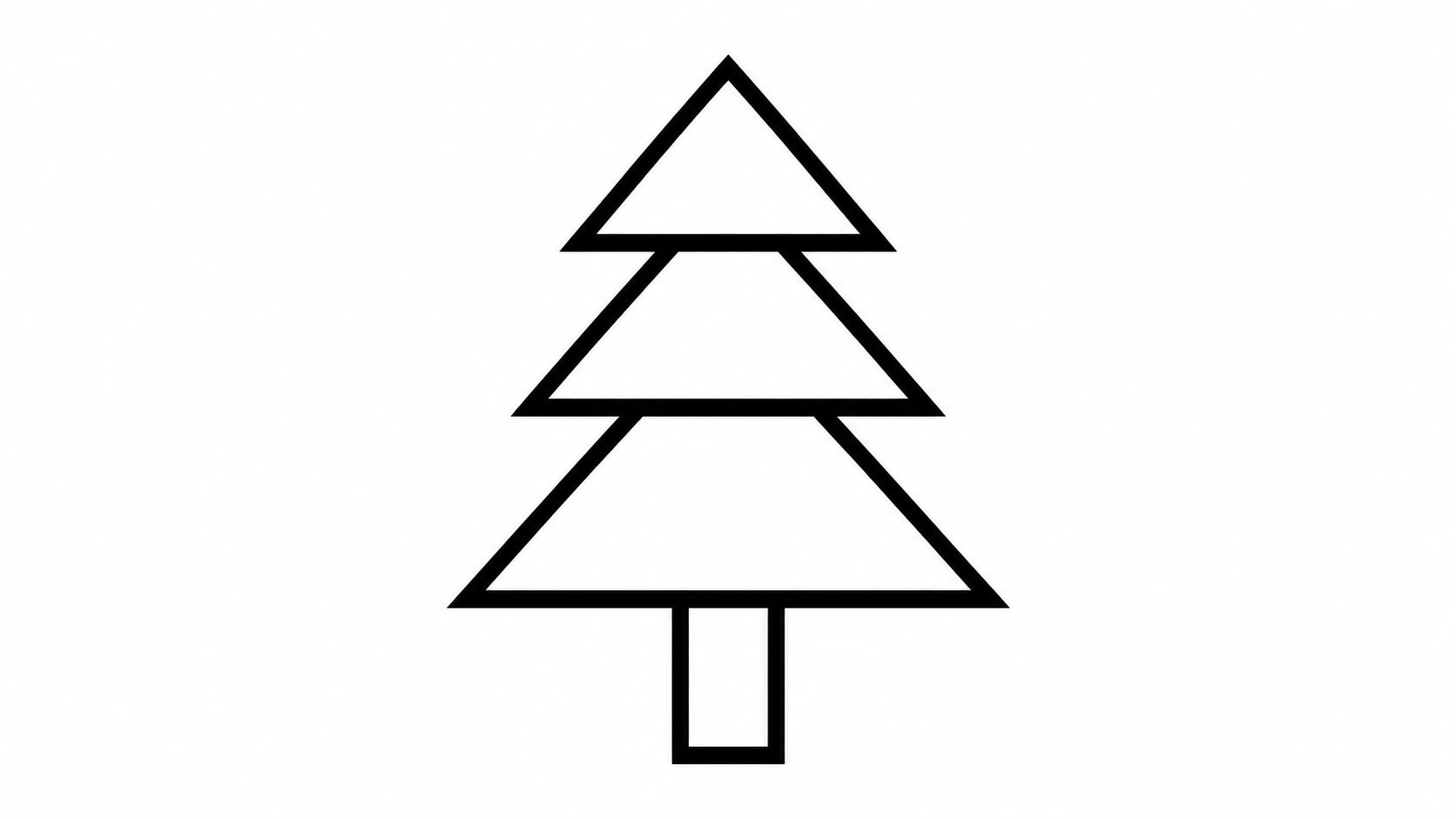
A row of three repeating pines along the inner forearm gives you presence without a big commitment, and repetition forgives minor softening. A single 2-inch pine also sits well on the ankle or behind the ear. If you're weighing larger back placements for later, these tree tattoo back ideas show how the same motif expands.
Prompt it precisely: "geometric pine tree, triangular tiers, symmetrical, three tiers, consistent line weight, minimalist." Then have your artist stencil it and check symmetry while you stand naturally, not while your arm is twisted toward them. Curves lie. A triangle that's perfect on paper can lean on a forearm.
For aging, this is the safest bet in the list. Straight lines and open tiers stay legible for years, provided the gaps between tiers aren't squeezed to hairlines at tiny sizes.
5. Japanese-Style Bonsai Tree
Bonsai carries the most specific meaning here, patience and careful cultivation, so don't choose it just because it looks cute in a pot. Choose it if that slow, deliberate growth is actually your story. If you want background first, you can explore different bonsai styles and see how trunk shapes change the mood.
The tattoo version uses a bold outline, a twisted or wind-blown trunk, and a stylized canopy in flat clusters rather than individual leaves. A 3-inch bonsai on a stone base on the outer calf gives the trunk room to bend. On the upper back, small cherry blossom accents can work, but each blossom adds detail that competes for space.
Keeping It Readable at Small Size
- TattoosAI prompt: "Japanese style bonsai, bold outline, sumi-e shading, twisted trunk, simple canopy clusters, stone base"
- Size and placement: 3 inches minimum on the calf, outer arm, or upper back.
- Aging note: Canopy clusters merge first. Keep three to five clusters maximum and let skin show between them.
Ask your artist whether the base helps or crowds your placement. I lean toward keeping the stone or pot, since it anchors the design and stops it reading as a generic shrub.
6. Watercolor Splash Tree
Watercolor is the expressive outlier. The trunk usually stays a fine black line, and the canopy becomes blended color washes with soft, bleeding edges, teal and green for a forest feel, pink for blossom. It looks painterly on day one and it's the style that changes most over time, so go in with eyes open.
The short clip below shows how loose those edges are meant to be, which helps you judge whether you'd still like the effect once it settles.
A 2-inch watercolor tree on the upper arm is the sensible version. That skin is smooth, relatively sun-protected, and easy to cover during healing. The rib cage looks great in photos but stretches with every breath and hurts more than most first-timers expect.
Prompt with "watercolor tree, color wash, soft edges, fine line trunk" plus your exact palette, then generate the same tree in two palettes before deciding. Ask your artist about color longevity and sun protection for your specific inks. Pastels fade fastest, and without a black outline, a pale canopy can become a faint stain. Budget mentally for a color refresh rather than pretending it won't need one.
7. Small Family Tree with Roots
This is the most personal design on the list, and the easiest to overload. The canopy stays simple while the roots carry the meaning, shaped around initials, names, or birth years. Roots also solve a composition problem, since they give a small tree visual weight at the bottom instead of a trunk that just stops.
Say you want initials for three family members woven into roots on your forearm. Three works. Seven names plus dates plus a quote does not, not at small size. Every added element steals space from the lettering, and lettering is the part that must stay legible.
Text smaller than a few millimeters tall doesn't stay text. It becomes texture, and nobody can touch that up into readability later.
Use the prompt "family tree, emphasized roots, fine line, three initials in roots, simple canopy, open spacing." Bring a handwriting sample if you want a parent's or grandparent's lettering matched, and confirm spelling on the stencil twice. Place it on the forearm or upper back at 2.5 to 3 inches so the roots can spread. Expect fine root lines to soften, so keep them separated, not interwoven into a nest.
How the Seven Small Tree Tattoo Styles Compare
Use the table to match a style's shape and trade-offs to a placement before settling on a design. The size ranges are starting points; lettering, fine foliage, and dense patterns need enough room to remain distinct.
| Item | Best Placements | Healing Time | Typical Size | Main Trade-off |
|---|---|---|---|---|
| Minimalist Single-Line Tree | Inner wrist, ankle, behind the ear, inner forearm | About 2–4 weeks | 1–3 inches tall | Fine lines may blur over time |
| Dotwork Tree of Life | Sternum, upper arm, shoulder blade, calf | About 2–4 weeks | At least 2 inches for clarity | Dotwork takes longer and can blur if too dense |
| Blackwork Birch Tree with Negative Space | Outer forearm, inner bicep, calf, side of the ribcage | About 2–4 weeks | Tall and narrow; needs room for bark pattern | Negative space may blend with some skin tones |
| Geometric Pine Tree | Back of the hand, inner forearm, collarbone, side of the foot | About 2–4 weeks | Compact; examples are around 2 inches | Precise alignment is essential |
| Japanese-Style Bonsai Tree | Outer calf, upper back, forearm, upper arm | About 2–4 weeks | Compact; examples are around 3 inches | Fine foliage can blur if the design is too small |
| Watercolor Splash Tree | Upper arm, thigh, shoulder | About 3–4 weeks | Compact; examples are around 2 inches | Color may fade or blur and need touch-ups |
| Small Family Tree with Roots | Forearm, upper back, shoulder, behind the ear | About 2–4 weeks | 2.5 to 3 inches | Small lettering can blur or clutter the design |
For a small design, the main compromise is detail versus longevity. Single-line branches, fine bonsai foliage, and family names all need open spacing; adding detail without increasing size can make the design harder to read as it ages. Dotwork and watercolor bring texture or color, but dense dots can blur, and color may need touch-ups. Birch bark and geometric tiers depend on deliberate spacing and alignment, while negative space can read differently across skin tones.
Use the row's typical size and placement as a starting brief for TattoosAI: specify the style, intended dimensions, and body area, then ask an artist which details to simplify. A clear prompt is more useful than a mood board that mixes competing styles.
Turning Your Favorite Small Tree Into a Studio-Ready Brief
Pick one style before you generate anything else. Mixing dotwork, watercolor, and geometric tiers into one small tree gives your artist three problems instead of one design. Then match placement to shape. Vertical trees want forearms and calves, circular trees want the sternum or upper back, wide root systems want flatter skin.
Bring two or three generated concepts to your consultation, printed at the actual size you want. Your brief for each should state style, size in inches, placement, and any density or color choices. Ask the artist one direct question about each version. Which details will still read as a tree after healing and aging, and what would they simplify?
Treat safety as part of the brief, not an afterthought. Published reviews summarized in the Journal of Applied Microbiology estimate post-tattoo infections in approximately 0.5% to 6% of tattooed individuals, with risk linked to contaminated ink and inadequate hygiene. Verify sterile single-use needles, disposable barriers, and traceable inks in person. A 2025 clinical report on tattoo complications also describes delayed infections that initially resembled ink allergy, so persistent nodules, spreading redness, pus, fever, or inflammation returning after healing means contacting a clinician, not waiting it out. Short-term redness, soreness, and flaking are normal. Worsening warmth isn't.
If you later turn a favorite motif into shirts or prints, that's a separate research habit, similar to doing niche research for Merch by Amazon before committing. For skin, the equivalent diligence is simpler. Refine your prompt, confirm minimum size, and let a professional redraw the final stencil.
Generate your shortlist before you book, using the exact prompts above to produce micro, small, and slightly larger versions of your favorite tree so you can compare what survives at each size. TattoosAI lets you describe the idea, choose a style, and refine color and detail across unlimited concepts. Take the two strongest results to your artist and start the conversation with a clear visual direction.