TattoosAI
You've got the idea in your head already. It might be a tiny wrist motif you saw on a mood board, a clean forearm symbol, or a full back piece that still feels abstract on screen. The hard part is turning that digital spark into tattoo designs line art that works on skin, survives healing, and still looks sharp years later. That's where the right mix of AI concepting and a skilled tattoo artist makes the difference.
Line art tattoos fit modern tattooing because they're clean, readable, and easier to scale than heavily shaded concepts. They also match the way many clients shop now, by saving references, comparing styles, and refining a prompt before anyone touches a stencil. If you want a fast way to explore options, try the free tattoo generator and use it to narrow your direction before you book.
Table of Contents
- 1. Minimalist Line Art
- 2. Single Line Continuous Drawing
- 4. Geometric Line Art
- 4. Geometric Line Art
- 5. Illustrative Line Art
- 6. Dotwork and Stipple Line Art
- 7. Sketch and Graffiti Line Art
- 8. Linework with Negative Space Integration
- 8-Style Line Art Tattoo Comparison
- Your Vision, Inked Bringing Your Line Art to Life
1. Minimalist Line Art
Minimalist line art works because it refuses to over-explain. A single face contour, a spare botanical stem, or a simple symbol can say more than a crowded composition when the line quality is strong and the spacing is intentional. That style is especially useful for first-time clients who want something subtle, discreet, and easy to place on a wrist, ankle, collarbone, or behind the ear, where clutter reads badly.

What works in practice
Use TattoosAI to push the concept toward the cleanest version possible, then compare several variants side by side before you settle on one. The best minimalist designs usually remove one more detail than you think they should, because skin adds visual complexity on its own.
Practical rule: If the tattoo still reads clearly when you shrink the concept, it's probably strong enough for a stencil.
Ask your artist to check line weight, because thin lines need precision and don't forgive shaky execution. That matters even more on small placements, where a design that looks elegant on a phone screen can become muddy if the lines are too close together. For a useful visual strategy with clean concept posts and artist discovery, the artist Instagram hashtag strategy can also help you study how minimal work is presented in the wild.
Minimalist line art does best when the placement has enough room to breathe. If you want a tiny tattoo, keep the motif simple. If you want a design with more emotional weight, let the composition stay minimal but give it a slightly larger canvas so the negative space stays visible after healing.
2. Single Line Continuous Drawing
Single line continuous drawing has a very specific charm. It looks effortless, but it's usually one of the hardest ways to design cleanly because the entire image depends on the path of one unbroken line. That makes it a strong fit for expressive faces, animal profiles, abstract figures, and symbolic “journey” pieces where the route itself carries the meaning.
How to brief the concept
Don't prompt TattoosAI with only the object, prompt it with the feeling behind the object. “A line that moves from tension to calm” will usually produce more interesting drafts than “a one-line face.” The emotional framing matters because this style is less about literal rendering and more about rhythm, flow, and visual storytelling.
You also need to be honest about placement. A continuous line can look elegant on a forearm or upper arm, but it can get awkward if the path fights the body's natural curves. A skilled tattoo artist will often redraw the route so the line feels intentional on skin instead of just technically unbroken.
What to avoid
- Too many subject changes: A line that tries to be face, flower, and bird all at once usually loses clarity.
- Overly tiny execution: The style relies on flow, and too much compression kills that.
- Ignoring body movement: The line should feel good when the limb bends, not just when it's straight.
The strongest versions keep the concept emotionally focused and visually spare. A profile, a silhouette, or a symbolic shape usually works better than a crowded scene. Let the line do the work, and let your artist adjust the spacing so the design feels calm instead of tangled.
4. Geometric Line Art
Geometric line art is built on control. Symmetry, repetition, and precise angles give the tattoo a structured feel that can look both modern and timeless, especially in mandalas, sacred geometry, animal faces, and architectural concepts. It suits people who want a design that feels measured rather than organic, with every line serving a clear structural role.
Where geometric work succeeds
The strongest geometric tattoos respect the fact that every inconsistency shows. A line that is slightly off, a circle that is uneven, or a symmetry break that was not intentional can weaken the whole piece. That is why you want a tattoo artist who enjoys drafting geometry, not someone guessing at it.
Use TattoosAI to test symmetry options before your consultation. Ask for a circular version, a triangular version, and a more angular variation so you can compare how the same idea shifts with different foundations. That gives your artist something concrete to work from instead of a vague “make it geometric” request.
Placement and scale matter
Large canvases usually serve geometric work better because the structure has room to breathe. A tiny mandala can collapse into visual noise if the line intervals are too tight. Negative space becomes part of the design language here, so the spacing has to stay readable once the tattoo sits on skin and starts aging.
Placement also changes how the geometry reads. A forearm, calf, or upper arm gives a clear directional flow, while areas that bend sharply can distort symmetry if the pattern is too rigid. A skilled artist will adjust the stencil so the piece keeps its balance on the body, not just on a flat sketch.
If you want the concept to hold up well, bring references that show the type of geometry you like, then ask what can be simplified without losing the core structure. That conversation usually saves the design from becoming overcomplicated. Geometric line art works best when the idea stays clean, the spacing stays intentional, and the final tattoo artist can translate digital precision into a form that fits the body naturally.
4. Geometric Line Art
Geometric line art is built on control. Symmetry, repetition, and precise angles give the tattoo a structured feel that can look both modern and timeless, especially in mandalas, sacred geometry, animal faces, and architectural concepts. It's a strong choice if you want something that feels calculated rather than organic.

Where geometric work succeeds
The best geometric tattoos respect the fact that every inconsistency shows. A line that's slightly off, a circle that isn't balanced, or a symmetry break that wasn't intentional can weaken the whole piece. That's why you want a tattoo artist who actually enjoys drafting geometry, not someone guessing at it.
Use TattoosAI to test symmetry options before your consultation. Ask for a circular version, a triangular version, and a more angular variation so you can compare how the same idea changes with different foundations. That gives your artist something concrete to work from instead of a vague “make it geometric” request.
Placement and scale matter
Large canvases usually serve geometric work better because the structure has room to breathe. A tiny mandala can collapse into visual noise if the line intervals are too tight. Negative space also needs to be handled carefully, since skin tone and body curvature affect how the pattern reads once it's inked.
Design rule: Geometric tattoos should look intentional from five feet away and still hold together up close.
If you want a concept that feels technical, balanced, and disciplined, geometric line art is one of the strongest options. Just keep the scale honest. This style rewards patience, clean drafting, and an artist who can keep symmetry crisp from first sketch to final pass.
5. Illustrative Line Art
Illustrative line art feels like it was pulled straight from a sketchbook, then refined just enough to work as a tattoo. It uses expressive line weight, movement, and artist-driven interpretation to create something less literal than realism and less rigid than geometry. That flexibility makes it ideal for people who want the tattoo to feel like wearable art instead of a symbol alone.
Why this style collaborates well with AI
TattoosAI works especially well here because the style thrives on interpretation. You can ask for charcoal sketch energy, ink wash feeling, or a more editorial drawing look, then compare how each version changes the mood of the design. The output should be treated as a conversation starter, not a final blueprint.
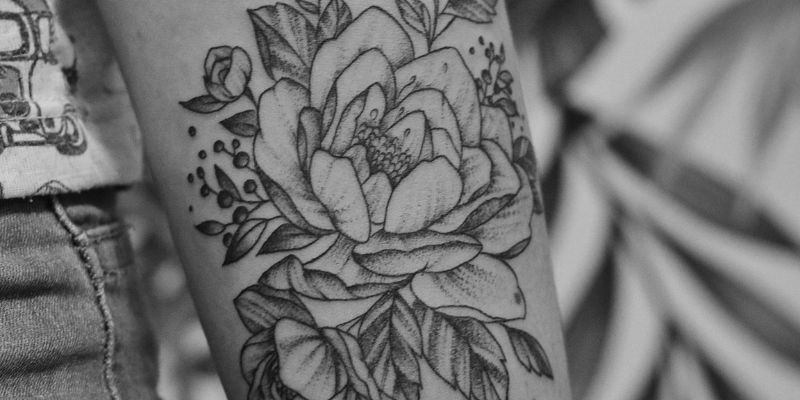
A good example is a floral tattoo that leans loose and gestural rather than perfectly botanical. Another is a portrait that feels like an illustrated magazine cover rather than a passport photo. In both cases, the artistic hand matters as much as the subject.
How to work with your artist
Bring references that show the kind of line energy you want, not just the object you want tattooed. That helps your artist understand whether you like sharp contour work, soft scratchy marks, or bold outlines mixed with fine interior lines. The more specific you are about mood, the easier it becomes to translate the idea into skin-safe structure.
- Show style references: Bring examples of line weight, texture, and composition.
- Name the mood: Say whether you want poetic, moody, surreal, or playful.
- Leave room for interpretation: This style gets better when the artist's hand is visible.
Illustrative line art works best when you want personality in the line itself. If a minimalist tattoo feels too restrained and realism feels too literal, this is the middle ground that often lands right.
6. Dotwork and Stipple Line Art
Dotwork and stipple line art builds form from patience. Instead of relying on solid blocks of shading, it uses dots, dashes, and small marks to create texture, depth, and contrast. That makes it a strong fit for mandalas, portraits, abstract shapes, and pieces that need softness without losing structure.
The process is slower, and that's not a flaw. It's part of the style. Dot density, spacing, and the way the marks taper all change how the final piece reads, which is why this is a format that benefits from a careful artist and a detailed concept board.
If you want to explore composition ideas before you commit, the TattoosAI dotwork style page is a direct place to test how a prompt changes when the output shifts toward stipple texture.
Why placement changes everything
Dotwork tends to hold best when the design has enough scale to preserve the details. A crowded, tiny stipple tattoo can blur visually even if the technique is technically clean. Higher-contrast body areas also help the marks stand out better, especially when the design uses a lot of open space.
A dense stipple pattern on a small area can look beautiful on day one and lose definition faster than a broader composition with breathing room.
That's why it helps to discuss not just the subject, but the spacing logic. Ask your artist how the dots will sit against the surrounding skin and where the darkest regions should land. A well-planned dotwork tattoo feels textured without becoming muddy, which is exactly what makes this style so satisfying when it's done right.
7. Sketch and Graffiti Line Art
Sketch and graffiti line art favors motion over polish. It pulls from street art, marker studies, and unfinished drawing drafts, which gives the tattoo a raw, intentionally imperfect feel. That makes it a strong match for people who want the design to feel edgy, spontaneous, and a little rebellious.
What gives it personality
The roughness has to be intentional. A sketch-style wolf, a graffiti letterform, or a portrait that feels drawn in the moment can look alive because the line does not pretend to be polished. The challenge is keeping enough structure underneath that looseness so the tattoo still reads clearly after it heals.
Use TattoosAI with prompts that ask for rough sketch energy, urban wall art influence, or a hand-drawn feel with visible motion. Then compare the outputs and check whether the subject still reads when you strip back the most chaotic marks. If the concept only works because of clutter, it will not age well as a tattoo.
Placement should support the attitude of the piece. Upper arms, calves, and other visible areas usually suit this style better than tiny hidden spots because the design needs room to feel expressive. If the tattoo is meant to look like it was captured mid-creation, give it enough scale to hold that energy without turning muddy.
What to ask the artist
Ask how much “mess” they are willing to keep. Some artists clean the sketch too much and lose the energy. Others leave too much chaos and blur the subject. The right balance keeps the piece readable while preserving the rough hand-drawn feel.
Sketch and graffiti line art can feel personal because it values attitude as much as precision. If you want the tattoo to feel alive rather than perfect, this style gives you room to show that.
8. Linework with Negative Space Integration
Negative space integration turns the empty parts into part of the design. That's what makes this style so smart, and also so easy to get wrong. The linework defines the primary shape, while the skin itself becomes a second layer, creating hidden forms, optical illusions, or layered imagery that only works when the spacing is planned carefully.
Why this style needs real collaboration
If you're testing ideas in TattoosAI, ask for versions where negative space is as important as the lines. Then compare how the same subject reads when the empty areas are widened, tightened, or used to create a second image. That's the difference between a clever design and a confusing one.
The VERIFIED DATA points to an important longevity issue here, too. Technical guidance says that larger and simpler can be better for line art longevity, because fewer, stronger contours with deliberate negative space are more durable than highly intricate micro-line pieces. That's especially relevant for body areas that move a lot or stretch more over time.
Common real-world applications
This style works beautifully for geometric pieces with hidden forms, animals with secondary silhouettes, and nature designs where the negative space shapes a face, path, or symbol. It's also strong for clients who want something intelligent-looking without making the tattoo visually heavy.
If you want this style to succeed, the artist needs to sketch the negative space with the same care as the inked lines. That's why a detailed consultation matters more here than almost anywhere else. You're not just placing lines on skin, you're designing an empty shape that has to stay legible.
8-Style Line Art Tattoo Comparison
| Style | 🔄 Implementation Complexity | ⚡ Resource & Time Efficiency | 📊⭐ Expected Outcomes | 💡 Ideal Use Cases | ⭐ Key Advantages |
|---|---|---|---|---|---|
| Minimalist Line Art | Moderate, simple concepts but demands very clean, precise lines | High efficiency, quick sessions, low ink and cost | Elegant, timeless, highly legible results; ages well | First tattoos, discreet placements, design-savvy minimalists | Versatile placement; easy to touch up; modern sophistication |
| Single Line Continuous Drawing | High, requires planned unbroken path and steady execution | Efficient execution time but requires specialized skill | Conceptual, artistic, flowing designs; may be less literal | Concept-driven tattoos, symbolic “journey” pieces, art lovers | Unique, conversation-starting; flows with body contours |
| Fine Line Realism | Very high, master-level precision and control | Low efficiency, many sessions, high cost and strict aftercare | Photorealistic, highly detailed, gallery-quality results | Portraits, wildlife, statement collector pieces | Exceptional detail and realism; visually impressive |
| Geometric Line Art | High, demands mathematical precision and symmetry | Moderate efficiency, scales well but requires accuracy | Striking, balanced, symmetrical pieces; robust longevity | Mandalas, sleeves, architecture/math enthusiasts | Scales well; visually striking; expandable into larger work |
| Illustrative Line Art | Moderate, varied line weights and expressive technique | Moderate efficiency, flexible session length and cost | Personal, hand-drawn look with emotional resonance | Collaborative artist projects, wearable art, creative commissions | Artist-unique, forgiving of imperfections, expressive |
| Dotwork and Stipple Line Art | Very high, extremely meticulous dot placement and patience | Low efficiency, very time-consuming, expensive, painful | Textured, dimensional shading and complex patterns | Large mandalas, textured portraits, high-commitment collectors | Unique texture and subtle shading without solid fills |
| Sketch and Graffiti Line Art | Low–Moderate, intentionally rough and spontaneous | High efficiency, relatively quick execution | Raw, edgy, unfinished aesthetic; strong urban impact | Alternative individuals, street-art fans, bold placements | Authentic, energetic, fast to execute |
| Linework with Negative Space Integration | Very high, requires advanced planning and precise composition | Moderate–Low efficiency, extensive design time; skilled artist needed | Dynamic, multi-layered designs with hidden elements; high visual interest | Collectors, visual thinkers, those wanting optical or dual images | Memorable, discovery-driven designs; premium gallery feel |
Your Vision, Inked Bringing Your Line Art to Life
Choosing among tattoo designs line art styles is really about deciding how much structure, softness, and longevity you want in the final piece. Minimalist work gives you restraint. Continuous line tattoos give you flow. Fine line realism gives you detail, but asks more from the artist and from the placement. Geometric, illustrative, dotwork, sketch, and negative-space designs each solve a different problem, which is why the best choice depends on how you want the tattoo to look on day one and how you want it to read years later.
The strongest results come when digital exploration and studio craft work together. Use TattoosAI to explore directions, compare variations, and narrow the concept before your appointment. Then bring those ideas to a professional tattoo artist who can adjust line weight, scale, and spacing for the realities of skin, movement, and healing. That collaboration matters because tattooing is a large, commercially active market, with more than 30% of U.S. adults reportedly having at least one tattoo in 2024, up from 21% in 2012, and the U.S. tattoo industry projected to reach $3.9 billion by 2030 as reported in the cited market data. A mature market still rewards clarity, good composition, and designs that translate well from screen to skin.
The broader industry trend also supports this approach. The U.S. tattoo artists market was estimated at $1.3 billion in 2026 with 23,774 businesses and a 2.8% CAGR from 2020 to 2025 per IBISWorld's industry profile, while independent forecasts continue to show expansion in the global market through the next decade according to market projections. That growth reflects a simple reality, more people want tattoos that feel personal, legible, and professionally executed.
If you're still refining your idea, keep testing. If you've already got a concept, bring it to a tattoo artist with clear reference images and a willingness to simplify where needed. And if you want a fast way to generate fresh line-art concepts before your consultation, TattoosAI is a practical place to start building the version that fits your body, your style, and your long-term expectations.
A CTA for TattoosAI.