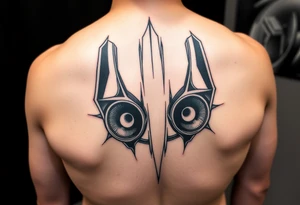
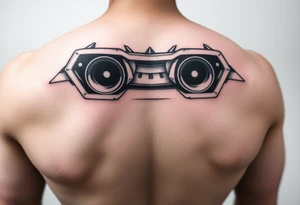
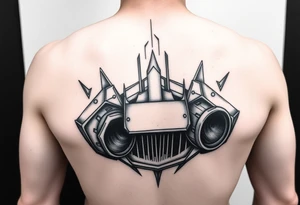
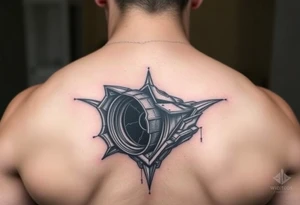
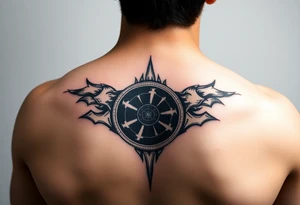
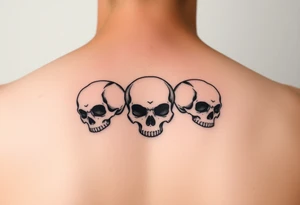
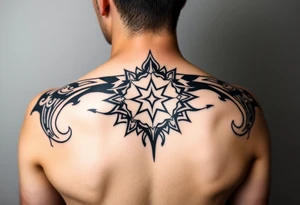
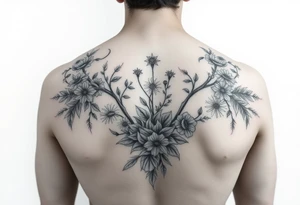
How the back's shape shapes the design
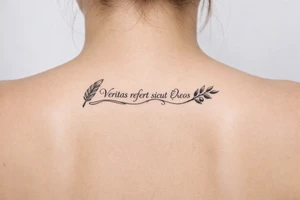
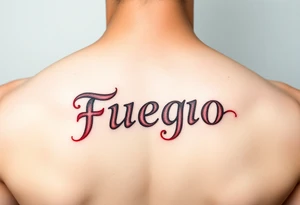
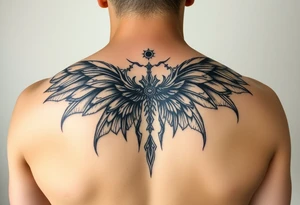
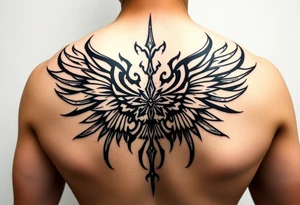
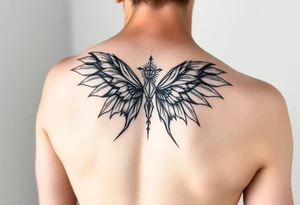
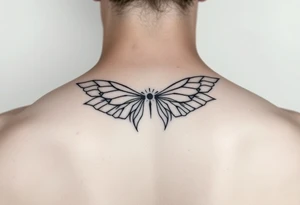
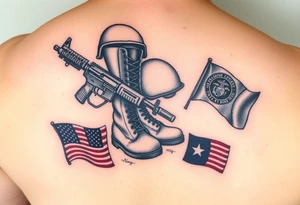
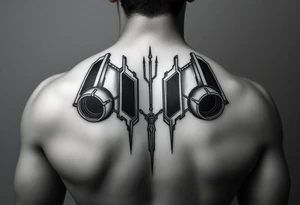
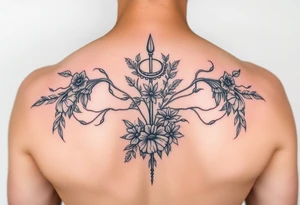
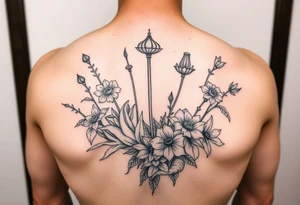
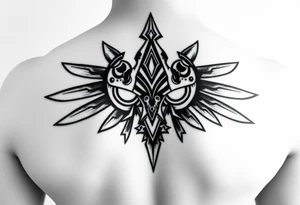
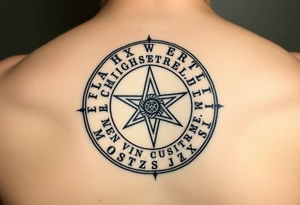
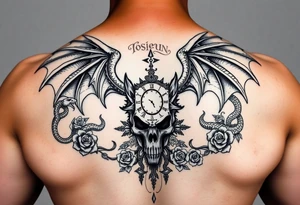
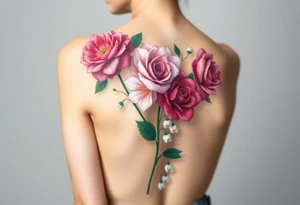
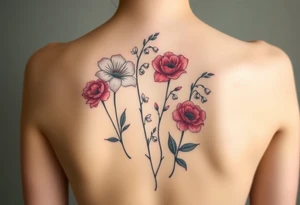
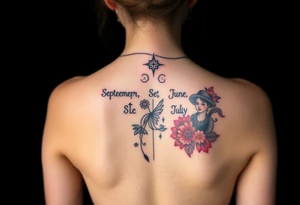
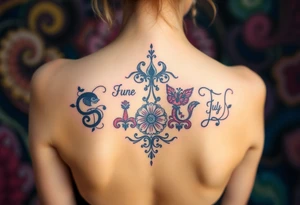
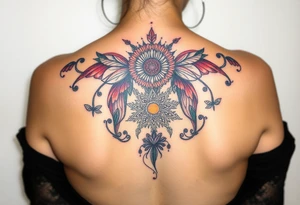
The back is not a flat rectangle. It's split by the spine, framed by two shoulder blades that move, and it tapers toward the waist. Symmetrical designs — mandalas, wings, mirrored florals, geometric panels — sit naturally because the body already reads as symmetrical. Vertical subjects like snakes, branches, script columns and swords follow the spine and make the torso look longer. Wide horizontal subjects need the upper back, where there's real width between the shoulders. If you plan a full back, sketch out where the design meets the shoulders and the lower back edges; those transitions are what separate a piece that looks made for the body from one that looks pasted on.