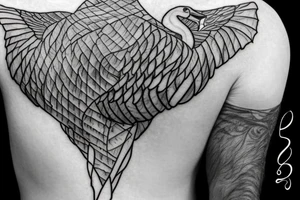
Georgian Tattoo Ideas

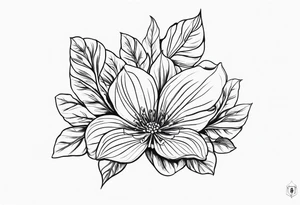
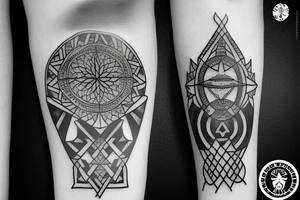
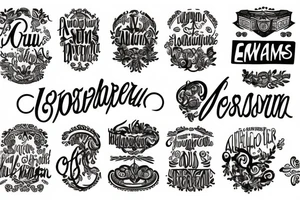
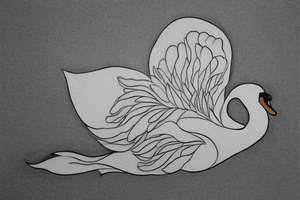
Georgian tattoos often refer to the country of Georgia and its culture. They can symbolize pride and patriotism for Georgians, showcasing their love for their country and heritage. Georgian tattoos may also incorporate traditional Georgian symbols, such as the cross of St. George or the borjgali, a symbol of the sun and eternal movement. These tattoos can represent faith, courage, and a connection to the land. Another interpretation could be a tribute to Georgian history and traditions, celebrating the rich cultural heritage of the country. Suitable locations for Georgian tattoos can vary depending on the design and size, but popular choices may include the arm, back, or chest, providing a larger canvas to showcase the intricate details of Georgian imagery. Below you will find a collection of georgian tattoo design ideas for you to browse and get inspired by.

Join 9,635 happy customers.

The Meaning Behind Georgian Symbols

The borjgali is the most layered of Georgian motifs. It is a rotating solar sign, its seven arms curling outward to suggest the ceaseless movement of the sun and, by extension, life and eternity. As a tattoo it carries ideas of vitality, endurance and the cycle of time. The Bolnisi cross and the five-cross flag design read more directly as faith and national identity, tied to Georgia's long Orthodox Christian history. Grapevine motifs echo Saint Nino, whose cross was famously bound with vine, linking the wine-making country to its patron. Choose based on which of these threads speaks to you, because each carries a distinct weight.
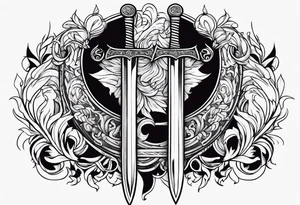
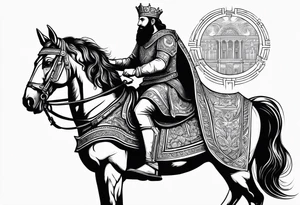
Where the Imagery Comes From

Georgian visual language draws on centuries of church architecture, manuscript illumination and stone carving. The borjgali appears on ancient Georgian relief work and is often paired with the Tree of Life. The Bolnisi cross takes its name from an early Georgian church and later shaped the modern flag. Georgian script, mkhedruli, adds another route: a name, a word or a line of poetry rendered in its flowing letters. Because these forms come from real religious and national heritage, treat them as living symbols rather than decoration. If you are not Georgian, approaching them with genuine respect and understanding matters more than getting a striking image.

How These Tattoos Are Usually Rendered

Symbolic pieces like the borjgali suit clean linework, where the symmetry of the arms carries the design. Some artists add fine ornamental detail, shading or a circular border to frame the motion. Crosses often work in bold black with sharp edges. Script tattoos depend entirely on accurate spelling and letterforms, so bring the exact text in Georgian and have a native speaker confirm it before the needle touches skin. Larger cultural scenes, like landscapes or church silhouettes, need more space and reward the arm, back or chest. Talk through style with your artist so the geometry and proportions stay true to the original symbol.

Georgian tattoos — common questions

What does the borjgali symbolize?

The borjgali is an ancient Georgian solar symbol with arms rotating outward from a centre. It represents the sun, eternity and the continuous movement of life. It is frequently paired with the Tree of Life. As a tattoo it commonly stands for vitality, endurance and a strong connection to Georgian heritage.

Can I get a Georgian tattoo if I'm not Georgian?

There is no rule against it, but these symbols carry real national and Orthodox Christian significance. Learn what a design means before committing, and avoid treating sacred motifs like the Bolnisi cross as pure decoration. Genuine appreciation and accuracy go a long way toward wearing the imagery respectfully.

How do I make sure Georgian script is correct?

Georgian script, mkhedruli, is easy to render incorrectly if you copy it visually. Write out the exact word or phrase, have a fluent Georgian speaker confirm the spelling and letterforms, then give that reference to your artist. Never rely on machine translation or a design pulled from an image alone.