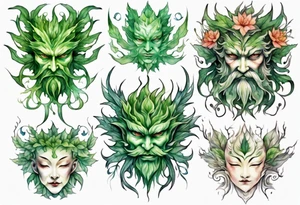
Greenman Tattoo Ideas

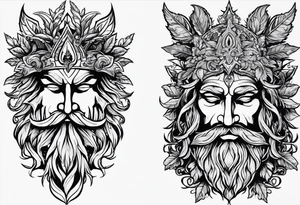
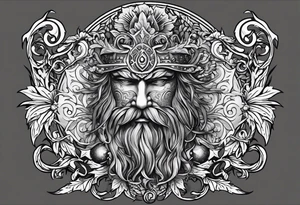
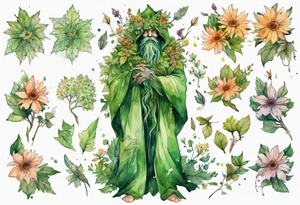
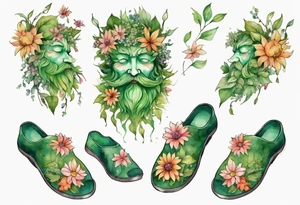
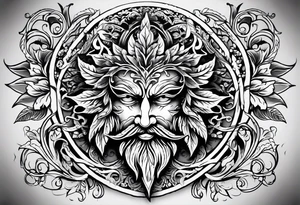
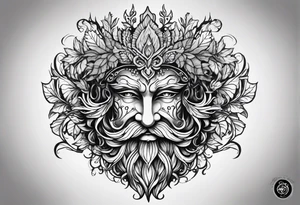
Greenman tattoos often depict a male face surrounded by or made of foliage, leaves, or vines. They are associated with nature, fertility, and rebirth. Greenman tattoos can symbolize a deep connection with the Earth and the cycles of life. They also represent growth, abundance, and the renewal of nature. Additionally, these tattoos can be seen as a celebration of the wild and untamed aspects of our own selves. Suitable locations for greenman tattoos include the upper arm or shoulder, representing strength and protection, or the back, symbolizing a connection to the natural world. Below you will find a collection of greenman tattoo design ideas for you to browse and get inspired by.

Join 9,635 happy customers.

The Deeper Meaning Behind the Green Man

Beyond a simple nature motif, the Green Man carries the idea of death and return woven into one face. Leaves grow from the mouth, eyes, or brow, suggesting that life pours out of the human form rather than being separate from it. For many wearers the image speaks to resilience through hard seasons, the certainty that dormancy is followed by growth, and a refusal to see humanity as apart from the wild. Some choose it to mark recovery, a fresh chapter, or a personal reconnection with the outdoors. Others simply value its blend of the human and the vegetal as a reminder that we are made of and returned to the living world.
Where the Symbol Comes From

The foliate head appears carved in stone across medieval European churches, cathedrals, and other buildings, often as a face sprouting oak, ivy, or hawthorn. The name "Green Man" itself was popularised in the twentieth century, and much of the folklore linking it to older pagan fertility gods is interpretation rather than documented fact. Similar leaf-and-face motifs also appear in Roman and earlier decorative art. Because its exact original meaning was rarely recorded, readings vary widely between traditions and scholars. It is honest to treat the Green Man as a rich, layered image whose significance has been shaped by centuries of reuse rather than a single fixed doctrine.

How the Design Is Usually Rendered and What to Weigh First

Artists typically build the face from overlapping leaves, vines, and tendrils, so linework and shading matter enormously. Oak and ivy are common choices, sometimes paired with acorns or berries for added symbolism. Blackwork and dotwork suit a stark, carved look; colour or watercolour styles lean into lush growth. Detailed foliage needs room, which is why larger placements read best. Before committing, think about the amount of fine detail you want, since dense leaf patterns can blur over time and may need touch-ups. Consider whether you prefer a gentle, benevolent face or a wilder, more untamed one, as the expression changes the whole tone.

Greenman tattoos — common questions

Is the Green Man a religious symbol?

It is not tied to one religion. The face appears in Christian church carvings yet is often read through nature-based or pagan lenses. Because its original intent was rarely recorded, meanings genuinely differ between traditions. Many wearers treat it as a spiritual nature symbol rather than a marker of any specific faith.

Does the Green Man have to be male?

Traditionally the foliate head is depicted with masculine features, and "Green Man" reflects that. However, foliate faces can be rendered feminine or ambiguous, and some people request a "Green Woman" or gender-neutral version. The core symbolism of growth and renewal carries across any interpretation you choose.

How big should a Green Man tattoo be?

It depends on detail. A face built from intricate leaves and vines needs enough space to stay legible, so medium to large placements like the upper arm, shoulder, or back work well. Smaller versions are possible with simplified foliage, but expect less fine detail and possibly earlier touch-ups.