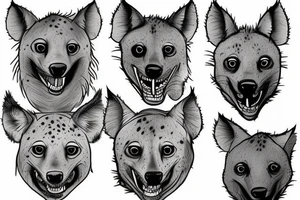
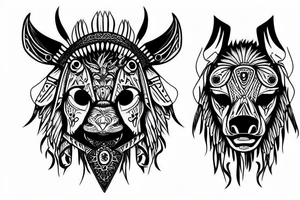
Hyena Tattoo Ideas

Hyena tattoos represent several meanings. Firstly, they can symbolize cunning and intelligence, as hyenas are known for their clever hunting strategies and scavenging abilities. Secondly, hyenas can be seen as symbols of loyalty and family bonds, as they live in close-knit social groups. Thirdly, hyenas can be associated with survival and adaptability, as they have a remarkable ability to thrive in different environments and overcome challenges. Additionally, hyenas may be interpreted as symbols of courage and fearlessness due to their strength and perseverance. Lastly, hyenas can represent the duality of nature, as they are often depicted as both scavengers and hunters. A suitable location for a hyena tattoo could be the back or shoulder, symbolizing protection and strength, or the calf, representing agility and adaptability. Below you will find a collection of hyena tattoo design ideas for you to browse and get inspired by.

Join 9,635 happy customers.

Cultural Roots and the Hyena's Reputation

The hyena carries a divided reputation across cultures, and that tension is part of its appeal as a tattoo. In parts of African folklore the spotted hyena is linked to trickery, witchcraft, and the boundary between the living and the dead, while also being respected as a fierce survivor. Ancient Egyptians hunted and depicted hyenas, and the animal appears in the mythologies of several regions with meanings that shift from omen to guardian. Because interpretations vary widely by tradition, it is worth knowing which cultural lens you want your piece to reflect rather than assuming a single universal meaning. Many wearers choose the hyena precisely because it resists an easy, flattering read.
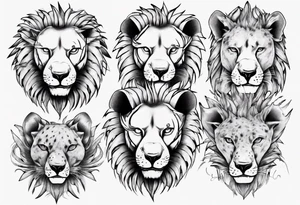
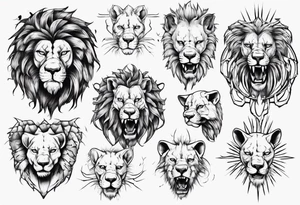
Common Styles and How Hyenas Are Rendered

Hyena tattoos lend themselves to bold, textured work. Realistic black-and-grey renderings capture the sloped back, powerful jaw, and spotted or striped coat, and they suit larger placements like the back, thigh, or upper arm. Neo-traditional versions lean into stylised eyes and exaggerated snarls, often adding bones, moons, or savannah grass. Blackwork and dotwork approaches strip the animal to silhouette and shadow, playing up its eerie, nocturnal associations. A laughing or open-mouthed hyena emphasises the trickster theme, while a calm profile reads more as guardian or clan symbol. Consider how much detail your chosen size can hold, since spotted texture and fur can blur at smaller scales over time.

What to Think About Before Committing

The hyena is not a conventional 'strength' animal, and its symbolism can be misread by others, so decide whether you are comfortable explaining it. If you are drawing on a specific cultural tradition, research that source and, where possible, honour it accurately rather than mixing meanings that don't belong together. Think about placement in relation to the design's scale: detailed coats and jaws need room. Bring reference images to your artist and discuss whether realism, neo-traditional, or blackwork best fits your intent. Because the animal reads as raw and unpolished rather than noble, choose it when that honesty appeals to you, not for a softened version.

Hyena tattoos — common questions

Is a hyena tattoo considered bad luck?

It depends entirely on the tradition. Some African folklore ties hyenas to witchcraft or ill omen, while other views celebrate them as survivors and clan animals. There is no single meaning, so a hyena tattoo is only 'unlucky' within specific cultural frameworks. Most wearers embrace its complex, ambiguous reputation deliberately.

What does a laughing hyena tattoo mean?

A laughing or open-mouthed hyena usually emphasises the trickster and rebel side of the symbol, playing on the animal's famous vocalisations. It can represent defiance, dark humour, or refusing to be underestimated. The pose leans into the hyena's eerie, cunning associations rather than its loyalty or family-group meanings.

Where does a hyena tattoo look best?

Larger, flatter areas suit hyenas because their spotted coats and heavy jaws need space to stay crisp. The back, thigh, upper arm, and shoulder all work well for detailed renderings. Smaller placements like the calf or forearm are possible but favour simpler blackwork or silhouette styles that age more cleanly.