Mantaray Tattoo Ideas

Manta ray tattoos can represent grace, elegance, and freedom, as these marine creatures glide smoothly through the water. They can also symbolize strength and resilience, as mantas are known for their endurance during long migrations. Additionally, manta rays are associated with knowledge and wisdom, as they are believed to possess deep spiritual insights. In some cultures, they are revered as spiritual guardians or bringers of good fortune. The best placement for a manta ray tattoo could be on the back, representing the fluidity of movement, or on the shoulder, symbolizing strength and protection. Below you will find a collection of mantaray tattoo design ideas for you to browse and get inspired by.

Join 9,635 happy customers.

Cultural Roots and Deeper Meanings

The manta's symbolism draws heavily from Pacific island and coastal cultures where the creature shares the water alongside daily life. In parts of Polynesia and among some Indigenous groups, rays appear in stories as protectors and guides, though the specific meaning varies by island and tradition rather than following a single shared myth. For divers and ocean lovers, the manta carries a more personal weight: a symbol of calm, of moving through the world without force. Because its cultural meanings are not universal, it is worth understanding which tradition, if any, you are drawing from rather than assuming one fixed spiritual interpretation across all of them.
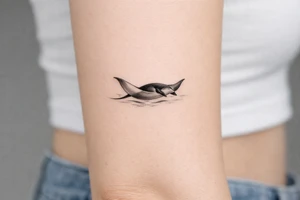
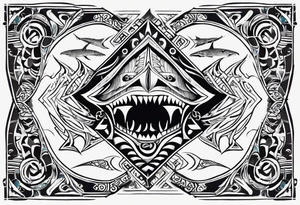
How Manta Ray Tattoos Are Usually Rendered

The manta's flat, wide silhouette makes it well suited to bold linework and negative space, and its shape naturally wraps around curved parts of the body like the shoulder, ribs, or upper back. Common styles include clean blackwork that emphasises the wing outline, tribal-influenced patterns echoing Pacific motifs, and detailed realism showing the underside spots and gill markings. Some designs pair the ray with waves, sunlight filtering through water, or a diver for scale and context. Watercolour approaches lean into the sense of drift and flow. Because the body is largely a single sweeping form, size matters: too small and the detail collapses, so many artists recommend a medium-to-large placement.

What to Consider Before Choosing One

Decide first what the manta means to you, since the intro's themes of freedom, wisdom, and protection pull in different directions and each suits different placements. If you are borrowing a specific cultural motif, research it and consider working with an artist who understands that tradition, especially for Polynesian-style patterns which carry their own meanings beyond decoration. Think about how the wide wingspan will sit on your chosen body part, as it reads best where it can spread out. Finally, look at how the design will age; large areas of solid black hold up well, while fine detail and colour gradients may need more upkeep over time.

Mantaray tattoos — common questions

Is a manta ray tattoo considered bad luck?

No. Manta rays are more often associated with good fortune, protection, and guidance, particularly in some coastal and island cultures. There is no widespread tradition linking them to bad luck. As with most animal symbols, the meaning you give it personally tends to matter more than any single cultural belief.

Where does a manta ray tattoo look best on the body?

The shoulder, upper back, ribs, and forearm all work well because they follow the ray's wide, sweeping shape. Curved areas let the wingspan spread naturally. Choose based on your intended meaning: the back suits themes of movement and freedom, while the shoulder is often chosen for strength and protection.

Does a manta ray tattoo need to be large?

It benefits from size. The manta is essentially one broad, flat form, so a very small version can lose its distinctive wing shape and detail. Medium to large placements let the silhouette read clearly and give room for markings, shading, or accompanying elements like waves.