Mongolian Tattoo Ideas
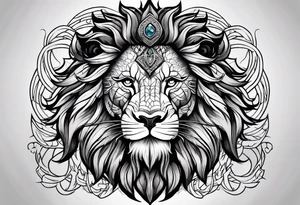
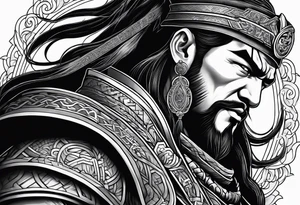
Mongolian tattoos often symbolize the rich cultural heritage and traditions of the Mongolian people. They can represent the connection with nature and the spirituality of the Mongolian nomadic lifestyle. Mongolian tattoos may also depict elements such as horses, yurts, or traditional Mongolian symbols to reflect pride in their ancestry and identity. These tattoos can be placed on various body parts, such as the chest or back, to display the significance of Mongolian culture and honor their roots. Below you will find a collection of mongolian tattoo design ideas for you to browse and get inspired by.


Join 9,635 happy customers.
Symbolism and Cultural Meaning
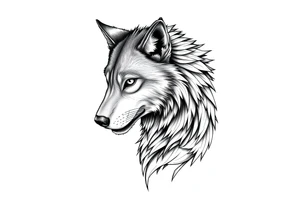
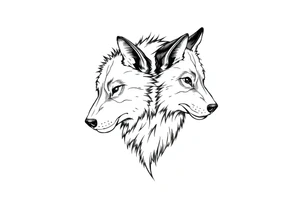
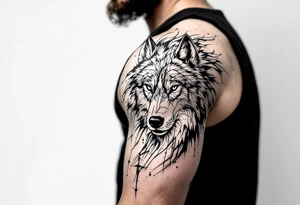
Mongolian tattoos draw from nomadic traditions spanning centuries across the steppes. The horse represents freedom, strength, and the bond between rider and land—central to Mongol identity. The endless knot (sülde) symbolizes eternity and interconnectedness. Wolves embody loyalty and pack mentality. Fire and water motifs reflect respect for natural forces. Mountains signify stability and protection. These symbols aren't decorative; they carry spiritual weight rooted in shamanism, Buddhism, and the practical realities of pastoral life. Wearing them acknowledges ancestral connection and values that persist today.
Traditional Design Elements and Rendering
Mongolian tattoos typically feature geometric patterns, interlocking lines, and animal forms rendered in bold, clean lines. The sülde knot appears as a continuous, symmetrical pattern. Horses are often depicted in profile or mid-gallop. Traditional designs incorporate elements from deel (robe) embroidery and metalwork. Modern interpretations may blend these classical motifs with contemporary styles—watercolor, dotwork, or minimalist line art. Placement often follows the chest or shoulder, echoing where traditional marks held protective significance. The scale varies from small symbolic pieces to large, detailed compositions.
Before You Choose
Research the specific symbol's meaning; conflating Mongolian, Tibetan, and other Central Asian traditions diminishes authenticity. If you lack Mongolian heritage, consider whether the tattoo represents genuine respect or appropriation. Consult reference materials or cultural experts to ensure accuracy. Understand that some symbols carry spiritual significance in shamanic or Buddhist contexts—wearing them casually may feel disrespectful to practitioners. Choose an artist experienced with geometric precision and cultural work. Think long-term about whether the design's meaning will remain personally resonant.
Mongolian tattoos — common questions
What does the Mongolian endless knot tattoo mean?
The sülde (endless knot) represents eternal cycle, continuity, and the interconnection of all things. It symbolizes the infinite nature of time and the bonds between past, present, and future—reflecting Buddhist and shamanic spiritual beliefs central to Mongolian worldview.
Can non-Mongolians get Mongolian tattoos?
Yes, but approach thoughtfully. Research the symbols' meanings, avoid treating them as purely aesthetic, and work with artists who understand cultural context. Respect the spiritual and historical weight these designs carry rather than treating them as exotic decoration.
Are Mongolian tattoos historically accurate?
Permanent tattoos weren't a major Mongolian tradition historically; marks and patterns appeared in clothing, metalwork, and body art. Modern Mongolian tattoos blend historical symbolism with contemporary tattoo practice, honoring cultural elements through a modern medium.