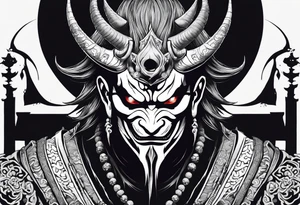
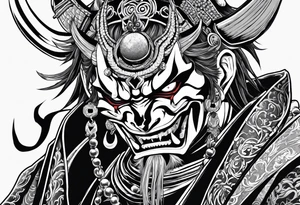
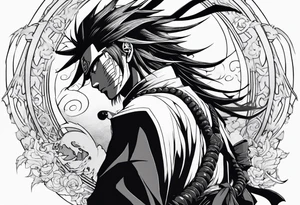
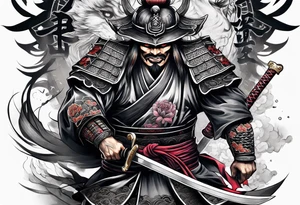
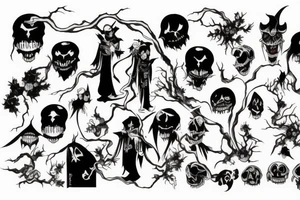
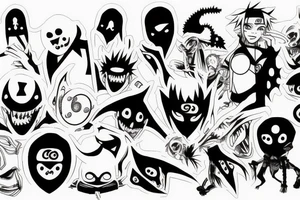
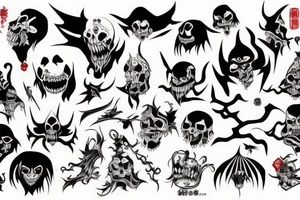
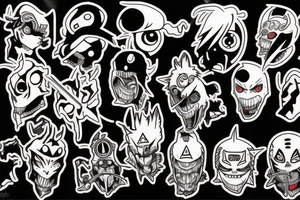
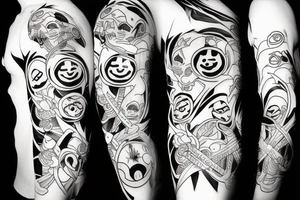
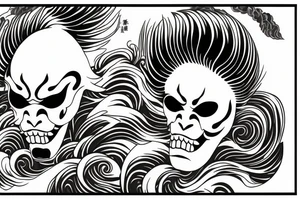
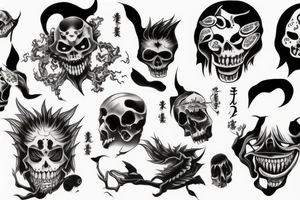
Shinigami Tattoo Ideas — 15 designs

Shinigami tattoos are inspired by Japanese folklore and represent the belief in death deities or spirits. They can symbolize the acceptance of mortality and the transient nature of life, reminding us to live fully and appreciate every moment. Shinigami tattoos can also serve as a reminder to let go of attachments and embrace change. Additionally, they may represent the idea of fate and the inevitability of death. Suitable locations for shinigami tattoos include the forearm or upper arm, symbolizing the proximity to the heart and the reminder to live consciously, or the back, representing the connection to the spiritual realm. Below you will find a collection of shinigami tattoo design ideas for you to browse and get inspired by.

Join 9,635 happy customers.

What Shinigami Actually Mean in Japanese Culture

The word shinigami combines shi (death) and kami (god or spirit), literally "death god." Unlike a single grim reaper figure, shinigami are not a fixed deity in traditional Shinto or Buddhist belief; they entered Japanese folklore relatively late, shaped partly by Buddhist ideas of impermanence and by imported Western imagery. In folklore they are less evil than impartial, guiding souls toward death when their time arrives. As a tattoo, the symbol leans into that neutrality: death as a natural process rather than punishment. Meanings a wearer may attach include respect for mortality, transition, and acceptance of what cannot be changed. It rarely signals worship of death itself.
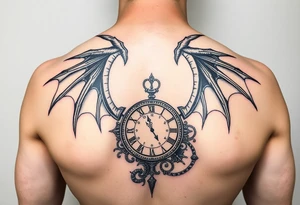
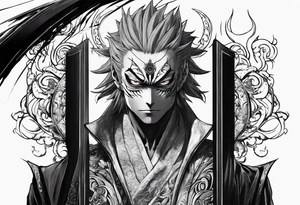
How Shinigami Tattoos Are Usually Designed

Because there is no single canonical shinigami, artists draw on several visual traditions. Some render a robed, skeletal or hollow-faced figure carrying a scythe, blending the Western reaper with Japanese linework. Others take direct inspiration from manga and anime, where shinigami appear as stylised, humanoid characters with distinct personalities. Traditional Japanese (irezumi) approaches favour bold outlines, flowing robes, dark shading, and background elements like wind bars, waves, or cherry blossoms to reinforce impermanence. Colour choices tend toward black, grey, and deep reds, though vivid palettes suit character-driven pieces. Larger canvases such as the back, thigh, or full sleeve give the figure room for detail and movement.

What to Consider Before Getting One

Decide first which shinigami you mean: a folkloric death spirit or a specific character from a series you love. That choice shapes the whole design and its meaning to you. If you want a traditional Japanese style, look for an artist experienced in irezumi so the linework and composition read authentically. Be aware that death imagery can be misread by others, so think about placement and whether you want it easily visible. Since the concept is genuinely open-ended, spend time on reference gathering and talk through symbolism with your artist rather than copying a stock image. A clear intention makes the piece feel personal rather than generic.

Shinigami tattoos — common questions

Is a shinigami the same as the grim reaper?

They overlap but are not identical. The grim reaper is a specific Western personification of death. Shinigami come from Japanese folklore and are often portrayed as impartial spirits or guides rather than a single figure. Modern shinigami imagery frequently borrows the scythe and robe, blending both traditions in tattoo art.

Is a shinigami tattoo disrespectful to Japanese culture?

It is generally not considered sacred in the way some religious symbols are, since shinigami are folklore and popular-culture figures rather than worshipped deities. Still, approaching the design thoughtfully, understanding its origins, and choosing a skilled artist shows respect and results in a more meaningful, accurate piece.

Does a shinigami tattoo mean you want to die?

No. Most people choose it to express acceptance of mortality, respect for the natural cycle of life and death, or affection for a character from manga or anime. Like much death imagery, it more often celebrates living consciously than signals any wish to die.