Sinner Tattoo Ideas — 26 designs

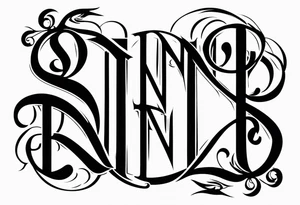
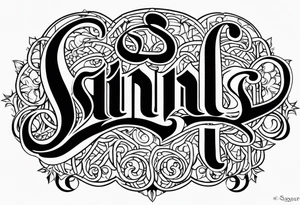
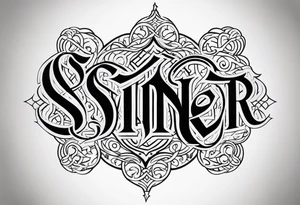
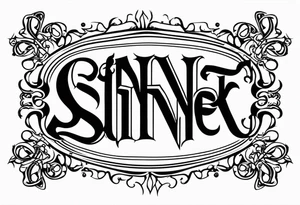
Sinner tattoos can represent a rebellion against societal norms or an embrace of one's flaws and imperfections. They may symbolize a person's acknowledgment and acceptance of their past mistakes or a reminder to avoid temptation and strive for redemption. Sinner tattoos can also be a reminder to live life to the fullest and not conform to society's expectations. Suitable locations for sinner tattoos include the chest, as it is a prominent and symbolic area, or the forearm, as a reminder of one's personal journey and growth. Below you will find a collection of sinner tattoo design ideas for you to browse and get inspired by.

Join 9,635 happy customers.

The Meaning Behind Sinner Tattoos

At its core, a sinner tattoo is a statement of self-honesty. Rather than hiding flaws, the wearer names them openly, turning a word usually loaded with shame into a declaration of ownership. For some it carries a defiant edge — a refusal to be judged by others' moral standards. For others it is deeply personal and even spiritual, marking a struggle between temptation and redemption rather than a rejection of faith. The meaning often depends on what sits alongside it. Paired with 'saint,' it speaks to duality and the tension inside everyone. On its own, it can read as pride, penance, or dark humour. The single word invites interpretation, which is part of its appeal.

Where the Word and Its Imagery Come From

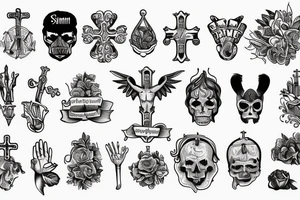
'Sinner' comes from religious language, chiefly Judeo-Christian tradition, where sin means falling short of a moral or divine standard. This gives the tattoo an inherent weight, whether or not the wearer is religious. The 'saint and sinner' pairing has a long presence in Western art and iconography, reflecting the idea that people contain both. Because the concept is broad, imagery draws from many sources: gothic and religious motifs, playing-card symbolism, and rebellious subcultures that reclaimed the word as identity. If you attach religious symbols, be aware they carry specific meanings within their traditions — a rosary, halo, or cross is not neutral decoration to many viewers, so use them with intention.

How Sinner Tattoos Are Usually Rendered

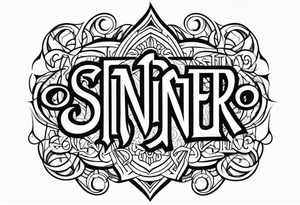
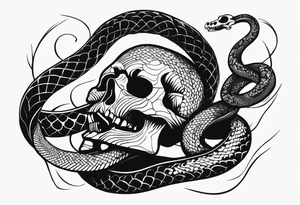
The most common approach is bold lettering — blackwork script, gothic blackletter, or old-school Americana type — where the word itself carries the design. Fine-line and cursive versions read as quieter and more personal, while heavy blackletter feels confrontational. Many people build a contrast piece, placing 'sinner' opposite 'saint' on either hand, wrist, or collarbone. Others surround the word with supporting imagery: thorns, roses, flames, wings, praying hands, or serpents. Placement shapes the tone too. Knuckles and hands read as loud and permanent, the chest as intimate, and the forearm as a visible personal reminder. Consider how legible the lettering stays as it ages, especially in thin or ornate fonts.

Sinner tattoos — common questions

Is a sinner tattoo anti-religious?

Not necessarily. While it can express rebellion against religion or societal morals, many wearers use it within a faith context to acknowledge imperfection and the pursuit of redemption. The meaning is entirely personal — the same word can signal defiance, humility, or dark humour depending on the wearer and the design choices around it.

Should I get 'saint' and 'sinner' together?

It is a popular pairing that highlights the duality within a person — the idea that everyone holds both. Splitting them across two hands, wrists, or sides of the body reinforces the contrast. If you want a single, focused statement rather than a comparison, one word on its own often carries more impact.

What lettering style works best?

Bold blackletter and gothic script feel confrontational and hold up well over time. Fine-line cursive reads as softer and more personal but can blur or fade as it ages, especially in small or intricate forms. Discuss line thickness and placement with your artist to keep the word legible long term.