TattoosAI
A striking back tattoo can look compelling on a screen and still feel wrong once it's mapped onto a real body. The design might crowd the shoulder blades, split awkwardly across the spine, or lose its shape when you bend or turn. If you're collecting back tattoos for men ideas, start with concepts that work with the back's structure, not just subjects you like.
Nine versatile directions include a Japanese dragon, a realistic portrait, a spread-wing eagle, a wolf or lion, a Norse world tree, a samurai, a geometric mandala, an American traditional composition, and meaningful lettering. Each uses the back differently, from broad horizontal wings to a vertical tree or a centered text layout. The right choice depends on how you want the piece to flow, how much skin it should cover, and whether you may add to it later.
Tattooing has a documented history spanning more than 5,000 years. The Smithsonian describes Ötzi, whose remains date to about 5,300 years ago, as having 61 tattoos, including markings on his lower back. That history offers context, but it doesn't dictate what a modern design should mean. (The Smithsonian's account of Ötzi's tattoos)
Use digital concepts to explain your preferences, not as finished placement plans. A tool such as TattoosAI can help you compare subjects, styles, and composition ideas. Your tattooist still needs to adapt the artwork to your back, review a stencil with you, and discuss how the design can heal and age.
Table of Contents
- 1. Japanese Dragon Back Piece (Irezumi)
- 2. Realistic Portrait or Memorial Back Tattoo
- 3. Spread-Wing Eagle Back Tattoo
- 4. Wolf or Lion Back Tattoo
- 5. Norse Yggdrasil or Viking-Inspired Back Tattoo
- 6. Samurai Warrior Back Tattoo
- 7. Blackwork Geometric or Mandala Back Tattoo
- 8. American Traditional Pin-Up or Skull and Dagger Back Piece
- 9. Scripture or Lettering Back Tattoo
- 9 Back Tattoo Ideas for Men: Style Comparison Matrix
- Turn Your Favorite Idea Into a Tattoo Worth Keeping
1. Japanese Dragon Back Piece (Irezumi)
A Japanese dragon can turn the back into one connected scene. Its body might coil around the spine, while clouds, waves, or flowers fill the spaces around it and carry the composition across the shoulder blades. The result works best when the supporting motifs connect the main figure instead of competing with it.
Traditional Japanese irezumi offers a visual language for large, flowing compositions. Dragons are often associated with strength, wisdom, and water, but your artist can help you decide what those ideas mean for your own piece. If you want the design to sit well on your body, ask how the dragon's movement will follow your back when you stand, twist, and bend.
Shape the flow before adding detail
Talk with your artist about the background, including the placement of clouds and wind bars. Those elements can bridge the spine and shoulders, helping the piece feel continuous rather than like separate images arranged on a flat rectangle. A full back design also takes planning. Discuss how the artist would divide the work into appointments, and identify a stopping point where the composition would still look deliberate if sessions are spread out.
For early visual exploration, try a detailed TattoosAI prompt such as: “Full-back Japanese dragon, irezumi style, coiled along the spine, clouds and waves, black and red.” Compare the silhouette and direction of movement, then take the most useful concepts to an artist for redrawing. For more references, browse back tattoo inspiration and composition ideas.
A full-back image can help you spot broad compositional choices, but it can't show exactly how the dragon will sit across your shoulder blades. Ask your tattooist to plan it on a back-shaped template and review the stencil on your body before any tattooing begins.
2. Realistic Portrait or Memorial Back Tattoo
Portraits ask for a different kind of space. The upper back can hold a face, a meaningful figure, or a memorial image with surrounding details, but the central subject must remain clear at the size you're planning. A portrait of a family member, for example, might sit between the shoulder blades with a restrained border or a few personal motifs around it.
The hardest part isn't choosing between black and gray or color. It's making sure the reference is suitable and that the artist has strong experience with healed portrait work. A photo with clear facial features, even lighting, and little shadow gives the tattooist more useful information than a small, blurry image. Ask to see healed examples in a comparable style, not only fresh photographs.
Give the portrait room to read
Wings, roses, or lettering can frame a memorial design, but too many details may take attention away from the face. Explore different framing ideas with TattoosAI, then treat each result as a layout reference rather than an exact stencil. Before booking, discuss whether the artist recommends grayscale or color for the subject and how that choice affects the design and session plan.
Portrait rule: The likeness should be the priority. Add framing only when it supports the person or story you want the piece to honor.
A realistic image may seem balanced while you're standing still, then shift in appearance as your shoulders move. Ask the artist to check the proposed placement with your arms relaxed and raised. If the design includes text, verify every word separately before it goes on your skin.
3. Spread-Wing Eagle Back Tattoo
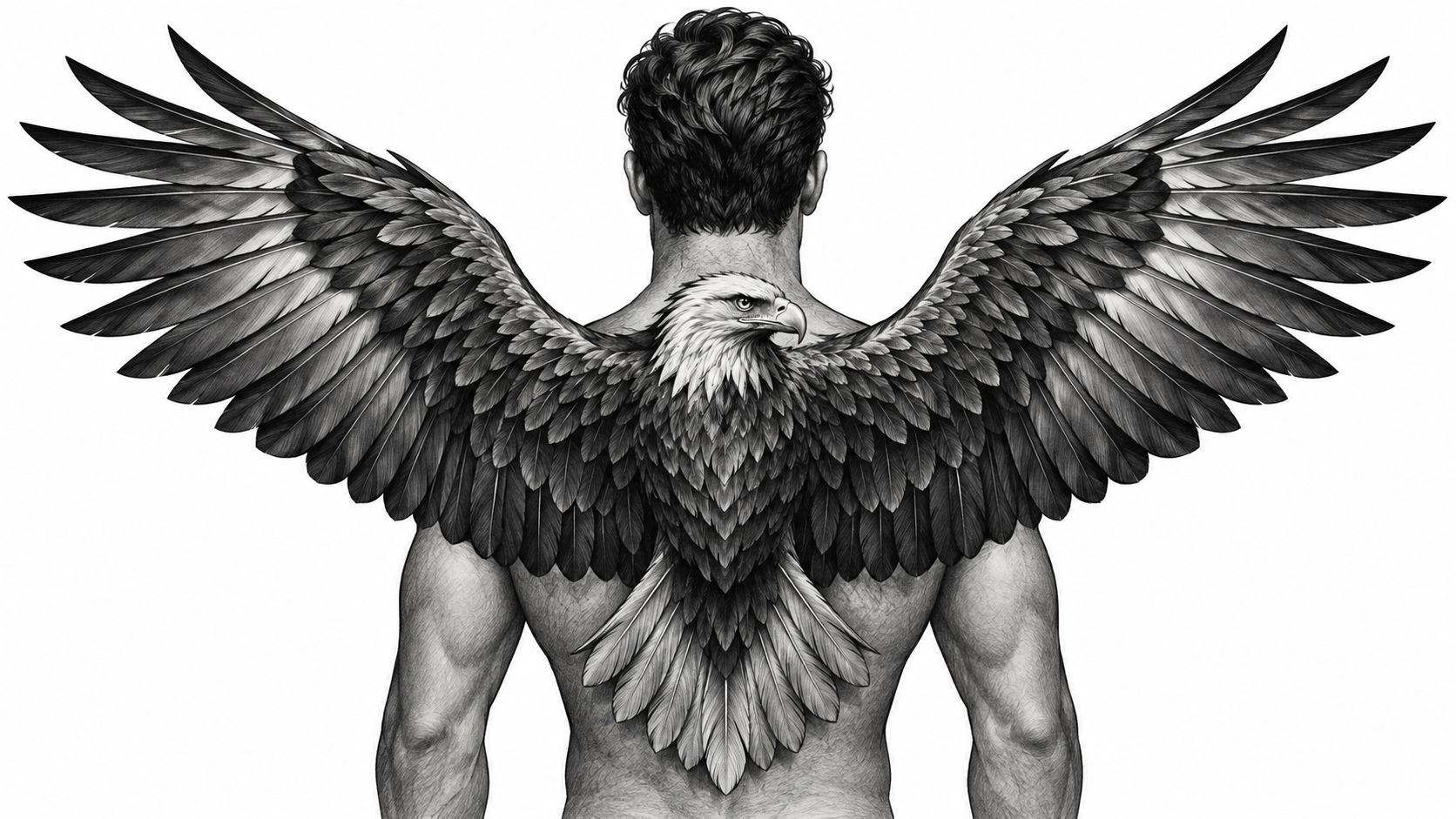
The eagle's shape naturally suits the upper back. Its wings can span the shoulder blades, while its head or body sits near the spine, creating a clear center with a broad horizontal reach. That makes the design easy to read from across a room, whether you choose a traditional American treatment, a neo-traditional illustration, or realism.
Eagles can suggest freedom, courage, strength, or patriotism. Decide which idea matters to you before choosing the pose, because a diving eagle, a perched eagle, and a front-facing eagle create very different compositions. The wing angle also affects how far the design reaches toward your shoulders and where it can stop without looking abruptly cut off.
Compare outline, texture, and coverage
A stencil test helps you judge the wingspan and see whether the center sits where you expect. Ask your artist to place the stencil on your back, then check it in a mirror with your arms at rest. Consider how it looks under the shirts you usually wear, especially if you want the tattoo covered at work or in formal settings.
Explore a traditional eagle with bold outlines, then compare it with a realistic or blackwork version. An image such as this black-and-white eagle-back sketch can help communicate the broad silhouette, but your artist should adjust the wing shape to your anatomy. Simplified feather forms and clear linework are often easier to read than a mass of fine, closely packed detail.
If you may add shoulder or sleeve work later, tell the artist before finalizing the outer edges. That discussion can help preserve room for future designs instead of boxing the eagle into a closed shape.
4. Wolf or Lion Back Tattoo
A wolf or lion gives a back tattoo a strong focal point without requiring a full scene. A large head can sit high between the shoulder blades, while a full-body animal can stretch across more of the back and use the spine as a guide for its movement. The animal's gaze matters too. A forward-facing portrait feels direct, while a profile can lead the eye toward one shoulder or across the back.
Wolves are commonly associated with loyalty, instinct, and independence; lions with courage, leadership, and strength. Those meanings can guide the choice, but the expression and posture often do as much work as the subject. A calm lion, a watchful wolf, and an animal shown in motion each give the tattoo a different character.
Choose the pose before the background
For a wolf, decide whether you want a close-up head, a full figure, or an animal framed by a moon or natural scenery. For a lion, compare an open mane with a tighter head-and-shoulders portrait. Bring multiple reference images to your artist so you can explain which fur or mane texture you prefer, rather than relying on a single image to communicate every detail.
A prompt such as “Wolf head, upper back, geometric moon background, black and gray” can help narrow down composition ideas in TattoosAI. You can also compare a lion and wolf in the same style to see which silhouette fits the upper back more naturally. Keep the background secondary so it doesn't crowd the animal's face.
Ask the artist to check the gaze and facial features against the curve of your back. A head centered on the spine may feel more balanced, while an offset portrait can leave room for an additional element on the opposite shoulder blade. If you're considering fine fur detail, discuss how much is practical at the intended size.
5. Norse Yggdrasil or Viking-Inspired Back Tattoo
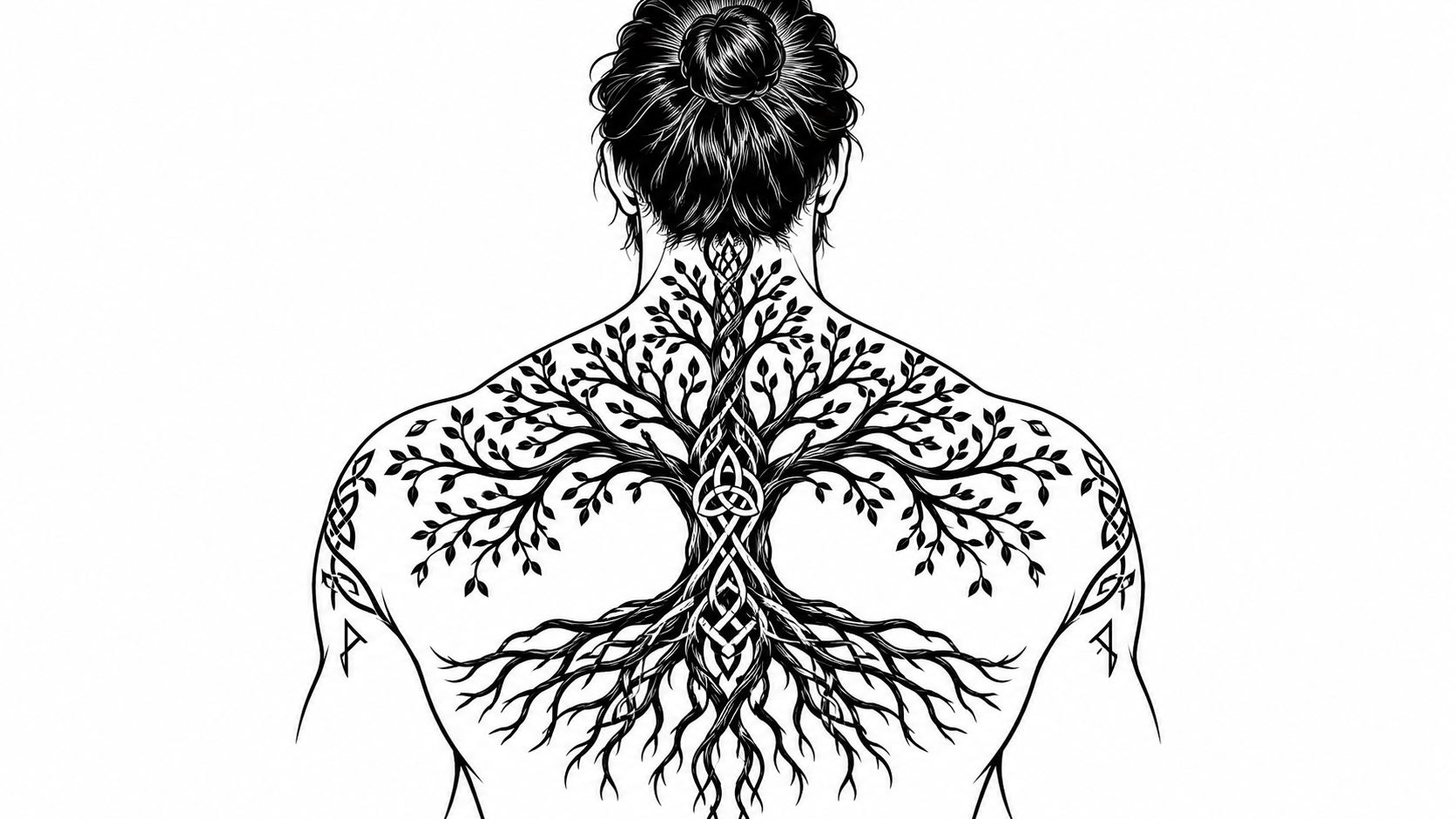
Yggdrasil, the world tree in Norse mythology, makes a natural vertical composition. Its trunk can follow the spine, with branches spreading across the upper back and roots reaching toward the lower back. That structure can also give the artist room to weave in knotwork, runes, or other carefully chosen imagery without losing the central form.
A Viking-inspired piece might instead focus on a longship, a runic arrangement, or interlacing knotwork. These subjects can represent heritage, resilience, or the connections between people and life. If you choose runes or symbols, verify their intended meaning before committing them to a permanent design. Your artist can help with placement and visual execution, but symbolism deserves separate research.
Follow the branches and protect the open space
Yggdrasil can work in blackwork or neo-traditional styles. In a dense blackwork version, the artist can use open skin to separate the roots and branches. In a more illustrative design, smaller details can add depth, but the tree still needs a clear outline that reads from a distance.
Try a few layouts in TattoosAI and compare how the trunk follows the spine and how the branches reach the shoulders. A Yggdrasil back-tattoo reference can help you explain the broad shape you like. Ask your tattooist how the line weight in knotwork and small symbols should be handled so the design remains clear as it heals and ages.
This kind of composition can become a larger backpiece later, but it doesn't need to fill the whole back at the outset. See large back tattoo planning ideas for further inspiration, then tell the artist whether you want a self-contained tree or a design that leaves room to expand.
6. Samurai Warrior Back Tattoo
A samurai can anchor a back tattoo with a human figure, armor, and supporting imagery. The pose determines how the composition uses the body. A standing warrior might run vertically down the back, while a turning or action pose can draw the eye across the shoulder blades. Cherry blossoms, flames, or a mask can establish atmosphere, but they should support the figure rather than compete with it.
This subject can evoke discipline, honor, and resilience. If those qualities are personal to you, decide which visual details express them. A composed stance creates a different impression from a drawn sword or a warrior in motion. Historical armor also varies, so collect references for the specific look you want rather than asking for a general “samurai” image and leaving every choice open.
Keep the figure connected across the back
The spine and shoulder blades can interrupt a figure if the pose isn't planned around them. Ask the artist to map the body's direction and key features before finalizing the design, especially the face, hands, and armor. Those details should land where the body's movement won't make them appear unintentionally divided.
For concept exploration, try a TattoosAI prompt such as “Samurai warrior, full back, armored, cherry blossoms, irezumi style.” Compare a traditional Japanese composition with a more graphic blackwork approach, then use the strongest result as a starting point for consultation. A full, flat image is useful for discussing mood and layout, but the tattooist needs to redraw the figure to fit your back.
Consider whether the piece should end at the upper back or extend toward the lower back. A clean stopping point can make the tattoo feel complete on its own, while an open composition may leave room for another element later.
7. Blackwork Geometric or Mandala Back Tattoo
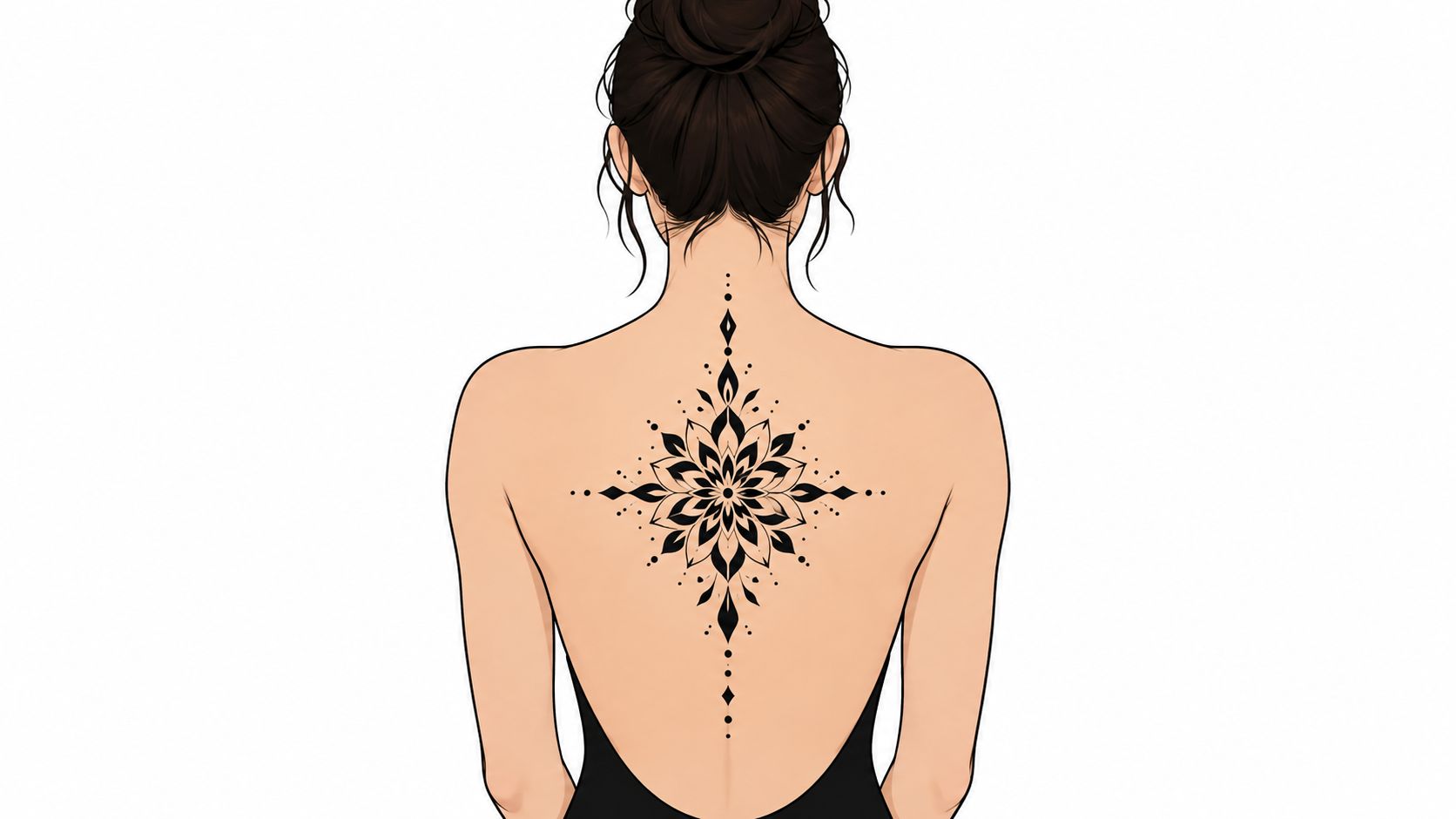
A geometric or mandala design turns the back into a study of symmetry, contrast, and negative space. A central motif can align with the spine, then open outward across the shoulder blades. Blackwork gives the piece a graphic quality, while dotwork and finer linework can soften the transitions between dark sections and bare skin.
This style depends on precision. If the main pattern is meant to be symmetrical, even a small shift can change how the whole design appears. Ask for the stencil to be checked in a mirror while you stand naturally. Your shoulders aren't always perfectly level, so the artist may need to adapt a mathematically even pattern to the way your body sits.
Make density part of the design
A tightly packed mandala can feel bold and formal, while more open geometry leaves the skin visible and gives the eye room to move. Compare both approaches before settling on the scale. If dotwork is central to your idea, ask how the artist builds shading and how the finished pattern will look as the skin heals.
Explore TattoosAI's geometric and blackwork directions to compare pattern density and placement. A symmetrical mandala-back example can communicate the overall balance, but don't assume a design shown on someone else will align the same way on you. Discuss whether the central shape should sit directly over the spine or shift to suit your posture.
A geometric piece can stand alone or become the start of a larger back composition. Tell the artist which you have in mind, because that decision affects whether the outer edges should feel finished or remain open.
8. American Traditional Pin-Up or Skull and Dagger Back Piece
American traditional designs use bold outlines and recognizable motifs to create a clear, graphic back piece. You might build around a skull and dagger, frame a central image with roses and swallows, or combine anchors, hearts, and banners into a broader composition. A symmetrical arrangement can spread across the shoulder blades, while a single central medallion gives the back a more contained focal point.
Traditional sailor imagery and early tattoo flash offer a visual starting point, but you don't need to copy a stock design. Choose a few motifs with personal relevance, then ask your artist to adapt their scale and arrangement to the back. A banner, for example, can carry a short phrase, while a rose or dagger can direct the eye toward the center.
Keep the motifs readable
Bold outlines and a restrained palette help separate shapes. Overcrowding can make individual symbols harder to distinguish, especially when several motifs compete for the same area. If you want color, discuss which hues suit your skin tone and the artist's strengths. A black-and-gray alternative can also clarify whether the composition works without relying on color to separate elements.
Use TattoosAI to compare layouts, such as a central skull framed by roses versus a wider design with swallows and banners. Then bring the preferred concept to an artist who understands traditional conventions. They can adjust line weight, spacing, and color choices rather than placing a digital arrangement on your back.
Think about whether the tattoo should stop at the upper back or connect to future shoulder work. Leave room around the outer edges if you're not ready to decide on the final extent. A design can feel complete without using every available inch.
9. Scripture or Lettering Back Tattoo
Lettering turns words into the main visual feature, so the first decision is what the text means and the second is how it should read on your back. A verse, name, or personal motto can sit across the upper back, run vertically along the spine, or form part of a larger design with wings, a border, or ornamental details. Each placement changes both visibility and legibility.
Choose the exact wording before testing fonts. Proofread it carefully and ask another person to check spelling and punctuation. If the text uses a language or script you don't read fluently, verify it with a knowledgeable person before the tattoo is finalized. A small spelling error can't be fixed by changing the frame.
Design for reading, not just decoration
Script and blackletter create different moods, but the letterforms must remain distinct at the size you plan to wear. Avoid shrinking a long passage to fit it across the back. Ask the tattooist to test the lettering at the intended scale and check how the words read when you stand naturally.
TattoosAI can help compare typography and surrounding elements, including wings, geometric borders, or a compass motif. Use those concepts to discuss the overall layout, then let a lettering-focused artist refine the actual letterforms. Ask how the text should follow the back's curve and whether a horizontal or vertical orientation will remain readable as you move.
Consider the piece's relationship to clothing and future tattoos. Text near the shoulders may be concealed by a shirt, while a design lower on the back may be exposed by some clothing. If you might add more work later, plan the borders so they won't block a future composition.
9 Back Tattoo Ideas for Men: Style Comparison Matrix
| Tattoo style | 🔄 Complexity & resources | 📊 Expected impact | Ideal use case | ⭐ Key advantage |
|---|---|---|---|---|
| Japanese Dragon Back Piece (Irezumi) | High; full-back design usually needs multiple sessions and an experienced irezumi artist | Bold, cohesive statement with traditional symbolism | A large, symbolic full-back piece | Detailed composition flows with the back's shape |
| Realistic Portrait or Memorial | High; requires a skilled realism artist and a sharp reference photo | Detailed, personal tribute; accuracy is essential | Honoring a loved one or meaningful figure | Highly personal and suited to upper-back detail |
| Spread-Wing Eagle | Medium; careful sizing and placement are important | Symmetrical, recognizable image symbolizing strength or freedom | A balanced upper-back design | Adapts to traditional, neo-traditional, or realism styles |
| Wolf or Lion | Medium to high; detailed fur or mane needs skilled shading | Strong animal imagery with customizable symbolism | A personal symbol of traits such as loyalty or courage | Flexible across several tattoo styles |
| Norse Yggdrasil or Viking-Inspired | Medium to high; symbol research and clear linework are important | Mythological, heritage-focused design | A nature- or Norse mythology-inspired piece | Branching forms fit the back's broad canvas |
| Samurai Warrior | High; detailed figure, armor, and background require careful planning | Dramatic, narrative design associated with discipline and honor | A Japanese-inspired figurative back piece | Combines a central figure with complementary motifs |
| Blackwork Geometric or Mandala | Medium; precise symmetry and substantial blackwork may require extended sessions | Clean, graphic design with strong contrast | A contemporary, symmetrical design | Bold black areas can remain legible over time |
| American Traditional Pin-Up or Skull and Dagger | Medium; bold outlines and a planned composition are central | Classic, colorful imagery with clear shapes | Fans of traditional tattoo motifs | Strong lines and solid colors tend to age well |
| Scripture or Lettering | Medium; requires careful proofreading, spacing, and legible sizing | Readable personal message or statement | Expressing a belief, value, or memory | Text and framing can be customized |
| 💡 Consult an artist about placement, sizing, and long-term readability before committing. |
Turn Your Favorite Idea Into a Tattoo Worth Keeping
The strongest back tattoo isn't necessarily the most elaborate or the largest. It's the one whose subject, style, scale, and flow suit your anatomy, personal meaning, and everyday life. A compact, well-planned upper-back piece can feel more considered than a full-back design that leaves no room to adapt.
Shortlist a few concepts and compare more than their subject matter. A dragon and a world tree both use a vertical axis, but they move across the back differently. An eagle emphasizes a horizontal span, while lettering depends on clean reading and a mandala asks for careful alignment. Think about what you want covered by clothing, whether you may add shoulder or sleeve work later, and how the design will look when you bend or turn.
TattoosAI can help you test ideas by refining prompts for style, placement, composition, palette, and line weight. For example, you might compare a centered blackwork tree with open branches against a denser version that fills the shoulder blades. Treat those outputs as discussion material, not body-specific designs. An AI image can suggest visual directions, but it can't assess your skin, map the stencil to your posture, or make medical judgments.
Bring your preferred concept and a contrasting option to a qualified tattoo artist. Ask to see healed work in a similar style, discuss the stencil on your back, and agree on how the design should stop if it will be completed over multiple appointments. Talk through ink selection, hygiene, consent procedures, and aftercare before committing. Tattooing can cause infections, allergic reactions, scarring, and other complications, so don't make safety an afterthought; the FDA's tattoo safety guidance explains risks to discuss with a professional.
For additional perspective, compare your chosen design with alternatives to tattoos before making a permanent decision. Then take the time to choose an artist whose healed portfolio shows the style and scale you want. The best result starts with a clear idea and becomes personal through careful collaboration.
Explore different back-tattoo concepts with TattoosAI, using detailed prompts to compare styles, subjects, color choices, and composition before your consultation. Bring the concepts you prefer to a qualified tattoo artist, who can adapt the design to your body and help plan its placement, sessions, and aftercare.