TattoosAI
You're saving rose references, comparing reds, blues, and watercolor washes, and trying to picture which design will still feel like yours once it's on your skin. That's a lot to decide from a screen, especially when the same flower can look bold and classic, soft and painterly, or bright enough to become the center of a sleeve.
Colorful rose tattoos work best when you plan more than the hue. Palette, outline, shading, placement, and the amount of open skin all affect how clearly a rose reads. A design that suits a small wrist tattoo may need simpler petals than one planned for an upper arm or back.
From classic red flash to watercolor washes and rainbow gradients, these eight styles explain what palettes make each rose pop, where the composition can sit comfortably, and how to test variations with TattoosAI. Treat the concepts as starting points, then ask your tattoo artist to adapt the details to your skin, placement, and preferences.
Table of Contents
- 1. Traditional American Red Rose with Green Leaves
- 2. Neo-Traditional Jewel-Tone Rose
- 3. Japanese Irezumi-Style Color Rose
- 4. Watercolor Splash Rose
- 5. Blue Rose with Symbolic Meaning
- 6. Realistic Full-Color Rose
- 7. Rainbow Gradient Rose
- 8. Rose with Butterflies and Botanical Accents
- 8 Colorful Rose Tattoo Styles Compared
- Turn Your Favorite Palette Into Ink
1. Traditional American Red Rose with Green Leaves
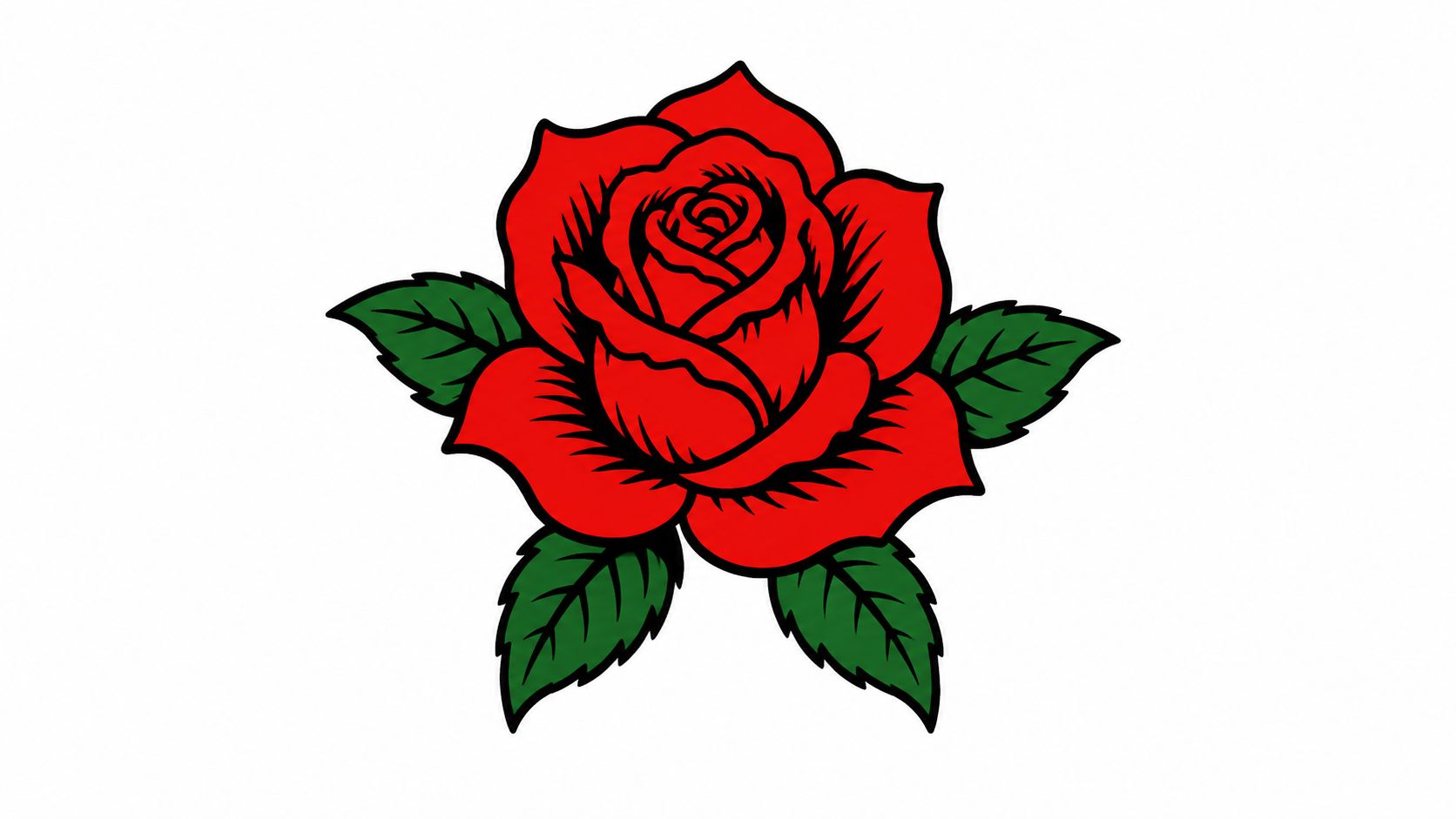
A traditional red rose is a strong starting point if you want a design that reads clearly at a glance. Deep red petals, green leaves, and a confident black outline give the flower a compact, recognizable shape. The limited palette keeps the design focused rather than asking small details to carry the whole image.
A small rose can fit on the forearm or calf, while a heart or banner can turn a flash-inspired flower into a more personal piece. For example, a banner could hold a name or a brief word, but the lettering needs enough space to stay legible. Ask your artist to show you a clean stencil-ready outline before adding color. That lets you assess the petal shape and leaf placement while the design is still easy to revise.
Keep the palette clear
Choose a deep, warm red rather than a red that leans strongly orange if that better matches your intended look. Color is personal, though, and the right choice depends on your skin tone, the artist's pigments, and the way the shades sit together. Bring those questions to your consultation rather than relying on a phone screen to predict the final ink.
Design prompt: Ask TattoosAI for an American traditional rose with deep red petals, green leaves, a bold black outline, and either a simple heart or a banner. Compare versions with different leaf arrangements before asking your artist to redraw the strongest idea.
Traditional designs are especially useful when you want a clear silhouette, but longevity still depends on professional execution and aftercare. The FDA explains that tattoo pigments vary and that tattoo inks raise safety questions around pigment use and contamination, so ask your artist about ink sourcing, sanitation, and aftercare practices during your consultation (FDA guidance on tattoos and tattoo inks).
2. Neo-Traditional Jewel-Tone Rose
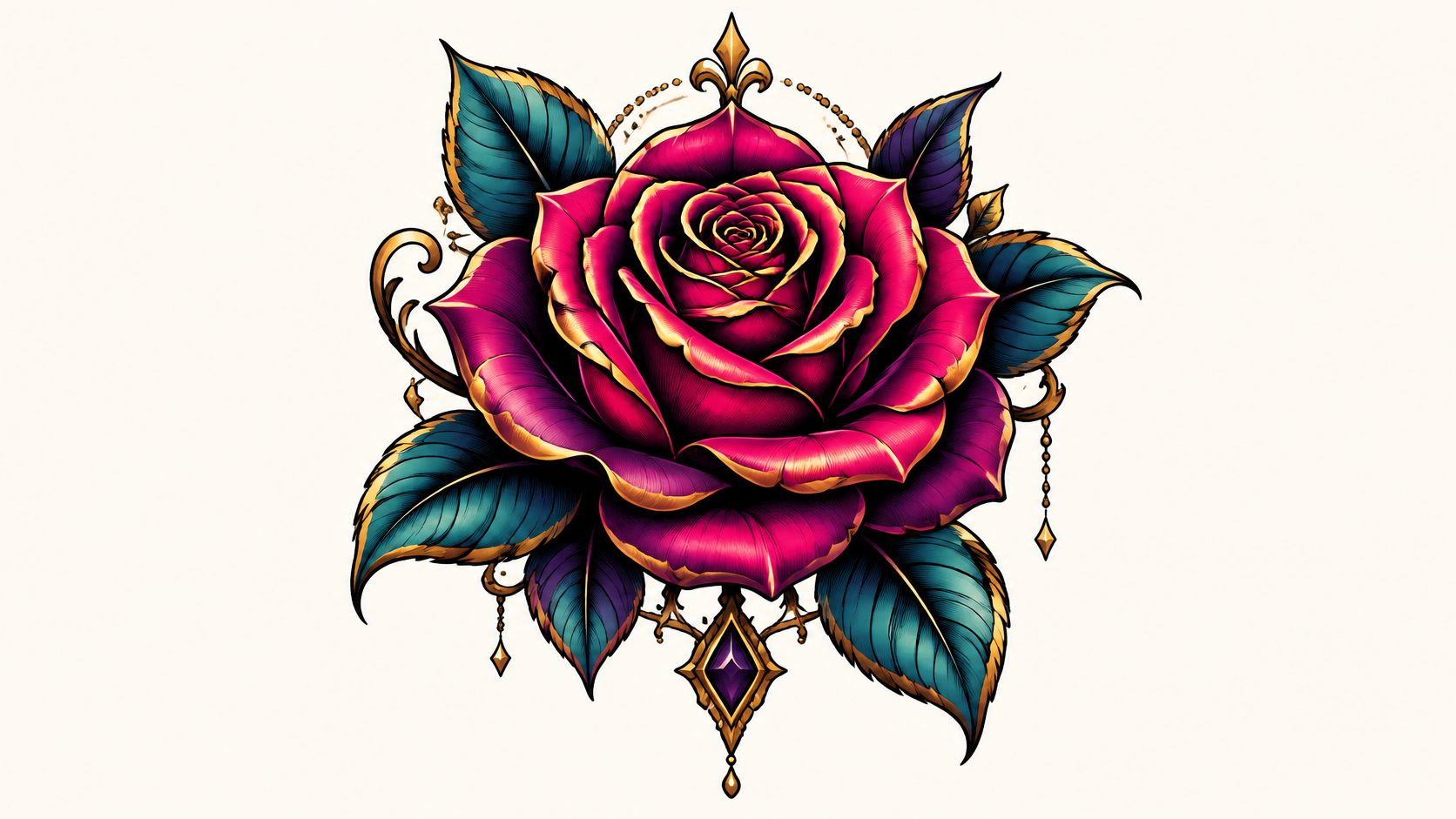
A neo-traditional rose gives the familiar flower more room for ornament. Magenta, teal, gold, and deep purple can create a jewel-like palette, while dimensional shading makes individual petals feel layered. Bold contours keep the flower's structure visible, even when the artist adds decorative details such as filigree or fine accents.
This style suits a larger composition when you want the rose to anchor other imagery. A rose sleeve with a dagger or skull can give the flower a dramatic role, while an ornamental frame can make a chest piece feel more formal. The key is hierarchy: the rose should remain easy to find among the surrounding details.
Plan the contrast before the decoration
Ask your artist how they'll separate shadow areas, especially where deep purple, teal, or dark magenta sit close together. If the darkest parts of the petals merge visually, the rose can lose its layered look. Keep add-ons selective, and use negative space to give the flower room to breathe.
Color test: Generate several jewel-tone versions with TattoosAI, changing one feature at a time. Compare, for example, a magenta bloom with teal leaves against a purple bloom with gold highlights, then discuss which palette is likely to translate best to your skin.
A sleeve can connect the flower to other pieces through repeated colors or shared ornamental lines. On the chest, a framed rose can follow the body's natural shape, but the artist should draw a placement mockup before committing to the final scale.
3. Japanese Irezumi-Style Color Rose
In Japanese-inspired tattooing, a rose can become part of a larger scene rather than a standalone flower. Layered petals, broad color fields, and open spaces between forms help create movement. Wind bars, clouds, or waves can guide the eye around the rose and connect it to a sleeve or back piece.
Peonies have a stronger place in classical Japanese floral imagery, but modern artists also adapt roses to Japanese-influenced compositions. A rose paired with koi on the thigh or back, for instance, can use the surrounding water and movement to shape the overall flow. Before combining symbols, research their meanings and discuss the intended mix with an artist experienced in the style.
Give the composition room
This approach usually needs enough space for both the flower and its background. A larger area makes it easier for the artist to show the direction of wind bars or the curve of waves without crowding the petals. Think of placement as part of the design: a sleeve can carry motion along the arm, while a back piece offers a broad canvas for more complex framing.
Use TattoosAI's Japanese style direction to explore how the rose might sit within a flowing composition. Try prompts that specify the body area, the main flower, and any background element you're considering. Compare the way a koi or cloud changes the balance before settling on a concept.
Keep the rose's palette coordinated with the surrounding imagery. A bold bloom can stand out through contrast, while carefully placed negative space prevents the background from competing with the flower.
4. Watercolor Splash Rose
A watercolor rose borrows the loose look of paint, with blended washes, drips, and splashes surrounding or replacing a firm outline. Color gradients do much of the work, so the result feels softer and less contained than a traditional rose. Pastel pink and blue can create a gentle forearm design, while a more abstract wash may suit the ribs.
The style's painterly effect depends on the artist's choices, not just the digital reference. Ask to see healed watercolor tattoos in the artist's portfolio, not only fresh photographs. Fresh color can look especially vivid, while a healed example gives you a better sense of how the artist's linework and washes settle over time.
Make the wash work with the flower
If the rose has little or no outline, ask how the petals will remain distinct from the splashes around them. The artist might use selective linework, stronger contrast in the bloom, or open skin between color areas. These choices help the flower stay legible without taking away its loose, painted feel.
To test directions, prompt TattoosAI for a watercolor rose and specify the wash colors, amount of splatter, and placement. Try a restrained version beside a more expressive one. For a closer look at the style, explore how watercolor tattoos work.
A watercolor reference can also become a conversation about touch-ups and long-term readability. No digital preview can promise how pigment will heal, so use the concept to communicate the mood, then let your artist adapt it for tattooing.
Here's a visual example of a watercolor tattoo approach:
5. Blue Rose with Symbolic Meaning
A blue rose is a striking choice when you want a flower that feels unusual or dreamlike. Because a blue rose doesn't occur naturally, people often use the color to suggest mystery, the impossible, or a form of devotion that feels distinctive. The meaning remains personal, so the tattoo can be a symbol you define rather than one you need to explain.
For a crisp design, place a blue rose with script on the inner forearm, where the two elements can read together. If you'd rather avoid lettering, geometric framing on the shoulder can give the flower structure without competing with the petals. Lighter highlights and deep navy shading can create depth, but your artist should advise how those shades will work with your skin tone.
Compare the message and the layout
A short line of script makes the tattoo more explicit, while a geometric frame lets the rose carry most of the meaning. You can test both directions with TattoosAI. Ask for a blue rose with lighter petal highlights and navy shadows, then compare a version with script against one with a restrained geometric border.
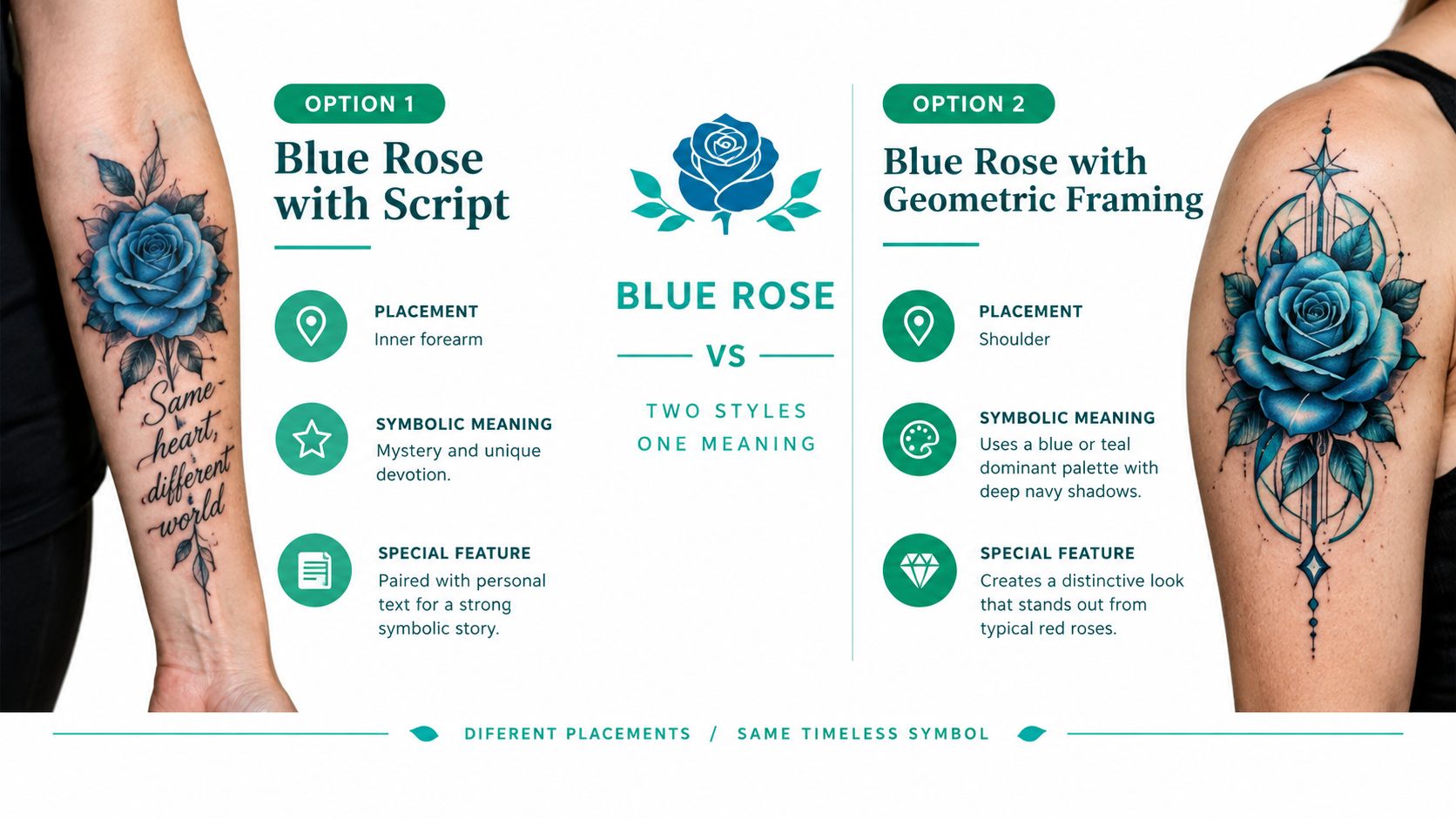
If you're deciding what the flower should represent, browse this guide to rose tattoo meaning for inspiration, then choose the interpretation that feels right to you. Ask the artist about pigment brands, how the blue may appear on your skin, and how to care for the tattoo after it heals.
Color choice deserves a careful conversation. In a one-year observational study of tattoo hypersensitivity, red ink accounted for a larger share of reported reactions than the other listed colors; that finding doesn't mean a blue tattoo is risk-free or that every person will react (study of tattoo hypersensitivity reactions). Tell your artist about any concerns and ask what pigment information the studio can document.
6. Realistic Full-Color Rose
A realistic rose aims to evoke a photograph or botanical illustration. Smooth transitions, petal texture, and carefully controlled shadows give the bloom a natural, dimensional look. That detail takes room to read, so a forearm or upper arm can work well for a single flower, while a larger botanical study may spread across more of the arm.
Start with a high-quality reference photo in clear lighting. A close-up that shows how light falls across the petals gives your artist more useful information than a heavily filtered image. If you want the rose to mark a person or memory, the reference can help personalize the flower without requiring extra symbols or text.
Balance detail with readability
Realism relies on subtle shifts between highlights, midtones, and shadows. Ask to see healed examples from the artist's portfolio so you can judge how their color transitions look after healing. Discuss the size openly, too. A highly detailed rose may need more space than a simplified design, and the artist can tell you whether the planned placement supports the detail you want.
TattoosAI can help you explore the broad composition before your appointment. Try a prompt for a single realistic red rose with natural green leaves, soft petal shading, and a plain background. Use the result to discuss angle, bloom shape, and the amount of foliage, rather than treating generated shading as a final tattoo stencil.
A medical review of red tattoo reactions describes how pigment reactions can involve tissue changes, and research on sun-triggered symptoms highlights why aftercare and monitoring matter. Ask your artist about sun protection once the tattoo has healed, and seek professional medical advice if you notice persistent itching, swelling, or raised skin (research on the histopathology of red tattoo reactions).

7. Rainbow Gradient Rose
A rainbow rose can move through the spectrum from petal to petal or blend several hues within each petal. The result may suggest pride, celebration, or a personal color story. It can feel playful with clean, minimal linework or more dramatic when paired with a traditional outline.
For a small wrist or ankle tattoo, simplify the petal structure so the colors have room to read. On a larger piece, the artist can show more gradual transitions and additional detail. Decide whether you want each petal to carry a distinct color or prefer a softer gradient, since those approaches create different visual rhythms.
Keep the transitions intentional
A spectrum can become visually busy if too many shades compete in a small space. Ask an artist experienced with multicolor blending to explain how they'll separate neighboring colors and preserve the rose's shape. Use a restrained palette if you want a cleaner blend, or build a broader spectrum into a larger design.
Practical rule: Screen colors are a reference, not an ink prescription. Ask your tattooist to translate the digital palette into professional pigments and explain how the shades will work together on your skin.
Use TattoosAI to test different versions before your consultation. Try a rainbow rose with clear color changes between petals, then compare it with a design where each petal blends gradually. A laser specialist may need different approaches for different tattoo colors, so if future removal matters to you, raise that question before committing to a dense multicolor design (research on laser removal of tattoo inks).
8. Rose with Butterflies and Botanical Accents
A garden-style rose composition brings together a focal flower, butterflies, leaves, and smaller botanical details. The rose can anchor the design while butterflies add motion and a second palette. Pastel wings can soften a bold red bloom, while brighter accents can make the whole composition feel more energetic.
This style can fill a half sleeve or spread across the back and shoulder blades. Before choosing details, decide what viewers should notice first. If the rose is the focal point, make it the largest or most contrast-rich element; if the butterflies matter just as much, ask the artist to balance their color and placement around the flower.
Check the composition on the body
Request a placement mockup so you can see how the design follows your arm, shoulder, or back. A cluster that looks balanced on a flat page may feel crowded when it wraps around the body. Ask the artist to leave enough open skin between petals, wings, and leaves to keep the forms distinct.
TattoosAI can help you compare different arrangements before the consultation. Prompt it for a rose with butterflies and botanical accents, then test a version with the rose centered against one where the flower sits off to the side. You can also test a floral design before committing if you want to explore the general look on your body before booking a permanent tattoo.
Think about future flexibility, too. A modular layout with separation between the rose and its accents gives an artist more options if you later want to rework a portion of the design. Sun protection after healing can help limit visual fading, but it won't make a permanent tattoo temporary.
8 Colorful Rose Tattoo Styles Compared
| Rose Style | 🔄 Complexity & Resources | 📊 Expected Outcome | ⭐ Key Advantages | 💡 Ideal Use Cases |
|---|---|---|---|---|
| Traditional American Red Rose | Low–moderate; limited colors, bold linework, modest session time | Clear, classic design that tends to remain readable over time | ⚡ Easy to communicate and works at small sizes | First tattoo; forearm, upper arm, calf, or shoulder |
| Neo-Traditional Jewel-Tone Rose | Moderate–high; skilled color work and detail; best suited to medium or large designs | Vivid, dimensional rose with decorative accents | Strong contrast and a balance of detail and readability | Ornate pieces or sleeves; upper arm, chest, or thigh |
| Japanese Irezumi-Style Color Rose | High; custom composition, larger area, and longer design planning | Flowing, energetic composition with bold color and background elements | Integrates naturally with body contours and larger motifs | Sleeves or larger pieces; back, thigh, chest, or shoulder |
| Watercolor Splash Rose | Moderate–high; requires a specialist; plan for more frequent touch-ups | Expressive, painterly effect with soft washes and splatter | Distinctive, artistic appearance | Painterly designs; forearm, ribcage, shoulder blade, or calf |
| Blue Rose with Symbolic Meaning | Variable; depends on style, detail, and blue pigment choices | Distinctive blue or teal design with personal symbolism | Unconventional color and flexible styling | Meaningful statement piece; inner forearm, shoulder, neck, or upper arm |
| Realistic Full-Color Rose | High; skilled artist, detailed reference, longer sessions, and higher cost | Lifelike petals, texture, and depth | Strong visual impact and botanical detail | Memorial or botanical design; forearm, upper arm, thigh, or back |
| Rainbow Gradient Rose | Moderate–high; precise color blending and careful aftercare required | Bright, multicolor petals with smooth or contrasting transitions | ⚡ Highly customizable and visually striking | Personal or celebratory designs; wrist, ankle, upper arm, or shoulder |
| Rose with Butterflies and Botanical Accents | Moderate–high; requires layout planning, especially for larger compositions | Layered, flowing garden-style design with multiple focal elements | Combines personal symbols in a cohesive composition | Sleeves or larger pieces; back, thigh, or shoulder |
Turn Your Favorite Palette Into Ink
The best rose design is the one that feels meaningful to you and fits the place you want to wear it. Before settling on a style, ask yourself what you want the tattoo to do: make a clear statement, carry a memory, bring color into an existing sleeve, or just give you a flower you love. Your answer can guide decisions about palette, scale, and whether the rose needs supporting imagery.
Choose one of the eight styles and generate three or four color variations with TattoosAI. Compare the versions on the screen, but treat the results as concept sketches rather than final tattoo artwork. Pay attention to whether you can still see the petals, leaves, and focal point when the design is reduced to the size you have in mind.
Then bring your strongest concept to an artist whose portfolio matches the style you want. Talk through placement, linework, pigment choices, healing, and aftercare before you book. Ask how the artist will adapt the design to your skin tone and what details may need to change so the tattoo stays readable. If you have questions about reactions, ink documentation, or removal options, raise them during the consultation rather than assuming a vivid digital palette maps directly to tattoo ink.
Designing for later changes doesn't mean expecting regret. It means understanding that a colorful tattoo is permanent, while fading, touch-ups, cover-ups, and removal are different possibilities with different trade-offs. Leave room between elements when it suits the composition, avoid unnecessary color density, and ask how a future artist could approach a partial rework. Sun protection can help preserve the tattoo's appearance after healing, but no palette makes ink temporary.
Use the generated variations to make your studio visit more focused, not to replace your tattooist's judgment. A good collaboration turns an appealing reference into a design that fits your body, your preferences, and the artist's professional approach. The final rose can still change during that process, and those refinements are part of making the tattoo yours.
Explore rose palettes, styles, and composition ideas with TattoosAI, then bring the concepts you like to a professional tattoo artist. Generate a few variations, compare the details, and start a focused conversation about turning your colorful rose idea into a design that suits you.