TattoosAI
“Make it as tiny as possible” can be poor advice for a ladybug tattoo. When the shell, spots, legs, and highlights are squeezed together, they have less room to stay distinct as the tattoo settles and ages. A charming drawing is not automatically a durable tattoo.
Choose the design for healed skin, not just a fresh photograph. Bold outlines, delicate lines, stippling, and watercolor each bring different trade-offs in line weight, color fade, and placement friction. A protected upper arm and an ankle under a shoe strap put a design through different conditions.
Prioritize what makes the insect recognizable before adding decoration. The decisions behind universal design principle applies here: give the shell a clear shape, keep the spots readable, and use enough contrast to separate the ladybug from its surroundings.
Table of Contents
- 1. Traditional American Flash Ladybug
- 2. Fine-Line Minimalist Ladybug
- 3. Dotwork Ladybug
- 4. Watercolor Ladybug
- 5. Japanese-Style Ladybug with Botanicals
- 6. Geometric Ladybug
- 7. Realistic Botanical Ladybug
- 7 Ladybug Tattoo Styles Compared
- From Lucky Charm to Finished Ink
1. Traditional American Flash Ladybug
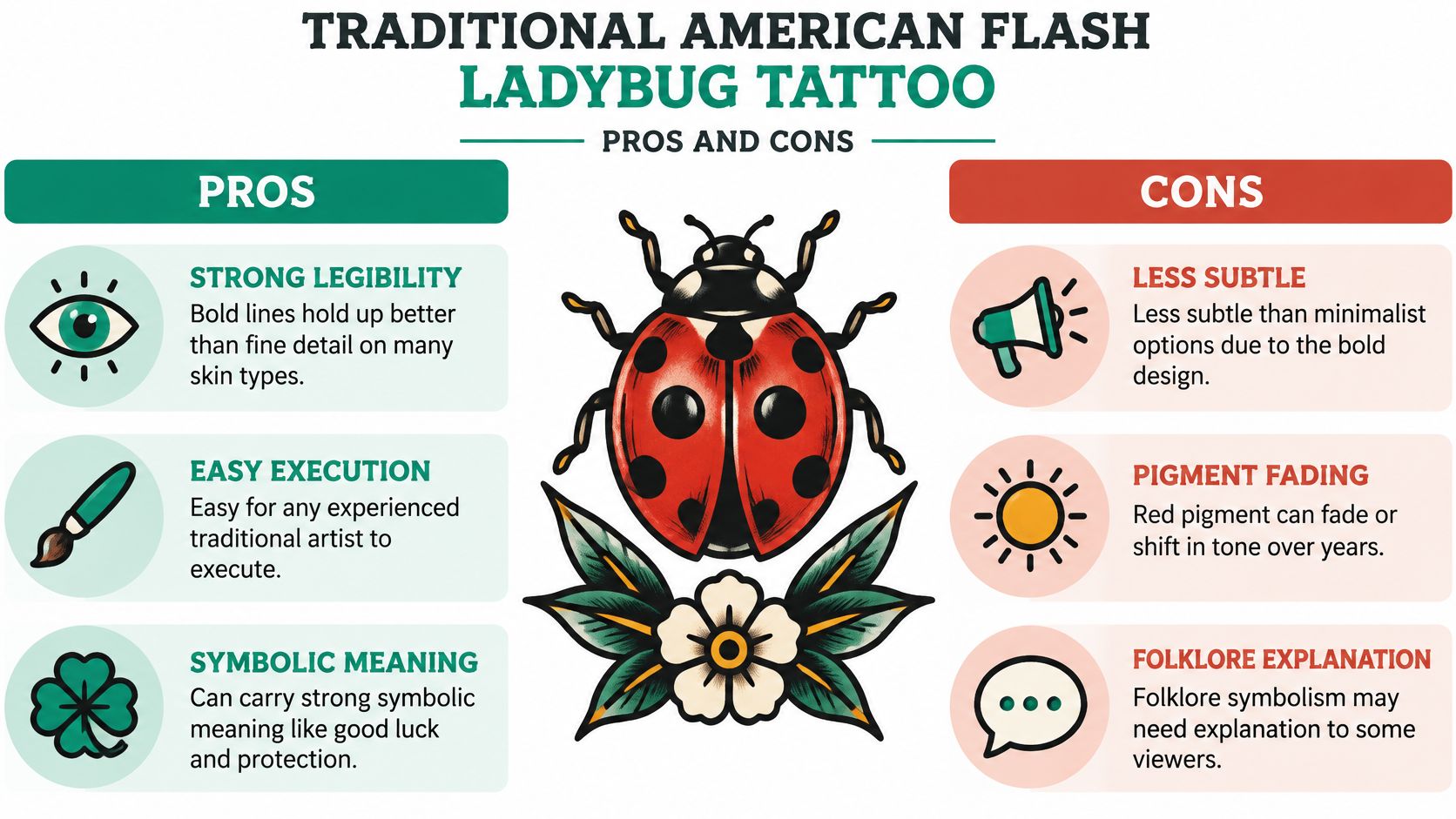
For straightforward readability, I'd start with traditional flash. A strong black outline, solid spots, and a limited red-and-black palette give the beetle a clear structure without relying on delicate shading.
Try a ladybug resting on a broad leaf on the calf, or pair it with a traditional rose on the upper arm. Keep the rose petals separate from the shell outline so the insect doesn't disappear into the flower's black shading.
The protection symbolism has a folklore basis. Country Living's account of ladybug symbolism connects the insect's name to the Virgin Mary and recounts the tradition of farmers receiving protection from crop pests. Treat that as folklore, not a documented historical event or a meaning everyone must adopt.
Keep the boldness in the right places
Ask your artist to balance the outer contour against the interior spots. A heavy outline won't rescue an overcrowded shell, especially if the central wing division and spots already touch in the drawing.
- Best placement: An upper arm or calf gives the artist room to separate the major shapes.
- Useful pairing: A clover or horseshoe can reinforce your personal good-luck theme without requiring tiny lettering.
- Main compromise: Bold black work feels less delicate, but it leaves less of the design dependent on subtle color transitions.
Practical rule: Judge the silhouette before the decoration. If the beetle doesn't read without its red fill, simplify it.
2. Fine-Line Minimalist Ladybug
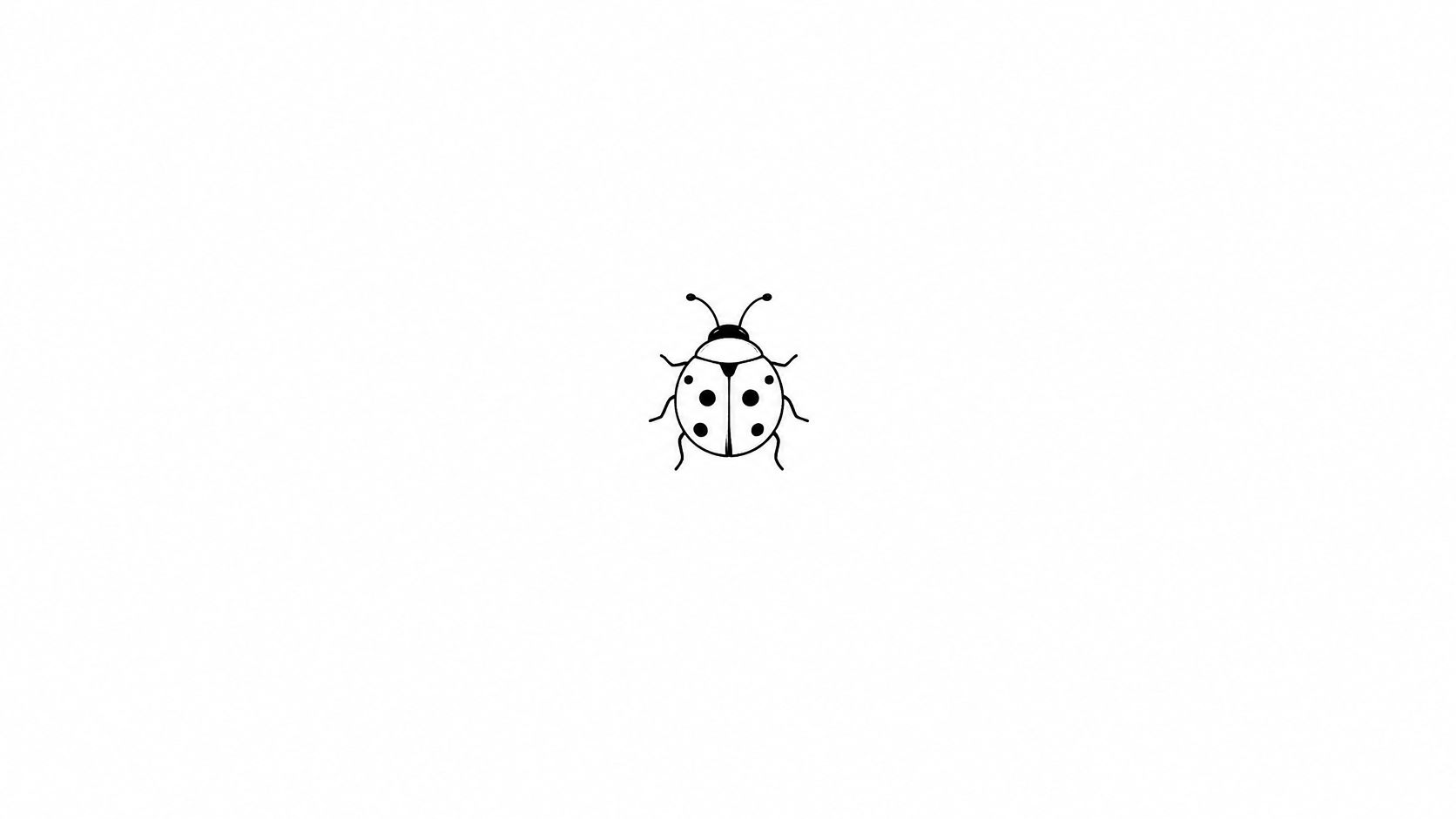
A fine-line ladybug can look quiet and intentional rather than unfinished. The strongest version uses a clean oval shell, a clear head, and a restrained arrangement of spots, not a miniature inventory of every anatomical detail.
For an understated inner-arm tattoo, choose a simple black outline with filled spots and omit elaborate feet or antenna joints. A finger placement may suit the aesthetic, but frequent washing, movement, and rubbing make it a less forgiving choice when consistent appearance is your priority.
Delicate shouldn't mean barely visible
Use our fine-line tattoo style guide to clarify the look you want, then ask your tattooist how much detail the proposed size can support. Slightly stronger lines and wider gaps are often a better compromise than insisting on the thinnest possible execution.
The FDA's tattoos and permanent makeup fact sheet states that no color additives are approved specifically for injection into human skin and warns that even sealed inks can contain microorganisms. Minimalist doesn't mean medically risk-free, so ink traceability and hygienic practice still matter.
- Keep: A distinct head, shell division, and separated spots.
- Remove: Tiny decorative marks that don't help identify the insect.
- Compare: Ask to see healed examples, not just sharply lit fresh work.
Don't treat removal as an easy fallback for choosing too small. Reviewing small tattoo removal pricing can help you consider that separate commitment before booking, rather than assuming a tiny tattoo is consequence-free.
3. Dotwork Ladybug
Dotwork gives a ladybug texture without relying on a solid red shell. The trade-off is that soft shading can blur into the insect's spots if the dots are packed too tightly. Use darker stippling beneath the shell edge to suggest curvature, while leaving more open skin across the top.
For a shoulder piece, a simple clover leaf can frame the beetle without competing with it. Keep any surrounding pattern lighter and less dense. Otherwise, the ladybug can disappear into a field of dots.
Keep spots separate from shading
The shell's spots should read as distinct markings, not as part of the stippled gradient. Ask your artist to preserve clear contrast between the dark spots, midtone dots, and untouched skin. That separation helps the shell stay legible as the tattoo ages.
The dotwork tattoo style guide shows how stippling differs from geometric and ornamental treatments. Bring a focused reference for the texture you want, then let your tattooist adapt the design to your body and placement.
- Portfolio check: Look for healed gradients and clear edges, not only intricate fresh work.
- Placement choice: The outer upper arm or shoulder gives a larger stippled design room and avoids direct friction beneath a watchband.
- Trade-off: Sparse dots feel airy, but stronger marks should still define the shell.
Leave open skin around the darkest markings. More dots do not automatically create more depth.
4. Watercolor Ladybug
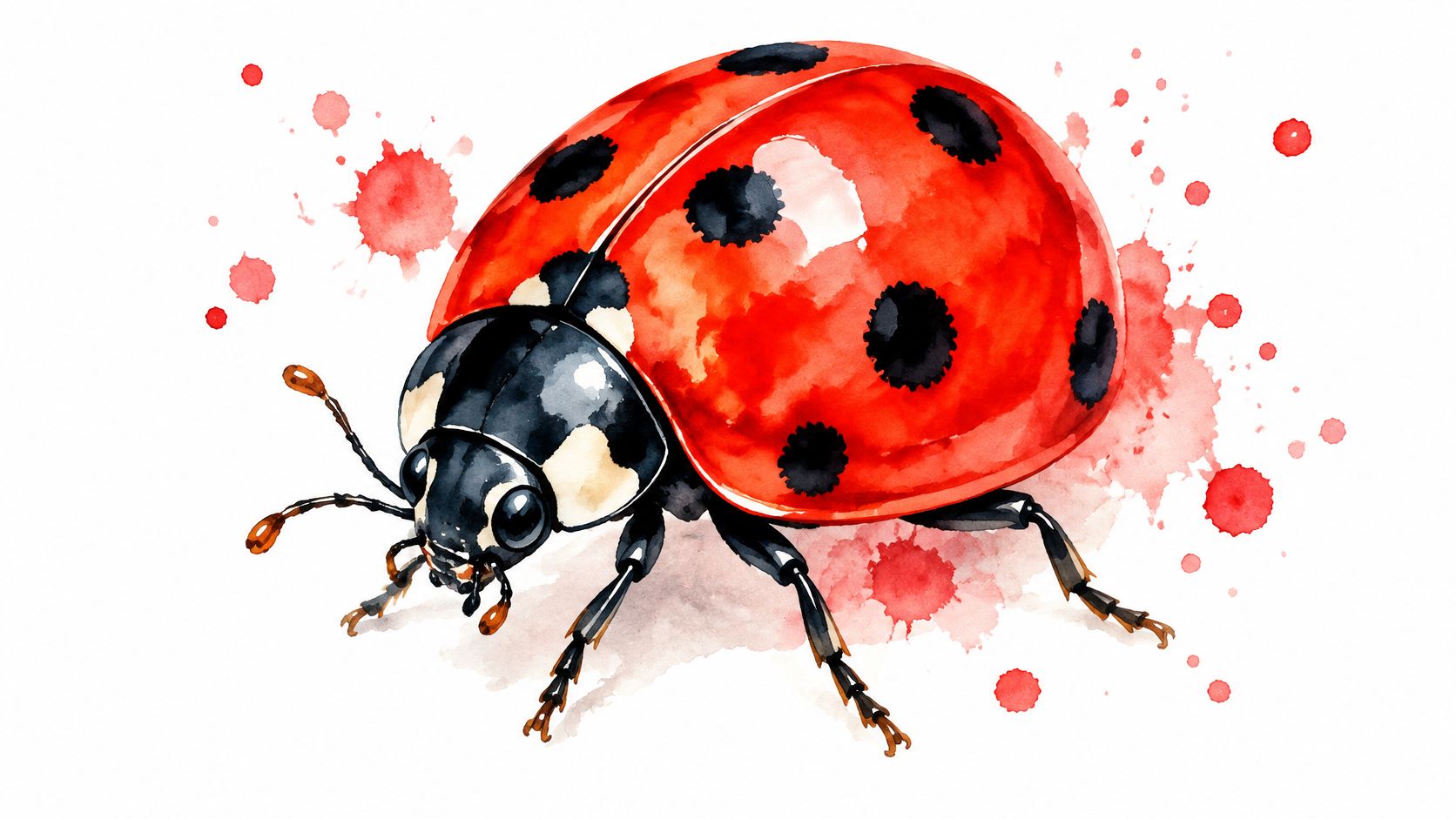
Watercolor works best when the looseness is deliberate, not when every edge is uncertain. A red wash can extend beyond the shell, but the head, wing division, and spots should still establish where the beetle begins and ends.
A practical upper-arm composition uses a clearly defined black ladybug structure with an irregular red wash behind it. Keep splatter away from the antennae so viewers don't have to distinguish anatomy from paint effects.
Color needs a separate conversation
A review of tattoo complications associates allergic reactions particularly with red and yellow pigments and describes reactions that can develop immediately or years after tattooing. That doesn't mean every red ink is unsafe, but it does make pigment questions relevant to a classic ladybug palette.
Ask for the ink manufacturer, color name, and batch information. A muted terracotta appearance isn't proof of a safer formulation, and blackwork shouldn't be presented as completely risk-free.
Ordinary fading and an inflammatory reaction are different problems. Persistent itching, swelling, or a raised rash warrants medical advice, not an automatic touch-up appointment.
- For longevity: Retain a recognizable dark structure beneath the loose color treatment.
- For placement: Prefer an area you can reasonably protect from sun exposure, and avoid a composition directly beneath a regularly rubbing strap.
- For expectations: Ask to see healed watercolor work and discuss touch-ups without accepting a promised schedule as a guarantee.
Choose watercolor because you like softness and irregularity. If your main requirement is a permanently crisp painted edge, another style is a better fit.
5. Japanese-Style Ladybug with Botanicals
A ladybug among chrysanthemums can work as a small focal accent within a larger flowing composition. The flowers and background establish the movement; the beetle provides a point of attention.
For a forearm design, place the insect on an outward-facing petal rather than dropping it into the darkest background. On an upper-arm sleeve, a branch can guide the eye toward the ladybug while leaving space for future botanical work.
Plan the surrounding tattoo first
Describe this as a Japanese-inspired botanical composition unless your artist is working within a specific traditional approach. Don't assume that adding a ladybug to cherry blossoms gives it an established Japanese symbolic meaning.
You can assign the beetle a personal meaning of protection, renewal, or affection for a garden. The important distinction is between your interpretation and a cultural claim.
- Preserve separation: Keep petal outlines, legs, and antennae from converging into a dark knot.
- Manage color: If both flower and shell are red, separate them with clear edges, different values, or open skin.
- Allow expansion: Discuss sleeve plans before placing a standalone beetle where a major branch or background element may later need to go.
The ageing trade-off is scale. A larger composition gives your artist room for stronger lines and broader color areas, but a tiny accent can still become difficult to distinguish inside it.
Ask to view the stencil with your arm relaxed and rotated. The ladybug should remain recognizable in ordinary positions, not only when you hold your arm exactly as it appeared in the design photograph.
6. Geometric Ladybug
Start with a recognizable beetle silhouette, then decide how much geometry it can carry. A shell divided into broad facets can read clearly; a shell packed with intersecting micro-triangles may look impressive on a screen but leave little breathing room on skin.
For an inner-arm piece, try an oval outer shell with angular interior panels and simple circular spots. A geometric leaf underneath can supply structure without forcing every part of the insect into the same shape language.
Check symmetry on the body
A symmetrical drawing won't look identical from every angle on a curved limb. Have your artist apply the stencil, then inspect it with the arm relaxed rather than twisting your skin to match a flat reference.
Ask which lines establish the beetle and which merely decorate it. The decorative lines should be the first candidates for removal if the design needs simplifying.
Stencil check: If adjoining shapes already seem crowded before tattooing, ask for more space rather than expecting precision alone to preserve them.
The strongest ageing strategy is hierarchy: a clear outer boundary, a readable wing division, and less visual weight in the internal geometry. When every line has equal strength, the shell can resemble an abstract grid instead of an insect.
A shoulder placement can accommodate a broader composition, while the inner arm suits a more compact arrangement. Either way, keep dense intersections away from the head and spots.
For personal symbolism, geometry can suggest order, balance, or a preference for structured design. Those are choices you bring to the tattoo, not universal meanings attached to geometric ladybugs.
7. Realistic Botanical Ladybug
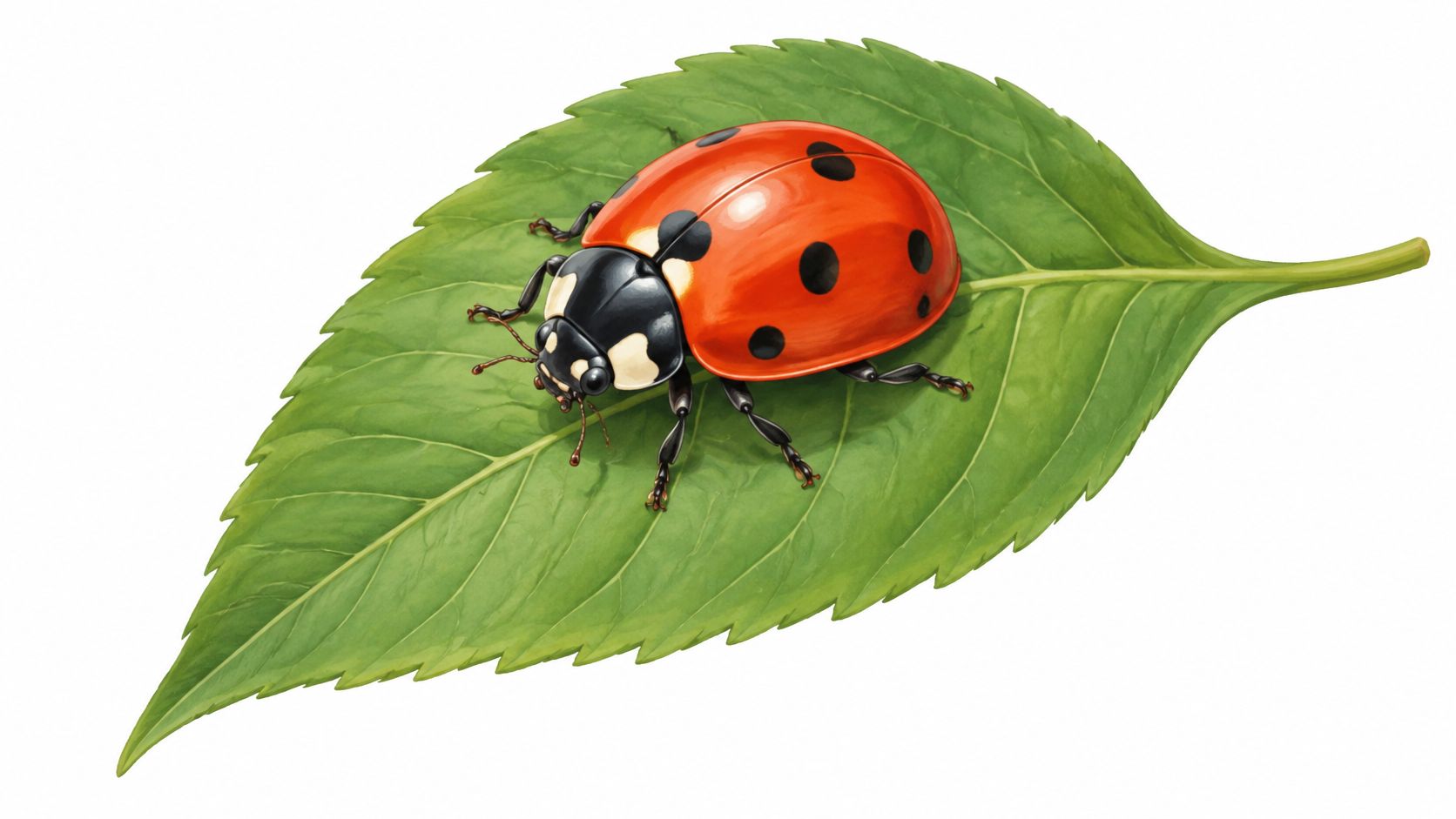
Realism needs room for the details that make it convincing. A glossy shell depends on separated highlights, midtones, and shadows, not merely extra dots and a bright red fill.
A ladybug resting on a rose petal can work well on the upper arm. On the calf, a broad leaf gives the artist a simpler supporting surface than a crowded arrangement of fine stems and fern leaflets.
Bring a real reference
Ladybugs aren't biologically uniform. The USDA Agricultural Research Service's Coccinellidae overview describes approximately 6,000 species worldwide, providing a factual basis for choosing different colors, patterns, and body shapes.
The same overview explains their role as predators of plant-damaging insects. A ladybug protecting a leaf can therefore support a personal interpretation of safeguarding growth without relying solely on good-luck folklore.
Bring photographs of both the beetle and the plant you want. Your artist should simplify those references into tattooable shapes rather than reproduce every photographic detail.
- Protect the focal point: Keep the shell sharper and more contrasted than the background.
- Reserve highlights: Leave sufficient light space instead of relying entirely on minute pale marks.
- Simplify the plant: Broad petals and leaves usually offer a clearer setting than dense miniature foliage.
The trade-off is size versus detail. If you want a very small tattoo, accept a more illustrative result; if you want convincing realism, give the artist enough space to establish depth without crowding the shell.
7 Ladybug Tattoo Styles Compared
| Item | Best Placement | Symbolism | Longevity | Session Time |
|---|---|---|---|---|
| Traditional American Flash Ladybug | Upper arm, forearm, or calf | Good luck, protection, joy, and faith | Bold outlines and clear color blocks tend to stay readable; small details may soften | Moderate |
| Fine-Line Minimalist Ladybug | Inner arm, inner wrist, or behind the ear | Simplicity, good fortune, and a personal reminder | Fine lines can spread with time, so a simple design with open spacing is more likely to remain legible | Short |
| Dotwork Ladybug | Shoulder, forearm, or upper back | Balance, harmony, and mindfulness | Dots may soften or spread; larger, well-spaced dots help preserve the pattern | Longer |
| Watercolor Ladybug | Upper arm, calf, or shoulder blade | Creativity, emotion, and freedom | Color can fade and soft edges may blur; strong outlines help the ladybug keep its shape | Variable; touch-ups may be needed |
| Japanese-Style Ladybug with Botanicals | Forearm sleeve, upper arm, or thigh | Nature, renewal, and the passing of seasons | Larger motifs with clear outlines and room between details are more likely to remain readable over time | Longer for larger, detailed designs |
| Geometric Ladybug | Inner arm, shoulder, or ankle | Order, structure, and modern elegance | Closely spaced lines may blur; simple geometry and open gaps help the pattern hold its shape | Variable by size and detail |
| Realistic Botanical Ladybug | Upper arm, forearm, or calf | Connection to nature, growth, and detail | Small anatomical details may soften; a larger design with clear contrast is more likely to stay recognizable | Longer |
From Lucky Charm to Finished Ink
The best lady bug tattoo isn't necessarily the boldest or most detailed. It's the one whose essential shapes remain readable as the skin and pigment change. Choose the compromise you can live with: heavier lines, softer color, a larger footprint, or less anatomical detail.
Shortlist the styles that match how you dress, work, and care for your skin. A protected upper arm may be more practical than an ankle beneath a daily boot collar, while a sleeve accent needs different planning from a standalone wrist tattoo.
For personal symbolism, borrow the editing approach behind floating locket styling ideas: choose meaningful elements rather than adding every available symbol. A leaf, flower, or chosen spot arrangement can carry your story without miniature lettering.
Bring a focused brief to the studio
Use our TattoosAI generator to explore your chosen style, changing the orientation, palette, or botanical setting separately so you can compare decisions clearly. Bring those references alongside questions prompted by our aftercare timeline and pain chart, but let your tattooist tailor the procedure and care instructions to you.
Our generated designs are references, not tattoo-ready stencils. Your tattooist must adapt the line thickness, spacing, curvature, and placement to your body, skin, and the way the design may age.
Before booking, confirm the studio's hygiene procedures and ink traceability. The FDA's tattoo safety guidance warns that contaminated ink or equipment can cause infection, so a strong portfolio isn't the only consideration.
Ask the artist to show you the final design at its intended size and explain what they've simplified. A useful consultation ends with a readable composition, realistic expectations, and a care plan, not a promise that fresh ink will stay unchanged.
TattoosAI lets you describe your ladybug idea, choose a style and color, and generate concepts to discuss with your tattooist. Visit TattoosAI to compare a bold flash version with a softer botanical treatment, then take your preferred reference to an artist who can adapt it for your skin.