TattoosAI
Will I still love this tattoo decades from now, or do I just love how it looks on a screen? That's the question a mood board can't answer. A no regrets tattoo starts with testing the design on your body, checking the lettering, and choosing details that don't depend on looking freshly inked forever.
Regret isn't inevitable, but it's real: in Pew Research Center's 2023 survey, 24% of tattooed U.S. adults said they had ever regretted getting one or more tattoos. Better planning can reduce uncertainty, though no motif or technique can guarantee lifelong satisfaction.
The useful filters are motif longevity, placement friction, and simplicity of line work. Choose imagery you can live with even when its original meaning changes, consider clothing and movement, and leave enough space between details. These designs offer sensible starting points, provided you're willing to adjust their size and execution rather than chase the smallest possible tattoo.
Table of Contents
- 1. Fine-Line Minimalist Symbols
- 2. Birth Flower Botanical Tattoo
- 3. Name or Initials in Simple Script
- 4. Short Quote or Single Word
- 5. Sacred Geometry and Mandala
- 6. Constellation or Star Map
- 7. Memorial Handwriting or Signature
- Comparing the 7 Low-Regret Tattoo Ideas at a Glance
- Test Before You Commit With Your No-Regrets Action Plan
1. Fine-Line Minimalist Symbols
A crescent moon or simple arrow doesn't need elaborate shading to feel complete. That restraint makes minimalist symbols approachable, but small and simple isn't the same as technically forgiving.
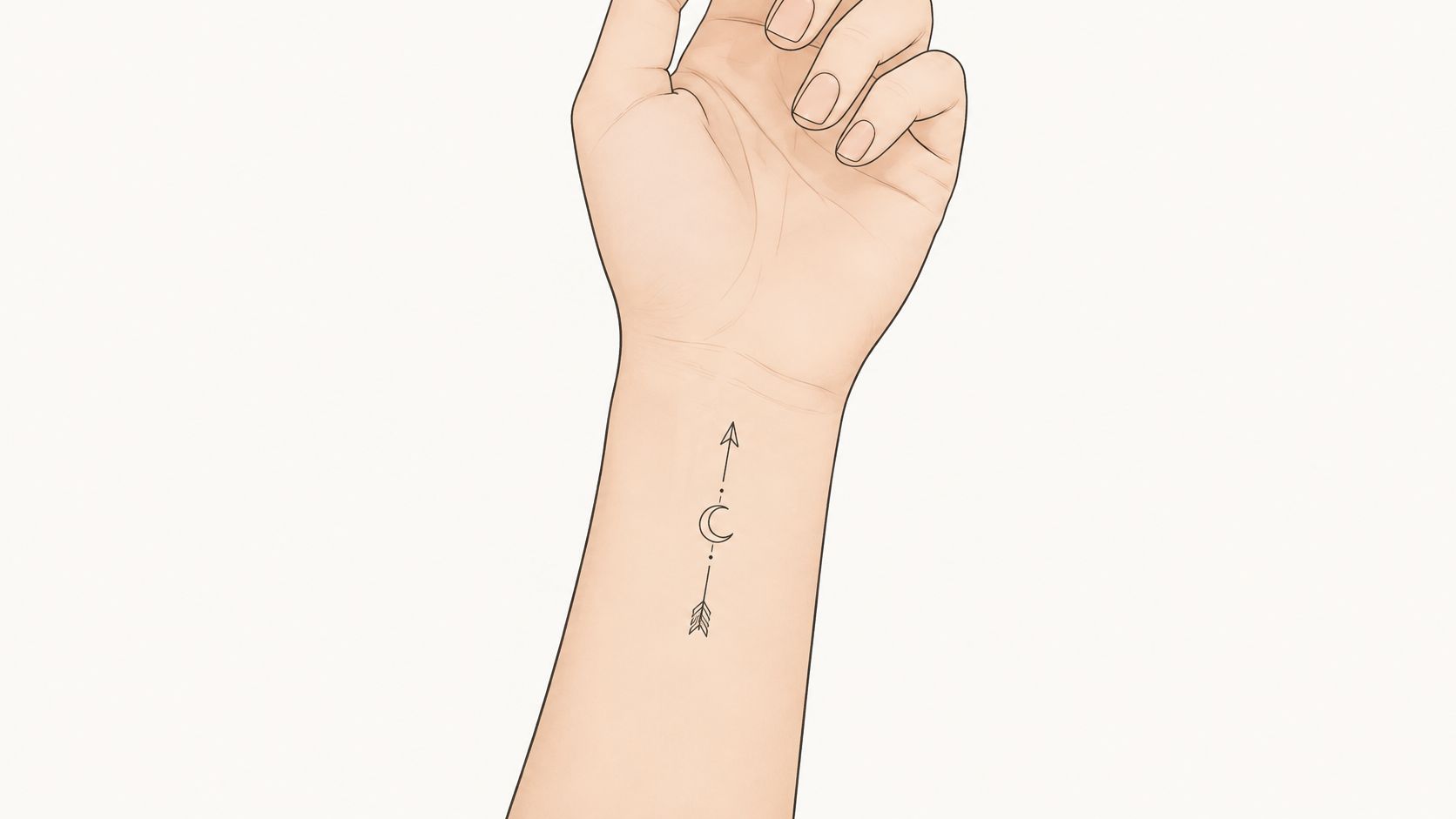
Consider an arrow on the inner forearm marking a change in direction. Its meaning can remain private, while its silhouette still works without an explanation. Position it away from the wrist crease, then check how it looks with your arm relaxed rather than posed for a photograph.
Choose Clarity Over Extreme Delicacy
Ask the artist to show healed examples of comparable work. A fresh, hair-thin line doesn't tell you how their tattoos settle, and a narrow crescent needs enough open space to remain recognizably crescent-shaped.
- Line weight: Choose the artist's recommended durable stroke, not automatically their thinnest needle configuration.
- Placement friction: Check where watch straps, bracelets, and cuffs contact the proposed spot.
- Future changes: Keep the surrounding skin open if you might eventually incorporate the symbol into a larger composition.
The fine-line tattoo style guide can help you describe the look you want. Bring actual-size alternatives to the consultation, then let your artist explain which details need breathing room.
Practical rule: If the design only looks good when you zoom in, simplify it or make it larger.
Don't assume a scheduled touch-up will solve weak planning. Assess the healed result with your artist before deciding whether more ink is appropriate.
2. Birth Flower Botanical Tattoo
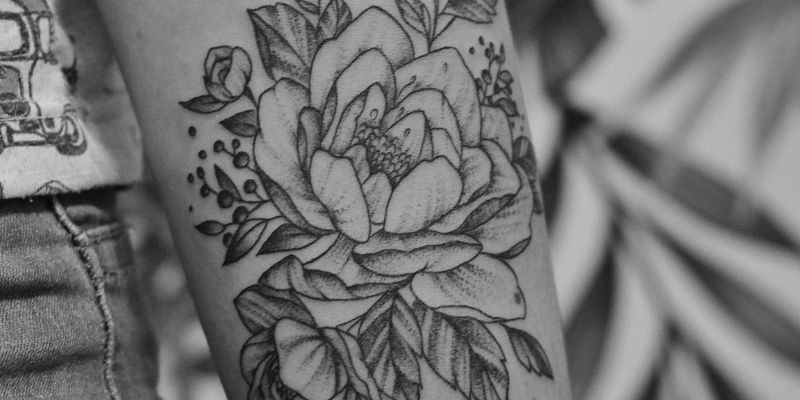
A birth flower lets you commemorate someone without putting their name on display. A single stem on the shoulder can feel intimate; a forearm bouquet can connect several family members through one composition.
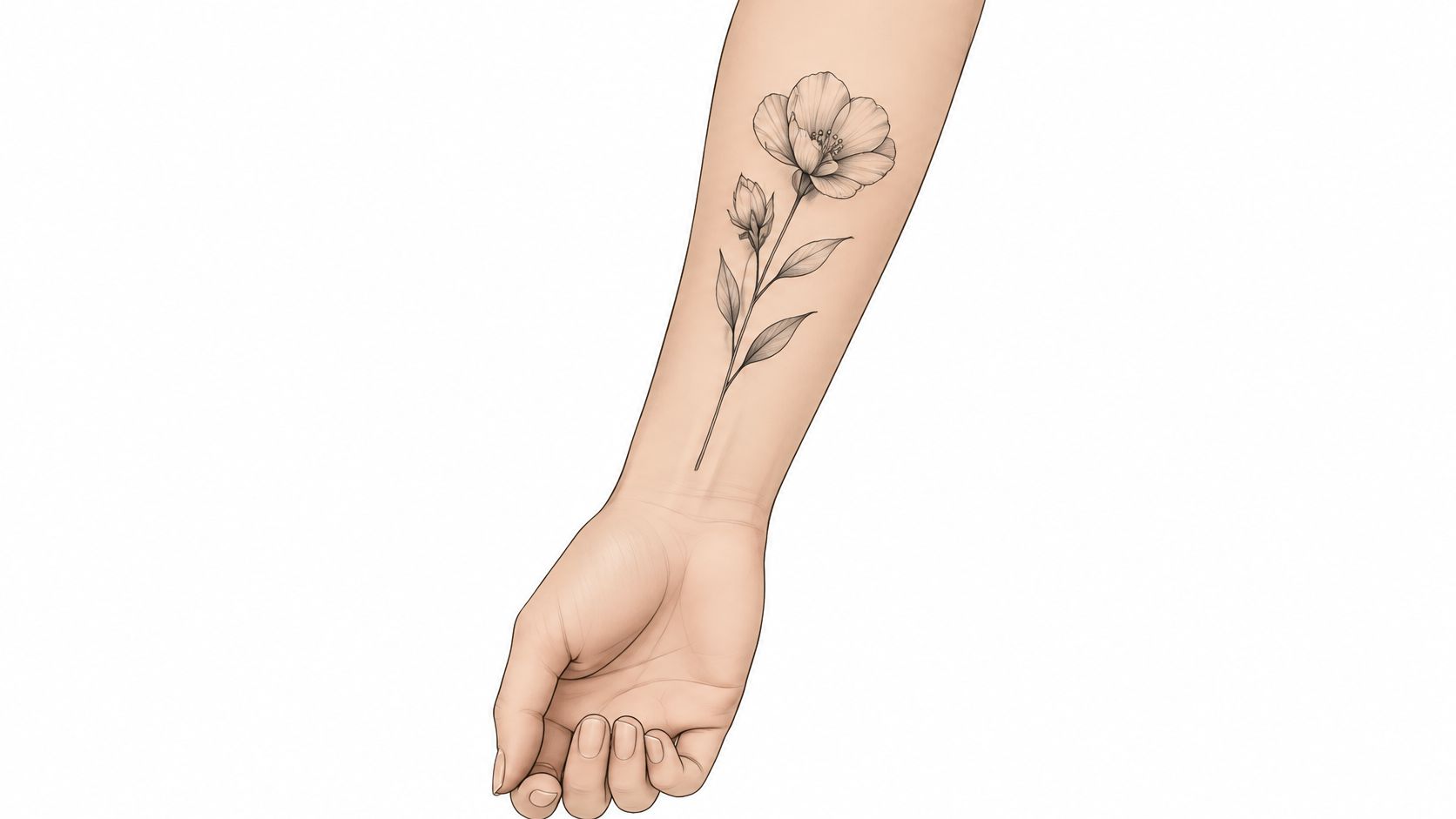
Choose the plant before choosing the tattoo style. Birth-flower lists can differ, so agree on the association that matters to you rather than assuming every reference uses the same flower. Bring a clear photograph of the actual plant so your artist can preserve its recognizable petal and leaf shapes.
Keep the Silhouette, Edit the Interior
Say you want a bouquet representing your children. Instead of shrinking every flower into a tightly packed cluster, let the artist stagger the blooms and reduce overlapping stems. You'll preserve the family connection without making the design depend on tiny internal marks.
- Line-only version: Prioritize distinct petals and open gaps where leaves cross stems.
- Color version: Ask how the artist will maintain definition if delicate color transitions soften.
- Placement: Test the bouquet with your arm hanging naturally and bent, especially near the elbow.
For future cover-up flexibility, an airy stem usually offers more compositional room than a dense, dark flower head. That doesn't make it automatically easy to cover, but it avoids filling the entire footprint with heavy pigment.
Leave room around the bouquet if you may add another flower later. Adding a stem to an intentionally open arrangement is a different job from squeezing one into an already crowded cluster.
3. Name or Initials in Simple Script
A meaningful name can still become an unreadable tattoo. Sentiment won't keep tightly looped letters separate, and beautiful handwriting on paper may need adjustment before it belongs on skin.
A child's name on the inner forearm is a workable example. Ask the artist to preserve the character of the lettering while opening cramped loops and giving adjacent letters enough separation. Compare custom script with plain lettering rather than assuming cursive is more personal.
Proof the Transfer, Not Just the Message
The final stencil is the version you're approving. Check every letter, accent, capital, and connection after it's placed on your body, not merely in the original message you sent the studio.
- Independent proofreading: Have someone else read the exact artwork without telling them what it says.
- Friction check: Avoid squeezing delicate initials onto a finger because the reference photograph looks discreet.
- Relationship check: Choose a partner's name only if you accept that the relationship and your feelings may change.
- Cover-up check: Leave space around the text; don't box it inside a dense decorative border.
Browse unique name tattoo ideas for layout possibilities, then narrow the options by legibility rather than novelty.
A name doesn't need decorative flourishes to prove how much someone matters to you.
Try a skin-safe temporary version during ordinary routines. If you keep rotating your wrist to make the lettering look right, reconsider its orientation before committing.
4. Short Quote or Single Word
Start with the wording, not the font. If you wouldn't keep the phrase in your life without the tattoo, attractive lettering isn't a strong reason to make it permanent.
A word such as courage on the inner forearm leaves more room for clear letterforms than a paragraph squeezed into the same space. A short motto along the ribs can also work, but the stencil needs checking while you're standing naturally, breathing, and moving.
Shorten the Message Before Shrinking It
Remove unnecessary words before reducing letter size. Generous spacing isn't wasted skin; it helps the reader distinguish letters and gives the artist room to build a durable design.
For a faith-based tattoo, a resource such as Bible verses for consistent prayer can help you reflect on passages. Verify the final wording against your chosen translation, especially if punctuation or a verse reference forms part of the artwork.
- Language accuracy: Have a fluent speaker check both meaning and natural phrasing.
- Typography: Inspect small counters, the enclosed spaces inside letters, and crowded joins.
- Everyday visibility: Decide whether you want to explain the phrase at work or in casual conversation.
Future revision deserves thought, too. Long text stretches across more skin, so a cover-up may require a substantially different composition rather than a neat replacement sentence. A compact word with open space around it gives the artist more layout options, although it never guarantees an easy cover-up.
5. Sacred Geometry and Mandala
A mandala can look balanced on a flat drawing and uneven on a moving back. Plan for the body's shape, not perfect geometry in isolation.
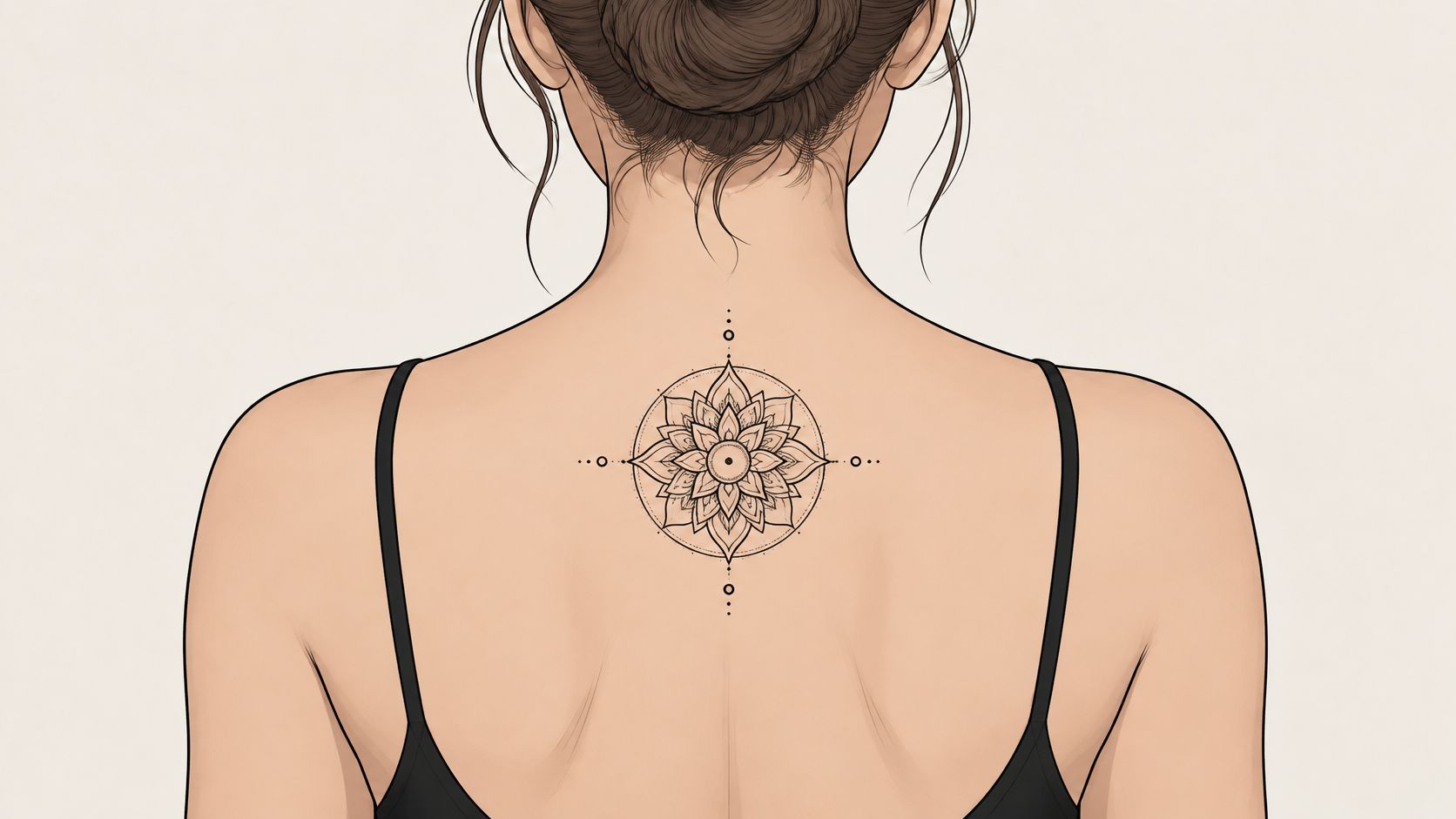
An upper-back mandala offers room for a clear center, separated rings, and dotwork that doesn't rely on microscopic spacing. A tiny sternum version involves a different compromise: the artist may need to remove layers rather than reproduce the same drawing at a smaller scale.
Judge the Spacing as Carefully as the Symmetry
Ask for healed geometric work, including photographs that show the whole placement. Look at whether circles remain distinct and whether the darkest areas still have visible separation.
- Stencil alignment: Check the design in a mirror while standing comfortably, not holding an artificially straight pose.
- Movement: Look again with your shoulders relaxed and your arms raised.
- Symbol choice: Understand any religious or cultural association before selecting a symbol for its appearance.
- Density: Keep open channels between repeated petals, dots, and borders.
Aging check: A larger mandala with fewer layers can retain more visual clarity than a smaller design packed with detail.
Cover-up flexibility is this option's weak point. Dense centers and repeated dark rings restrict what another artist can place over them. If flexibility matters, favor an open outer structure and resist adding dark background fill merely to make the fresh tattoo appear more dramatic.
6. Constellation or Star Map
A wedding-night sky map sounds precise. It's only precise if the underlying date, location, time, and chart settings are correct. Verify the astronomy separately from the tattoo illustration.
Use a planetarium or star-chart tool to establish the reference, then decide how much of it belongs in the tattoo. A simplified constellation on the upper arm may communicate the memory more clearly than a crowded sky map with labels, coordinates, and decorative orbit lines.
Give Every Dot a Purpose
For a child's birth constellation, ask the artist to distinguish prominent stars without turning the smaller ones into barely visible pinpricks. Test whether the arrangement still reads when printed at the intended size.
- Dot spacing: Leave clear skin between stars and connecting lines.
- Placement friction: Compare the upper arm or back with spots beneath a waistband or frequently rubbed strap.
- Composition: Remove secondary stars before compressing the entire map.
- Verification: Keep the original chart alongside the final drawing so decorative edits don't accidentally change the intended arrangement.
If your interest includes astrological guidance for life decisions, separate that personal interpretation from the astronomical reference. A horoscope isn't a tool for confirming what the sky looked like at a particular place and moment.
Sparse constellations can leave useful room for future additions, but dark star clusters create different cover-up constraints. Decide whether you want a standalone piece or the beginning of a larger celestial composition before the artist places the first stencil.
7. Memorial Handwriting or Signature
A handwritten note can hold a person's character in its uneven strokes. Preserve the features that make it recognizable, and size the tattoo so those marks have room to age.
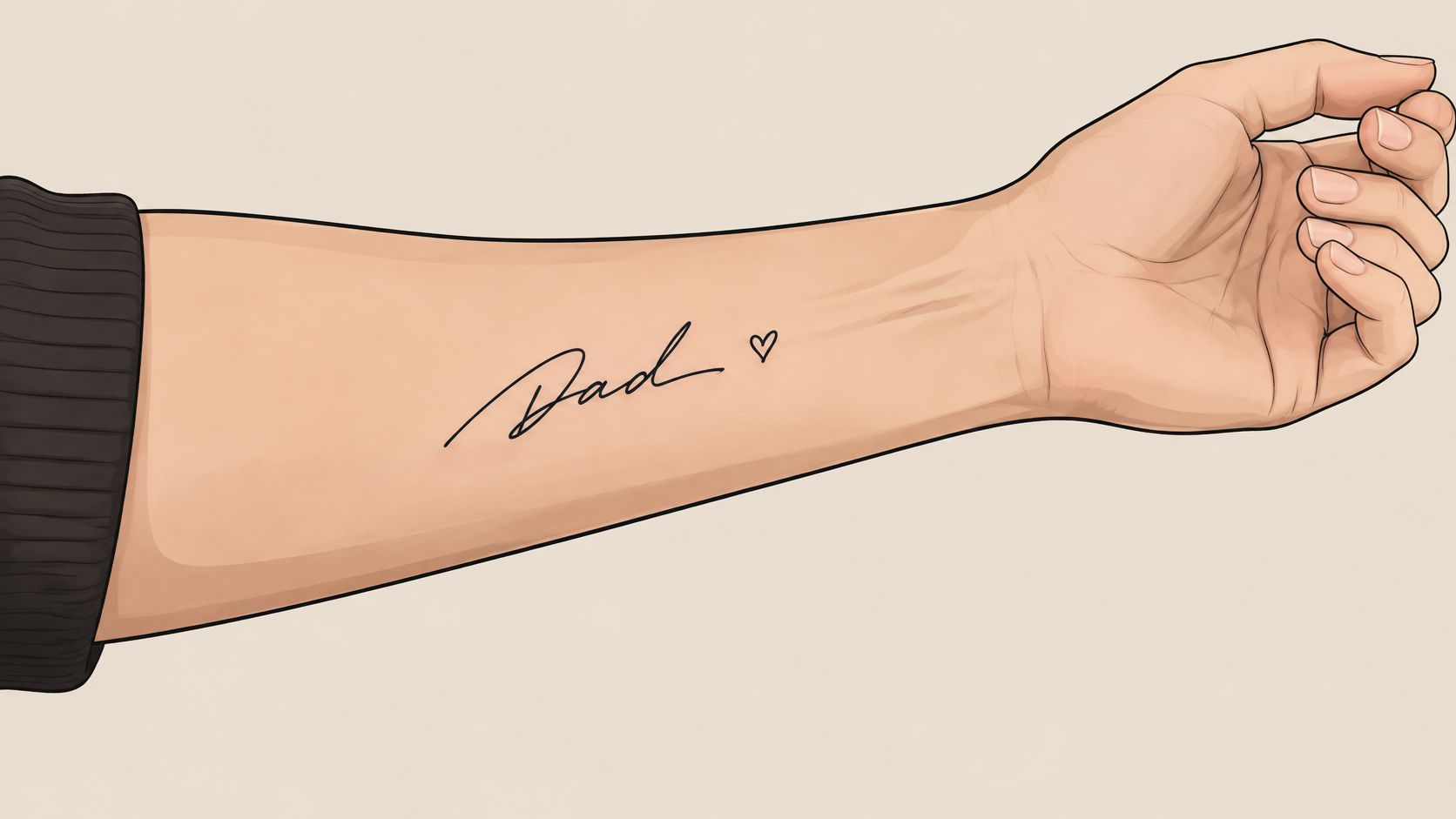
A signature with clear, separated letters is easier to adapt than a cramped one. On the inner forearm, a tight cluster of loops can blur together over time. Giving the design more space may preserve its character, though it makes the tattoo more visible.
Preserve Character, Not Every Ink Defect
Scan the original clearly and keep an untouched copy. Your artist can separate intentional strokes from paper texture, scan noise, or faded ink, then adapt the drawing for your skin and the way the lines may age.
- Distinctive features: Mark the slant, unusual letter shapes, and flourishes you want to keep.
- Line weight: Let the artist adjust thin strokes and tight gaps so they have room to hold their shape.
- Placement friction: Try the transfer with your wrist bent and relaxed. Keep important letters clear of the crease, where movement can distort the design.
- Cover-up options: A dark, dense signature can be harder to work into a later design. Keep the lines as open as the handwriting allows.
If you're writing a tribute to accompany the handwriting, meaningful memorial plaque wording examples can prompt a concise message. Keep the tattoo focused: extra dates and ornament can compete with the handwriting and make a small piece harder to read.
Removal is an uncertain, costly fallback, not a substitute for careful decisions. The Associated Press's reporting on tattoo removal describes the pain, expense, and uncertain results involved. Give an emotionally important design enough space on your skin, and enough thought before you commit.
Comparing the 7 Low-Regret Tattoo Ideas at a Glance
| Typical Size | Best Placements | Typical Sessions | Best For |
|---|---|---|---|
| 1–3 inches | Inner wrist, inner forearm, behind the ear, ankle | 1 session | A subtle, personal first tattoo |
| 1–6 inches for single flowers; larger for bouquets | Forearm, upper arm, ribs, back of the shoulder | 1–2 sessions | A meaningful tribute to a birth month or loved one |
| 2–5 inches long | Inner forearm, inner wrist, collarbone, rib cage | 1 session | Honoring a loved one or preserving a meaningful name |
| 1–4 inches tall for short phrases | Inner forearm, ribs, back of the neck, upper back | 1 session | A concise personal belief, motto, or reminder |
| 2–10 inches or larger | Upper back, sternum, forearm, calf | 1–3 sessions | Symmetrical designs with geometric or spiritual meaning |
| 3–8 inches | Upper arm, inner forearm, ribs, upper back | 1–2 sessions | Commemorating a meaningful date, time, or place |
| 2–5 inches | Inner forearm, inner bicep, wrist, over the heart | 1 session | Preserving a loved one's handwriting or signature |
Test Before You Commit With Your No-Regrets Action Plan
A no regrets tattoo isn't a promise that your taste will never change. It's a decision you've tested beyond the excitement of the first drawing. Keep the concept around for weeks, revisit it during ordinary days, and notice whether you still like the image without rehearsing its backstory.
Before booking, work through the practical checks:
- Test the placement: Use an artist-applied stencil or skin-safe temporary mockup on the actual body area. Check it under clothing and during normal movement.
- Approve the scale: Print the design at its intended size. Ask which details need enlarging, separating, or removing.
- Choose durable line work: Review healed examples and discuss spacing, line weight, and realistic touch-up expectations.
- Proof every character: Check names, dates, translations, and punctuation on the final transfer.
- Discuss future changes: Ask what an extension or cover-up could involve, without treating either as guaranteed.
- Check studio safety: Verify local licensing requirements, ask about hygiene and inks, and disclose allergies or skin conditions.
Health-related regret matters as much as appearance. The FDA's tattoo safety guidance identifies risks including infection, allergic reactions, and scarring, and advises seeking medical care if a tattoo isn't healing, develops a rash, or comes with fever.
For concept exploration, our TattoosAI generator offers unlimited concepts across 19 styles, alongside a library of 26,000 tattoo ideas. Describe the motif, intended placement, and details you want to avoid, then take the reference you prefer to a tattooist you trust.
We're a design reference tool, not a studio or booking service. Your tattooist must adapt the image to your body, skin, and how it will age. We don't currently offer a body-placement preview; a simulator is in development, so real-world placement testing remains essential.
Visit TattoosAI to turn your idea into tattoo concepts you can compare before committing to ink. Explore simpler and more spacious versions, then bring your preferred reference to a trusted tattooist for a placement, line-weight, and aging review.