TattoosAI
You've saved a delicate rib tattoo, held your phone beside the mirror, and wondered whether it would look as good on your body. Then the practical questions arrive. Should it sit higher? Will your bra rub it? Can lettering stay readable if you make it smaller?
Small rib tattoos often look strongest when they follow the torso's natural curve, rather than competing with it. Start with a visual direction that feels personal, then consider the space it needs, the clothes you wear, and the difference between a delicate image on screen and a workable tattoo stencil.
You don't need to settle every detail before a consultation. You need a clear motif, a preferred placement, and enough flexibility for your artist to adjust the design. These concepts pair visual inspiration with practical design briefs, so you can arrive with something more useful than a folder of unrelated pictures.
Table of Contents
- 1. Fine-Line Script Lettering
- 2. Minimalist Botanical Sprig
- 3. Dotwork Star Constellation
- 4. Fine-Line Feather
- 5. Geometric Sun or Triangle Linework
- 6. Fine-Line Japanese Wave or Mini Koi
- 7. Small Swallow Silhouette
- 7 Small Rib Tattoo Designs Compared
- Turn Your Inspiration Into a Tattoo-Ready Brief
1. Fine-Line Script Lettering
A short word such as Breathe, a child's name, or a meaningful date can make a restrained rib tattoo. Try a gently angled word along the side ribs, or a stacked arrangement if you prefer a narrower composition.
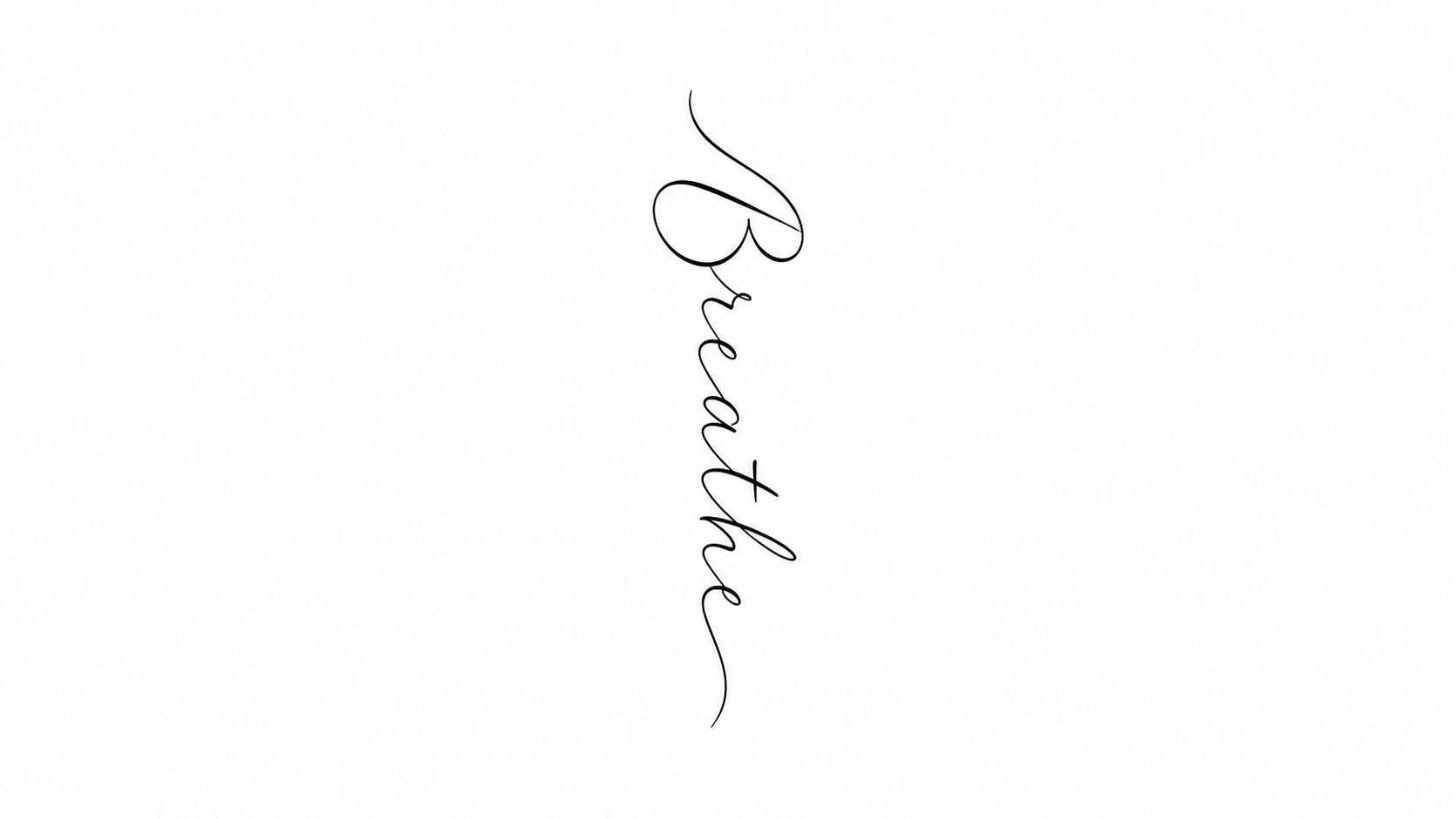
Choose the lettering for readability, not just elegance. Fine-line work and tightly packed details have less tolerance for future softening than heavier outlines, making generous spacing especially important in tiny text, as discussed in this rib-tattoo design guidance.
Give Each Letter Enough Room
Ask your artist to show the stencil at its actual size, then check it in a mirror without leaning close. Pay attention to enclosed letter shapes, overlapping flourishes, and whether you can distinguish the word without already knowing what it says.
- Simplify the message: Compare a single meaningful word with a longer phrase before shrinking the lettering.
- Check the direction: Decide whether the text should read horizontally, vertically, or along a shallow curve.
- Protect the spacing: Let your artist enlarge or redraw letters rather than forcing a fixed measurement.
Use the fine-line tattoo style guide to clarify the visual treatment you prefer. If you're sketching digitally, the best stylus from Tinymoose offers a separate drawing-tool reference, but your tattooist should make the final lettering adjustments.
Concept brief: A short cursive word, open letter spacing, restrained flourishes, black ink, and a gentle rib-following angle.
2. Minimalist Botanical Sprig
A fern frond, wheat stalk, or eucalyptus sprig gives you a natural alternative to lettering. For someone who wants a private reminder of a garden or natural scene, a recognizable plant can feel more personal than a generic floral arrangement.
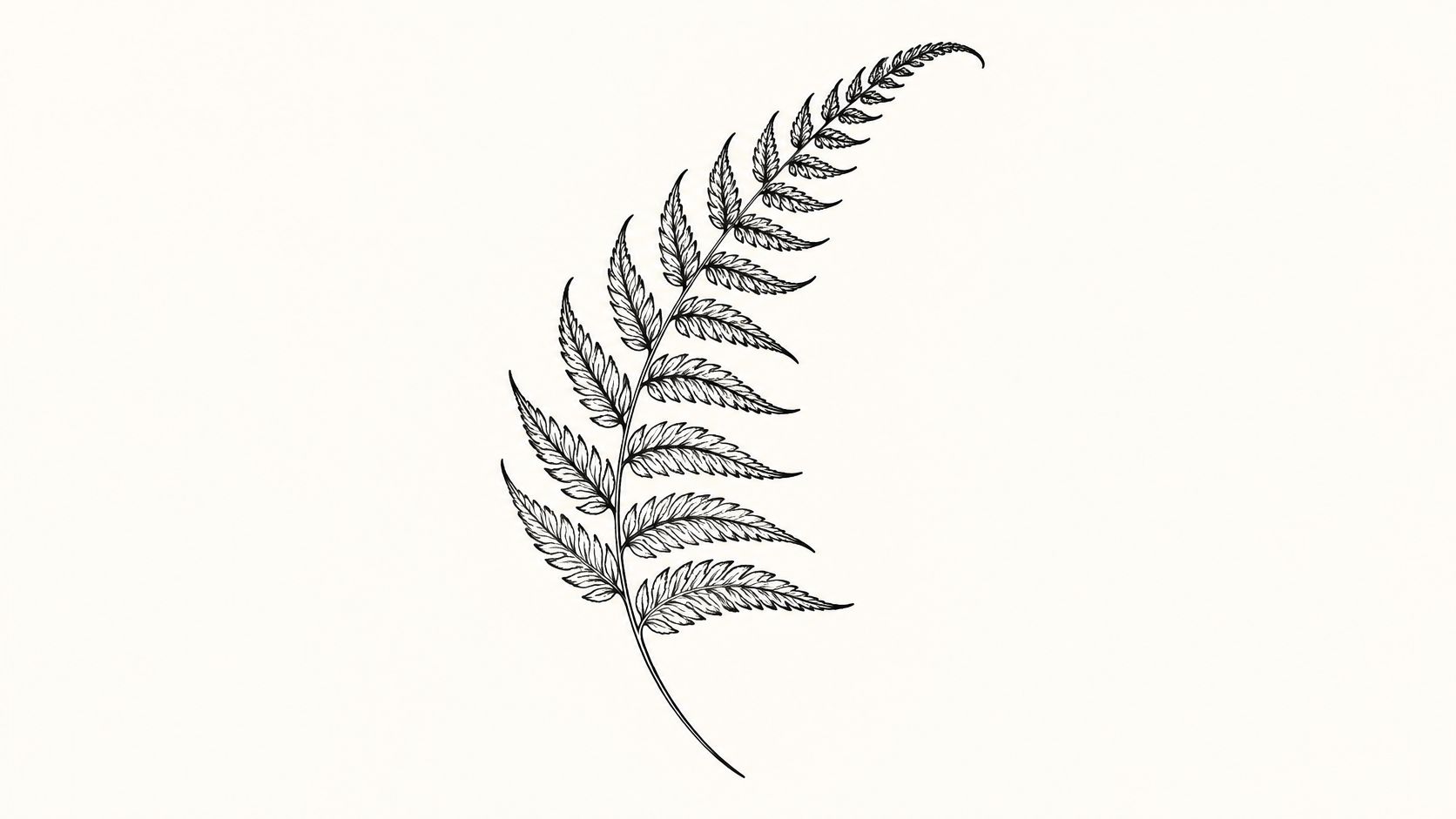
Start with the plant's overall gesture. You might prefer a fern that bends around the side ribs, or a straighter wheat stalk that gives the composition a vertical emphasis.
Keep the Plant Recognizable
Bring a photograph of the exact species if botanical accuracy matters to you. Ask your artist which identifying features to preserve and which tiny veins or overlapping leaves to remove.
Design principle: Keep the characteristic shape of the plant before keeping every detail.
For example, a eucalyptus-inspired concept could use a curved stem and widely separated leaves, without adding dense shading. Discuss a slightly stronger stem with lighter leaf outlines, then compare that treatment with a consistent line weight.
Placement needs a clothing check, too. Rib movement and rubbing garments make this a high-friction healing environment; practitioner guidance places surface settling at roughly 2–4 weeks, so plan for a realistic low-friction recovery window rather than assuming a small tattoo needs little care, according to this rib-tattoo healing guide.
Concept brief: A species-specific sprig with an open arrangement, minimal internal detail, and a stem curved to suit the intended placement.
3. Dotwork Star Constellation
Would you rather wear a recognizable constellation or an invented scattering of stars? Decide that before choosing the arrangement, especially if the tattoo is meant to represent a particular night or place.
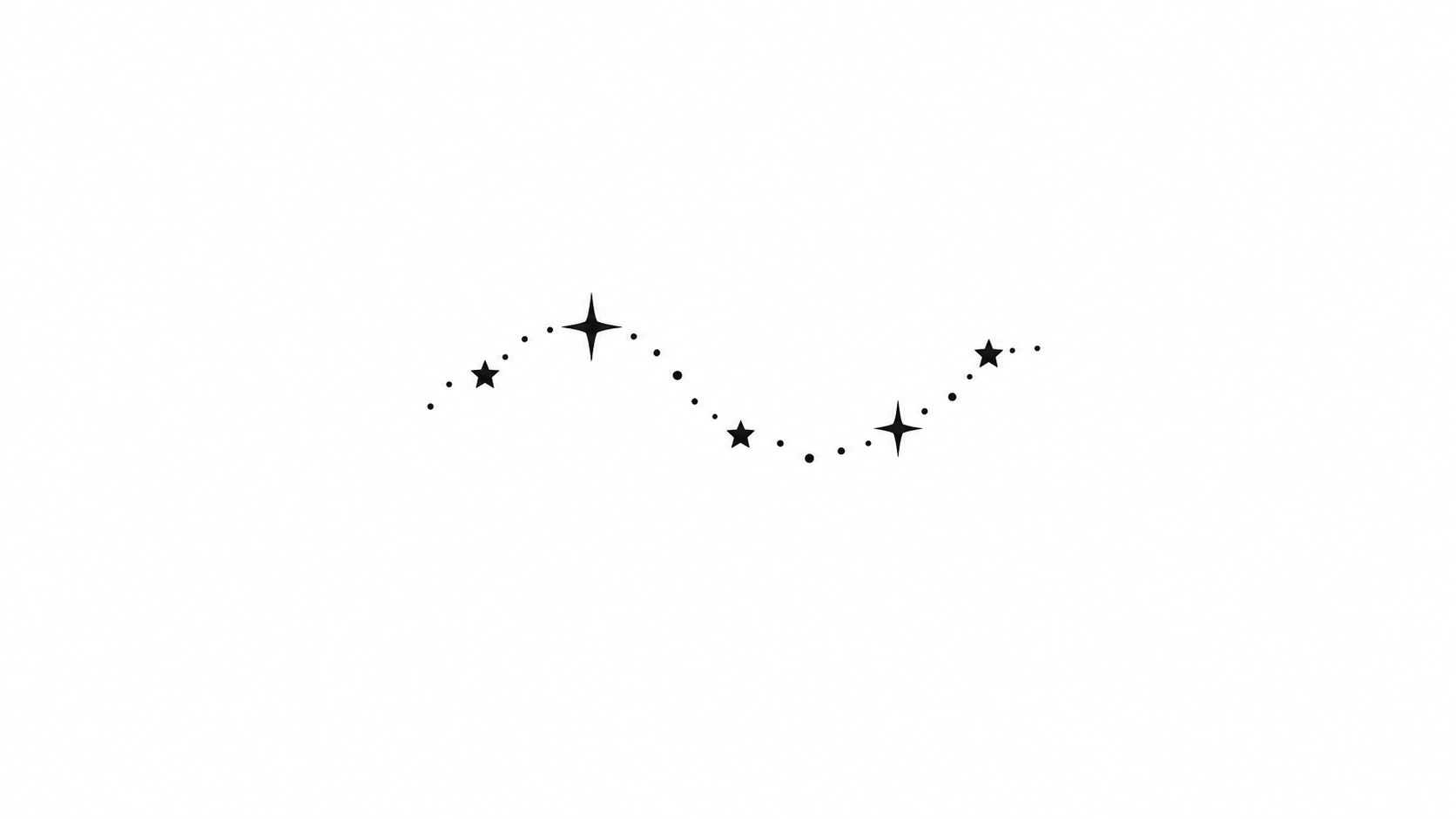
For an accurate sky reference, bring a star chart that matches your intended location and date rather than relying on an attractive generated pattern. For a purely decorative piece, you can give your artist more freedom to arrange dots and star shapes around the rib curve.
The dotwork tattoo style guide can help you distinguish a sparse constellation from a densely stippled design. A small constellation doesn't need a shaded background to feel complete.
Separate Accuracy From Decoration
- Accurate constellation: Preserve the relationships between the main stars, then discuss scale and orientation.
- Decorative sky: Use a restrained mix of dots and star shapes with intentional empty space.
- Personal landmark: Let a selected star represent your memory without claiming the whole arrangement is astronomically exact.
If you're marking a shared trip, for example, choose whether the place, the date, or the visual composition matters most. That decision makes it easier to resolve compromises during the stencil fitting.
Concept brief: A sparse star arrangement along a shallow arc, separated dots, limited accent stars, and no dense background texture. Ask the artist to judge the smallest workable marks rather than prescribing an arbitrary dot count.
4. Fine-Line Feather
A feather offers a long, flowing shape without requiring text or a plant motif. You could place it diagonally along the side ribs, angle it toward the back, or let the shaft follow a gentle downward curve.
Choose what the feather means to you. If it represents freedom, a person, or a particular bird, explain that intention instead of assuming the image carries a universal meaning.
Tattooing has served different purposes across cultures, including identity, ritual, affiliation, healing, and personal expression, as outlined in this scholarly review of tattoo history. That context is a reason to approach culturally specific designs thoughtfully, not to assign every feather the same symbolism.
Preserve the Shape, Edit the Texture
A detailed feather drawing might include many closely packed barbs. For a small rib concept, ask your artist to compare that drawing with a simplified version that emphasizes the shaft, outer contour, and selected internal strokes.
A feather can look light without every line being extremely faint.
For example, someone remembering a bird seen on family walks might bring a species photograph alongside a simplified sketch. The artist can discuss which features are important to recognition and which would make the tattoo unnecessarily crowded.
Before approving placement, mark where your usual bra band or waistband sits. Ask whether rotating or moving the feather would make aftercare more practical without losing the composition you want.
Concept brief: A bird-specific feather with a clear central shaft, selective internal lines, an open tip, and no added decorative elements unless they have a purpose.
5. Geometric Sun or Triangle Linework
Choose geometry if you prefer a defined, structured composition. A compact sunburst, nested triangles, or a circle crossed by a line offers a different visual character from flowing script and botanicals.

Compare the ideas by how much internal space they need. A sun with widely separated rays gives your artist a different spacing problem from triangles nested closely inside each other.
Fit the Stencil to Your Body
Ask to inspect the stencil while standing naturally, then while sitting and taking a comfortable deeper breath. Don't judge the placement only in a posed mirror photograph.
The ribs stretch and compress with breathing and torso movement, and an immediately crisp result isn't a promise of settled appearance, as explained in this review of tattoo healing and durability considerations. Your goal is a convincing design on a moving body, not unchanging geometry from every angle.
- For a sun: Compare shorter, widely spaced rays with a more elaborate sunburst.
- For triangles: Ask whether the inner gaps remain clearly visible at the proposed size.
- For future additions: Tell your artist whether you might later build a larger side-rib composition.
A lower-rib sun might suit someone who wants a self-contained symbol, while an elongated triangle arrangement could be worth testing for a narrower space. Neither choice should be finalized without a stencil fitting.
Concept brief: Clean geometric linework, consistent visual weight, generous internal gaps, and a placement selected on the body rather than from a flat template.
6. Fine-Line Japanese Wave or Mini Koi
A wave curl and a miniature koi may share an inspiration, but they make different design demands. The wave can be reduced to a flowing contour, while the koi asks you to decide how much fish anatomy and decoration you want to retain.
For a discreet side-rib piece, compare a simple curved wave with a diagonally swimming koi. If you're drawn to a repeating wave pattern, also consider whether a short band-like arrangement suits your intended placement better than a standalone motif.
Choose Flow Before Ornament
Don't compress a complex composition because you want a tiny tattoo. Ask the artist to identify what must remain: perhaps the koi's body curve, tail, and fins, or the wave's crest and open curl.
- Wave direction: Request an open curl without a crowded foam texture.
- Koi direction: Compare a simplified fish outline with a more detailed version at a larger scale.
- Pattern direction: Keep enough surrounding space to distinguish the repeated shapes.
If Japanese visual traditions are central to your choice, consult an artist experienced in that work and discuss the references directly. Avoid treating every wave or koi image as interchangeable, and don't assume a generated concept accurately represents a traditional composition.
For example, if you want the tattoo to express perseverance, explain that personal intention and ask how the artist would approach it. You don't need to claim that every viewer will interpret it identically.
Concept brief: A Japanese-inspired wave or koi with a clear directional curve, selective detail, no crowded background, and room for the artist to revise the composition.
7. Small Swallow Silhouette
A swallow silhouette offers a stronger visual alternative to delicate outlines. You might choose a bird crossing the side ribs, or an angled flight pose that you associate with leaving, returning, or moving forward.
Start by checking whether the bird is recognizable without internal decoration. Cover the small details in your reference image and look at the outer shape: the wings, body, and forked tail should create the impression you want.
Make the Tail Part of the Sizing Decision
Ask your artist to compare a solid black silhouette with an outlined version. For the silhouette, discuss the separation between the tail points and wings; for the outline, decide which internal marks are necessary.
Sizing rule: If the defining feature needs more room, enlarge the design or simplify it. Don't keep shrinking it to match an imagined category of “small.”
For someone planning a shared-journey tattoo, paired birds could carry personal meaning. Test that arrangement against a single bird before committing, since you may prefer the calmer composition.
Small size isn't a reason to dismiss a healing problem. Worsening redness, warmth, swelling, pain, drainage, or fever warrant medical attention, and persistent itch or pain can also signal a reaction rather than routine healing, according to this clinical review of tattoo complications.
Concept brief: A swallow in flight with a distinct wing shape, clearly separated tail points, strong contrast, and a size established by the tattooist.
7 Small Rib Tattoo Designs Compared
| Tattoo Example | 🔄 Implementation Complexity | ⚡ Design and Artist Requirements | 📊 Expected Outcome | 💡 Ideal Use Case | ⭐ Key Advantage |
|---|---|---|---|---|---|
| Fine-Line Script Lettering | Low–moderate; font and placement need careful sizing | Fine-line skill; moderate letter spacing; stencil check | Discreet, personal text; tiny letters may blur or become harder to read over time | A meaningful word, date, or short phrase | Easy to personalize and conceal |
| Minimalist Botanical Sprig | Low–moderate; simple curved composition | Clean linework; stronger stem lines; avoid dense details | Light, organic design; simple shapes can age well, but fine veins may fade | Nature lovers seeking a subtle motif | Naturally follows the rib curve |
| Dotwork Star Constellation | Moderate; spacing and arrangement require precision | Dotwork experience; accurate star map if based on a real sky | Soft, celestial look; closely spaced or tiny dots may blur over time | A date, place, or personal connection to the night sky | Can represent a specific sky or meaningful moment |
| Fine-Line Feather | Moderate; symmetry and fine barbs need attention | Fine-line skill; slightly bolder central shaft; specific feather reference | Flowing, symbolic design; thin barbs may fade or disappear | A subtle symbol of freedom or guidance | Vertical shape suits the torso |
| Geometric Sun or Triangle Linework | Moderate–high; alignment errors are noticeable | Precision-focused artist; stencil adapted to the body's curve | Clean, modern motif; small details may blur and flat shapes may distort on curved ribs | Those who value symmetry and geometric design | Easy to coordinate with or expand into future pieces |
| Fine-Line Japanese Wave or Mini Koi | Moderate–high; small scale can limit detail | Artist familiar with Japanese motifs; simplified composition | Curved, symbolic design; small koi details or fine wave lines may lose clarity | Japanese-style imagery and symbolism | Combines cultural meaning with a rib-following shape |
| Small Swallow Silhouette | Low–moderate; minimum size must preserve the tail | Bold outline and fill; artist should adapt proportions to the rib curve | Readable, classic silhouette; very small details may be lost | A bold, traditional motif associated with travel or return | Strong silhouette tends to hold up well over time |
Turn Your Inspiration Into a Tattoo-Ready Brief
The best small rib tattoo isn't the smallest option. It's a design whose motif, scale, line weight, and placement work together on a curved, moving part of your body.
Use TattoosAI to explore alternatives before your consultation, treating each output as a concept reference rather than a guaranteed tattoo-ready stencil. Describe the motif, mood, orientation, color preference, and details you want excluded. Request simpler and more visually substantial variations so you have meaningful options to discuss.
Give Your Artist Clear Decisions to Work With
Bring your preferred reference alongside a short written brief:
- Motif and meaning: Explain what matters personally and which features must remain.
- Placement and dimensions: Identify the intended rib area and your preferred size, while allowing adjustments.
- Linework and color: State whether you prefer fine outlines, stronger black shapes, color, or limited shading.
- Daily clothing: Point out bra bands, waistbands, or other contact areas relevant to healing.
- Future plans: Mention possible additions before fixing the composition in place.
- Comfort and recovery: Ask about session pacing, breaks, aftercare, and when to seek help.
For prompt-writing practice, prompt tips for 3D asset creation provide a separate creative-workflow reference. Keep tattoo decisions grounded in your artist's assessment of skin, anatomy, and technique rather than a digital image's apparent polish.
Ask to see healed work and discuss how your chosen design might soften. Agree on a stencil you can evaluate at life size, not just a zoomed-in screen preview.
Finally, make room for professional revision. A useful concept starts a focused conversation; it doesn't replace the tattooist's judgment. Arrive knowing what you love about the design, and remain flexible about the changes needed to make it work on your ribs.
TattoosAI lets you develop tattoo concepts from descriptions and explore different visual styles. Try your chosen rib motif with varied spacing, orientation, and line weight, then bring your preferred references to a professional tattooist for sizing and placement.