TattoosAI
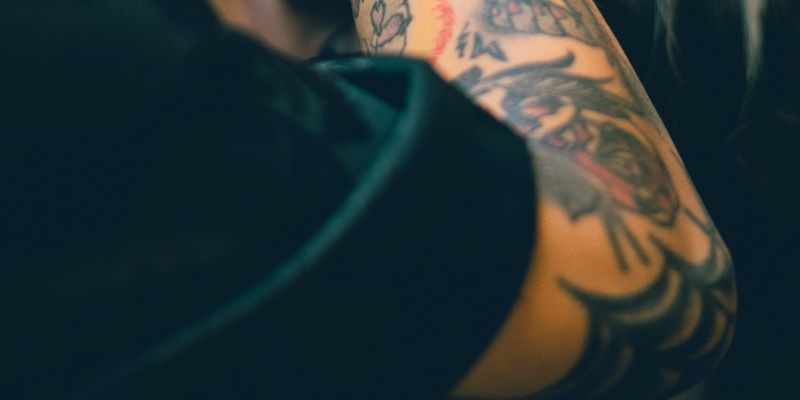
You've found a spider concept you like, but the question is whether it will still look intentional when your arm bends, straightens, rests on a desk, and moves through daily life. An elbow isn't a flat canvas. Its rounded point, changing tension, friction, and constant motion all affect how a spider tattoo on elbow designs reads during healing and over time.
The strongest concepts balance the spider with the joint. Radial web lines can follow the elbow cap, while a realistic spider may need a different orientation, more negative space, or a flow into the forearm and upper arm. Below are seven useful directions, from AI concept tools to studios with visible traditional elbow work. AI can help you compare styles quickly, but your tattooist must adapt the final artwork, stencil, scale, and line weight to your anatomy.
Table of Contents
- 1. TattoosAI
- 2. BlackInk AI
- 3. Stork.AI Elbow Tattoo Generator
- 4. Morphic Spider Tattoo AI Designer
- 5. Tattoodo
- 6. Fatty's Tattoos & Piercings in Washington, DC
- 7. Greenpoint Tattoo Co. in Brooklyn, New York
- Elbow Spider Tattoo, 7-Point Comparison
- Turn the Best Concept Into a Tattooable Plan
1. TattoosAI
The arm is bent over a desk, and the spider's web collapses into a dark knot. Straighten the elbow, and the same design may look too thin around the joint. TattoosAI tattoo generator helps you test those directions before an artist redraws the concept for your anatomy.
You describe the subject, choose from 18+ styles, and set color preferences to generate several concepts. Options include minimalist, dotwork, Japanese, watercolor, 3D, blackwork, geometric, portrait, and lettering. That range lets you compare a sparse web with a denser traditional-inspired elbow cap without commissioning each rough idea separately.

Use anatomical prompts rather than naming a style alone. Request an elbow-cap composition, a circular web centered on the joint's point, a visible central opening, and lines that stay readable with the arm bent. Generate alternatives with wider ring spacing, stronger outer lines, or the spider positioned above the web. These changes let you compare line density, scale, and readability on a rounded, moving surface.
Every account includes four free designs with no card required, and unlimited designs are available for $4.99 per month as listed on the TattoosAI pricing page. Free tools without an account include a pain chart, stencil maker, font generator, symbol meanings, and size and cost calculators. They can prepare questions for a studio consultation, but they cannot assess your skin, joint shape, or existing tattoos.
Why it works for elbow planning
Use the generator to explore direction, then treat the result as a reference for a redraw. Crowded web intersections may need fewer lines, a central gap may need to be enlarged, and the spider may need repositioning so it follows the elbow's curve instead of fighting it. TattoosAI does not currently provide a live body-placement preview, although a virtual simulator is in development. Print the preferred concept or ask your artist to test it with a stencil.
Practical rule: Generate several distinct directions, then ask your artist which details will remain clear as ink on your moving joint.
Pros
- Fast exploration: Turn a written idea into multiple concepts through a simple three-step workflow.
- Broad style range: Compare blackwork, dotwork, geometric, traditional-inspired, and delicate approaches.
- Flexible collaboration: Use a selected image as a starting point for redraw, scale changes, and stencil adjustments.
- Private options: Pro plans let designs remain private instead of placing them in the public exploration gallery.
Cons
- No live placement preview: Check the elbow fit with a printout or studio stencil.
- Prompt sensitivity: Vague descriptions can create crowded webs or anatomy that will not translate cleanly to skin.
2. BlackInk AI
The elbow bends, folds, and changes the apparent shape of a tattoo. BlackInk AI helps you test spider designs against those practical constraints before an artist redraws the concept. Its tattoo-focused prompts support blackwork, minimalist, and traditional directions, while variations can change the spider's silhouette, web structure, and visual weight.
Start with the decision that affects readability most: how much of the elbow should the design cover? A dense web can create a strong cap, but too many rings and crossings may merge into a dark center. An open web leaves more breathing room and can remain clearer as the joint moves. A spider that extends toward the forearm creates more length, while a compact spider keeps attention on the rounded elbow surface.
Elbow check: Review each reference with your arm both bent and straight. A symmetrical digital web may look uneven once the skin folds over the joint.
BlackInk AI is most useful for comparing line density, ring spacing, center openings, and spider placement. Test whether the spider sits over the elbow point, rests inside one ring, or reaches beyond the cap. Keep the scale large enough for the main forms to read, but leave your artist room to adapt the design to your actual joint, skin, and existing tattoos.
A practical workflow is to save three distinct references: one bold, one open, and one with the spider extending toward the forearm. Bring them to the consultation with a note about what you want preserved, such as the web's open center or the spider's body shape. The artist can then combine the strongest parts into a stencil-ready plan.
The platform does not provide a live AR placement preview, so a clean digital circle is not proof of a clean elbow fit. Print the preferred concept or ask the studio to test its proportions with a stencil.
Pros
- Tattoo-focused output: Prompts and presets are built around tattoo references rather than general illustration.
- Useful geometry tests: Compare ring spacing, center size, line density, and spider position before booking.
- Clear artist communication: Contrasting references show whether you prefer a bold cap, open web, or forearm extension.
Cons
- No anatomical finalization: An artist must still fit the design to your moving, rounded elbow.
- No live placement view: Digital proportions can change once the arm bends and the skin folds.
3. Stork.AI Elbow Tattoo Generator
Your elbow looks different with the arm bent, straight, or relaxed. Stork.AI starts with that placement problem, generating radial concepts intended for the elbow rather than treating the joint as a flat canvas. A web suits the rounded cap, while a long-legged spider can become cramped once the design wraps over the point and the skin folds during flexion.
Use the generator to test how much of the elbow should carry ink. Compare a full web centered on the joint with a composition that leaves the point open. Try the spider in the middle, attached to one ring, or extending toward the forearm. The supplied tool information describes concepts sized for 3 to 5 inches centered on the joint, but that range is only a planning reference. Your artist must check the actual cap, nearby tattoos, and how the design reads while your arm moves.
Line density matters as much as scale. Tight rings and fine legs may look detailed on screen, then merge when the elbow bends. Wider spacing, a clear center, and a body large enough to read usually produce a more durable reference. For context on symbolism and placement, see this guide to spider web tattoos on elbows. Discuss meaning with your artist as well as visual style, since a web can carry different associations depending on its setting.
Use Stork.AI for a placement test
Stork.AI works well as a free first pass before contacting a studio. It offers fewer tattoo-specific controls than niche platforms, so treat each result as a composition study, not a finished stencil. Export one open design, one denser design, and one that reaches toward the forearm. Print them at practical sizes and check each against the arm while bent and straight.
If the balance disappears when the elbow flexes, reduce the line density or change the placement before booking.
Bring the strongest reference and mark what should remain unchanged. Your artist can redraw the rings, adjust the spider's scale, and account for skin movement.
Pros
- Placement-aware workflow: The elbow shapes the initial concept.
- Accessible starting point: You can test radial web structures before choosing a studio.
- Useful exports: Saved concepts make the consultation more specific.
Cons
- Fewer tattoo controls: It offers less control than a tattoo-focused generator.
- Professional redraw required: The final design must fit your skin and movement.
4. Morphic Spider Tattoo AI Designer
A spider that looks clear on a screen can lose its identity once it crosses the elbow's rounded, moving surface. Morphic helps test that decision early by focusing on the creature as well as the web. Compare species, body shapes, leg angles, web density, and details such as droplets or anchor points before settling on a direction.
Start with the silhouette, then add detail. A compact body and controlled legs usually remain easier to read as the joint bends. Dense linework can blur across the crease, while open negative space gives the spider and web room to separate. A wider design may follow the elbow's curve better, but it can also extend into the upper arm or forearm, so check the intended boundary before asking for a redraw.

Use spider tattoo ideas from TattoosAI as a comparison board for species and stylistic references. Save only a few directions, then annotate each one with practical changes: smaller spider, wider web, heavier black fill, fewer rings, or a more open center. This gives your artist a usable brief instead of a collection of unrelated images.
Test the concept with your arm bent and straight. If the spider disappears into the crease, reduce detail or shift the focal point before finalizing the stencil.
Morphic's browser workflow and high-resolution downloads make reference sharing straightforward. It does not provide a live elbow preview or confirm how the design will settle on your skin. The tattooist still needs to redraw the composition, set the scale, and account for movement.
What Morphic does well
- Spider-focused exploration: Compare silhouettes and species without losing the creature's role in the composition.
- Clear briefing material: Saved variations make line density, scale, and fill choices easier to discuss.
- Useful downloads: High-resolution references support a more precise consultation.
Where it falls short
- Concept art only: Fine details may need simplification for the elbow's flexing surface.
- No physical placement test: Confirm the final size and reach on the arm before booking.
5. Tattoodo
Use Tattoodo after you have narrowed the spider style you want. Its completed tattoo library lets you compare real black fill, web spacing, and line weight instead of judging only AI concepts. Search for healed work and elbows or other joints that bend, then study how the design remains readable as the skin rounds and stretches.
A spider placed over the elbow needs a composition that can tolerate movement. Dense web rings may blur into a dark patch, while an oversized spider can lose its silhouette when the arm bends. Save a small set of references and mark the changes you want, such as an open center, fewer rings, a wider web, or a heavier body. These notes give the artist a workable starting point.
Tattoodo's basic “try it on” preview can show approximate placement. Use it to compare scale, not to approve the stencil. Check the concept with your arm relaxed, bent, and straight. If the spider drops into the crease or the outer web reaches awkwardly onto the upper arm, ask the artist to adjust the focal point and spacing.
Use the platform as an artist filter
Artist profiles and booking tools help turn references into a consultation with a U.S. tattooist. Review full portfolios rather than polished close-ups. Give priority to artists who show controlled circles, clean line weight, healed tattoos, and designs placed around moving joints.
Ask how the stencil will sit in several arm positions. The artist should explain which details need simplification, how large the spider must be to remain legible, and whether the web should connect with existing forearm or upper-arm work.
What Tattoodo contributes
- Finished-work references: Compare actual approaches to spider bodies, webs, and black balance.
- Artist discovery: Review portfolios and booking options in major U.S. cities.
- Placement orientation: Use the preview to judge a rough scale before consultation.
Limits to account for
- Approximate overlay: It cannot replace a physical stencil check on the moving elbow.
- Uneven portfolio relevance: You must verify each artist's experience with elbow composition and healed results.
6. Fatty's Tattoos & Piercings in Washington, DC
For a classic American-traditional spider web, Fatty's Tattoos & Piercings offers useful evidence before booking. Artist Rubio's portfolio shows a spider-web elbow in a bold traditional treatment, so you can assess line confidence, black balance, and how the design sits across the rounded elbow cap. Review Artist Rubio's portfolio at Fatty's Tattoos & Piercings before contacting the Washington, DC studio.
The elbow's movement makes line density and scale practical concerns. Heavy outer lines and clear radial divisions usually stay readable as the joint bends, while overly fine webbing can crowd the curved surface. A compact web can remain self-contained. Leaves, stars, flames, or other traditional elements can extend it into a sleeve, but surrounding tattoos may limit the available space.
Studios like Fatty's stay booked by treating their portfolio as a local business growth strategy, publishing healed elbow work instead of only fresh close-ups.
Bring an artist-ready brief
Show the artist references that clarify your preferred spider, web density, line weight, and black-to-skin balance. Ask to see the stencil with your arm relaxed, bent, and straight. Confirm whether the center will hold a spider, solid fill, or open negative space, and explain how nearby forearm or upper-arm tattoos should connect.
A multi-artist shop may also help you compare traditional and neo-traditional solutions. The key question is how each approach survives the elbow's changing shape. A simpler spider and wider web spacing may read more clearly than a detailed design compressed into the joint.
Pricing is not listed publicly, so request an estimate during consultation. Availability may also be limited, making an early portfolio review practical.
Studio standard: Choose the artist whose healed elbow work matches your preferred line weight, not merely the artist with the strongest digital mock-up.
Pros
- Relevant portfolio evidence: Documented spider-web elbow work supports a more informed choice.
- Traditional expertise: The shop handles bold linework, shading, color, and blackwork.
- Clear booking path: You can review the artist before making contact.
Cons
- No public pricing: An estimate requires consultation.
- Potential wait: A popular artist may not have immediate availability.
7. Greenpoint Tattoo Co. in Brooklyn, New York
The elbow is moving, rounded, and difficult to judge from a flat mock-up. Greenpoint Tattoo Co. suits clients who want a bold American-traditional web with a clear booking process. Henry “Big” publishes elbow-web pricing and flash policies in the studio's public materials, giving you useful information before discussing a custom concept. Check the Greenpoint Tattoo Co. website for current shop information, hours, artists, and booking details.
A traditional web's radial lines can follow the elbow cap rather than bunching across the joint. Decide first whether the design ends at the elbow or anchors a sleeve. A compact cap stays readable as a standalone tattoo. A larger composition can connect with roses, daggers, animals, or lettering, but added line density and scale demand more planning as the arm bends and straightens.
Readability before detail
Keep the center open if you want the joint's movement to remain visually clear. A spider adds a focal point, but its legs can become crowded where the skin folds. Wider web spacing, firm line weight, and a silhouette that reads from several angles usually serve the elbow better than intricate detail packed into the center.
Practical check: Ask to see the stencil with your arm relaxed, bent, and straight. The design should retain its main shape in all three positions.
Published rates can help with an uncomplicated web or sleeve top-off. Custom work may still require direct contact if you want a black-only web, a particular spider species, or controlled negative space. Bring references showing preferred line density, spider scale, and black-to-skin balance. The artist can then explain whether existing flash or a custom layout fits your arm and future plans.
New York demand may affect scheduling, so confirm availability directly instead of treating the booking page as proof of an immediate appointment.
Pros
- Budget visibility: Published elbow-web rates support early planning.
- Traditional focus: Bold linework suits readable elbow compositions.
- Clear shop information: Hours, artists, and booking details are easy to review.
Cons
- Custom booking may differ: A custom design can require direct communication.
- Availability may be limited: Scheduling depends on demand and artist availability.
Elbow Spider Tattoo, 7-Point Comparison
| Tool / Provider | 🔄 Implementation complexity | ⚡ Resources & speed | ⭐📊 Expected outcomes | 💡 Ideal use cases | Key advantages |
|---|---|---|---|---|---|
| TattoosAI | Low, three-step UI, minimal learning | ⚡ Very fast; free 4 designs then $4.99/mo; many free tools | ⭐⭐⭐, high variety and originality; large usage volume 📊 | First-timers, ink enthusiasts planning sleeves, artists seeking quick refs | Fast workflow, 18+ styles, low cost, unique syntheses |
| BlackInk AI | Low, tattoo-focused prompts & presets | ⚡ Fast iteration; low overhead (pricing not specified) | ⭐⭐, tattoo-specific outputs optimized for elbow webs 📊 | Rapid exploration of elbow-cap spider compositions before studio visit | Tattoo-centric guidance, spider/web presets, example gallery |
| Stork.AI, Elbow Tattoo Generator | Low–Medium, built-in placement logic | ⚡ Free and quick; exportable concepts | ⭐⭐, placement-aware designs sized for elbow; still needs pro stencil 📊 | First-time placement planning; checking radial/web geometry | Elbow-specific guidance, flexion/extension tips |
| Morphic, Spider Tattoo AI Designer | Low–Medium, describe-and-refine canvas | ⚡ Browser-based; HD downloads for artists | ⭐⭐, focused spider concepts and clean artist-ready refs 📊 | Comparing species/silhouettes; exporting HD references for stencil work | Placement callouts, spider-focused gallery, HD exports |
| Tattoodo | Medium, browse, try-on preview, booking flow | ⚡ Large library; “try it on” preview (approximate); booking tools | ⭐⭐, strong for inspiration + artist discovery; preview is rough 📊 | Move from concept to booking an experienced artist in major U.S. cities | Massive design library, artist profiles, booking & reviews |
| Fatty's Tattoos & Piercings, Artist Rubio | Medium, in-person consults; studio workflow | ⚡ Local studio visit; pricing by consult; possible waitlists | ⭐⭐⭐, proven elbow-web execution shown in portfolio 📊 | Clients wanting bold American-traditional elbow-web in D.C./Mid‑Atlantic | Documented portfolio examples, reputable multi-artist shop |
| Greenpoint Tattoo Co., Henry “Big” | Medium, shop booking/flash-first systems | ⚡ Transparent published pricing; NYC demand/availability | ⭐⭐⭐, reliable traditional elbow-web execution; budget clarity 📊 | Budgeting and planning straightforward bold elbow webs in NYC | Published elbow-web rates, long-running traditional reputation |
Turn the Best Concept Into a Tattooable Plan
Start by choosing the spider's visual role. A realistic spider asks for recognizable anatomy, controlled leg spacing, and enough open skin around the body. A graphic spider-web elbow cap relies more on radial balance, strong outer lines, and negative space. A traditional treatment usually favors bold structure, while dotwork or ornamental work can create a lighter surface, but it needs careful spacing so the details don't collapse into the joint.
Next, decide whether the design stops at the elbow or flows into a sleeve. A self-contained cap should have a clear boundary and a center that still reads when the arm bends. A sleeve-connected concept needs anchor points that guide the eye onto the forearm or upper arm without making the elbow look like an isolated sticker. Show your artist nearby tattoos, future plans, and any scars or uneven texture around the joint.
Test the design in both positions before approving the stencil. The elbow's constant motion matters during healing as well as after the tattoo settles. A prospective tattoo-healing study found that nearly all tattoos in its sample healed normally within 3 months, but one elbow tattoo showed discrete redness and crusting, which the authors attributed to the elbow's higher mechanical stress rather than infection, with no extra intervention needed. You can read the prospective tattoo-healing study for that specific observation.
Questions to settle with your artist
- Scale: How large must the web be for the rings and center to remain distinct?
- Line weight: Which lines need reinforcement because they cross a high-friction, moving area?
- Negative space: Where will open skin protect the spider and web from becoming a dark patch?
- Stencil placement: Does the design stay centered when the arm is relaxed, bent, and straight?
- Aftercare: Which movements, clothing choices, and activities should you limit during healing?
Joint aftercare guidance warns that the first 5 to 7 days can feel especially tight and stingy as scabs pull during movement, and that overworking the joint or returning too soon to heavy activity can worsen cracking and bleeding. Follow your artist's instructions, keep the elbow clean, and don't treat a difficult healing phase as a reason to pick at the tattoo or apply unapproved products. The aftercare guidance for tattoos over joints explains why movement and friction deserve specific attention.
The symbolism also deserves an honest conversation. A spider web tattoo on the elbow has a long-established association with U.S. prison culture, and independent references describe it as a coded marker of time served rather than purely decorative artwork. Some prison-tattoo traditions interpret each ring or layer as a year of incarceration, while broader recognition of the prison-linked symbolism strengthened during the 1970s and 1980s. Read the history and modern interpretations of spider-web tattoos before choosing the design, particularly if you'll wear it in places influenced by American street-tattoo iconography.
Use AI tools and online galleries to compare directions, not to replace an experienced tattooist. TattoosAI is especially useful for additional style iterations, color options, and unexpected variations, but its lack of live body-placement preview means the final decision still belongs in the studio. Bring your strongest references, explain what you want to preserve, and let the artist finalize scale, line weight, negative space, stencil placement, and execution for your elbow.
TattoosAI can generate multiple original spider and spider-web concepts across 18+ styles, helping you compare bold traditional caps, blackwork, dotwork, and more delicate directions before your consultation. Visit TattoosAI to explore variations, then bring the most useful references to your tattooist for a design that fits your moving elbow.