TattoosAI
You've saved a photo of your cat, picked a favorite flower, and started imagining the tattoo. Then the practical questions arrive. Would that face still look like your cat on a small wrist piece, or does it need the space of an upper arm? Should the flowers frame the portrait, or become part of the cat's silhouette?
A cat flowers tattoo works because you can give each subject a different job. The cat supplies personality, posture, and recognition; the flowers add movement, color, and personal associations. There's historical depth behind the feline imagery, too: documentation of cats in ancient Egypt connects cats with domestic protection and religious figures associated with protection, fertility, and power.
You don't need to adopt an ancient meaning, though. Your design might celebrate a mischievous pet, remember a companion, or pair shapes you love.
Start with recognition: Decide what makes the cat yours before adding decorative detail. An ear notch or curled tail may matter more than elaborate petals.
Use these ideas to narrow down placement, readable detail, and a useful generation prompt before asking a tattooist to turn your favorite concept into a stencil.
Table of Contents
- 1. Cat with Cherry Blossoms (Sakura Cat)
- 2. Black Cat with Roses
- 3. Fine-Line Cat with a Single Flower
- 4. Cat with Lotus Flower
- 5. Celestial Cat with Moon and Flowers
- 6. Cat Peeking from a Floral Wreath
- 7. Dotwork Cat with Marigolds
- Cat Flowers Tattoo Ideas at a Glance
- Turn Your Cat Flower Sketch Into a Plan You Can Take to a Studio
1. Cat with Cherry Blossoms (Sakura Cat)
A seated cat beneath an arching cherry branch suits someone who wants movement without an action-heavy pose. You might choose it to mark a passing season or a fresh start, but the composition should work even without an explanation.
This reference shows how branches can frame the cat rather than hide it.
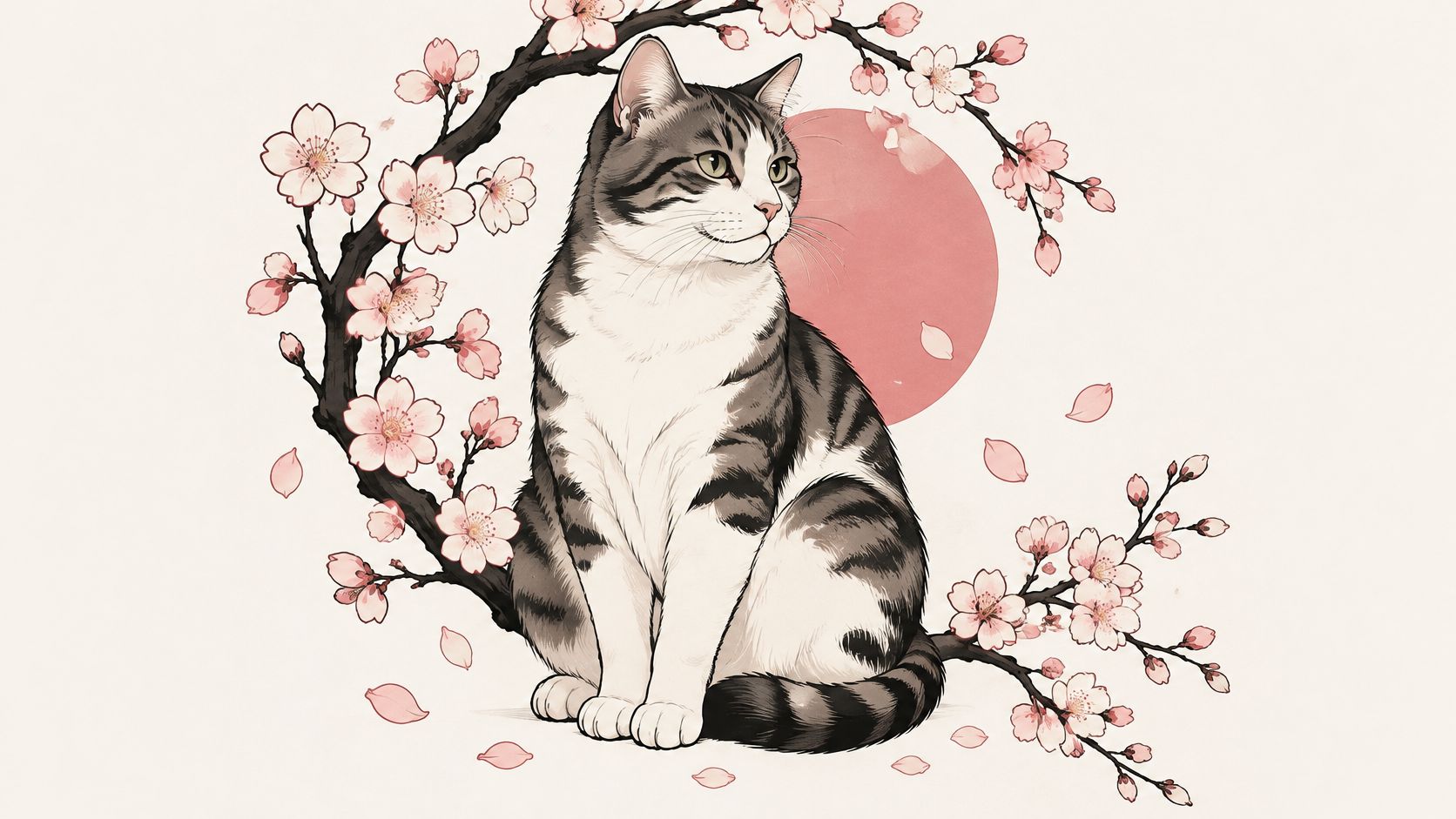
Placement matters more than extra blossoms. On a forearm, let the trunk travel lengthwise and keep the cat's face on the most visible surface. A thigh or back panel gives an artist room for spreading branches, a sun, or background elements without crowding the subject.
Keep the Branches Open
For a workable forearm concept, picture your tabby sitting below a curved branch, with blossoms above the ears and open skin around the whiskers. Avoid putting every flower directly behind the face, where petal edges and fur lines compete.
- Longevity trade-off: Pale pink can be a beautiful accent, but ask for a composition that remains understandable through its outlines and dark structure.
- Style decision: If you want Japanese-style wind or cloud backgrounds, choose an artist whose portfolio demonstrates that approach rather than adding motifs at random.
- Prompt to test: Seated tabby beneath sakura branches, Japanese-inspired composition, bold outline, open background, pink blossom accents, vertical forearm layout.
Compare blossom shapes in our guide to different types of flower tattoos, and bring specific background questions when planning a custom floral tattoo.
Use the video as another visual reference, not as a substitute for placement testing.
2. Black Cat with Roses
Choose this pairing for contrast. A black cat gives the tattoo a strong silhouette, while a rose provides a distinct focal point through its petals and optional color. It can feel romantic, mischievous, or slightly gothic without requiring ornamental extras.
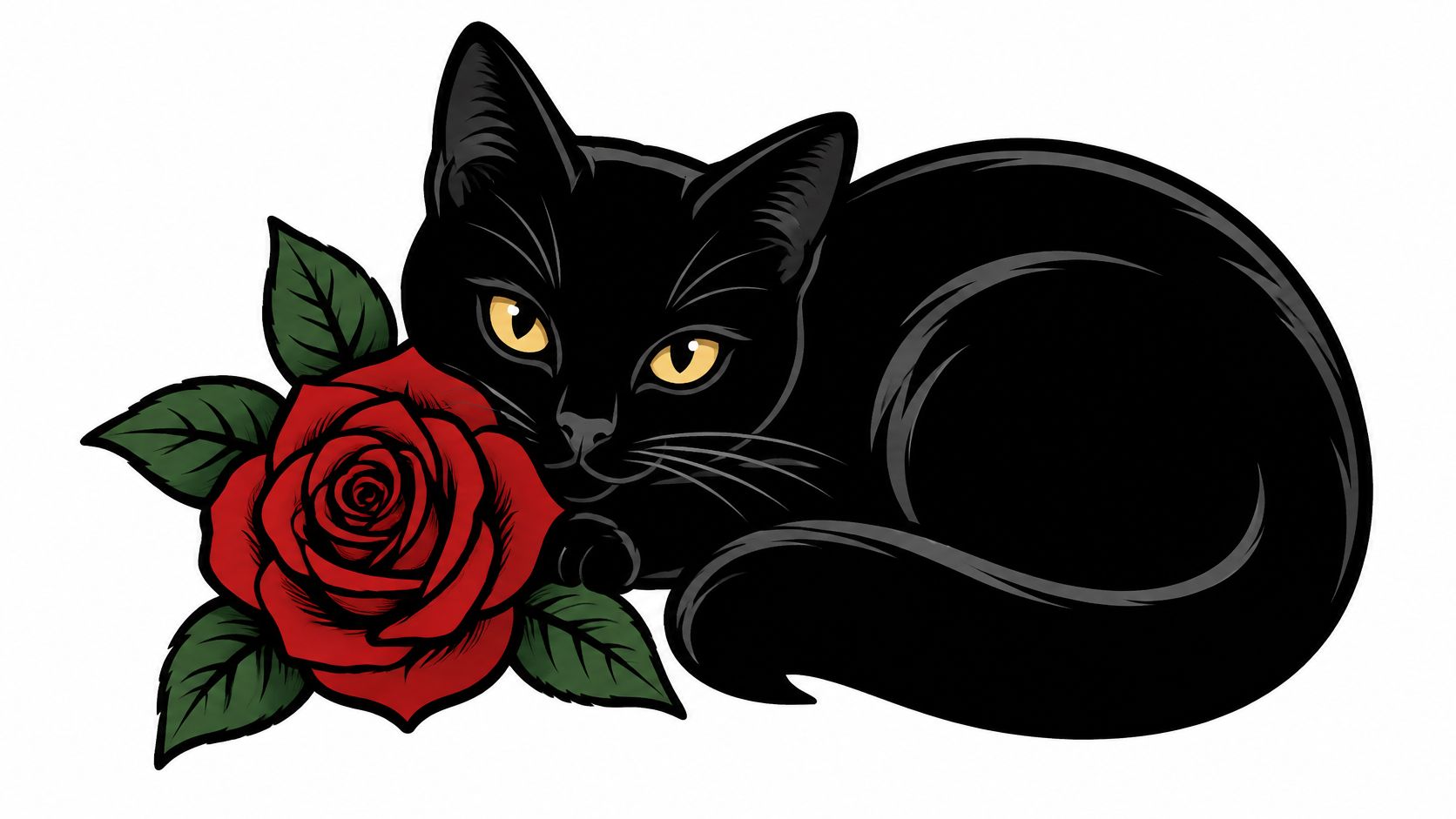
A curled cat beside a rose works well on an outer upper arm or calf. Those placements let you preserve the animal's rounded shape instead of stretching it to fit a narrow strip of skin.
Separate the Dark Shapes
The common mistake is placing dark rose leaves against a fully black body. Ask the artist to separate them with open skin, a lighter petal edge, or a change in position, so you can identify the cat before studying the details.
For a tribute to a black pet, keep the recognizable ear shape and tail position, then simplify the coat. Trying to show every strand of black fur often adds texture without improving likeness.
A black cat doesn't need to be a featureless silhouette. Deliberate skin breaks can describe the cheek, shoulder, and folded paws.
Color is a choice, not a requirement. A black-and-gray rose can feel just as complete as a red version. The clinical review of tattoo complications identifies red pigments as frequent contributors to chronic allergic reactions, although that doesn't mean every red tattoo will cause a reaction.
Prompt to test: Curled black cat beside an open rose, old-school-inspired tattoo, strong outer contour, visible skin breaks, uncluttered calf composition. Compare a red-accent version with a monochrome version before choosing your palette.
3. Fine-Line Cat with a Single Flower
If your sketch is a tiny cat beside lavender, simplify before you shrink. A clean profile with a distinctive tail is usually a better starting point than a miniature portrait with whiskers, stripes, and shaded eyes.
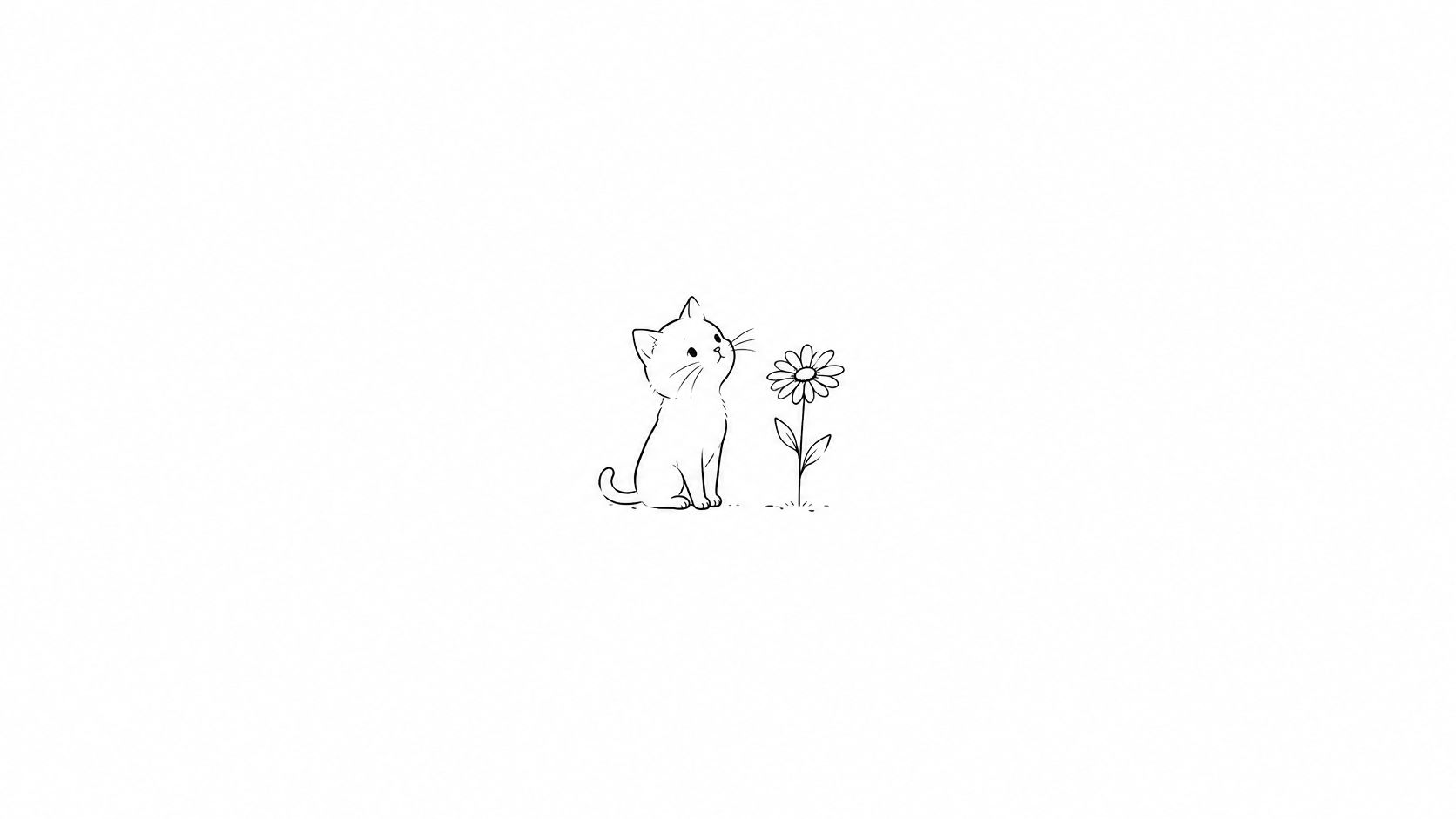
For example, a wrist design could show a seated cat facing a single tulip. The tulip's broad outline keeps the botanical element recognizable without the tightly packed florets a lavender sprig might require.
Small Doesn't Mean Detail-Free
Ask the artist which details they'd remove at your preferred size. There's no universal minimum readable size for every cat face, flower, technique, and placement, so let the actual drawing guide that conversation.
- Wrist: Check how the design looks when your wrist bends, and keep important features away from a crowded crease.
- Ankle: Try a vertical stem alongside an upright cat rather than squeezing a wide scene into a narrow area.
- Behind the ear: Favor a silhouette and simple bloom over facial likeness; decide whether you're comfortable losing portrait detail.
Healing also deserves realistic expectations. A clinical tattoo-aftercare study evaluates skin repair during aftercare, but it isn't proof that extremely delicate lines will remain unchanged long term.
Prompt to test: Minimalist seated cat profile beside a tulip, fine-line appearance, widely separated contours, no fur texture, plain background. If the flower overwhelms the cat at the size you want, compare the idea with a simpler cat paw tattoo.
4. Cat with Lotus Flower
A sleeping cat beside an open lotus creates a quiet, horizontal composition. It's a useful choice when you want the tattoo to feel restful rather than alert or playful.
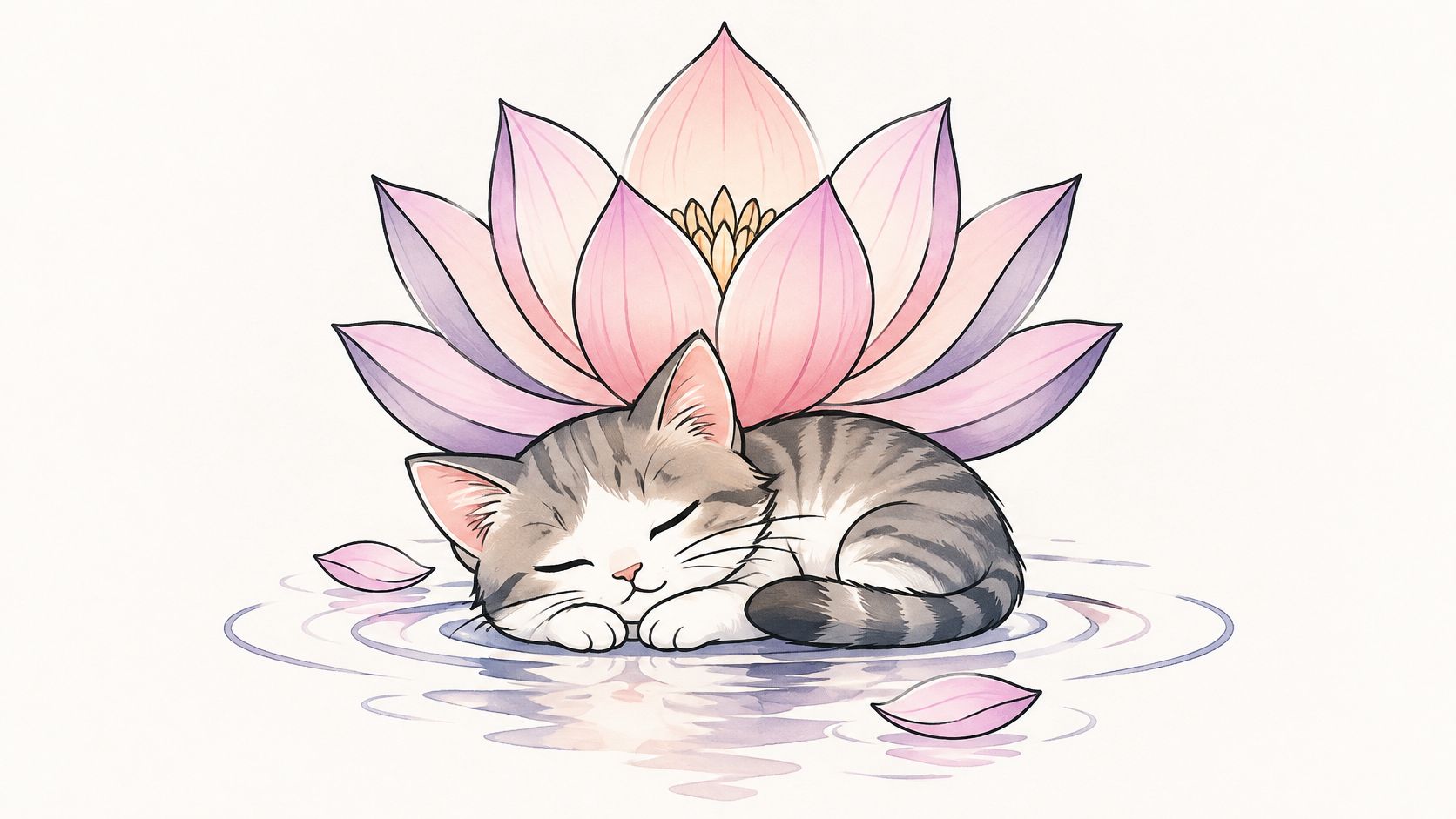
You might choose the lotus to represent personal growth or renewal. If your meaning comes from a particular religious tradition, learn that context before combining the flower with sacred imagery or decorative symbols.
Choose What Carries the Shape
Watercolor and dotwork solve different problems. A watercolor treatment can suggest reflections and atmosphere, while dotwork can describe the cat's volume and the flower's layered form without a broad color wash.
For a shoulder piece, picture a curled cat beneath a lotus angled toward the outer arm. Give the cat a clear contour, then keep soft color outside the face so the expression doesn't depend on a pale wash.
- Placement: The shoulder or upper arm accommodates the lotus's width. A calf version may need a more upright arrangement.
- Longevity: Keep petal tips distinct and avoid stacking fine ripple lines beneath equally fine fur marks.
- Portfolio check: Ask to see healed examples of the effect you want, especially if the reference relies on very soft edges.
Prompt to test: Sleeping cat beside an open lotus, shoulder composition, defined cat outline, spacious petals, restrained watercolor accents, minimal water ripples.
Generate a monochrome interpretation as well. If removing the color makes the cat and flower difficult to distinguish, strengthen the drawing before adding the wash back in.
5. Celestial Cat with Moon and Flowers
The moon is often the element that makes this idea too busy. A cat, crescent, flower cluster, stars, and moon phases can all work together, but they shouldn't all demand equal attention.
Choose a focal point first. For a pet-centered tattoo, make the cat largest and use the crescent as a frame. For a decorative sleeve section, the crescent can lead while a sleeping cat rests along its lower curve.
Give Each Element Its Own Space
A useful upper-arm example is a curled cat under a crescent, with peonies grouped below rather than scattered across the face. Leave clear areas between the moon, ears, and petals, then let the artist determine the necessary spacing at stencil size.
Allure's coverage of tattoo trends emphasizes the wearer's personal relationship with floral imagery. You can choose jasmine because it reminds you of an evening garden, rather than assigning it a meaning you don't connect with.
Readability test: View the concept as a small thumbnail. If you can't separate the cat, moon, and flowers, remove decoration before adding detail.
For longevity, avoid relying on tiny stars and dense petal veins to make the composition interesting. Strong silhouette, balanced dark areas, and open skin are more useful planning priorities, though they don't guarantee a particular aging outcome.
Prompt to test: Sleeping cat beneath a crescent moon, peony cluster below, black-and-gray tattoo, clear separation between subjects, open background, upper-arm composition.
Compare that against a version without moon phases. If you want a larger back piece, the additional space can support a broader arrangement, but it still needs a clear visual hierarchy.
6. Cat Peeking from a Floral Wreath
For a recognizable portrait, start with the cat's expression and build the wreath around it. Choose a photo that shows the markings, head angle, and features you want to preserve. Flowers should frame the face, not compete with it.
Build the Wreath Around the Expression
A cat with uneven facial markings and a tilted head may look awkward inside a symmetrical circle. An open floral arch around the cheeks can follow the portrait more naturally. Keep the ears, eyes, and muzzle clear.
- Forearm: An oval or open arch can follow the available skin.
- Calf: A fuller wreath can work, but check how its edges turn out of view.
- Memorial: Choose flowers connected to the pet or your shared surroundings.
Dense leaves around small eyes can blur the expression. Leave space around the pupils and muzzle, and simplify fur texture before reducing the markings that make the cat recognizable.
Use digital montages as inspiration for composition, not as finished tattoo designs. The artist can refine the wreath and portrait together at stencil size.
Prompt to test: Tuxedo cat peeking through an open wildflower wreath, ears unobstructed, portrait as the focal point, clear muzzle, restrained foliage, oval forearm composition. Compare variations with a more open arch and fewer leaves. Take the preferred layout to a tattooist you trust, along with the original photograph as a likeness reference.
7. Dotwork Cat with Marigolds
Dotwork suits a cat-and-marigold pairing when you want texture without heavy, continuous shading. The contrast can come from a softly stippled coat beside rounded, layered flower heads.
If you're choosing marigolds for a Día de Muertos tribute, learn about their place in that tradition before adding related imagery. Personal remembrance and cultural references deserve more thought than selecting a decorative border because it looks appealing.
Use Density Deliberately
Consider a forearm design with a seated cat and a marigold cluster near its paws. Keep the face relatively open, use denser dots beneath the chin and body, and simplify the flowers into readable scalloped shapes.
The trade-off is straightforward: more dots don't automatically create a better tattoo. Closely packed stippling can approach a solid tonal area, while very subtle shading may not provide enough contrast for the cat's features.
- Placement choice: A forearm or calf gives the artist room to establish changes in dot density. A broad back composition can accommodate garlands or borders without compressing the portrait.
- Flower treatment: Keep the main petal masses distinct instead of outlining every small fold.
- Artist selection: Review healed stippling, looking at how clearly the artist separates light, middle, and dark areas.
For a remembrance piece, an upright cat beside an arch of marigolds may communicate more clearly than a portrait surrounded by dense flowers on every side. Leave space for the face to remain the first thing you notice.
Prompt to test: Stippled seated cat beside marigolds, dotwork shading, clear facial features, open skin between flower heads, restrained folk-art-inspired border, vertical forearm layout. Compare a border-free version before committing to the extra ornament.
Cat Flowers Tattoo Ideas at a Glance
| Item | Typical Style | Best Placement | Scale and Complexity |
|---|---|---|---|
| Cat with Cherry Blossoms (Sakura Cat) | Japanese-inspired, bold outlines, pink and white blossoms | Forearm, thigh, or back | Medium to full sleeve; flowing branches add complexity |
| Black Cat with Roses | Traditional or neo-traditional, bold black with red or pink accents | Calf or upper arm | Adaptable in size; strong contrast and moderate detail |
| Fine-Line Cat with a Single Flower | Minimalist fine-line, black or grey | Wrist, ankle, or behind the ear | Small, often under 5 cm; simple and quick to complete |
| Cat with Lotus Flower | Watercolor or blackwork with soft shading or dotwork | Upper arm, shoulder, or calf | Medium to large; layered petals require detail |
| Celestial Cat with Moon and Flowers | Blackwork, dotwork, or fine-line | Sleeve or back panel | Larger placement recommended; multiple motifs create dense detail |
| Cat Peeking from a Floral Wreath | Color or soft grey-scale, often portrait-style | Calf or forearm | Adaptable in size; facial details and circular framing need care |
| Dotwork Cat with Marigolds | Stippled blackwork, sometimes with orange or yellow accents | Forearm or full back | Medium to large; time-intensive dotwork and layered flowers |
Turn Your Cat Flower Sketch Into a Plan You Can Take to a Studio
Choose the pairing that fits your cat's personality and your available skin, not just the most impressive reference image. A lively stretching cat might suit cherry branches, while a familiar sleeping pose may work better beside a lotus or beneath a crescent.
Keep your shortlist focused. Compare a detail-rich version with a simplified version, and explain what you're willing to lose if the placement can't support everything.
Make the Concept Useful to Your Tattooist
With TattoosAI, you can describe the pairing, choose a style, and generate original concepts to compare before your consultation. You're free to use what you generate, including getting it tattooed, but the image still needs a professional assessment for anatomy, line weight, size, and placement.
We don't currently offer a way to preview a tattoo on your body. Measure the proposed area yourself, mark the boundaries with a skin-safe cosmetic pencil, and use an actual-size paper print to judge the footprint without treating it as an accurate curved-body preview.
Bring the artist a compact, practical brief:
- The cat reference: A clear photograph showing the expression, markings, and pose you want preserved.
- The preferred concept: Your strongest composition, plus an alternative if the placement requires simplification.
- The placement information: Approximate boundaries and whether you want to extend the tattoo later.
- The nonnegotiable detail: The feature that matters most, such as a bent ear, distinctive tail, or particular flower.
Ask what the tattooist would change before booking the design work. A useful answer should address the stencil's readability, the available space, and the artist's approach to the chosen technique, not just whether they can reproduce the picture.
Agree on aftercare with the studio, too, and seek medical care for worsening redness, warmth, pus, fever, or persistent itching rather than trying to diagnose a reaction yourself.
Book around the tattoo you can wear, not the image you can generate. We're an independent design product, not a studio or booking service; take the concept to a tattooist you trust for the final adjustments.
Visit TattoosAI to turn your cat, flower, and style preferences into original tattoo concepts. Compare an open, simplified composition with a more detailed version, then bring your favorite and your pet's reference photo to your tattooist.