TattoosAI
You've saved a symbol from a film, a trip, or a friend's tattoo, but the image alone doesn't answer the important questions. What does it mean? Will the design still read clearly on skin? Does it belong to a specific culture or religious tradition, and would wearing it be respectful?
This guide covers eight widely chosen Asian symbols, from dragons and koi to characters, lotuses, and phoenixes. Each entry pairs meaning with a concrete style direction, placement advice, a prompt you can adapt for TattoosAI, and a verification step before anything becomes permanent. The goal isn't to treat Asian imagery as one interchangeable category. Japanese irezumi, Chinese characters, Korean motifs, Thai Sak Yant, and other traditions have distinct histories and visual systems, so a strong brief should name the intended culture and symbolism before an artist starts drawing.
Table of Contents
- 1. Dragon Tattoos Represent Power and Protection
- 2. Koi Fish Tattoos Mark Perseverance and Transformation
- 3. Yin-Yang Tattoos Express Balance Through Circular Form
- 4. Kanji and Chinese Characters Require More Than Translation
- 5. Lotus Tattoos Combine Beauty With Spiritual Context
- 6. Mandala Designs Turn Geometry Into a Spiritual Statement
- 7. Cherry Blossom Tattoos Capture Beauty and Impermanence
- 8. Phoenix and Asian Bird Tattoos Mark Renewal
- 8 Asian Symbol Tattoos: Quick Comparison
- Turning Your Chosen Symbol Into a Ready-to-Book Design
1. Dragon Tattoos Represent Power and Protection
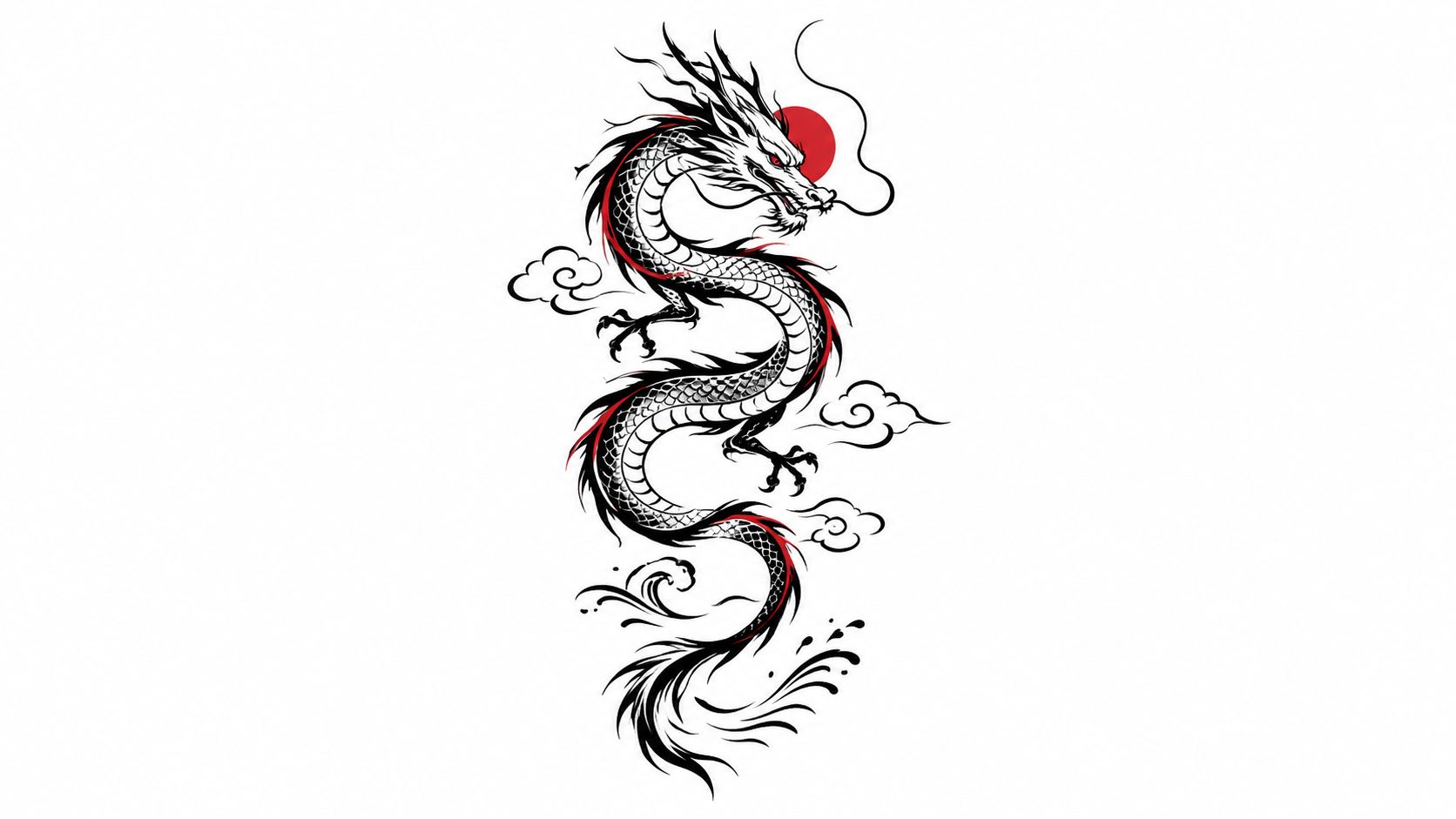
Asian dragon tattoos can look completely different depending on the tradition behind them. A Chinese dragon is often long, sinuous, and associated with celestial power, water, prosperity, and good fortune. A Japanese dragon, or irezumi dragon, usually appears within a larger composition of waves, clouds, flowers, or windbars. Both can suggest strength and wisdom, but they shouldn't be treated as the same character with different colors.
A full-back dragon gives the artist room to create movement through the coils, claws, whiskers, clouds, and water. A forearm or upper-arm version needs stronger editing. Too many scales and background details can turn into visual noise, while a minimalist outline can preserve the silhouette but lose the layered symbolism of a traditional composition.
Style and placement choices
- Traditional Japanese composition: Use a large back, chest, thigh, or sleeve placement with waves and clouds supporting the dragon's movement.
- Chinese-inspired dragon: Keep the body elongated and dynamic, with a clear celestial or water-related direction rather than generic flames.
- Minimalist line work: Choose the rib, inner forearm, ankle, or shoulder, but simplify the anatomy enough to remain legible.
- Color planning: Compare black-and-grey with red, blue, or gold accents. Color changes the mood, but it doesn't define the cultural origin by itself.
A useful prompt would be: “Chinese-inspired celestial dragon, long serpentine body, cloud and water elements, black-and-grey with restrained red accents, vertical upper-arm composition, clear head and claws, no Japanese irezumi background.”
For historical background and symbol-specific development, compare the Chinese dragon tattoo meaning guide. Before booking, ask the artist to identify whether the final design follows Chinese, Japanese, or another regional tradition. If you want a decorative dragon with no traditional claim, label it as contemporary rather than calling it “Asian.”
2. Koi Fish Tattoos Mark Perseverance and Transformation
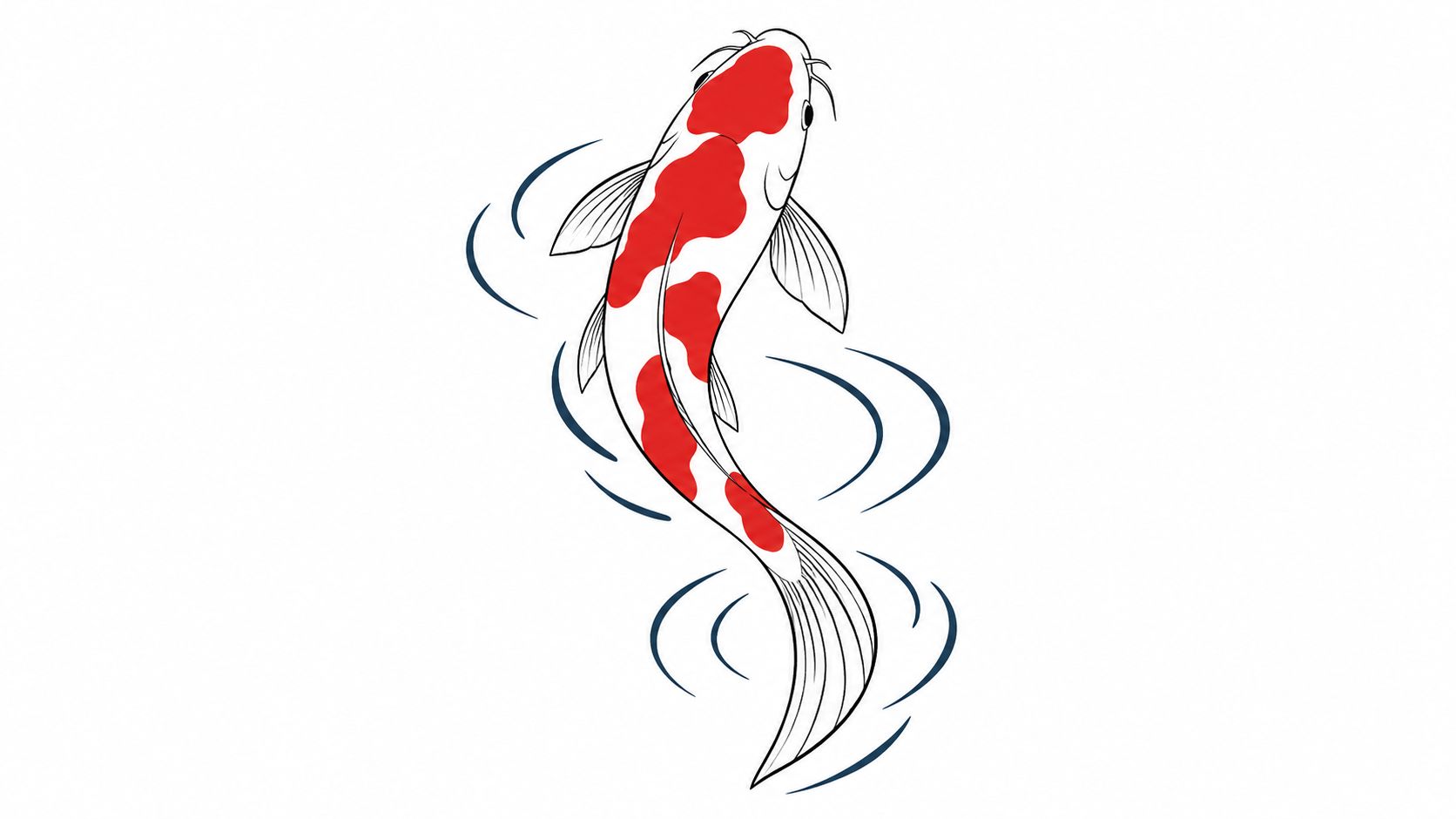
Koi tattoos work because the fish naturally creates direction. The body bends, the fins open into negative space, and waves can carry the design around a limb. In Japanese symbolism, koi commonly suggests persistence, transformation, courage, and progress through difficulty. The familiar image of a fish swimming against moving water makes it an intuitive choice for someone marking recovery, ambition, or a major personal change.
Placement determines whether the koi feels like a character or part of a larger current. A shoulder-to-wrist sleeve allows the body to travel vertically, while a back or rib design gives it room to swim horizontally. A small koi on the wrist or ankle can work as line art, but detailed scales, fins, and wave patterns need enough space to avoid becoming a dark, indistinct shape.
Build the movement into the brief
Try pairing the fish with water, lotus flowers, or restrained wind and splash effects. Two koi swimming in opposing directions can express balance, but the composition should still give each fish a readable head, body, and tail. A koi pointing upward can suggest striving, while a descending fish may better suit a design about acceptance, return, or calm.
A prompt-ready direction could read: “Traditional Japanese koi swimming upward through stylized waves, red-and-white body, black outline, shoulder-to-forearm vertical composition, moderate scale detail, open negative space around fins.”
Use the koi fish tattoo meaning guide to refine the symbolic starting point, then ask the tattooist to adapt the fish to the body's movement. Don't let an image generator decide the direction by accident. The angle, water flow, and surrounding elements should support the meaning you want the viewer to read.
3. Yin-Yang Tattoos Express Balance Through Circular Form
The yin-yang symbol is immediately recognizable, which is both its advantage and its limitation. Its paired dark and light halves represent complementary forces rather than a simple battle between good and evil. That makes it suitable for ideas about balance, change, interdependence, action and stillness, or two parts of one identity.
Its circular structure suits the wrist, inner forearm, ankle, back of the neck, sternum, and upper chest. A small traditional black-and-white version can stay crisp if the curves and dots are given adequate breathing room. Dotwork, geometric framing, or controlled shading can make the design feel more personal, but adding too many surrounding symbols may hide the central form.
Make a familiar symbol personal
A dragon curling around the circle creates a strong relationship between power and balance. Koi can replace or orbit the two halves, while moon phases, mountains, water, or sun motifs can establish a more individual story. These additions should have a reason. A decorative border that exists only to fill space often makes a small tattoo look crowded.
Test at least two directions before settling:
- Classic black-and-white: Best for a clear, compact symbol with little maintenance in the design itself.
- Dotwork geometry: Adds texture and a measured, contemporary feel around the circular outline.
- Watercolor interpretation: Softens the symbol, but color transitions can reduce immediate recognition.
- Three-dimensional shading: Creates depth, though excessive realism can make the simple form look heavier than intended.
A practical prompt might specify: “Balanced yin-yang circle with fine dotwork, subtle mountain and water geometry, black-and-grey, inner forearm placement, clean symmetry, no text.”
Before tattooing, inspect the stencil at its actual intended size. The two internal dots, outer curve, and dividing line should remain distinct. If the design includes characters or religious imagery alongside the yin-yang, verify those elements separately rather than assuming the whole composition is automatically culturally coherent.
4. Kanji and Chinese Characters Require More Than Translation
Characters can turn a personal value into a compact visual mark, but they carry the highest verification risk in this list. Chinese characters and Japanese kanji overlap historically, yet language, pronunciation, compound usage, calligraphy, and cultural context can differ. A character that looks elegant in isolation may not express the intended idea in a natural phrase.
The safest workflow begins by naming the target language and script. Decide whether the concept is Traditional Chinese, Simplified Chinese, or Japanese kanji. Then validate the complete phrase, not just individual characters. Documented translation problems include an intended idea of “freedom” rendered as “free of charge” and “power” rendered as “electricity,” which is why a dictionary result or machine translation isn't enough. See the character tattoo translation and stencil guidance for the production risks involved.
Build a language-safe design brief
A vertical phrase can suit the forearm, ribs, spine, or calf, while a horizontal phrase may read more naturally across the chest, collarbone, or shoulder. Don't choose orientation only because it looks “more Asian.” The writing direction and composition should follow the selected language and the artist's lettering plan.
Use a prompt such as: “Japanese kanji phrase supplied separately by a fluent Japanese reader, formal brush calligraphy, vertical outer forearm layout, generous spacing, black ink, no invented characters, stencil-ready.”
The image generator should create a visual concept, not approve the language. Have a fluent reader inspect the actual rendered stencil for character order, typography, orientation, decorative additions, and accidental mirroring. Reversed or mirrored non-symmetrical characters can become malformed or different forms. If the reviewer can't examine the final artwork at tattoo scale, the verification step isn't complete.
5. Lotus Tattoos Combine Beauty With Spiritual Context
The lotus is often chosen for ideas of rebirth, purity, resilience, and spiritual awakening. Its growth from murky water into an open bloom gives the design a clear visual narrative, but the symbol also appears in Buddhist and Hindu contexts. That matters when the tattoo includes a deity, mantra, mandala, or other sacred imagery. A lotus used as a general botanical motif isn't the same cultural statement as a lotus placed beneath a religious figure.
The flower adapts well to many body shapes. A full bloom can sit on the chest, shoulder blade, upper back, or thigh. A side-profile blossom fits the ribs or forearm, while an opening bud can mark a smaller design without losing the idea of development. Petal count, angle, water, leaves, and surrounding space affect whether the tattoo reads as botanical, devotional, or purely ornamental.
Choose the visual language first
- Fine-line lotus: Delicate and restrained, but small petal interiors need enough spacing to remain open over time.
- Black-and-grey shaded bloom: Gives the petals weight and works well on the shoulder or chest.
- Watercolor lotus: Pink, purple, or blue transitions create softness, though the composition needs a strong outline or value structure.
- Lotus with mandala geometry: More overtly spiritual and better suited to a larger, centered placement.
- Botanical lotus with water: Grounds the flower in a natural setting and avoids an isolated decorative icon.
A prompt-ready brief could say: “Open pink lotus floating above calm water, botanical realism with restrained line work, shoulder-blade placement, clear petal separation, no deity or sacred text, soft black-and-grey shading with limited color.”
If you do want Buddhist or Hindu elements, identify that intention directly and consult an artist who understands the relevant tradition. A respectful design needs context, not just a visually attractive arrangement.
6. Mandala Designs Turn Geometry Into a Spiritual Statement
Mandalas are circular compositions built from symmetry, repetition, and a central point. The term has roots in South Asian religious and philosophical traditions, and mandala forms can represent wholeness, cosmic order, meditation, or spiritual completion. At the same time, many contemporary tattoos use mandala-like geometry as an abstract design. Those uses shouldn't be presented as identical.
A mandala's symmetry makes mistakes obvious. If the central axis drifts, a repeated petal is missing, or the outer ring collapses into dense blackwork, the design can look uneven from a distance. The back, sternum, upper arm, shoulder, thigh, and calf offer broad surfaces where concentric rings can remain readable. A small wrist mandala needs aggressive simplification.
Control complexity before the appointment
Start with the center, then decide how many rings the body placement can support. A simple lotus center with open geometry may age more clearly than an elaborate design packed with tiny dots. Dotwork gives a soft, stippled value range, while geometric blackwork creates sharper contrast and a more graphic result.
Useful prompt details include:
- Structure: symmetrical circular mandala with a clearly defined center
- Style: dotwork, fine-line geometry, blackwork, or restrained watercolor
- Scale: broad enough for the intended rings and negative space
- Placement: centered upper back, shoulder, sternum, thigh, or calf
- Cultural framing: abstract contemporary geometry, Buddhist-inspired, or another named context
For example: “Contemporary symmetrical mandala with lotus center, black-and-grey dotwork, open negative space, upper-back composition, moderate complexity, no religious deity or script.”
Ask the artist to simplify the generated concept for real skin. Screen-perfect symmetry doesn't guarantee a practical stencil. The final design must follow the body's curve, leave enough breathing room between lines, and preserve the central shape when viewed at normal distance.
7. Cherry Blossom Tattoos Capture Beauty and Impermanence
Cherry blossoms, or sakura, are strongly associated with Japanese aesthetics and the passing of seasons. Their appeal isn't limited to a pretty pink flower. The brief flowering period can represent impermanence, renewal, memory, or the decision to value a moment because it doesn't last forever.
A single blossom works on the wrist, ankle, behind the ear, or collarbone, but isolated petals can look generic without a deliberate composition. A branch gives the artist a natural line to follow down the forearm, ribs, or shoulder. A larger tree can fill the back, although the trunk, blossom density, and falling petals need to be planned as one visual rhythm rather than assembled as separate decorations.
Let the branch guide the placement
Watercolor treatment creates a soft, drifting effect, especially with pink and white blossoms, but it needs enough tonal contrast to avoid looking washed out. Fine-line work is quieter and easier to scale down, while a traditional Japanese composition can add waves, clouds, mountains, or a broader background. Those additions should belong to the same visual language.
Try a direction such as: “Japanese cherry blossom branch flowing from shoulder toward upper arm, sparse pink-and-white blooms, falling petals, fine-line and soft watercolor hybrid, calm negative space, no text.”
For a minimal design, specify “single open blossom” rather than “cherry blossom tattoo.” For a more substantial piece, request a branch with a clear start and end, then show the artist where it should follow the body. If you add Mount Fuji, waves, or another Japanese motif, ask the artist to keep the composition recognizably Japanese rather than combining unrelated symbols under a generic Asian label.
8. Phoenix and Asian Bird Tattoos Mark Renewal
Bird symbolism varies widely across Asia, so the name of the bird should be chosen carefully. The Chinese fenghuang is not interchangeable with every Western phoenix. A Japanese crane, or tsuru, carries a different visual and cultural identity from a firebird. The design can represent renewal, resilience, longevity, or transformation, but the selected bird determines the story.
A phoenix with spread wings needs space to breathe. The back and chest support a broad symmetrical composition, while the thigh can carry an angled bird rising through flames or clouds. A crane suits a slimmer vertical design on the calf, forearm, or side of the torso. A small perched bird can work on the shoulder or upper arm, but reducing feathers too far may erase the distinction between species.
Name the bird and its environment
- Chinese fenghuang: Specify elegant plumage, a composed posture, and Chinese visual references rather than defaulting to Western firebird anatomy.
- Japanese crane: Use a lean silhouette, deliberate wing position, and restrained line work or Japanese composition.
- Phoenix in ascent: Pair wings with flames, smoke, or celestial elements when the concept is personal rebirth.
- Bird with water: A crane, koi, or dragon pairing can suggest balance, but the symbolism needs to be intentional rather than crowded.
A prompt could read: “Chinese fenghuang with flowing ornamental feathers, poised ascending posture, cloud and celestial elements, red and gold accents with black outline, upper-back composition, culturally specific Chinese styling, no Western eagle anatomy.”
Before approving the image, ask the artist to explain which bird tradition the anatomy and surrounding motifs reference. If the design includes a deity, sacred emblem, or religious text, seek cultural guidance rather than relying on the generator's visual confidence. The strongest result makes the source tradition clear and gives the bird enough room to remain recognizable.
8 Asian Symbol Tattoos: Quick Comparison
| Design | Implementation Complexity 🔄 | Skill & Resources ⚡ | Expected Outcomes 📊 | Ideal Use Cases 💡 | Key Advantages ⭐ |
|---|---|---|---|---|---|
| Dragon Tattoos - The Mythical Icon of Power | High, intricate flow, anatomy, large compositions | High, experienced artist, long sessions, higher cost | Bold, dramatic statement; strong cultural resonance 📊 ⭐⭐⭐⭐ | Full-back, sleeve, chest; symbolic power/protection pieces | Versatile styles; deep cultural meaning; highly recognizable |
| Koi Fish Tattoos - Perseverance & Transformation | Medium-High, flowing forms and composition | Medium-High, color work or detailed shading, moderate time | Dynamic, graceful visuals; narrative of perseverance 📊 ⭐⭐⭐ | Sleeves, back panels, paired compositions; life-journey narratives | Beautiful movement and color options; photographs well |
| Yin‑Yang Tattoos - Balance & Duality | Low, symmetrical, compact design | Low, quick sessions, low cost | Instant recognizable symbolism; minimalist to detailed options 📊 ⭐⭐⭐ | First-timers, wrist/ankle/chest; simple philosophical statements | Timeless, highly scalable, quick turnaround |
| Kanji & Chinese Characters - Personalized Script | Low-Medium, simple execution but high linguistic risk | Medium, verify translation, calligraphy-skilled artist | Personal, concise meaning; high emotional significance 📊 ⭐⭐⭐ | Small placements (wrist, behind ear); meaningful, text-based tattoos | Compact and deeply personal; elegant calligraphic aesthetic |
| Lotus Flower Tattoos - Rebirth & Enlightenment | Medium, symmetry and petal detail required | Medium, color or fine-line skill; moderate time | Spiritual, botanical beauty; symbolic rebirth 📊 ⭐⭐⭐ | Chest, back, shoulder; spiritual or healing narratives | Universal spiritual appeal; pairs well with other symbols |
| Mandala Designs - Spiritual Geometry | High, extreme symmetry and precision | High, dotwork/geometric expertise, long sessions | Mesmerizing, highly personal spiritual statement 📊 ⭐⭐⭐⭐ | Large back/shoulder pieces or focal meditative tattoos | Infinitely customizable; unique and detail-rich |
| Cherry Blossom Tattoos - Transience & Beauty | Medium, delicate linework and petal detail | Medium, fine-line or watercolor skill; upkeep for color | Poetic, delicate aesthetics; sense of impermanence 📊 ⭐⭐⭐ | Forearm, shoulder, branch compositions; poetic or seasonal themes | Visually beautiful and versatile; pairs well with Japanese motifs |
| Phoenix & Asian Bird Symbolism - Renewal & Resilience | High, dynamic feathers, movement, large composition | High, anatomical and color skill, extended sessions | Powerful transformation narrative; dramatic visual impact 📊 ⭐⭐⭐⭐ | Back, chest, large wingspan areas; rebirth or recovery stories | Strong symbolic resonance; visually striking and dynamic |
Turning Your Chosen Symbol Into a Ready-to-Book Design
Begin with the meaning, not the picture. Choose the symbol that matches what you want to mark, whether that's perseverance through difficulty, balance, renewal, protection, memory, or a personal value. Then name the cultural tradition precisely. “Japanese koi,” “Chinese fenghuang,” “Japanese kanji,” and “contemporary geometric lotus” give an artist far more useful direction than “Asian tattoo.”
Next, choose one dominant style and one placement. Traditional Japanese composition, fine-line botanical work, dotwork, watercolor, geometric blackwork, and realistic shading all handle detail differently. A large back dragon can support layered clouds and water, while a small wrist character or lotus needs open spacing and fewer internal details. The best placement also considers how the body bends, how visible the tattoo will be in work or social settings, and whether the design can remain readable as it ages.
Write the prompt as a production brief:
- Meaning: State the personal idea and the selected cultural context.
- Subject: Name the exact symbol, species, script, or motif.
- Composition: Describe direction, movement, symmetry, and surrounding elements.
- Style: Choose one primary treatment, then add restrained secondary effects.
- Placement: Include the body area and whether the design is vertical, horizontal, or centered.
- Color: Request black-and-grey, limited accents, or a specific palette.
- Constraints: Exclude invented lettering, unrelated sacred motifs, excessive detail, or generic “Asian” decoration.
TattoosAI can help generate multiple visual directions from that brief, including Japanese, watercolor, minimalist, dotwork, geometric, blackwork, and other styles. Treat those outputs as concept development rather than final approval. For characters, have a fluent reader review the actual stencil. For religious or historically specific imagery, consult an artist experienced in the relevant tradition. If you're comparing booking options, even a service such as Bonna Beauty cosmetic tattoo illustrates why the service context matters alongside the visual result.
The practical target is to bring two or three refined concepts to the tattooist, not a single unedited image. Ask which version will age best, which details need simplifying, and how the design should be redrawn for your anatomy. A U.S. study found that 18.2% of tattooed participants reported regretting at least one tattoo, with regret associated with placements including the head, neck, hands, wrists, and fingers, as well as peer pressure, impairment during tattooing, and tattoo-related adverse events. Read the study on tattoo regret and associated factors before treating a discreet or highly visible placement as automatically low risk.
The strongest tattoos combine meaningful symbolism with a design that suits the body and the artist's skill. Slow down at the language, cultural-context, and stencil stages. Once those are resolved, the studio appointment becomes a focused design conversation rather than a gamble on an attractive image.
TattoosAI lets you describe an Asian-symbol concept, select from styles such as Japanese, minimalist, dotwork, watercolor, geometric, and blackwork, and generate multiple concepts for comparison. Visit TattoosAI to refine a dragon, koi, lotus, character, or bird brief before bringing your preferred directions to a qualified tattooist.